VASER Liposuction in Thailand Your guide to cost, top surgeons & hospitals
VASER does not just remove fat. It sculpts around the anatomy you already have, revealing definition that was always underneath.

What Is VASER Liposuction?
Also known as: VASER Lipo · VASER Lipoplasty
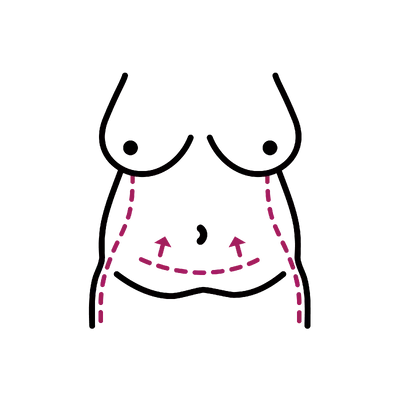
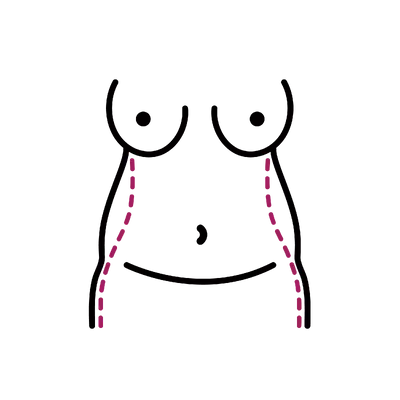
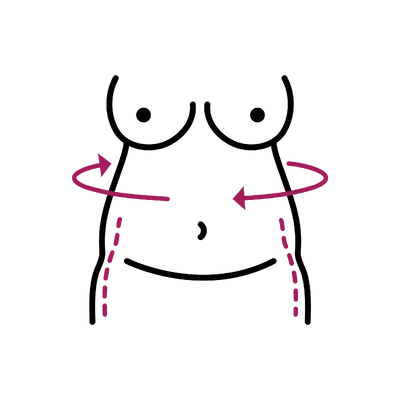
VASER liposuction is a body-contouring surgery that removes localised fat by loosening the fat cells with ultrasound energy, then suctioning them out. A thin probe sends sound waves that break apart the fat while sparing blood vessels, nerves, and the collagen framework, so the surgeon shapes an area more precisely and with less bruising than traditional liposuction. Because that framework is preserved and stimulated, skin tends to retract smoothly over the new contour. Removed fat cells do not grow back, so the change usually lasts while your weight stays stable.1,2 It is normally done under general anaesthesia in 2 to 4 hours.
VASER is less about taking volume away and more about revealing what is already there. Some people want a stubborn pocket softened; others want defined lines along the abdomen or arms. Your surgeon plans the work around your body fat, skin quality, and goals.
It refines shape rather than replacing weight loss, and athletic etching only works when there is muscle tone underneath to uncover. A consultation tells you whether standard or hi-def VASER suits you, and a good surgeon will say so plainly if neither fits.
It can address a range of concerns, including:
Am I a Good Candidate for VASER Liposuction?
VASER rewards the right starting point, so surgeons weigh your body fat, skin quality, and definition goals before recommending it over other techniques.
VASER refines shape rather than reducing size, so your starting weight sets the ceiling on what it can deliver.
Within 15kg of target: Good candidates are close to their target weight. The procedure sculpts what remains, it does not replace weight loss.
Hi-def thresholds: Athletic etching requires low body fat, ideally below roughly 20%.
Stable weight: Removed fat cells do not regenerate, but remaining cells enlarge with gain. Even moderate weight gain will obscure sculpted definition.
Honest triage: Patients with higher body fat benefit more from standard VASER than from attempting hi-def sculpting.
The skin has to retract smoothly over the new contour, so elasticity is one of the first things surgeons examine.
Good retraction needed: Candidates need good skin elasticity. VASER preserves the collagen framework and stimulates it, but it cannot rescue genuinely loose skin.
Laxity routes elsewhere: Significant skin laxity rather than firm tissue is a caution sign. Ultrasonic retraction will not be enough, and an excisional procedure would suit better.
Six months of tightening: Collagen stimulation continues tightening the skin for up to 6 months. Whether that retraction will be enough for borderline elasticity is a judgement your surgeon makes at examination, not something compression wear can guarantee.
Good candidates have the specific problems where VASER's tissue selectivity outperforms conventional liposuction.
Stubborn pockets: Fat that masks underlying muscle definition despite training is the classic VASER case, removed with less bruising and better retraction.
Previous lipo irregularities: Uneven contours or fibrotic scarring from earlier liposuction respond well, provided the scar tissue is assessed during consultation.
Fibrous areas: Dense, fibrous zones like the back and male chest that traditional liposuction handles poorly are where the ultrasound advantage shows most.
Hi-def and 4D sculpting reveal muscle rather than create it, so surgeons gate these versions on what is already underneath.
Visible muscle tone: If you cannot see any definition when you flex, hi-def is unlikely to produce the etched lines you see in marketing photos.
Consistent training: The underlying muscle has to be there to reveal. Inconsistent training is a reason surgeons steer patients to standard VASER instead.
Maintenance commitment: Stable weight and continued training are essential, since hi-def definition disappears under even moderate fat gain.
Who is not suitable for vaser liposuction?
- Significant skin laxity needing an excisional procedure instead
- Body fat too high for hi-def or athletic etching goals
- Previous liposuction scar tissue not yet assessed by a surgeon
- Smokers unwilling to stop four weeks before and after surgery
- Heat-sensitive skin or a history of poor scarring at port sites
- Significant uncontrolled heart or lung disease, or otherwise not medically fit for general anaesthesia
- Bleeding or clotting disorder, anticoagulant use, or significant VTE history until assessed
- Cardiac pacemaker, implanted defibrillator, or other implanted electronic or metallic device, as VASER's ultrasonic energy is a contraindication unless cleared by your cardiologist
Pricing
How Much Will VASER Liposuction Cost in Thailand?
What vaser liposuction costs at accredited hospitals in Thailand, and what your final quote depends on.
Get your exact price
Tell us what you're considering and we'll send a personalised quote from accredited hospitals within 24 hours.
Get my free quoteTypical prices in Thailand
Typical ranges based on recent hospital quotes. Your exact price depends on the hospital and how complex your case is, and is confirmed at your teleconsultation.
VASER Liposuction
Ultrasound energy loosens fat cells so the surgeon can suction them out while sparing surrounding tissue, giving more precise contouring and less bruising than traditional liposuction.
| Liposuction with VASER, up to one to two hours of surgery 1 night Ultrasound-assisted fat removal with one night in hospital, suited to contouring a small number of areas. | $5,100 ฿173,000 |
Typically not included
- Extra contouring areas beyond the one to two hours the package covers, quoted separately
- Intensive care, or hospital nights beyond the one stated in the package
- Pre-operative medical clearance and fitness assessment
- Laboratory tests and other investigations
- Pathology and pathologist charges on any tissue removed
Get your exact price
Tell us what you're considering and we'll send a personalised quote from accredited hospitals within 24 hours.
Hospitals Trusted for VASER Liposuction
From internationally accredited flagships to dedicated specialist hospitals, these are the kinds of facilities where international patients have this procedure.

Rattinan Clinic
A specialist body contouring clinic in central Bangkok with over 14,000 BodyTite treatments performed.
View hospital profile
Kamol Cosmetic Hospital
The only specialist cosmetic surgery hospital in Thailand to hold JCI accreditation.
View hospital profile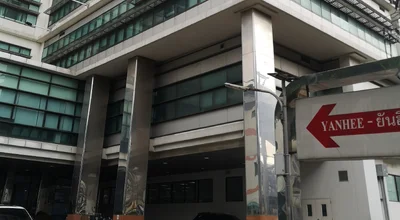
Yanhee International Hospital
A 400-bed hospital known worldwide for high-volume cosmetic surgery.
View hospital profile
Get a Free Quote in Two Minutes
Tell us what you're considering. We'll match you with suitable specialists and provide real hospital pricing.
- Honest pricing with no markups
- Matched to a specialist for your procedure
- No obligation, no pressure


Rated 5 stars by our patients
The complete guide to VASER Liposuction in Thailand
Everything below is for readers who want the full detail: costs broken down, types and techniques, recovery, risks and safety, and planning your trip.
VASER Liposuction Surgeons & Clinics in Thailand
VASER is a specialised tool. Not every plastic surgeon who performs liposuction is equally proficient with it. Here is what to look for.
Leading Hospitals in Bangkok
Our partner hospitals have current-generation VASER systems in their plastic surgery departments. These are JCI-accredited, full-scale hospitals with dedicated theatre suites, anaesthesia teams, and post-operative recovery infrastructure. VASER equipment requires calibration and maintenance standards that are best maintained at hospital-grade facilities.
Experienced VASER Surgeons
Our partner surgeons are board-certified by the Thai Board of Plastic and Reconstructive Surgery and hold VASER-specific training certifications. Many completed body sculpting fellowships internationally and returned to Thailand where higher surgical volumes allow them to maintain fluency across standard VASER, hi-def, and 4D techniques. That ongoing caseload is what keeps their eye for proportion sharp.
What to Look for in a VASER Surgeon
VASER case volume is the signal that matters most, a general liposuction surgeon who occasionally uses VASER is not the same as one who performs VASER as their primary technique, and this is something we screen partner surgeons for. For hi-def work, we look for surgeons who can show before-and-after results in patients with comparable body fat levels and the same areas treated, and who perform true 4D sculpting rather than only marketing it, since the difference in skill level is significant. During your own consultation, it is worth paying attention to how honestly the surgeon assesses your suitability for hi-def vs standard VASER, which tends to be the clearest sign of experience.
Understanding Your Results
VASER results improve progressively as swelling resolves and skin tightens. Here is what the timeline looks like and what to realistically expect.
Typical VASER Results
Standard VASER produces smoother, more refined contours than traditional liposuction, with better skin retraction over the treated areas. Hi-def VASER creates visible muscle definition, etched abdominal lines, pectoral borders, and arm contours, in patients with sufficiently low body fat. 4D results show definition that reads naturally across different positions and movements, not just standing in front of a mirror.
What Results Can You Expect?
Initial improvement is visible immediately, but the sculpted result develops over months. Standard cases show a strong preview by week 4. Hi-def etching takes longer, the lines sharpen gradually from month 2 onward as swelling resolves and collagen contracts. The skin-tightening effect continues for up to 6 months, which is why VASER patients often report that their result keeps improving well after they expected it to be final. Maintaining low body fat is essential for preserving hi-def definition.
VASER Liposuction Cost in Thailand
Average Cost of VASER Liposuction
Our partner hospital runs one VASER package. Liposuction with VASER covering up to one to two hours of surgery is ฿173,000 with one night in hospital, about $5,088. The time limit is part of the package definition rather than small print, so a session contouring several areas will run past it and be quoted separately. Hi-def and 4D sculpting do not appear on that menu. This is one accredited hospital's fly-in rate valid to 31 December 2026, and a private hospital sits at the premium end of a very wide Thai cosmetic surgery market.
Cost Breakdown
The package covers the operating theatre and recovery room, the medical supplies and the medication for the operation itself, the surgeon and anaesthetist teams, and a standard room with nursing care and meals for the night. VASER equipment carries a per-use cost that sits inside the hospital fee, which is one reason it prices above tumescent liposuction. Outside the figure are pre-operative medical clearance, laboratory tests and other investigations, consultations with specialists outside the operating surgeon, medication for conditions you already take, intensive care beyond the stated night, and any surgery beyond the one to two hours the package allows. Get in writing what happens if your case runs long, because that is the exclusion most likely to catch you.
What Affects the Price?
Within the package the only variable that matters is time. One to two hours buys a modest number of areas, and anything past that is quoted on top, so the first question to settle is how many zones you actually want treated rather than which VASER variant appeals. Beyond that menu, hi-def work costs more than standard VASER because it takes longer and the sculpting is more precise, 4D is more demanding again, and revision cases run higher because scar tissue adds operative time. Where you have it done moves the number more than any of that. Large Bangkok cosmetic hospitals publish VASER fees per treated site at well under half the package figure, though those numbers state no inclusions, so part of the gap is a cheaper hospital and part is a bare fee set against a bundled package.
Thailand vs International Price Comparison
VASER liposuction runs $7,000–$12,500 in the US, £5,500–£9,500 in the UK and A$6,500–A$11,300 in Australia. Our partner hospital's package at about $5,088 sits below the American and British floors, so against those two the saving is roughly half. Against Australian pricing, which converts to about $4,300 to $7,500, it lands inside the range rather than beneath it and the saving is slight. Remember too that the figure buys up to one to two hours of surgery, so setting it against an at-home quote covering more zones is not like for like. The deepest savings on VASER in Thailand sit at the large cosmetic hospitals rather than at a JCI-accredited private hospital.
Non-Surgical Alternatives to VASER Liposuction
The main non-surgical options are fat freezing (cryolipolysis, often marketed as CoolSculpting) and fat-dissolving injections such as deoxycholic acid. Both target small, isolated pockets of fat without surgery or anaesthesia, working gradually over several weeks as the body clears the treated cells. For someone with one modest bulge and no interest in downtime, they can soften a contour with no incisions.
The limits are significant, though. These treatments only reduce a thin layer of fat, so each area usually needs several sessions to show much change, and they cannot sculpt, etch muscle lines, or treat fibrous areas like the back or male chest. They do nothing for loose skin, results are modest and unpredictable, and fat freezing carries a rare risk of paradoxical fat growth where the treated area enlarges instead. None of it delivers the precise, comprehensive reshaping that defines a VASER result.
For meaningful volume reduction across one or more areas, smooth athletic contouring, hi-def muscle definition, or any case involving dense or scarred fat, VASER liposuction is the route, and that is what the rest of this page covers.
Types of VASER Liposuction
VASER is a technology, not a single procedure. What your surgeon does with it depends on your body fat level, the areas being treated, and how much definition you want. Here is how the main applications differ.
VASER Lipo (Standard)
Standard VASER for general fat reduction and contouring. The ultrasound advantage, smoother results and better skin retraction, applies even for straightforward volume reduction. Suitable for virtually any body area and a wide range of body fat levels. This is the most commonly performed variant.
- General fat reduction with smoother results than traditional liposuction
- Better skin retraction through preserved collagen framework
- Applicable to abdomen, flanks, thighs, arms, back, chin, and more
- Best for: patients wanting refined contouring with less bruising and faster recovery than tumescent alone
VASER Hi-Def
Advanced sculpting that removes fat selectively around muscle groups to reveal and accentuate natural definition. The surgeon etches along the anatomical lines of the rectus abdominis, obliques, pectorals, or arms. Requires low body fat, good muscle tone, and an experienced surgeon. This is where VASER's precision advantage is most apparent.
- Etches visible muscle definition, abdominal lines, pectoral borders, arm contours
- Requires body fat below approximately 20% with underlying muscle development
- The most technically demanding VASER application
- Best for: athletic patients who train regularly but carry a stubborn fat layer obscuring muscle definition
VASER 4D Sculpting
The most sophisticated version, accounting for how muscles look during movement and in different positions, not just standing still. The surgeon creates definition that reads naturally when you twist, bend, or flex. Few surgeons perform true 4D work, and it demands both VASER expertise and an understanding of dynamic anatomy.
- Creates definition visible across multiple positions and movements
- Accounts for how fat distribution affects appearance during motion
- Requires the highest level of VASER surgical skill
- Best for: patients who want athletic definition that looks natural in motion, not just in static photos
VASER Techniques and Settings
The ultrasound settings and approach vary depending on what each treatment zone needs. Getting this right is what separates a smooth result from an uneven one.
Superficial vs Deep Fat Removal
VASER can target fat at different depths. Deep fat removal reduces overall volume, while superficial work refines contours and creates visible muscle definition. Most patients receive a combination, deep removal first to reduce bulk, then superficial sculpting to refine. Hi-def cases involve more superficial work, which is technically harder because there is less margin for error.
- Deep removal reduces bulk and overall volume in each zone
- Superficial sculpting creates visible lines and muscle definition
- Most cases combine both depths for balanced results
- Best for: deep is standard for volume reduction; superficial is added for athletic definition
Continuous vs Pulsed Ultrasound Mode
VASER probes can deliver energy continuously or in pulses. Continuous mode emulsifies fat faster and suits larger, deeper areas. Pulsed mode delivers less total energy, reducing thermal risk, better for delicate zones like the chin, arms, and areas with thinner fat layers. Your surgeon selects the mode based on the treatment zone.
- Continuous mode processes larger volumes of fat efficiently
- Pulsed mode reduces thermal exposure for delicate or thin areas
- Mode selection varies zone by zone within the same procedure
- Best for: continuous suits deep abdominal and flank work; pulsed suits smaller, thinner areas
Fat Harvesting for Transfer
VASER-emulsified fat is often considered higher quality for fat grafting than mechanically extracted fat because the cells are loosened rather than torn. If you are combining VASER with fat transfer to the buttocks (BBL) or other areas, the harvested fat may have better cell viability and therefore better long-term survival. Not all patients need this, but for combination cases it is a meaningful advantage.
- Ultrasound loosens fat cells rather than tearing them, preserving cell integrity
- Potentially higher fat graft survival rates compared to mechanically harvested fat
- Particularly relevant for VASER + BBL combination procedures
- Best for: patients planning fat transfer alongside liposuction
Power-Assisted Extraction (PAL)
Once VASER has emulsified the fat, many surgeons remove it with a power-assisted cannula that vibrates rapidly rather than relying on manual passes. The gentle oscillation aspirates the loosened fat efficiently while reducing surgeon fatigue over a long sculpting case, which helps keep the extraction even across each zone. Pairing ultrasound emulsification with power-assisted removal is a common, complementary combination rather than an alternative to VASER.
- Vibrating cannula aspirates emulsified fat with less manual force
- Steadier, more even extraction across large or multi-area cases
- Frequently paired with VASER rather than used as a standalone method
- Best for: larger-volume or multi-area cases where consistent, controlled removal matters
VASER Liposuction Recovery Timeline
Days 1–3
Treated areas are swollen and tender, though typically less bruised than you would expect from traditional liposuction. The compression garment goes on immediately and stays on around the clock. Light walking begins from day one. Your care coordinator checks in daily to monitor progress.
Week 1–2
Bruising fades quickly, one of VASER's advantages. Swelling drops noticeably by day 7–10, and early contour changes become visible even through residual puffiness. Most patients feel comfortable with desk work and short outings by the end of week one. Follow-up appointments happen during this window.
Weeks 3–6
Contours sharpen each week as swelling continues to resolve. Light exercise resumes, progressing from walking to gentle cardio and eventually resistance training. The compression garment transitions to daytime-only wear. For hi-def cases, the sculpted lines start to become visible.
Months 3–6
Final contours are fully established as the last swelling resolves and VASER's collagen-stimulating effect tightens the overlying skin. Hi-def definition becomes increasingly sharp. The result at 6 months is your permanent shape. Tiny incision marks have faded to barely visible points.
When Can You Fly After VASER?
Most patients can fly home 7–10 days after surgery, once healing is confirmed at a follow-up appointment. VASER's lower tissue trauma means recovery is somewhat faster than traditional liposuction, but the same travel principles apply, wear your compression garment, stay hydrated, and move around the cabin regularly. Mild swelling increase during the flight is normal and settles within a day or two.
When Can You Return to Work and Exercise?
Desk work is realistic from day 5–7 for most cases. Physically demanding work needs 2–3 weeks. Walking starts immediately. Light gym work can resume at 3 weeks, with full training including resistance work from 4–6 weeks. For hi-def cases, avoid intense core work until your surgeon confirms the sculpted contours have stabilised, typically around week 6. Wear the compression garment during exercise for the first 6 weeks. Hold off on driving for 1–2 weeks, until you are off prescription pain medication and can twist and perform an emergency stop without the compression garment or treated areas restricting you; abdominal and flank work tends to need the longer end, and Thailand's heat under a snug garment can make it less comfortable to drive early.
When Will You See Final Results?
Standard VASER cases show a strong preview by week 4 as the major swelling resolves. Hi-def results take longer, the etched lines and muscle definition become progressively sharper from month 2 onward. VASER's collagen stimulation continues tightening the skin for up to 6 months, so the result at month 3 is not yet final. Patients with thicker skin or higher starting body fat percentages should expect the longer end of the refinement timeline.
Anaesthesia for VASER Liposuction
VASER liposuction in Thailand is performed under general anaesthesia, so you are fully asleep and feel nothing while the surgeon works. A consultant anaesthetist stays with you for the whole procedure and monitors you continuously, which is standard at the accredited hospitals we work with. Because VASER sculpting is detailed and the operating time can run to several hours, being fully under also lets the surgeon position and reposition you to shape each area accurately.
For very small, single-area cases some surgeons may offer local anaesthetic with sedation instead, where you are relaxed and pain-free but not fully asleep. Which approach is used is a decision your surgeon and anaesthetist make together, based on how many areas are being treated, whether it is standard or hi-def work, and your medical history.
Before you are cleared for anaesthesia you have a pre-operative assessment, including blood tests and a review of any medications you take, so anything that affects safety is picked up in advance. You feel nothing during surgery itself. Afterwards the soreness is usually mild, more like a deep ache after a hard workout than sharp pain, and it is well controlled with the medication your surgeon prescribes.
Risks and Safety of VASER Liposuction
VASER adds ultrasonic energy to the standard liposuction process. This introduces specific considerations alongside the standard risks of fat removal.
- Contour irregularities or asymmetry, over-sculpting in hi-def work is harder to correct than under-sculpting3
- Thermal burn from the ultrasonic probe (rare with proper technique and energy settings)
- Seroma or persistent swelling in the treatment area3
- Temporary numbness or altered sensation (usually resolves within weeks to months)3,4
The VASER-specific risk is thermal injury from the ultrasonic probe. This is almost entirely technique-dependent, experienced surgeons manage energy settings, probe movement speed, and treatment time to keep tissue temperatures safe. Ask your surgeon about their thermal monitoring approach during consultation.
Is VASER Liposuction Safe in Thailand?
Yes, when performed at a JCI-accredited hospital by a surgeon trained in VASER technology. VASER has been in clinical use globally since the early 2000s with a strong safety record. The ultrasonic energy is tissue-selective, which means less collateral damage than traditional liposuction. Thailand's top hospitals maintain the latest-generation VASER systems and their surgeons hold VASER-specific certifications alongside their plastic surgery board qualifications.
How to Reduce Your Risk
We match you only to surgeons with VASER-specific training, since not all plastic surgeons are experienced with ultrasonic-assisted techniques, and to JCI-accredited hospitals running the current generation of VASER equipment. On your side, the most useful thing you can do is stay realistic about hi-def expectations, the best candidates have low body fat and developed musculature, and patients with higher body fat percentages benefit more from standard VASER than from attempting hi-def sculpting. Follow compression garment protocols diligently, VASER relies on good skin retraction, and consistent compression supports that process.
When Is Touch-Up or Revision Needed?
Touch-up work after VASER is uncommon but may be considered for minor asymmetry or areas where definition did not emerge as expected once swelling fully resolved. For hi-def cases, under-sculpting is preferable to over-sculpting because it is easier to remove additional fat than to add it back. Wait at least 6 months before assessing whether touch-up is needed, VASER's collagen remodelling continues through this period and contours sharpen progressively.
Planning Your Trip to Thailand for VASER Liposuction
Most VASER patients need 7–10 days in Thailand. Here is how to structure your trip around the procedure and recovery.
How Long to Stay in Thailand
Plan for 7–10 days. Your consultation and pre-operative assessment take a day, surgery follows shortly after, and the remaining days cover recovery and follow-up appointments. VASER's lower tissue trauma means recovery is typically smoother than traditional liposuction, but you still need time for your surgeon to assess healing before clearing you to travel.
What's Included in a Medical Trip
Your care coordinator arranges scheduling, hospital transfers, and all post-operative appointments. A typical surgical quote covers the surgeon, anaesthesia, hospital fees (including VASER equipment usage), compression garments, and medications, though exact inclusions are set by the clinic and confirmed in writing in your quote. Flights and accommodation are arranged separately, with recommendations for convenient hotels near the hospital provided by your coordinator.
Recovery in Bangkok
Bangkok is the practical base for VASER recovery. You are close to your hospital for follow-up appointments and any concerns that arise. VASER patients typically recover faster than traditional liposuction patients, so you may feel comfortable exploring Bangkok, carefully, within a few days. The compression garment under loose clothing is the main visibility consideration. After your final follow-up, moving to another part of Thailand for the remainder of your trip is a reasonable option.
Related Procedures
Other procedures that address similar goals or conditions, in case one of them is a closer fit for you.
Planning your treatment in Thailand
Independent guides to help you weigh the decision, before you commit to anything.
Common Questions About VASER Liposuction
Everything you need to know before your procedure
More About VASER Liposuction

Medical References
Keep researching with AI
Open this guide in your AI assistant to dig deeper and ask the questions it didn't answer.
Opens in a new tab with this guide already loaded.
Medical disclaimer: This information is for educational purposes only and does not replace professional medical advice. Individual results, recovery times, and suitability vary. Always consult a qualified surgeon before making decisions about treatment.
Ready to Get Started?
No-obligation consultation and quote within 24 hours. Speak with a coordinator who can match you to the right surgeon and hospital.
Speak to Our Team