Brow Lift in Thailand Your guide to cost, top surgeons & hospitals
A brow lift restores the upper face in a way injectables cannot, by lifting the brow itself rather than temporarily relaxing the muscles around it.
What Is Brow Lift?
Also known as: Forehead Lift · Browplasty
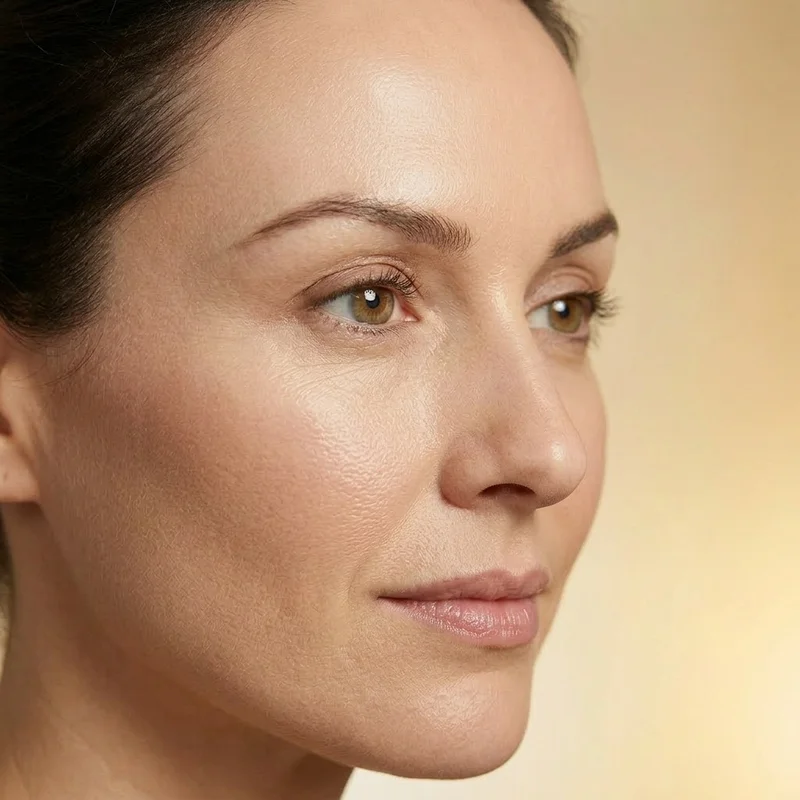
A brow lift is facial surgery that raises a dropped brow and smooths the forehead by repositioning the brow tissue and weakening the muscles that pull it down. It lifts brows that have sunk below the bony rim of the eye socket and softens the horizontal forehead lines and vertical frown lines between the brows. Also called a forehead lift, it is usually done under general anaesthesia in about 1 to 2 hours, and because the muscle weakening is structural, the result often lasts many years.
The brow drops slowly with age, so the upper face can look tired even when you feel fine. A common worry is a permanently startled look, but a careful lift moves the brow only a few millimetres, enough to clear the weight from the upper lid without changing your expression.
Results vary, and the aim is a natural brow position, not an arch that was never there. If hooded upper lids are part of the picture, your surgeon will say at consultation whether a brow lift alone is enough or whether eyelid surgery would help too.
It can address a range of concerns, including:
Am I a Good Candidate for Brow Lift?
Suitability for a brow lift comes down to where the heaviness originates, your hairline, and whether you want structural rather than injectable-scale change.
Good candidates have upper-face ageing that is positional, brows that have physically dropped, rather than surface lines alone.
Low, heavy brows: brows that have descended enough to create a tired or stern appearance are the core indication.
Persistent creases: horizontal forehead lines that remain at rest become significantly shallower once the lift and muscle work are done.
Frown lines: the vertical lines between the brows are permanently softened through corrugator weakening.
Brow asymmetry: one brow sitting noticeably lower than the other can be corrected during the same procedure.
Hooded upper lids have two possible causes, and the right operation depends on which one you have.
Brow descent: when a dropped brow is pushing skin over the lid, a brow lift alone can clear the hooding.
Lid skin excess: when the excess sits in the lid itself, blepharoplasty is needed, sometimes alongside the lift.
Both together: the brow and lid frequently contribute at the same time, so surgeons assess them as a unit to avoid an unbalanced correction.
Botox plateau: patients having regular forehead Botox who are still unhappy with brow position are textbook surgical candidates.
Your hairline decides which approach is open to you, and in some cases whether the standard ones are at all.
High hairline: a very high natural hairline rules out the coronal approach, which raises the hairline further still.
Pretrichial option: patients with a high forehead can still be candidates via a hairline incision that lifts the brow while actually shortening the forehead.
Temple thinning: noticeable thinning at the temples conflicts with where the endoscopic incisions sit.
Low forehead: a low hairline tolerates the coronal approach well and can even benefit from the slight lift it gives the hairline.
The medical gates here are lighter than for bigger lifts, but a few procedure-specific ones matter.
Migraines and scalp sensitivity: frequent migraines or significant scalp sensitivity are explicit cautions for this operation.
Smoking: scalp blood flow drives incision healing, so a stop of at least four weeks before surgery is required.
Botox disclosure: previous forehead Botox must be mentioned at consultation, because it affects how the muscles are assessed and the surgery is planned.
General health: candidates need no uncontrolled medical conditions, with blood thinners paused two weeks before surgery.
A brow lift moves the brow only a few millimetres, and the most common fear about it is a planning issue rather than an inevitability.
No startled look: the surprised appearance comes from over-elevation or complete muscle division, both avoidable with conservative planning; the aim is a restored position, not a new arch.
Structural change: this is a bigger commitment than injectables, so anyone wanting an injectable-style subtle tweak should not book surgery.
Long duration: results often hold for many years, and the frown-line reduction is permanent.
Settling period: the brow sits slightly high at first and settles into its final position over around three months.
Who is not suitable for brow lift?
- Expecting an injectable-style subtle tweak rather than a structural lift
- Very high natural hairline where a coronal approach is planned
- Frequent migraines or significant scalp sensitivity not yet discussed with the surgeon
- Noticeable temple hair thinning over endoscopic incision sites
- Smokers unwilling to stop four weeks before surgery
- Wanting a dramatic new arch rather than a restored natural position
- History of keloid or hypertrophic scarring, given the scalp and hairline incisions involved
Pricing
How Much Will Brow Lift Cost in Thailand?
What brow lift costs at accredited hospitals in Thailand, and what your final quote depends on.
Get your exact price
Tell us what you're considering and we'll send a personalised quote from accredited hospitals within 24 hours.
Get my free quoteTypical prices in Thailand
Typical ranges based on recent hospital quotes. Your exact price depends on the hospital and how complex your case is, and is confirmed at your teleconsultation.
Brow Lift
A dropped brow is lifted and the forehead smoothed by repositioning the brow tissue, through techniques ranging from a small temple incision to a full endoscopic lift.
| Temporal brow lift Day case The outer brow raised through a small incision at the temple, under local anaesthetic as a day case | $1,600 ฿55,000 |
| Endoscopic brow lift 1 night The whole forehead and brow lifted through keyhole incisions behind the hairline | $4,700 ฿159,000 |
| Endoscopic forehead and brow lift with Endotine 1 night The same endoscopic lift held in place with an absorbable Endotine fixation device | $8,100 ฿276,000 |
Typically not included
- A coronal lift or a combined brow and eyelid case is quoted individually rather than at this package price
- Any device not named in the package. The Endotine fixation is named and included, anything else is not
- Intensive care or any night beyond the one stated in the package
- Pre-operative medical clearance and fitness assessment
- Specialist consultant fees outside the operating surgeon
- Pathology and pathologist charges on any tissue removed
Get your exact price
Tell us what you're considering and we'll send a personalised quote from accredited hospitals within 24 hours.
Hospitals Trusted for Brow Lift
From internationally accredited flagships to dedicated specialist hospitals, these are the kinds of facilities where international patients have this procedure.

Masterpiece Hospital
A cosmetic surgery specialty hospital in Bangkok focused on facial contouring, rhinoplasty and eyelid work.
View hospital profile
Kamol Cosmetic Hospital
The only specialist cosmetic surgery hospital in Thailand to hold JCI accreditation.
View hospital profile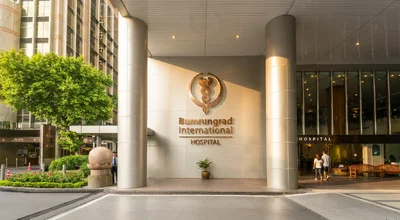
Bumrungrad International Hospital
Southeast Asia's flagship private hospital, treating over 520,000 international patients a year.
View hospital profile
Get a Free Quote in Two Minutes
Tell us what you're considering. We'll match you with suitable specialists and provide real hospital pricing.
- Honest pricing with no markups
- Matched to a specialist for your procedure
- No obligation, no pressure


Rated 5 stars by our patients
The complete guide to Brow Lift in Thailand
Everything below is for readers who want the full detail: costs broken down, types and techniques, recovery, risks and safety, and planning your trip.
Brow Lift Surgeons & Clinics in Thailand
A brow lift is a precise procedure where small differences in elevation and muscle management separate a good result from a mediocre one. Here is what to look for when choosing where and with whom to have it done.
Leading Hospitals in Bangkok
Our partner hospitals are JCI-accredited and operate dedicated plastic surgery departments with full-time specialists. These leading Bangkok hospitals have endoscopic equipment, onsite monitoring, and the capacity to manage any complication without transfer. For a procedure like brow lift, a hospital setting provides a level of safety infrastructure that standalone aesthetic clinics typically cannot match.
Experienced Brow Lift Surgeons
Our partner surgeons hold Thai Board certification in plastic and reconstructive surgery, the equivalent of FRACS, ABPS, or GMC specialist registration. Brow lift is frequently performed alongside blepharoplasty and facelift, so these surgeons understand how the upper face interacts as a unit rather than treating the brow in isolation. That integrated perspective is important because over-lifting the brow while ignoring the eyelids, or vice versa, produces an unbalanced result.
What to Look for in a Surgeon
Board certification is the starting point. Ask specifically about their brow lift volume and whether they perform endoscopic work regularly, the technique requires different skills from open surgery. Request before-and-after photos of patients with a similar degree of brow descent to yours, taken at least three months post-operatively so you are seeing settled tissue rather than early swelling. If a surgeon's portfolio only shows dramatic transformations, ask to see subtle cases too. The most technically difficult thing about a brow lift is knowing when to stop.
Understanding Your Results
Brow lift results are permanent and become apparent quickly, but the final settled position takes around three months to establish fully.
Typical Brow Lift Results
A brow lift elevates the brow line by several millimetres, enough to clear upper lid hooding and open the eye area without creating an artificial arch. Horizontal forehead lines become significantly shallower, and the vertical frown lines between the brows are permanently softened through muscle weakening. The overall effect is a rested, less heavy upper face. Results often last many years, with the brow ageing gradually from its new, higher baseline position.2
What Results Can You Expect?
Most patients see the majority of their result within the first month. The brow sits slightly high initially and settles into its permanent position over weeks two to eight. During your consultation, your surgeon will assess brow position, forehead height, skin thickness, and muscle activity to determine how much lift is appropriate and which technique will achieve it. If your upper eyelids also need attention, the surgeon should tell you whether a brow lift alone will resolve the hooding or whether blepharoplasty is needed alongside it.
Brow Lift Cost in Thailand
Average Cost of a Brow Lift
A brow lift in Thailand is priced by technique, so the figure spans a wide range. The simplest version, a temporal brow lift that raises the outer brow through a small incision at the temple under local anaesthetic as a day case, is around ฿55,000, about $1,620, at the general run of Thai cosmetic prices. A full endoscopic brow lift, which lifts the whole forehead and brow through keyhole incisions behind the hairline with one night in hospital, is around ฿159,000 at those same market rates. At the premium end, an accredited hospital charges ฿276,000, about $8,118, for an endoscopic forehead and brow lift held with an absorbable Endotine fixation device, one night included. Which technique your case needs is what sets the price, and the ฿276,000 rate is that hospital's fly-in quote, valid to 31 December 2026.
Cost Breakdown
At the premium end, the accredited hospital's ฿276,000 figure covers the operating theatre and recovery room, the medical supplies and the medication for the operation itself, the surgeon and anaesthetist teams, and a standard room with nursing care and meals for the night, with the Endotine device named in the package rather than billed on top. The lighter temporal and endoscopic techniques come in lower partly because they involve a shorter, often day-case procedure with less or no time in hospital. Across all three, several things sit outside the quoted figure, including pre-operative medical clearance, laboratory tests and other investigations, consultations with specialists outside the operating surgeon, medication for conditions you already take, and any night beyond the one stated.
What Affects the Price?
The main lever is which technique you have. A temporal lift that treats only the outer brow through a small incision sits at the bottom of the range, a full endoscopic lift of the whole forehead sits in the middle, and an endoscopic lift held with an Endotine device at an accredited hospital sits at the top. Where you have the surgery matters too, since an accredited private hospital bundles the theatre, the room, the night and both surgical teams into one number, while cosmetic rate cards commonly publish a fee with the inclusions left unstated, so the two are not the same kind of figure. Work out what each number actually buys before you compare them. Beyond that, combining a brow lift with upper eyelid surgery costs more than either alone while costing less than staging them as two trips.
Thailand vs International Price Comparison
A brow lift runs $5,600–$10,000 in the US, £4,400–£7,600 in the UK and A$5,200–A$9,000 in Australia. Thailand covers a far wider span. A temporal brow lift at around ฿55,000, roughly $1,620, sits well below every one of those ranges, and a full endoscopic lift at around ฿159,000 still comes in under them. Only at the premium end, an endoscopic lift with Endotine at an accredited hospital for about $8,118, does the Thai figure climb into the upper half of the US and UK ranges and above Australian private pricing once converted. So the saving depends on the technique your case needs. A lighter lift undercuts home comfortably, while the most involved version at an accredited hospital is priced for the facility and the fixation rather than to beat a quote at home.
Surgical vs Non-Surgical Brow Lift
A non-surgical, or "liquid", brow lift uses botulinum toxin (Botox) to relax the muscles that pull the brow down, letting the muscles that lift it win out. The result is a subtle elevation of a few millimetres, mostly at the outer brow, alongside smoother frown and forehead lines. It takes minutes, needs no incisions and no downtime, and is a reasonable first step when the heaviness is mild or you want to see what a small lift feels like before committing.
The limits are real, though. Botox relaxes muscles; it does not reposition tissue, so it cannot lift a brow that has genuinely dropped below the bony rim, clear true upper-lid hooding, or shorten or reshape the forehead. The effect is temporary, fading over roughly three to four months, so it needs repeating several times a year to maintain. Dermal filler and thread lifts are sometimes offered for the brow too, but they give modest, short-lived results and carry their own risks in this delicate area.
For a lasting lift, a structural change rather than a surface one, or anything injectables can no longer manage, surgical brow lift is the route. It physically repositions the brow and weakens the down-pulling muscles permanently, with results that typically hold for many years, and that is what the rest of this page covers.
Types of Brow Lift
The right approach depends mainly on your hairline position, how much lift is needed, and whether the problem is across the full brow or concentrated at the outer edges. Each type addresses a different combination of these factors.
Endoscopic Brow Lift
The most commonly performed version. Three to five small incisions behind the hairline allow camera-guided access to the brow tissues. The surgeon releases the brow from its attachments, weakens the frown muscles, lifts the tissue, and fixes it in the new position with absorbable anchors or small screws. Minimal scarring and a lighter recovery than open approaches.
- 3–5 small incisions hidden behind the hairline, no long scar
- Camera guidance gives precise muscle and tissue control
- Absorbable fixation devices hold the brow while it heals in position
- Best for: mild to moderate brow descent with a normal or low hairline
Coronal Brow Lift
A single ear-to-ear incision across the top of the scalp allows the surgeon to lift the entire forehead as a unit. More invasive than endoscopic, but it gives the greatest access for severe drooping and deep creases. The incision raises the hairline slightly, which can actually benefit patients with a low forehead but rules it out for those with a high one.
- Maximum control for severe brow descent and deep forehead lines
- Removes a strip of scalp to lift the entire forehead
- Raises the hairline, beneficial for low foreheads, problematic for high ones
- Best for: significant brow ptosis where endoscopic lift would not achieve enough elevation
Temporal (Limited Incision) Brow Lift
Targets only the outer brow through small incisions at the temples. This lifts the tail of the brow, the part of the brow that often drops first and contributes to lateral hooding, without touching the central forehead. Often done alongside upper blepharoplasty when the outer brow and upper lid both contribute to a heavy, hooded appearance.
- Addresses the outer brow only, the area most prone to early descent
- Shortest recovery of the three approaches
- Pairs well with upper eyelid surgery for a combined upper-face correction
- Best for: lateral brow descent without significant central forehead ageing
Direct Brow Lift
The most targeted option, lifting the brow through an incision placed just above the eyebrow itself rather than in the scalp. A strip of forehead skin directly above the brow is removed and the brow is fixed at its new height. It gives very precise, reliable elevation and avoids any scalp dissection, but it leaves a fine scar at the upper edge of the brow, so it is usually reserved for patients where that scar will sit in a natural skin crease or hide within bushy brow hair, and for cases where a strong, dependable lift matters more than a hidden incision.
- Incision sits just above the brow, giving direct, precise control of brow height
- No scalp dissection, so it suits high hairlines and thinning hair
- Leaves a fine scar at the upper brow edge that fades but can remain faintly visible
- Best for: older patients, heavier brows, or facial-nerve-related brow droop where a dependable lift outweighs scar concerns
Brow Lift Techniques
The technique your surgeon uses depends on where the brow has dropped, how deep the forehead lines run, and whether your hairline position creates any constraints. Here is what is commonly used and why each approach exists.
Endoscopic Fixation Methods
After lifting the brow tissue, it needs to be held in place while it heals. Surgeons use either absorbable Endotine devices that anchor the tissue to the bone and dissolve over months, or small titanium screws removed at follow-up. Endotine is more common because it dissolves over time and avoids a removal appointment. In the long run, the fixation method matters less than the quality of the lift itself.
- Endotine: absorbable, no removal needed, may be palpable under the skin for a few months
- Titanium screws: strong fixation, removed at follow-up, no long-term hardware
- Both achieve equivalent final brow position once healing completes
- Best for: selected based on tissue thickness and the degree of lift required
Corrugator and Procerus Muscle Weakening
The muscles that pull the brow down and inward, corrugator supercilii and procerus, are partially weakened or divided during surgery. This is the surgical equivalent of what Botox does temporarily, except the effect is permanent. Weakening these muscles smooths the vertical frown lines between the brows and reduces the downward pull that caused the descent in the first place.
- Corrugator weakening reduces vertical frown lines (the "11s") permanently
- Procerus division smooths the horizontal line across the bridge of the nose
- Partial weakening preserves some ability to frown, full division can look unnatural
- Best for: included in most brow lifts where frown lines are a significant concern
Hairline (Pretrichial) Incision
For patients with a high forehead, a standard brow lift raises the hairline further, the opposite of what is wanted. A pretrichial incision runs along the front edge of the hairline, allowing the surgeon to lift the brow while shortening the forehead. The trade-off is a fine scar at the hairline that takes several months to fade. Hair grows through it over time, which helps conceal it.
- Lifts the brow without raising the hairline, actually lowers it
- Reduces forehead height by removing a strip of forehead skin
- Fine scar along the hairline fades over 3–6 months as hair grows through
- Best for: patients with a high forehead who need brow elevation without adding more forehead length
Brow Lift Recovery Timeline
Days 1–3
Swelling concentrates across the forehead and often tracks down to the upper eyelids and bridge of the nose. A mild headache-like tightness is common. You will rest at your hotel with head elevation, cold compresses, and prescribed medication. Your care coordinator checks in daily during this phase.
Days 4–7
Swelling drops noticeably and bruising around the eyes begins to shift from purple to yellow. Sutures or clips are removed around day 7 at your follow-up appointment. Most patients feel well enough for short walks and light meals out by day five. The brow may sit slightly higher than its final position. This settles over the coming weeks.
Weeks 2–4
Bruising clears and the brow begins settling toward its permanent position. You can return to desk work and social activity. Numbness or tingling across the forehead is normal and gradually improves. Avoid anything that raises blood pressure significantly until your surgeon gives clearance.
Months 1–3
Remaining swelling resolves and the brow reaches its final resting position. Incision scars within the hairline fade from pink to near-invisible. Scalp sensation returns progressively. By three months, the result is essentially settled, a lifted, smoother upper face without any visible evidence of surgery.
When Can You Fly After a Brow Lift?
Most patients are cleared to fly 7–10 days after surgery, once sutures or clips have been removed and your surgeon has confirmed that healing is on track. Cabin pressure at cruising altitude is safe at this stage and does not affect the surgical result. Some patients notice mild forehead puffiness during the flight from reduced movement and dry cabin air. This is temporary and resolves within a day of landing. The shorter flight clearance compared to rhinoplasty or facelift reflects the lighter nature of this procedure.
When Can You Return to Work and Exercise?
Desk work is manageable for most patients within 7–10 days, once bruising has faded enough to feel comfortable on camera or in the office. Light walking is encouraged from day one. Gym sessions, running, and anything that significantly raises blood pressure should wait until 3–4 weeks post-surgery to avoid provoking swelling around the healing tissues. Contact sports and heavy lifting need at least 6 weeks. Hair colouring should be postponed for 4–6 weeks to avoid chemical irritation near the incisions.
When Will You See Final Results?
The brow will appear slightly higher than its final position immediately after surgery. This is intentional, as some settling occurs over the first few weeks. By one month, the brow is close to its permanent position. Forehead lines are visibly smoother once swelling clears. The settled result at three months is essentially the final outcome. Scalp numbness around the incisions resolves gradually, with most patients regaining full sensation within three to six months.
Anaesthesia for a Brow Lift
A brow lift in Thailand is performed under general anaesthesia, so you are fully asleep and feel nothing during the operation.3 A consultant anaesthetist stays with you throughout and monitors you continuously, which is standard at the accredited hospitals we work with. Being fully under also keeps you completely still while the surgeon works through small incisions in the scalp, which matters for precise, even brow positioning.
Your surgeon and anaesthetist decide the plan together based on your medical history, and on whether the brow lift is done on its own or combined with upper eyelid surgery in the same session. Combining procedures means one anaesthetic and one recovery rather than two. If you have ever reacted badly to a general anaesthetic, raise it at consultation so it can be planned around.
Before you are cleared you have a pre-operative assessment, including blood tests and a review of any medications you take. You feel nothing during surgery, and the discomfort once you wake is mild: most patients describe a headache-like tightness across the forehead rather than sharp pain, and it is well controlled with the medication your surgeon prescribes.
Risks and Safety of Brow Lift Surgery
Like any surgery under general anaesthesia, a brow lift carries risks. It involves the scalp and tissues close to sensory nerves, so it is worth understanding these clearly.
- Temporary numbness or altered sensation across the forehead and scalp (common, resolves over weeks to months)1,2
- Asymmetry in brow height that may require minor adjustment
- Temporary hair loss around incision sites, particularly with coronal technique (usually regrows as healing completes)2,1
- Infection at the incision site (uncommon with proper sterile technique)1
- Over-elevation creating a surprised or unnatural expression (avoidable with conservative surgical planning)
- Visible scarring at the hairline, particularly with pretrichial technique
- Keloid or hypertrophic scarring at the scalp or hairline incisions in patients with a scarring tendency
- Haematoma requiring drainage (rare)
- Injury to the frontal branch of the facial nerve affecting brow movement (very rare at experienced centres)2,1
The most talked-about risk, looking "surprised", is almost entirely a planning issue rather than a surgical one. Conservative elevation and muscle weakening rather than complete division are what prevent it. Choosing a surgeon who operates on the upper face regularly is the single most effective way to reduce all of these risks.
Is Brow Lift Surgery Safe in Thailand?
Yes. At JCI-accredited hospitals with board-certified plastic surgeons, brow lift surgery in Thailand meets the same clinical and safety standards as the UK, US, and Australia. Like any surgery under general anaesthesia it carries risks, which your surgeon reviews with you beforehand. Thailand's leading hospitals maintain strict infection-control protocols, dedicated plastic surgery units, and full onsite monitoring capability.
How to Reduce Risks
Choose a JCI-accredited hospital over a standalone clinic, the safety infrastructure is fundamentally different. Verify your surgeon holds Thai Board certification in plastic and reconstructive surgery and performs brow lifts as part of their regular workload. Stop smoking at least four weeks before surgery, as scalp blood flow matters for incision healing. Discontinue aspirin, ibuprofen, and blood-thinning supplements two weeks prior. If you have had previous Botox to the forehead, mention this during your consultation, it can affect muscle assessment and surgical planning.
When Is Revision Needed?
Revision after brow lift surgery is uncommon. The most frequent reason is brow asymmetry that becomes apparent once all swelling has resolved, which can often be corrected as a minor procedure under local anaesthesia. Recurrence of brow descent can occur over many years as ageing continues, though this is not a revision scenario, it is normal ageing beyond the multi-year result window. Wait at least three to four months before evaluating whether any adjustment is needed, as the brow continues to settle during this period.
Planning Your Trip to Thailand for a Brow Lift
A brow lift is one of the easiest facial procedures to plan around a trip. The shorter recovery means a 7–10 day stay covers everything comfortably.
How Long to Stay in Thailand
Plan for 7–10 days. Day one covers your consultation and pre-operative assessment. Surgery is typically scheduled for day two, with most patients discharged the same day or after one night. The remaining days are spent recovering at your hotel with scheduled check-ins, suture removal around day seven, and a final follow-up before your surgeon clears you to fly. The shorter stay compared to facelift or rhinoplasty reflects this procedure's lighter recovery demands.
What's Included in a Medical Trip
Your care coordinator manages hospital transfers, surgery scheduling, and all follow-up appointments. The surgical quote covers surgeon fees, anaesthesia, facility charges, and post-operative care including medications and suture removal. Flights and accommodation are arranged separately, but your coordinator can recommend hotels close to the hospital. Most patients recover comfortably in a hotel room, no special post-operative facility is needed after discharge.
Recovery in Bangkok vs Phuket
Bangkok is the practical choice for the first week. Suture removal, follow-up checks, and any unexpected concerns are handled quickly when you are close to the hospital. Because brow lift recovery is lighter than most facial surgery, some patients relocate to Phuket after their sutures are out for a few days of rest before flying home. That works, but only once your surgeon has confirmed healing at the post-operative check. For the first seven days, stay close to your surgical team.
Related Procedures
Other procedures that address similar goals or conditions, in case one of them is a closer fit for you.
Planning your treatment in Thailand
Independent guides to help you weigh the decision, before you commit to anything.
Common Questions About Brow Lift
Everything you need to know before your procedure

Medical References
Keep researching with AI
Open this guide in your AI assistant to dig deeper and ask the questions it didn't answer.
Opens in a new tab with this guide already loaded.
Medical disclaimer: This information is for educational purposes only and does not replace professional medical advice. Individual results, recovery times, and suitability vary. Always consult a qualified surgeon before making decisions about treatment.
Ready to Get Started?
Speak with our care coordinators for a free, no-obligation consultation and personalised quote.
Speak to Our Team