Breast Augmentation in Thailand Your guide to cost, top surgeons & hospitals
The right implant on the right frame is invisible. You just look like you, only more proportional.
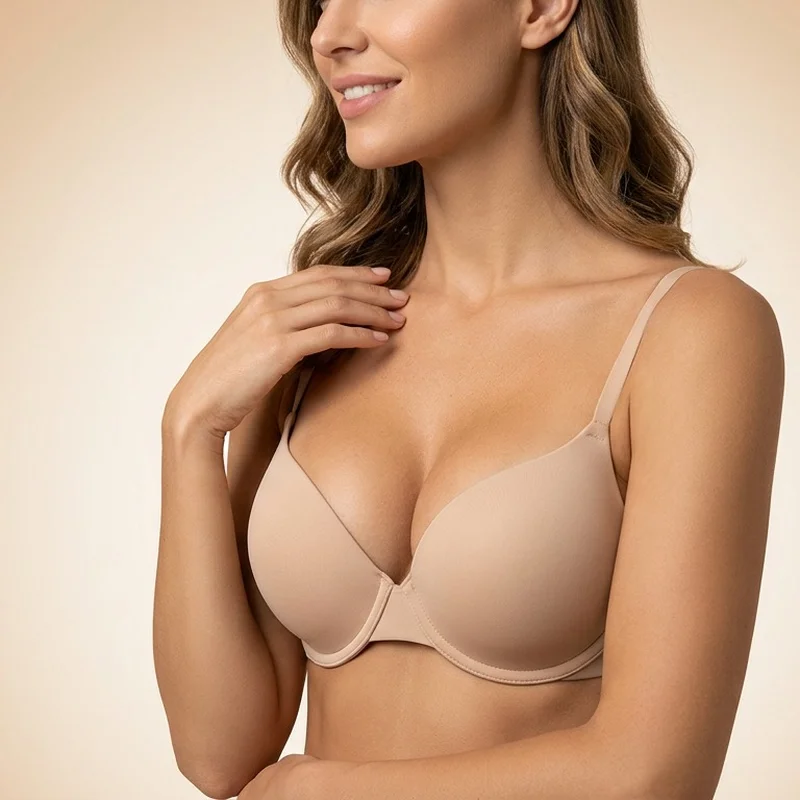
What Is Breast Augmentation?
Also known as: Boob Job · Augmentation Mammoplasty
Breast augmentation is surgery that increases the size of the breasts and improves their shape, using silicone or saline implants placed behind the breast tissue or chest muscle. It can add fullness, improve projection, and restore volume lost after pregnancy or weight change. The implants go in through a small incision, usually hidden in the breast crease or around the areola, under general anaesthesia in about one to two hours. It is one of the most well-studied cosmetic procedures in the world, with decades of safety data behind it.
The right result is personal. The size and shape of the implant, where it sits, and your own body all decide how natural the breasts look and feel afterwards. Your surgeon works through these choices with you so the result suits your frame, rather than fitting everyone to the same template.
Done well, the aim is breasts that look in proportion with the rest of you and feel like your own, not obviously enhanced.
It can address a range of concerns, including:
Am I a Good Candidate for Breast Augmentation?
Augmentation results depend on matching the implant to your anatomy and your life stage; here is what surgeons assess at consultation.
Breast tissue needs to be fully developed and properly assessed before an implant can be planned reliably.
Completed development: Surgeons want breast growth finished before placing implants; a breast that is still changing makes sizing guesswork.
Under 22: Not an absolute bar, but caution applies under 22 where tissue has had limited assessment so far.
Sizing at consultation: Final implant decisions are made in person with measurements, trial sizers, and 3D imaging, not beforehand from photos of other patients, so allow time for that step.
The implant has to fit your chest, not just your wish list, and surgeons measure before they recommend.
Chest width: Your chest measurements largely determine which implant base width and profile will look proportional rather than obviously surgical.
Tissue coverage: Thin tissue points toward submuscular or dual-plane placement to reduce visible edges and rippling; adequate coverage opens up subglandular options.
Realistic sizing: A clear preference for a size much larger than your chest width can support is a caution flag, and a good surgeon will push back rather than accommodate it.
Learn how surgeons choose between over and under the muscle placement
Pregnancy and nursing change breast tissue, so surgeons ask about your plans before agreeing a surgery date.
Finished having children: The ideal candidate has completed her family, or is comfortable with how implants interact with breastfeeding.
Nursing timeline: Planning to breastfeed within the next 6-12 months is a reason to delay surgery.
Future breastfeeding: Most women with implants can breastfeed; submuscular placement and inframammary incisions carry the lowest risk to milk ducts, so raise it at consultation if it matters to you.
General health determines how safely you heal around a new implant pocket.
Stable weight: Good general health with a stable body weight is the baseline; fluctuations change how the implant sits on your frame.
Non-smoker: You need to stop smoking at least 4 weeks before surgery, because nicotine impairs blood flow to the healing tissue around the implant pocket.
Family history: A strong family history of breast cancer that has not been screened or worked up needs assessment before cosmetic surgery proceeds.
Implants are long-lasting devices, not lifetime ones, and surgeons want candidates who accept what follows surgery.
10-20 year lifespan: Modern implants are built to last 10-20 years; many patients never need replacement, but you should plan as if you might.
Capsular contracture: The most common long-term complication is scar tissue tightening around the implant; placement and implant choices influence the risk.
Ongoing monitoring: Routine checks with your doctor at home, usually ultrasound or MRI every few years, are the standard recommendation for catching silent ruptures early.
Who is not suitable for breast augmentation?
- Breasts still developing, or under 22 without a thorough tissue assessment
- Planning to breastfeed within the next 12 months
- Unscreened strong family history of breast cancer
- Weight not yet stable
- Smokers unwilling to quit 4 weeks before surgery
- Set on a size far beyond what the chest width can support
- Body dysmorphic disorder or unrealistic expectations
- Previous radiation to the breast or chest wall, which impairs healing and raises capsular contracture and wound-breakdown risk
- Active or untreated breast cancer, or an un-investigated suspicious breast lump
Pricing
How Much Will Breast Augmentation Cost in Thailand?
What breast augmentation costs at accredited hospitals in Thailand, and what your final quote depends on.
Get your exact price
Tell us what you're considering and we'll send a personalised quote from accredited hospitals within 24 hours.
Get my free quoteTypical prices in Thailand
Typical ranges based on recent hospital quotes. Your exact price depends on the hospital and how complex your case is, and is confirmed at your teleconsultation.
Breast Augmentation
Silicone or saline implants are placed behind the breast tissue or chest muscle through a small hidden incision to add fullness and improve shape.
| Breast augmentation with gel or saline implants, implants not included 1 night The standard operation with one night in hospital, with the implants themselves priced separately | $5,600 ฿190,000 |
| Endoscopic breast augmentation, implants not included 1 night Placed with endoscopic assistance for a more direct view of the pocket, also with one night in hospital | $5,900 ฿202,000 |
Typically not included
- The breast implants themselves, which are quoted separately and are not optional
- Intensive care beyond the one night stated in the package
- Pre-operative medical clearance and fitness assessment
- Pathology and pathologist charges on any tissue removed
- Specialist consultant fees outside the operating surgeon
Get your exact price
Tell us what you're considering and we'll send a personalised quote from accredited hospitals within 24 hours.
Hospitals Trusted for Breast Augmentation
From internationally accredited flagships to dedicated specialist hospitals, these are the kinds of facilities where international patients have this procedure.
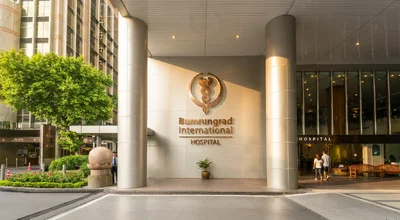
Bumrungrad International Hospital
Southeast Asia's flagship private hospital, treating over 520,000 international patients a year.
View hospital profile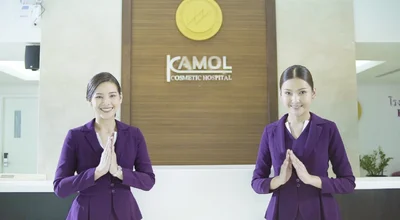
Kamol Cosmetic Hospital
The only specialist cosmetic surgery hospital in Thailand to hold JCI accreditation.
View hospital profile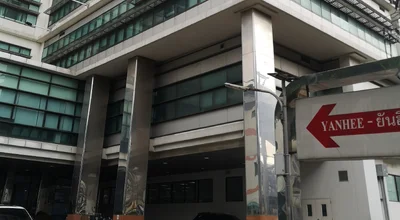
Yanhee International Hospital
A 400-bed hospital known worldwide for high-volume cosmetic surgery.
View hospital profile
Get a Free Quote in Two Minutes
Tell us what you're considering. We'll match you with suitable specialists and provide real hospital pricing.
- Honest pricing with no markups
- Matched to a specialist for your procedure
- No obligation, no pressure


Rated 5 stars by our patients
The complete guide to Breast Augmentation in Thailand
Everything below is for readers who want the full detail: costs broken down, types and techniques, recovery, risks and safety, and planning your trip.
Breast Augmentation Surgeons & Clinics in Thailand
Implant selection gets the attention, but surgeon skill is what determines whether the result looks balanced or obviously augmented. Here is what to look for.
Leading Hospitals in Bangkok
Our partner hospitals are JCI-accredited international facilities with dedicated plastic surgery departments. They maintain permanent surgical teams, not visiting consultants on rotation. Equipment includes 3D sizing simulation, a full range of implant brands and profiles in stock, and onsite capacity to handle complications without referral elsewhere.
Experienced Breast Augmentation Surgeons
Our partner surgeons hold Thai Board certification in plastic and reconstructive surgery. Many trained internationally, with fellowships in the US, South Korea, or Europe, and returned to Thailand where the surgical volume is higher. Augmentation is a procedure where high caseloads matter, because sizing judgment improves with experience across different body types. Ask about their typical weekly volume and their preferred techniques for your specific anatomy.
What to Look for in a Surgeon
Board certification is the baseline. Beyond that, ask to see before-and-after photos of patients with a similar body type and starting point to yours, with the same chest width and similar tissue coverage. Pay attention to whether the results look proportional or oversized. A good surgeon will steer you away from an implant that is too large for your frame rather than just giving you whatever size you ask for. That willingness to push back is a positive sign.
Understanding Your Results
Augmentation results are immediately visible but take months to fully settle. Here is what to expect at each stage.
Typical Breast Augmentation Results
Augmentation adds volume, improves projection, and fills out the upper pole. A well-matched implant produces a result that looks like a naturally fuller version of your breasts, not an obvious addition. Symmetry improves but perfect symmetry is rarely achievable because most patients start with some natural asymmetry. The result is permanent as long as the implants remain intact, though breasts will continue to age and change with gravity and weight fluctuations.
What Results Can You Expect?
Within the first week you will see a clear increase in size, but the shape is not final. Implants sit high and look rounded initially. Over 3–6 months, they drop into position and the lower pole fills out to create a more natural contour. Your surgeon will use sizing tools and, in many cases, 3D imaging during consultation to show you a simulated outcome based on your measurements. That consultation is where sizing decisions should be finalised, not beforehand based on photos of other patients.
Breast Augmentation Cost in Thailand
Average Cost of Breast Augmentation
Our partner hospital publishes two breast augmentation packages. The standard operation with gel or saline implants is ฿190,000 with one night in hospital, about $5,588, and the endoscopic version is ฿202,000, about $5,941. Both figures are for the surgery only. The implants are excluded from the package and quoted separately, which matters more here than on almost any other procedure, because implant choice can move a total by more than the operation itself costs. These are one accredited hospital's published fly-in rates valid to 31 December 2026, and a private hospital sits at the premium end of a very wide Thai cosmetic market.
Cost Breakdown
The package covers the operating theatre and recovery room, the medical supplies and the medication for the operation itself, the surgeon and anaesthetist teams, and a standard room with nursing care and meals for the night. The implants are not in it. Neither are pre-operative medical clearance, laboratory tests and other investigations, consultations with specialists outside the operating surgeon, medication for conditions you already take, or intensive care beyond the stated night. Ask for the implant quoted by brand and size alongside the package figure, because a surgery price on its own tells you very little about what you will actually pay.
What Affects the Price?
Two things move it, and only one of them is on the published menu. The ฿12,000 between the standard and endoscopic packages is the technique, since endoscopic assistance gives the surgeon a more direct view of the pocket being made. The larger variable sits outside both figures entirely. Thai cosmetic hospitals that publish a fee varying by implant brand show that spread plainly, with the same operation covering a band of more than ฿180,000 from the cheapest brand to the dearest. No hospital publishes an implant price on its own and we will not put a number on one, so treat the package figure as a floor and get the implant quoted by brand and size before you compare anything. Combining augmentation with a breast lift is a different operation again and is quoted separately.
Thailand vs International Price Comparison
Breast augmentation runs $7,000–$12,500 in the US, £5,500–£9,500 in the UK and A$6,500–A$11,300 in Australia. The two packages, at about $5,588 and $5,941, sit below the American and British floors, but only because the implants are not inside them. Against Australian pricing, which converts to roughly $4,300 to $7,500, the surgery alone already uses up most of the gap. The large Bangkok cosmetic clinics advertise figures for the whole operation that start well below this surgery-only package, so the headline saving on breast augmentation in Thailand is real but it is found there rather than at a JCI-accredited private hospital. Those advertised numbers state no inclusions, though, so a low figure of that kind is a fee rather than a package and the two are not directly comparable.
Implants vs Non-Surgical Breast Enhancement
If you would rather avoid an implant, the genuine alternative is fat transfer, where fat is liposuctioned from the abdomen or thighs, purified, and injected into the breasts. It uses your own tissue, leaves no implant in the body, and feels entirely natural. The catch is scale: fat transfer typically adds around half a cup to one cup size per session, a proportion of the grafted fat is reabsorbed, and you need enough donor fat to harvest, so it suits a modest, natural enhancement rather than a clear jump in size.
Be wary of the truly non-surgical claims. Creams, herbal pills, vacuum suction bras, and "breast enhancement" devices do not reliably increase breast size, and there is no injectable filler or energy device that safely and lastingly enlarges the breast. Anything promising implant-level results without surgery is overstating what it can do.
For a defined increase in size, reliable projection and upper-pole fullness, or correcting significant asymmetry, implants remain the route that delivers a predictable, lasting result in a single operation, and that is what the rest of this page covers. Many patients also combine a smaller implant with fat transfer for a softer, more natural edge, something your surgeon can discuss at consultation.
Types of Breast Augmentation
Implant choice depends on your anatomy, not just personal preference. Chest width, existing breast tissue, and skin elasticity all shape which implant type and placement will produce the best result on your frame.
Silicone Gel Implants
The most popular choice worldwide and in Thailand. Cohesive silicone gel feels closest to natural breast tissue and holds its shape well. Available in round and anatomical (teardrop) profiles. Fifth-generation silicone has an excellent safety record and a natural feel that saline cannot match.
- Most natural feel of any implant type, closest to real breast tissue
- Available in smooth or textured shells, round or anatomical shapes
- If rupture occurs, gel stays contained within the shell (cohesive)
- Best for: most patients wanting a natural feel with predictable shape
Gummy Bear Implants (Form-Stable)
A highly cohesive silicone implant that maintains its shape even if the shell is compromised. Firmer than standard silicone gel, with a teardrop profile that mimics a natural breast slope. The trade-off is a slightly firmer feel and a longer incision for insertion.
- Holds its anatomical shape, less risk of rippling or distortion
- Firmer to the touch than standard silicone gel
- Requires a slightly longer incision due to the stiffer fill
- Best for: patients wanting strong shape retention, especially with limited tissue coverage
Saline Implants
Inserted empty and filled during surgery, which allows fine-tuning of volume and requires a smaller incision. Saline feels firmer than silicone and is more prone to visible rippling in thin patients. If rupture occurs, the body absorbs the saline harmlessly and the deflation is immediately obvious.
- Volume adjustable during surgery for precise symmetry correction
- Smallest incision of any implant type
- More visible rippling in patients with thin tissue coverage
- Best for: patients who prefer no silicone, or where precise volume matching matters
Breast Augmentation Techniques
Technique covers three separate decisions: where the incision goes, where the implant sits, and what profile to use. Each one affects the final look, feel, and recovery differently.
Implant Placement: Submuscular vs Subglandular
Submuscular (under the pectoral muscle) provides more tissue coverage over the implant, reducing visible edges and rippling. Subglandular (over the muscle) gives more immediate projection and avoids the animation distortion that occurs with muscle movement. Dual-plane splits the difference by partially covering the upper implant with muscle.
- Submuscular: better coverage, lower capsular contracture rates, but longer recovery
- Subglandular: faster recovery, no animation distortion, but more visible in thin patients
- Dual-plane: combines upper-pole coverage with natural lower-pole drape
- Best for: submuscular suits thin patients; subglandular suits those with adequate tissue coverage
Incision Approaches
Inframammary (under the breast fold) is the most common, offering direct access and a well-hidden scar. Periareolar (around the nipple border) camouflages the scar but carries a slightly higher risk to nipple sensation. Transaxillary (armpit) leaves no breast scar at all but limits implant size options and requires endoscopic guidance.
- Inframammary: best surgical control, works with all implant types and sizes
- Periareolar: scar blends at the areola border, useful when combining with a lift
- Transaxillary: no breast scar, but restricted to certain implant sizes
- Best for: inframammary suits most patients; periareolar suits augmentation-lift combos
Implant Profile Selection
Profile describes how far the implant projects from the chest wall relative to its base width. Low profile gives subtle fullness, moderate is the most common, and high profile creates maximum projection on a narrower base. Your chest width largely determines which profile gives a proportional result.
- Low profile: wider base, subtle projection; suits broader chests
- Moderate profile: the most commonly chosen balance of width and projection
- High profile: maximum projection from a narrow base; suits narrower frames
- Best for: determined by your chest measurements, not preference alone
Composite (Hybrid) Augmentation
Composite augmentation pairs an implant with fat transfer in the same operation. The implant supplies the volume and projection, while a layer of your own fat is grafted over the top to soften the edges and disguise any rippling. It is the technique surgeons reach for when a patient wants the reliability of an implant but a more natural feel and a smoother upper-pole transition than an implant alone gives on thin tissue.
- Implant provides the size; grafted fat softens the upper-pole edge and feel
- Reduces visible rippling and implant edges in slim patients
- Needs enough donor fat to harvest, and adds liposuction time to the operation
- Best for: thin patients wanting implant volume with a softer, more natural finish
Breast Augmentation Recovery Timeline
Days 1–3
Tightness and pressure across the chest are normal as tissues adjust to the implants. Swelling peaks around day 2–3. You are placed in a surgical support bra from day one and wear it continuously. You will rest at your hotel with prescribed pain relief and daily check-ins from your care coordinator. The implants will sit high initially; this is expected.
Week 1
Bruising begins to fade and discomfort shifts from sharp to dull. Light walking is encouraged. You will have a follow-up appointment around day 7 to check the incisions; any outer dressings are removed then and the thin surgical tape over the incisions is refreshed. That tape usually stays on for the first 2–3 weeks to support the healing scar, then comes off at a later check or peels away on its own. Sutures are usually dissolvable and need no separate removal. Desk-based work is realistic from around 7–10 days, once you are off strong pain relief. Most patients are comfortable with gentle daily activities by the end of week one.
Weeks 2–4
Implants start to drop and settle into a more natural position; this is called 'drop and fluff' and it happens gradually. You can step up to longer walks and lower-body exercise. Keep wearing the support bra day and night; most surgeons advise it for the first 6 weeks. Avoid chest exercises, heavy lifting, and sleeping on your stomach.
Months 2–6
The implants continue settling and softening as the tissue pocket matures. Upper-pole fullness evens out and the final shape emerges. By three to six months, the breasts feel soft and sit in their permanent position. All activities including gym and sports can resume.
When Can You Fly After Breast Augmentation?
Most patients can fly home 7–10 days after surgery, once your surgeon has checked the incisions and confirmed healing is progressing well. Cabin pressure at cruising altitude does not affect breast implants. You may notice mild swelling increase during the flight from reduced movement and pressure changes; this settles within a day or two of landing. Wear your support bra during the flight.
When Can You Return to Work and Exercise?
Desk-based work is manageable from around 7–10 days post-surgery for most patients. Light walking is encouraged from day one to promote circulation. Lower-body exercise can resume after two weeks. Chest exercises, heavy lifting, and anything that engages the pectoral muscles should wait until at least 6 weeks.1 Swimming and contact sports require the same timeframe. The timeline shifts slightly depending on whether your implants are placed above or below the muscle.
When Will You See Final Results?
You will see a noticeable difference immediately after surgery, but the implants sit high and swollen at first. Over the following weeks, they gradually drop into the pocket and the lower pole fills out. This process is commonly called drop and fluff. Most of the settling happens by month three, with the final softness and shape usually visible by six months. Submuscular implants tend to take slightly longer to settle than subglandular.
Anaesthesia for Breast Augmentation
Breast augmentation in Thailand is performed under general anaesthesia, so you are fully asleep and feel nothing during the operation. A consultant anaesthetist stays with you for the whole procedure and monitors your breathing, heart rate, and oxygen continuously, which is standard at the accredited hospitals we work with.
General anaesthesia is the right choice here because the implant is placed through tissue and, in many cases, behind the chest muscle, which would be uncomfortable to do any other way. Your surgeon and anaesthetist confirm the plan together, taking into account your weight, general health, and any medication you take. The operation itself is short, usually one to two hours, so your time under anaesthetic is limited.
Before you are cleared you have a pre-operative assessment, including blood tests and a review of your medical history and medications. You feel nothing during surgery. When you wake, the main sensation is tightness and pressure across the chest rather than sharp pain, and this is well controlled with the medication your surgeon prescribes, easing noticeably over the first few days.
Risks and Safety of Breast Augmentation
Breast augmentation has a strong safety record spanning decades, but it is still surgery and you should understand what can go wrong before committing.
- Capsular contracture: scar tissue tightens around the implant, causing firmness or distortion (most common long-term complication)1,2
- Implant rupture or slow leak (modern cohesive gel largely contains any leak within the shell)
- Temporary or, rarely, permanent changes in nipple sensation
- Asymmetry in size, shape, or implant position requiring assessment
- Infection at the incision site (rare with proper sterile technique)
- Implant malposition: sitting too high, too low, or too far apart
- Visible rippling, particularly in thin patients with subglandular placement
- Need for implant replacement or revision over time
Most risks are influenced by implant selection, placement choice, and tissue coverage rather than by luck. A thorough sizing and planning consultation is the single biggest factor in avoiding problems down the line.
Is Breast Augmentation Safe in Thailand?
Yes. Breast augmentation at JCI-accredited hospitals in Thailand meets the same safety and infection-control standards as the US, UK, and Australia. Our partner surgeons are certified by the Thai Board of Plastic and Reconstructive Surgery and use FDA-approved or equivalent implant brands. The procedure has decades of safety data behind it, and complication rates at accredited facilities here are consistent with published international figures.
How to Reduce Your Risk
Choose a JCI-accredited hospital over a boutique clinic. The infrastructure for managing complications is fundamentally different. Verify your surgeon holds Thai Board certification in plastic surgery specifically, not general surgery. Discuss implant brand and placement options in detail during consultation and ask why they are recommending a particular combination for your anatomy. Complete all pre-operative blood work. Stop smoking at least four weeks before surgery, as nicotine impairs blood flow to healing tissue around the implant pocket.4,5
When Is Implant Replacement Needed?
Modern implants are not lifetime devices; they are designed to be long-lasting, but future surgery may be needed to replace one or both implants.1,3 The most common reason for revision is capsular contracture, where the scar tissue around the implant tightens and causes firmness or shape distortion. Implant rupture is less common with current-generation cohesive silicone but does occur over long timeframes. Routine monitoring with your doctor at home, usually an ultrasound or MRI every few years, is the standard recommendation for detecting silent ruptures early.2
Planning Your Trip to Thailand for Breast Augmentation
Most patients need 7–10 days in Thailand. Here is how the timeline works and what to organise before you travel.
How Long to Stay in Thailand
Plan for 7–10 days minimum. Day one covers your consultation, sizing session, and pre-operative assessment. Surgery is usually scheduled for day two or three, followed by one night in hospital. The remaining days are spent recovering at your hotel with check-ins, a follow-up appointment to check incisions, and clearance from your surgeon before you fly. If you are combining augmentation with a lift, extend to 10–14 days.
What's Included in a Medical Trip
Your care coordinator handles the logistics: hospital transfers, surgery scheduling, interpreter services if needed, and all post-operative follow-up appointments. Surgical quotes cover surgeon fees, implants, anaesthesia, hospital stay, and aftercare. Flights and accommodation are arranged separately, but your coordinator can recommend nearby hotels and help with bookings to keep everything close to the hospital during recovery.
Recovery in Bangkok vs Phuket
Bangkok is the practical choice for the first week. You are minutes from your hospital for follow-ups and your surgical team is immediately available if something unexpected comes up. After your first follow-up and once healing is confirmed as on track, relocating to Phuket or a resort area for the remainder of your stay is an option. But for the critical early days, convenience and proximity outweigh comfort.
Related Procedures
Other procedures that address similar goals or conditions, in case one of them is a closer fit for you.
Planning your treatment in Thailand
Independent guides to help you weigh the decision, before you commit to anything.
Common Questions About Breast Augmentation
Everything you need to know before your procedure
More About Breast Augmentation

Medical References
- Breast enlargement (augmentation) (NHS)
- Breast Augmentation Safety (American Society of Plastic Surgeons)
- What is the lifespan of breast implants (American Society of Plastic Surgeons)
- Patients Should Stop Using E-Cigarettes before Plastic Surgery, Experts Conclude (American Society of Plastic Surgeons)
- How nicotine sabotages plastic surgery (American Society of Plastic Surgeons)
Keep researching with AI
Open this guide in your AI assistant to dig deeper and ask the questions it didn't answer.
Opens in a new tab with this guide already loaded.
Medical disclaimer: This information is for educational purposes only and does not replace professional medical advice. Individual results, recovery times, and suitability vary. Always consult a qualified surgeon before making decisions about treatment.
Ready to Get Started?
Speak with our care coordinators for a free, no-obligation consultation and personalised quote.
Speak to Our Team