Mini Tummy Tuck in Thailand Your guide to cost, top surgeons & hospitals
If the problem is below your belly button and nowhere else, a mini tuck handles it with half the scar and half the downtime.
What Is Mini Tummy Tuck?
Also known as: Mini Tummy Tuck Surgery · Mini Abdominoplasty
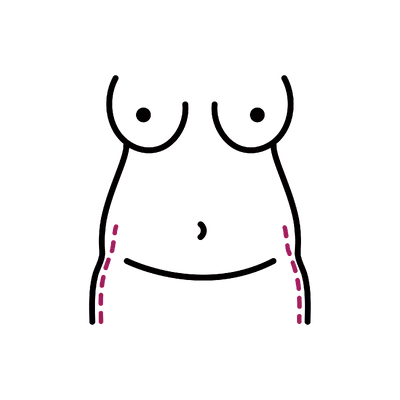
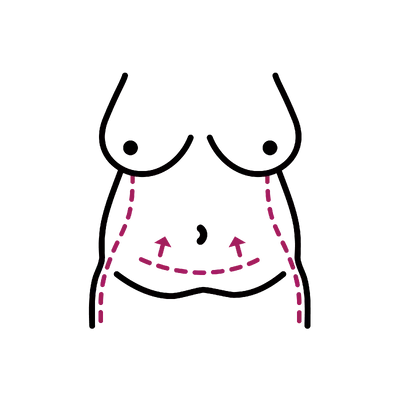
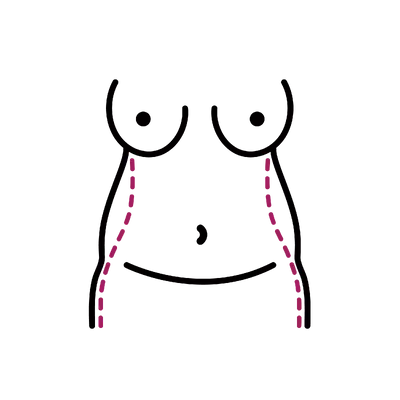
A mini tummy tuck is surgery that flattens the lower abdomen by removing excess skin and fat below the belly button. It treats a stubborn lower pouch and loose skin beneath the navel, often after pregnancy or weight change, and the lower abdominal muscles can be gently tightened at the same time. The incision is short, similar in length to a caesarean scar and tucked low within the bikini line, and the belly button stays in its original position. It usually takes about 1.5 to 2.5 hours under general anaesthesia, and the result lasts well when your weight stays stable.
This is a focused operation, not a smaller version of everything, so feeling unsure whether it fits you is normal. Your surgeon examines the whole abdominal wall and tells you honestly whether your looseness really stops below the navel or reaches higher.
For most people whose looseness sits low, the change is real and recovery quicker than a full tummy tuck. If it reaches above the navel, a full abdominoplasty suits better, and a consultation settles which one you are.
It can address a range of concerns, including:
Am I a Good Candidate for Mini Tummy Tuck?
The mini tuck works brilliantly for a narrow group of patients, so surgeons examine exactly where your laxity sits before recommending it.
This is the defining question, because a mini tuck can only reach the area below the navel.
Below the navel only: Good candidates have skin laxity and concerns limited to the lower abdomen, a pouch that persists despite diet and exercise.
Firm upper abdomen: The upper abdominal wall is left untouched, so it must already be in good shape with no looseness above the belly button.
Mild lower diastasis only: Limited muscle tightening below the navel is possible, but significant or full-length muscle separation needs a full abdominoplasty.
Honest examination: A good surgeon checks the full abdominal wall and tells you plainly if a mini tuck is not enough.
The lower abdominal repair sits exactly where pregnancy stretches, so family planning is part of the suitability assessment.
Family complete: Candidates should have no plans for future pregnancy, since pregnancy can stretch the repair and likely undo the result.
Post-pregnancy timing: A mini tuck is a common choice after pregnancy, including for caesarean scars with overhanging skin, once your body has settled.
Stable for months first: Ideally you have completed your family and maintained a stable weight for several months before surgery.
This procedure refines, it does not reduce, so surgeons want your weight settled before they excise skin.
At or near target: Good candidates are at or near their target weight when they book surgery.
Not actively changing: Weight still moving in either direction is a caution sign, since it changes how the lower abdomen will sit after surgery.
Bariatric timing: If you are within 6-12 months of bariatric surgery, surgeons will ask you to wait until your weight has fully stabilised.
The most common problem with this procedure is not a complication, it is the wrong patient choosing it.
Lower abdomen only: The result is a flat profile below the navel. The upper abdomen, flanks, and waistline look the same as before unless liposuction is added.
Right-sized correction: If your laxity is genuinely limited to below the navel, the result is excellent, with a short bikini-line scar and roughly half the recovery of a full tummy tuck.
Under-correction risk: Borderline laxity above the navel that goes unaddressed can leave the result feeling incomplete. That is a consultation conversation, not a surprise to discover afterwards.
Who is not suitable for mini tummy tuck?
- Skin laxity or muscle separation above the navel
- Full-length diastasis recti needing a complete repair
- Future pregnancies planned
- Weight still changing or within 6-12 months of bariatric surgery
- Smokers unwilling to stop at least four weeks before surgery
- Currently pregnant or breastfeeding, or less than 6 to 12 months post-partum
- A high BMI (typically above 30), which raises wound-healing and clot risk and is better addressed by weight loss first
- Uncontrolled diabetes or a bleeding or clotting disorder, until medically optimised
- Immunosuppression, or any condition or medication that impairs wound healing
- Active skin infection or rash in the lower abdomen, which must clear before surgery
Pricing
How Much Will Mini Tummy Tuck Cost in Thailand?
What mini tummy tuck costs at accredited hospitals in Thailand, and what your final quote depends on.
Get your exact price
Tell us what you're considering and we'll send a personalised quote from accredited hospitals within 24 hours.
Get my free quoteTypical prices in Thailand
Typical ranges based on recent hospital quotes. Your exact price depends on the hospital and how complex your case is, and is confirmed at your teleconsultation.
Mini Tummy Tuck
Where you land in this range depends on whether the skin is simply tightened or whether the separated muscle is repaired and liposuction added in the same operation.
| Standard mini abdominoplasty Loose skin and fat below the navel removed, with no muscle work | $2,500 to $3,500 ฿85,000 to ฿119,000 |
| Mini abdominoplasty with muscle repair Adds tightening of the separated muscle across the lower abdomen | $3,000 to $4,000 ฿102,000 to ฿136,000 |
| Mini abdominoplasty with liposuction Skin removal plus contouring of the flanks or waistline | $3,500 to $5,000 ฿119,000 to ฿170,000 |
Get your exact price
Tell us what you're considering and we'll send a personalised quote from accredited hospitals within 24 hours.
Hospitals Trusted for Mini Tummy Tuck
From internationally accredited flagships to dedicated specialist hospitals, these are the kinds of facilities where international patients have this procedure.

Rattinan Clinic
A specialist body contouring clinic in central Bangkok with over 14,000 BodyTite treatments performed.
View hospital profile
Kamol Cosmetic Hospital
The only specialist cosmetic surgery hospital in Thailand to hold JCI accreditation.
View hospital profile
Yanhee International Hospital
A 400-bed hospital known worldwide for high-volume cosmetic surgery.
View hospital profile
Get a Free Quote in Two Minutes
Tell us what you're considering. We'll match you with suitable specialists and provide real hospital pricing.
- Honest pricing with no markups
- Matched to a specialist for your procedure
- No obligation, no pressure


Rated 5 stars by our patients
The complete guide to Mini Tummy Tuck in Thailand
Everything below is for readers who want the full detail: costs broken down, types and techniques, recovery, risks and safety, and planning your trip.
Mini Tummy Tuck Surgeons & Clinics in Thailand
For a mini tummy tuck, the surgeon's judgment about whether you are a genuine candidate matters as much as their technical skill. Here is what we look for in the partner surgeons we match you with.
Leading Hospitals in Bangkok
Our partner hospitals perform the full spectrum of abdominoplasty procedures, mini, standard, extended, and revision. This means your surgeon can assess you for a mini tuck and pivot to a full procedure if the examination reveals more laxity than expected. That flexibility is important and only available at hospitals that handle all variants routinely.
Experienced Mini Tummy Tuck Surgeons
Our surgeons are board-certified by the Thai Board of Plastic and Reconstructive Surgery. For mini abdominoplasty specifically, what matters is their ability to distinguish who actually needs a mini versus a full tummy tuck. A surgeon who recommends a mini tuck for every patient is cutting corners. A surgeon who correctly identifies the limited cases where it works is the one to choose.
What We Look for in a Surgeon
We look for surgeons who can show before-and-after results of mini abdominoplasty patients specifically, not full tummy tuck results repackaged, and who run a thorough consultation. A good surgeon will examine your upper and lower abdomen, check for diastasis recti above the navel, and tell you honestly if a mini tuck is sufficient or if you need a full procedure. That conversation is more valuable than any marketing material, and it is the standard we screen partner surgeons against.
Understanding Your Results
Mini tummy tuck produces a focused improvement in the lower abdomen. Here is what the change looks like and what it cannot address.
Typical Mini Tummy Tuck Results
The lower pouch is gone. The area below the navel sits flat against the abdominal wall, and the incision scar hides within the bikini line. The belly button stays in its natural position, no surgical scarring around it. The improvement is real but limited to the lower abdomen; the upper abdomen, flanks, and waistline look the same as before unless liposuction is added.
What Results Can You Expect?
If your laxity is truly limited to below the navel, the result is excellent, a flat lower profile with a short, well-hidden scar and quick recovery. If you have borderline laxity above the navel that was not addressed, you may feel the result is incomplete. Your surgeon will set accurate expectations during consultation by examining the full abdominal wall, not just the lower portion.
Mini Tummy Tuck Cost in Thailand
Average Cost of Mini Tummy Tuck
Mini tummy tuck in Thailand typically costs between $2,500 and $5,000. A straightforward skin excision without muscle repair sits at the lower end. Adding liposuction to the flanks or lower muscle plication increases the fee. Hospital choice and surgeon experience also factor into the final number.
Cost Breakdown
The surgeon's fee is the primary cost. Hospital fees are modest for a day case or one-night stay. Anaesthesia fees reflect the shorter operating time, 1.5–2.5 hours compared to 3+ hours for a full tummy tuck. Aftercare covers a compression garment, follow-up visits, and medications.
What Affects the Price?
The main variables are whether liposuction is combined, whether muscle repair is included, and the hospital tier. A skin-only mini tuck is the least expensive option. Adding liposuction to the flanks or waistline increases theatre time and cost. Muscle plication adds a moderate increment. Surgeon seniority and hospital reputation also shift the price.
Thailand vs International Price Comparison
Mini tummy tuck in Thailand costs 40–60% less than equivalent procedures in the US ($7,000–$12,500), Australia (A$6,500–A$11,300), and the UK (£5,500–£9,500). The difference reflects Thailand's lower operating costs rather than a difference in surgical capability. Our partner hospitals are JCI-accredited, and surgeons hold the same board certifications as their Western equivalents.
Non-Surgical Alternatives to a Mini Tummy Tuck
If the only thing bothering you is a small lower belly bulge, non-surgical fat reduction is the obvious thing to weigh up first. Fat-freezing (cryolipolysis, often known as CoolSculpting) and injectable fat-dissolving treatments reduce a pocket of stubborn fat with no incision and no real downtime, usually over a course of sessions spread across several weeks. For a purely fatty pouch on someone with firm, elastic skin, they can genuinely slim the area.
The catch is what they cannot do, and it is exactly what a mini tummy tuck is for. These treatments only shrink fat. They do not remove the loose skin that hangs after pregnancy or weight loss, they cannot tighten a separated lower muscle, and on already-lax skin, reducing the fat underneath can leave the area looking emptier rather than flatter. Results build gradually, top-up sessions are common, and energy or injectable devices carry their own risks, from uneven contour to, rarely, a paradoxical increase in fat.
A mini tummy tuck is the right route when the problem is skin and structure, not just fat: an overhanging lower pouch, a caesarean shelf, loose skin below the navel, or mild lower muscle laxity. It physically removes the excess skin and tightens the lower abdominal wall in one operation, and the result lasts as long as your weight stays stable.1 If you are unsure whether your lower belly is fat, skin, or both, that is precisely what a consultation is there to settle.
Types of Mini Tummy Tuck
There are a few variations of mini abdominoplasty, and which one applies depends on whether fat removal or muscle repair is part of the plan. The distinguishing feature across all of them is that the belly button stays put.
Standard Mini Abdominoplasty
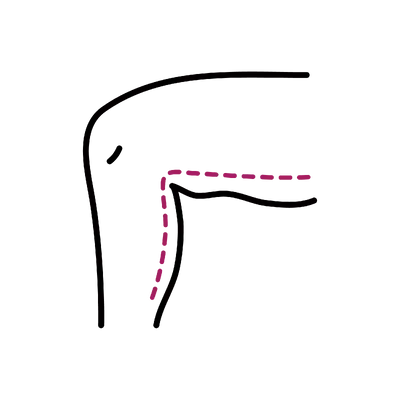
The baseline procedure. A short horizontal incision above the pubic area removes a crescent of excess skin and fat. The lower abdominal skin is pulled down and closed. No belly button repositioning and no upper abdominal work. Clean, predictable, and the fastest recovery of any abdominoplasty variant.
- Incision length similar to a caesarean scar
- Excess lower skin and fat excised, remaining skin redrapes downward
- No umbilical repositioning, belly button stays untouched
- Best for: limited lower abdominal laxity with good upper-abdomen tone
Mini Abdominoplasty with Muscle Repair
Adds plication (tightening) of the lower rectus muscles below the navel. Useful for patients with mild diastasis recti limited to the lower abdomen, common after pregnancy. The muscle repair adds 20–30 minutes of operating time and slightly extends early recovery.
- Lower muscle tightening addresses mild sub-umbilical diastasis
- Produces a flatter, firmer lower profile than skin excision alone
- Only appropriate when muscle separation is below the navel, not above
- Best for: post-pregnancy patients with lower muscle laxity and a small skin pouch
Mini Abdominoplasty with Liposuction
Combines skin excision with liposuction to the flanks, lower abdomen, or waistline. The liposuction refines the surrounding contour so the result does not look like a flat patch in an otherwise untreated area. A common combination that adds modest cost and recovery time.
- Skin removal plus targeted fat reduction in adjacent areas
- Produces a more harmonious result than excision alone
- Liposuction typically targets the flanks and waistline
- Best for: patients with a lower pouch plus flanking fat deposits that need smoothing
Mini Tummy Tuck Techniques
Technique for mini abdominoplasty is fairly standardised. The main variables are incision length, whether the flap is undermined, and whether additional contouring is layered in.
Limited Undermining Technique
The skin flap is lifted only enough to excise the excess and close the incision, no dissection extends above the navel. This preserves blood supply to the abdominal skin, reduces the risk of seroma, and produces faster healing. The trade-off is less flexibility in skin redistribution.
- Minimal flap elevation preserves blood supply
- Lower seroma risk compared to full-undermining approaches
- Faster healing and less post-operative discomfort
- Best for: straightforward lower-pouch excision without muscle repair
Endoscopic-Assisted Mini Tuck
Uses an endoscope (camera) inserted through the incision to perform muscle repair without extending the dissection. Allows the surgeon to tighten the lower abdominal wall with minimal tissue disruption. Not widely available but offered at select Bangkok hospitals.
- Camera-guided muscle plication through a small incision
- Less tissue disruption than open muscle repair
- Precision tightening without full-length incision
- Best for: patients who need lower muscle repair but want minimal dissection
Scarpa Fascia Preservation
Rather than dissecting down to the muscle, the surgeon leaves the deep fascial layer (Scarpa's fascia) and its lymphatic channels intact beneath the lower flap. Preserving this layer reduces fluid leakage into the wound, which lowers seroma risk and supports faster, more comfortable healing. A well-documented refinement that fits the limited-dissection nature of a mini tuck.
- Deep fascial and lymphatic layer left intact below the flap
- Lower seroma and drain-output rates than full-depth dissection
- Sits naturally with the limited undermining a mini tuck already uses
- Best for: patients prioritising a quick, low-complication recovery
Progressive-Tension (Drainless) Closure
Rather than relying on a surgical drain, the surgeon anchors the skin flap to the underlying muscle wall with a row of internal quilting sutures as the abdomen is closed. This obliterates the space where fluid would otherwise collect, which is why it lowers the risk of seroma, the most common complication after this procedure, and often avoids a drain altogether. It adds a little operating time but makes for a tidier, more comfortable early recovery.
- Internal quilting sutures secure the flap and close off dead space
- Reduces seroma risk, often removing the need for a drain
- Spreads tension across the repair for a flatter, more secure closure
- Best for: anyone wanting to minimise seroma risk and recover without a drain
Mini Tummy Tuck Recovery Timeline
Days 1–3
The lower abdomen feels tight and swollen. Standing fully upright is uncomfortable, you will walk slightly bent forward for the first few days. Light walking is encouraged from day one. Pain is managed with prescribed medication and most patients describe it as moderate tightness rather than sharp pain.
Week 1–2
Swelling reduces and the lower abdomen visibly flattens. Most patients feel well enough for desk work and light daily activities by day 7–10. You can stand upright comfortably. Sutures are checked or removed during this period. Your surgeon confirms whether you are cleared to fly. Driving usually resumes around two weeks, once you are off prescription pain medication and can brace your abdomen and perform an emergency stop without pain.
Weeks 3–4
Return to low-impact exercise, walking, gentle stretching, lower-body work that does not engage the core directly. The incision line is healing and the scar is pink but flat. Most patients feel functionally normal for everyday activities.
When Can You Fly After a Mini Tummy Tuck?
Most patients are cleared to fly at 7–10 days. This is notably shorter than a full tummy tuck because the procedure involves less dissection and no umbilical work. Your surgeon checks the incision at day 7 and confirms readiness. Wear loose, high-waisted trousers on the flight to avoid anything pressing on the incision line.
When Can You Return to Work and Exercise?
Desk work from day 7–10. Driving usually resumes around two weeks, once you are off prescription pain medication and can brace your abdomen for an emergency stop without pain. Light exercise from week 3. Core-specific work, planks, sit-ups, heavy lifting, should wait until week 6 to let the lower abdominal repair solidify. Swimming is fine once the incision is fully sealed, usually around week 4. Running and higher-impact exercise from week 4–5.
When Will You See Final Results?
You will notice a flatter lower profile within the first week, once the swelling begins to clear. By week 4, the result is close to final. The scar sits low, within the bikini line, and starts pink, fading to a pale flat line over 6–12 months. Compared to a full abdominoplasty, you are looking at roughly half the time to reach your final result.
Anaesthesia for a Mini Tummy Tuck
A mini tummy tuck is performed under general anaesthesia, so you are fully asleep and feel nothing during the operation.1,2 Even though it is a shorter, more focused procedure than a full abdominoplasty, the lower abdominal wall still needs to be relaxed for the surgeon to excise skin and, where planned, tighten the lower muscle, which is why general anaesthesia is the standard. A consultant anaesthetist stays with you throughout and monitors you continuously, as is routine at the accredited hospitals we work with.
Because the operation is brief, usually 1.5 to 2.5 hours, your time under anaesthesia is shorter than for a full tummy tuck, which is part of why many cases are done as a day case or with a single overnight stay. The anaesthetist reviews your medical history and any medications beforehand and decides the safest plan for you, and a long-acting local anaesthetic is often infiltrated into the incision area so you wake up more comfortable.
Before you are cleared, you have a pre-operative assessment, including blood tests and a review of your general health and weight stability. You feel nothing during surgery. Afterwards, most patients describe moderate tightness in the lower abdomen rather than sharp pain, and you will stand slightly bent forward for the first few days. The discomfort is well controlled with the medication your surgeon prescribes, and most people move on to simple paracetamol within a few days.
Risks and Safety of Mini Tummy Tuck
Mini abdominoplasty has a lower risk profile than a full tummy tuck because less tissue is disrupted, operating time is shorter, and the blood supply to the abdominal skin is better preserved. But it is still surgery.
- Seroma (fluid collection beneath the skin flap)1, the most common complication
- Infection at the incision site
- Haematoma or bleeding requiring drainage
- Scar widening or hypertrophic scarring
- Temporary numbness in the lower abdominal skin
- Asymmetry or contour irregularity
- Under-correction if the procedure scope was too conservative for the actual laxity present
The most common problem with mini tummy tuck is not a complication, it is choosing the wrong procedure. If a patient with full abdominal laxity gets a mini tuck, the result will be disappointing. Proper candidate selection during consultation prevents this and is the most important step in the process.
Is Mini Tummy Tuck Safe in Thailand?
Yes. Mini abdominoplasty is a routine outpatient or single-night procedure at JCI-accredited hospitals in Thailand. The surgical risk is lower than a full tummy tuck due to the shorter operating time and limited dissection. Our partner surgeons are board-certified by the Thai Board of Plastic and Reconstructive Surgery and perform this procedure regularly.
How to Reduce Your Risk
The biggest risk-reduction step is confirming you are actually a candidate for a mini tuck rather than a full abdominoplasty. Beyond that, stop smoking at least four weeks before surgery1, maintain a stable weight, and follow post-operative instructions, particularly compression garment use and activity restrictions in the first two weeks.
When Is Revision Surgery Needed?
Revision is uncommon for mini tummy tuck. When it does occur, it is usually because the initial procedure was too conservative, a patient who needed a full abdominoplasty got a mini instead. Scar revision for widening or hypertrophy is the other scenario, typically addressed with laser treatment or minor surgical correction after the scar has fully matured at 12 months.
Planning Your Trip to Thailand for Mini Tummy Tuck
Mini tummy tuck is one of the easier procedures to plan around. The short recovery and minimal hospital stay make it well suited to a compact medical trip.
How Long to Stay in Thailand
Plan for 7–10 days. Day 1 covers your consultation and pre-operative assessment. Surgery is typically a day case or involves one night in hospital. Follow-up at day 3 and day 7 checks healing and suture status. Your surgeon clears you to fly at the final appointment.
What's Included in a Medical Trip
Your coordinator schedules everything, hospital admission, surgery, and follow-up appointments. A typical surgical quote covers surgeon fees, anaesthesia, hospital stay, compression garment, and medications, though exact inclusions are set by the clinic and confirmed in writing in your quote. Accommodation and flights are arranged separately, with coordinator recommendations for nearby hotels.
Recovery in Bangkok vs Phuket
Bangkok is the sensible base for the entire trip. A 7–10 day stay with two follow-up appointments means there is no practical benefit to relocating to Phuket mid-trip. Stay close to the hospital, keep your appointments, and fly home once cleared.
Related Procedures
Other procedures that address similar goals or conditions, in case one of them is a closer fit for you.
Planning your treatment in Thailand
Independent guides to help you weigh the decision, before you commit to anything.
Common Questions About Mini Tummy Tuck
Everything you need to know before your procedure

Medical References
Keep researching with AI
Open this guide in your AI assistant to dig deeper and ask the questions it didn't answer.
Opens in a new tab with this guide already loaded.
Medical disclaimer: This information is for educational purposes only and does not replace professional medical advice. Individual results, recovery times, and suitability vary. Always consult a qualified surgeon before making decisions about treatment.
Ready to Get Started?
No-obligation consultation and quote within 24 hours. Speak with a coordinator who can match you to the right surgeon and hospital.
Speak to Our Team