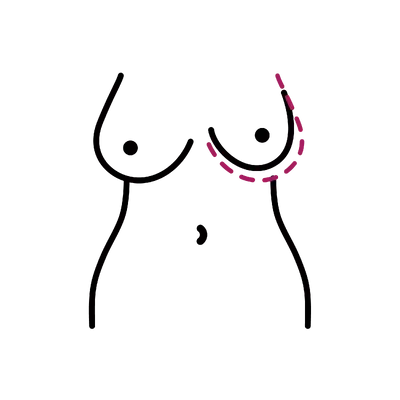
Breast Implant Revision in Thailand Your guide to cost, top surgeons & hospitals
Revision is about getting it right this time: correcting what did not work and restoring the shape you were after from the start.

What Is Breast Implant Revision?
Also known as: Implant Replacement · Implant Exchange Surgery
Breast implant revision is surgery that corrects a previous breast augmentation by removing, replacing, or repositioning the implant. It resolves capsular contracture, where the scar capsule around the implant hardens1,2, fixes malposition where an implant has shifted, addresses visible rippling, or changes the size, shape, or material you currently have. The surgeon assesses the capsule and the pocket first, and what they find shapes the technique. Surgery usually takes 2 to 4 hours under general anaesthesia, and the revised shape settles over 3 to 6 months.
No two revisions are the same, because no two original surgeries went wrong in the same way. Some people need a simple implant exchange. Others need the capsule removed and the pocket rebuilt. Your surgeon plans the approach around your history and the tissue available, using your records and imaging.
Revision is best thought of as a correction, not an upgrade. For most people a clear improvement on where you are now is achievable, though tissue operated on before responds less predictably than first-time surgery. Your surgeon will be honest about what is realistic for your case at consultation.
It can address a range of concerns, including:
Am I a Good Candidate for Breast Implant Revision?
Revision works when the problem is defined, the records exist, and the previous result has settled; surgeons check each before operating.
A result that has not finished settling cannot be judged, let alone corrected.
Six months minimum: Previous surgery less than 6 months ago is a caution flag; the result has not yet fully settled.
Settled assessment: Implant position and swelling keep changing in the early months, and early concerns often resolve as swelling clears.
Worth the wait: Operating on unsettled tissue risks correcting a problem that would have resolved on its own, and adds scar tissue for no benefit.
Good candidates have a specific, identifiable problem that revision techniques reliably correct.
Capsular contracture: Hardness, distortion, or pain around the implant; capsulectomy with replacement lowers the recurrence risk.
Malposition: Bottoming out, lateral drift, or implants riding too high respond to pocket repair and repositioning.
Rippling or rupture: Visible rippling through thin tissue coverage, or rupture and shell integrity concerns after years of wear.
Size or type change: Wanting a different size, profile, or implant material is the simplest form of revision when the capsule is healthy.
Each previous operation leaves scar tissue, and your history determines what is safely possible this time.
Records available: Your implant card, operative notes, and recent imaging give the revision surgeon a clear picture before opening the pocket.
Prior revisions: Two or more previous revisions with thin, scarred tissue may make a staged approach safer than another single-stage attempt.
No active infection: Good general health with no active infection around the implant site is a baseline requirement.
Revision corrects what went wrong; surgeons are wary of candidates expecting it to outdo the original surgery.
Correction, not upgrade: The goal is a measurable improvement over your current situation, not an outcome materially better than a well-executed first augmentation.
Tissue has limits: Breasts that have been operated on before respond less predictably, and your surgeon should be upfront about those limits.
Longer settling: Revision cases take slightly longer than primary surgery to reach final shape, typically 3-6 months as the revised pocket stabilises.
Who is not suitable for breast implant revision?
- Previous breast surgery less than 6 months ago
- Two or more prior revisions with thin, scarred tissue wanting another single-stage fix
- No implant records or imaging available and unwilling to obtain imaging
- Active infection near the implant site
- Expecting perfection from an already complex situation
- Smokers unwilling to stop at least 4 weeks before surgery
- Uncontrolled diabetes, a connective tissue disorder, or ongoing corticosteroid use that impairs healing in already-operated tissue, until optimised with your doctor
Pricing
How Much Will Breast Implant Revision Cost in Thailand?
What breast implant revision costs at accredited hospitals in Thailand, and what your final quote depends on.
Get your exact price
Tell us what you're considering and we'll send a personalised quote from accredited hospitals within 24 hours.
Get my free quoteTypical prices in Thailand
Typical ranges based on recent hospital quotes. Your exact price depends on the hospital and how complex your case is, and is confirmed at your teleconsultation.
Breast Implant Revision
How much of the old pocket and scar capsule has to be rebuilt is what moves the price, not the implants themselves.
| Implant exchange New implants through the existing pocket, changing size or type | $3,000 to $4,000 ฿102,000 to ฿136,000 |
| Capsulectomy with replacement Scar capsule removed and a fresh pocket made for new implants | $4,000 to $5,500 ฿136,000 to ฿187,000 |
| Complex revision with pocket repair Rebuilding the pocket with support material when the shape has shifted | $5,000 to $6,000 ฿170,000 to ฿204,000 |
Get your exact price
Tell us what you're considering and we'll send a personalised quote from accredited hospitals within 24 hours.
Hospitals Trusted for Breast Implant Revision
From internationally accredited flagships to dedicated specialist hospitals, these are the kinds of facilities where international patients have this procedure.

Bumrungrad International Hospital
Southeast Asia's flagship private hospital, treating over 520,000 international patients a year.
View hospital profile
Kamol Cosmetic Hospital
The only specialist cosmetic surgery hospital in Thailand to hold JCI accreditation.
View hospital profile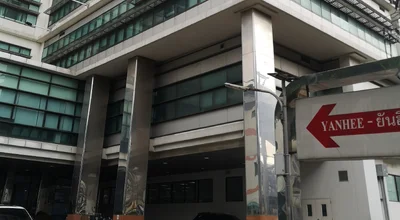
Yanhee International Hospital
A 400-bed hospital known worldwide for high-volume cosmetic surgery.
View hospital profile
Get a Free Quote in Two Minutes
Tell us what you're considering. We'll match you with suitable specialists and provide real hospital pricing.
- Honest pricing with no markups
- Matched to a specialist for your procedure
- No obligation, no pressure


Rated 5 stars by our patients
The complete guide to Breast Implant Revision in Thailand
Everything below is for readers who want the full detail: costs broken down, types and techniques, recovery, risks and safety, and planning your trip.
Breast Implant Revision Surgeons & Clinics in Thailand
Revision results depend heavily on the surgeon's ability to read scar tissue and adapt the plan mid-surgery. Here is what separates competent revision surgeons from the rest.
Leading Hospitals in Bangkok
Our partner hospitals are JCI-accredited international facilities in Bangkok with dedicated plastic surgery departments. For revision cases specifically, what matters is that these hospitals have on-site imaging, pathology labs for capsule analysis, and the full range of implant brands and ADM products available during surgery. That flexibility is critical when the surgeon needs to change plan once they see the capsule.
Experienced Revision Surgeons
Our partner surgeons are certified by the Thai Board of Plastic and Reconstructive Surgery. Several trained internationally in South Korea, Japan, or the US before returning to Thailand where surgical volumes are significantly higher. Revision work is a specific skill set. It requires reading scar tissue, managing compromised pockets, and knowing when to stage a procedure rather than force everything into one session.
What to Look for in a Revision Surgeon
Ask about revision cases specifically, not just primary augmentation numbers. A surgeon who does five hundred primary augmentations but rarely touches revision is not the right fit. Request before-and-after photos of cases similar to yours, with the same complication and implant type. Check that they have access to the full range of implant sizes and ADM products, because revision plans often change once the capsule is exposed.
Understanding Your Results
Revision results depend on what is being corrected and the condition of your existing tissue. Here is what to expect realistically.
Typical Breast Implant Revision Results
Common improvements include resolving capsular contracture hardness, correcting implant malposition or asymmetry, eliminating visible rippling, and achieving the size or profile that was not delivered the first time. A successful revision should look and feel closer to what you originally wanted, but tissue that has been operated on before has limits, and your surgeon should be upfront about those.
What Results Can You Expect?
You will see an immediate difference in shape and position once swelling begins to subside, but the final result takes 3–6 months to emerge as the pocket stabilises. Your surgeon should use your original operative notes, current imaging, and clinical photography to set clear expectations during the consultation. The goal is a measurable improvement over your current situation, not a guarantee of a perfect outcome.
Breast Implant Revision Cost in Thailand
Average Cost of Breast Implant Revision
Breast implant revision in Thailand typically costs between $3,000 and $6,000, depending on the complexity of the case. A straightforward implant exchange at the lower end, full capsulectomy with pocket reconstruction at the upper end. Quotes should be broken down so you can see the surgeon fee, implant cost, hospital charges, and any extras like ADM or mesh separately.
Cost Breakdown
The surgeon fee is the largest component and reflects the technical difficulty; revision takes longer than primary augmentation and demands more judgment. Hospital and theatre fees cover the facility, operating room, and nursing support. Anaesthesia fees are separate. New implants are itemised at cost. If ADM, mesh, or other biological materials are needed, they add to the total. Aftercare covers follow-up visits and medication during your recovery in Thailand.
What Affects the Price?
Complexity is the main driver. A simple same-pocket implant swap costs less than a full capsulectomy with plane conversion and ADM reinforcement. The number of prior surgeries matters too; more scar tissue means longer operative time. Implant brand and type affect the price. Surgeon experience with revision work specifically also factors in, and rightly so.
Thailand vs International Price Comparison
Breast implant revision in Thailand costs 40–60% less than the same procedure in the US ($8,400–$15,000), Australia (A$7,800–A$13,500), and UK (£6,600–£11,400). The price difference reflects lower facility and staffing costs in Thailand, not a difference in surgical capability. Our partner hospitals hold JCI accreditation and surgeons carry board certifications equivalent to their international counterparts.
Non-Surgical Alternatives to Revision
For early or mild capsular contracture, some patients are offered non-surgical options before revision is considered: leukotriene inhibitors such as montelukast (Singulair) taken off-label, implant massage, or external ultrasound therapy aimed at softening the hardening capsule. These can occasionally ease a developing grade I or II contracture and are worth discussing with a doctor at the first sign of firmness, before scar tissue matures.
The honest limit is that none of these reverses an established problem. They do nothing for an implant that has shifted, bottomed out, ruptured, or rippled, and the evidence for softening a firm capsule is mixed at best. Once contracture reaches grade III or IV, or once the issue is position, sizing, or shell integrity, no injection, massage, or device can correct it; the scar capsule or the implant itself has to be physically addressed.
When the breast is hard, distorted, painful, or visibly wrong, surgical revision is the route that actually corrects it, removing or releasing the capsule, repositioning or exchanging the implant, and rebuilding the pocket where needed. That is what the rest of this page covers.
Types of Breast Implant Revision
The type of revision depends on what went wrong and what needs fixing. A simple implant swap is a different surgery to a full pocket reconstruction, and your surgeon needs to know the difference before quoting you.
Implant Exchange (Size or Type Change)
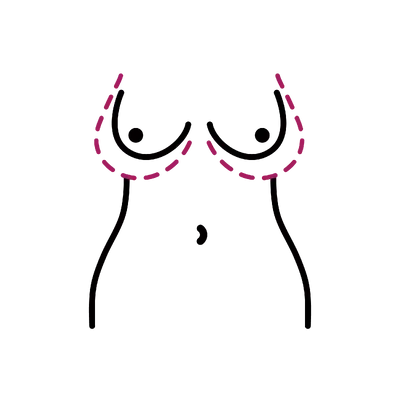
Removing the current implant and replacing it with a different size, shape, or material. The existing pocket may be reused or adjusted. This is the simplest form of revision when the capsule is healthy and the pocket is intact.
- Existing incision site is reopened; no new scars
- Capsule is assessed and left intact, scored, or partially removed as needed
- Pocket may be tightened or expanded depending on the new implant dimensions
- Best for: patients wanting a size or profile change with no major capsule problems
Capsulectomy with Implant Replacement
Full or partial removal of the thickened capsule followed by new implant placement. Required when capsular contracture has distorted the breast shape or caused pain. More involved than a simple exchange because the capsule has to come out before anything new goes in.
- Total capsulectomy removes all scar tissue; partial removes only the affected portion
- New implant is placed in a fresh pocket, sometimes in a different plane
- Reduces the chance of contracture recurring compared to scoring alone
- Best for: capsular contracture grades III–IV, or recurrent contracture after previous revision
Pocket Repair and Repositioning
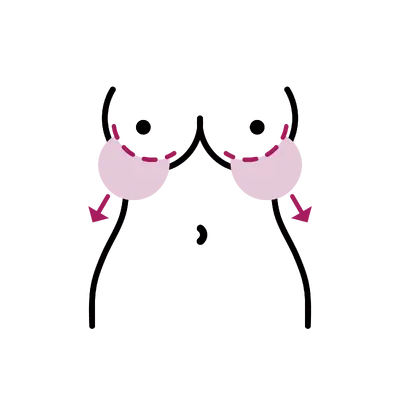
Addresses implants that have shifted, including bottoming out, moving laterally, or sitting too high. The surgeon closes off part of the old pocket and creates a new one in the correct position. Often involves internal sutures or acellular dermal matrix for structural reinforcement.
- Internal capsulorrhaphy sutures narrow or reposition the pocket
- ADM or mesh may be used for additional lower-pole support
- Plane conversion (subglandular to submuscular or dual-plane) sometimes necessary
- Best for: bottoming out, symmastia, lateral displacement, or double-bubble deformity
Breast Implant Revision Techniques
The technique your surgeon chooses depends on what the capsule looks like inside, how the pocket has changed, and what result you are trying to achieve this time around.
Capsulotomy vs Capsulectomy
Capsulotomy scores or releases the capsule to relieve tightness without removing it. Capsulectomy removes the capsule entirely. Which one makes sense depends on contracture severity. Mild cases often respond to capsulotomy, but moderate-to-severe contracture usually needs the capsule out completely to lower recurrence risk. There is one situation where the choice is not about contracture grade at all: if you currently carry a recalled textured implant (the Allergan BIOCELL range withdrawn worldwide in 20193,4, or an equivalent macro-textured device), the recommended operation is en bloc capsulectomy, where the capsule is removed intact around the implant rather than peeled off in pieces, with the capsule sent for pathology. This is a materially bigger operation than a simple exchange or standard capsulectomy and needs a surgeon experienced in it.
- Capsulotomy: less tissue disruption, shorter surgery, adequate for mild contracture
- Capsulectomy: removes all scar tissue, significantly lowers recurrence risk
- En bloc capsulectomy keeps the capsule intact around the implant during removal; recommended for recalled textured (Allergan BIOCELL) devices, with capsule sent for pathology
- Best for: capsulotomy suits grade II contracture; capsulectomy suits grade III–IV or recurrent cases; en bloc with pathology suits recalled textured implants
Pocket Plane Conversion
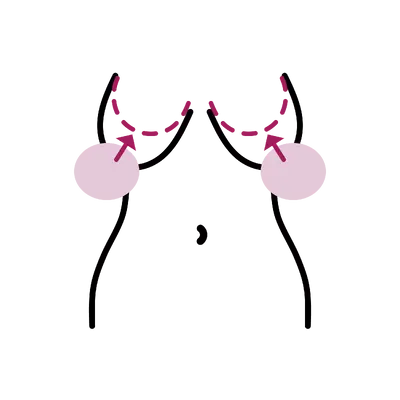
Moving the implant from one anatomical plane to another, typically subglandular to submuscular or dual-plane. This is done when the original placement contributed to the problem, such as visible rippling in thin patients or animation deformity with submuscular placement. The old pocket is closed and a new one created.
- Subglandular to submuscular adds tissue coverage and reduces rippling
- Submuscular to dual-plane can resolve animation deformity
- Old pocket must be fully closed with internal sutures to prevent implant migration
- Best for: rippling, animation issues, or inadequate tissue coverage in the original plane
Internal Support with ADM or Mesh
Acellular dermal matrix (ADM) or synthetic mesh reinforces the lower pole of the pocket when tissue alone cannot hold the implant in position. This is the standard approach for recurrent bottoming out or when the breast tissue is too thin or damaged to provide structural support on its own.
- ADM integrates with tissue over time, providing a biological scaffold
- Synthetic mesh offers immediate mechanical support and predictable strength
- Both are used to define the inframammary fold and prevent downward migration
- Best for: recurrent bottoming out, tissue deficiency, or revision after multiple previous surgeries
Fat Transfer (Autologous Fat Grafting)
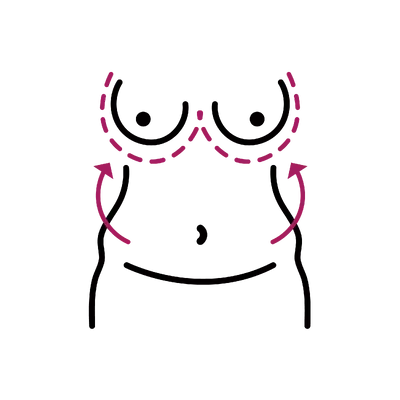
Fat is harvested from elsewhere on your body by liposuction, purified, and injected into the breast to add a layer of natural tissue over the implant. In revision it is used most often to camouflage visible rippling, soften the upper-pole edge, smooth contour irregularities, or improve coverage where the tissue over the implant has thinned. It can be combined with an implant exchange in the same operation, and in some cases supports a move to a smaller implant or a hybrid result.
- Uses your own fat, so the coverage feels and looks natural over the implant
- Particularly useful for rippling and thin upper-pole tissue that mesh alone cannot soften
- A proportion of grafted fat is reabsorbed, so a touch-up session is sometimes needed6
- Best for: visible rippling, thin tissue coverage, or refining contour alongside an exchange
Breast Implant Revision Recovery Timeline
Days 1–3
Expect tightness and soreness concentrated around the revised pocket. If capsule work was done, bruising tends to be more pronounced than after primary augmentation. Pain is managed with prescribed medication and your coordinator checks in daily at your hotel. Light walking from day one.
Weeks 1–2
Bruising begins to fade and the acute tightness eases. You can manage light daily activities and short walks comfortably. A follow-up appointment at the end of week one checks incision healing and drain removal if applicable. Most patients feel significantly better by day ten.
Weeks 3–6
Swelling continues to reduce and the revised shape starts to emerge. Light lower-body exercise can resume around week four with surgeon clearance. Chest exercises and heavy lifting remain off-limits. The implants are still settling during this phase.
Months 3–6
Implants reach their final position as the new pocket stabilises and tissues adapt fully. Scars from the existing incision lines continue to soften and fade. All activities, including upper-body training and impact sports, can resume once your surgeon confirms full healing.
When Can You Fly After Breast Implant Revision?
Most patients can fly home 10–14 days after revision surgery, once their follow-up confirms healing is progressing and any drains have been removed. Cabin pressure at altitude is safe and will not affect implant position or healing. Some residual swelling may increase slightly during the flight; this is temporary and settles within a couple of days after landing.
When Can You Return to Work and Exercise?
Desk-based work can resume after about 10–14 days for most revision patients. Light walking is encouraged from day one. Lower-body exercise can restart around week four, but chest-focused workouts and heavy lifting should wait until six weeks post-surgery minimum. If your revision involved pocket reconstruction or ADM, your surgeon may extend that restriction to eight weeks.
When Will You See Final Results?
You will see a noticeable improvement once initial swelling subsides around week two to three, but that is not your final result. Implants take 3–6 months to fully settle into the revised pocket, and the breast shape continues to refine during that period. Revision cases often take slightly longer to reach their final form than primary augmentation because the tissue has been operated on before.
Anaesthesia for Breast Implant Revision
Breast implant revision is performed under general anaesthesia2, so you are fully asleep and feel nothing during the operation. A consultant anaesthetist stays with you from the moment you go under until you wake in recovery, monitoring you continuously throughout. This is standard practice at the accredited hospitals we work with, and it is the safe choice for revision because the surgeon often cannot confirm exactly how much work the pocket needs until the breast is opened and the capsule is assessed.
That uncertainty is part of why a thorough pre-operative assessment matters here. You will have blood tests and a review of your medications and overall fitness for anaesthesia, and your surgeon will already have studied your operative notes and imaging to anticipate the likely plan. A simple same-pocket exchange and a full capsulectomy with reconstruction are very different operations, and being fully asleep means the surgeon can adapt the approach mid-surgery without any discomfort to you.
You feel nothing while the work is done. Once you wake, the sensation is usually tightness and soreness around the revised pocket rather than sharp pain, and it is well controlled with the medication your surgeon prescribes. If capsule work was involved, bruising and early soreness tend to be a little more pronounced than after a first-time augmentation, which is normal and eases over the first few days.
Risks and Safety of Breast Implant Revision
Revision surgery carries all the risks of primary augmentation plus additional considerations related to scar tissue, altered anatomy, and the reason revision is needed in the first place.
- Recurrent capsular contracture (lower risk with full capsulectomy than capsulotomy alone)
- Infection at the surgical site, particularly if ADM or mesh is used
- Implant malposition or asymmetry requiring further adjustment
- Seroma or haematoma formation in the revised pocket
- Temporary or permanent changes in nipple sensation
- Wound healing complications, especially in patients with multiple prior surgeries
- Need for further revision if the pocket does not stabilise as expected
- Visible or hypertrophic scarring along existing incision lines
The likelihood of any complication depends on what is being corrected, how many times the breast has been operated on before, and the condition of the tissue the surgeon has to work with. Discuss your specific history in detail before signing off on a plan.
Is Breast Implant Revision Safe in Thailand?
Yes. Revision surgery at a JCI-accredited hospital with a board-certified plastic surgeon meets the same safety standards as the US, UK, and Australia. Thailand's top hospitals have dedicated breast surgery units that handle revision cases regularly. The key safety factor is surgeon experience with secondary breast surgery specifically, not just general cosmetic work.
How to Reduce Your Risk
Start by choosing a JCI-accredited hospital, which covers infection control, facility standards, and emergency protocols. Verify your surgeon's board certification and ask specifically about their revision caseload. Provide your original operative notes and implant details so the surgeon knows exactly what they are working with before they open you up. Pre-operative imaging (ultrasound or MRI) should be reviewed before surgery is scheduled.
When Is Further Revision Needed?
Further revision may be necessary if capsular contracture recurs, the implant shifts position as swelling resolves, or the aesthetic result does not meet what was discussed. Recurrence rates for contracture are lower after full capsulectomy than after capsulotomy alone. Wait at least six months before evaluating your result. The pocket needs that long to fully stabilise, and early concerns often resolve as swelling clears.
Planning Your Trip to Thailand for Breast Implant Revision
Most revision patients need 10–14 days in Thailand. Here is how to organise your trip, what to send in advance, and what happens on the ground.
How Long to Stay in Thailand
Plan for 10–14 days minimum. This covers your in-person consultation and pre-operative assessment, the surgery itself, one night in hospital, and the critical first week of recovery including your follow-up appointment and drain removal if needed. If your revision is more complex (capsulectomy with pocket reconstruction), staying the full fourteen days gives your surgeon time to assess healing before clearing you to fly.
What's Included in a Medical Trip
Your care coordinator manages hospital transfers, surgery scheduling, and post-operative follow-up appointments. The surgical quote covers surgeon fees, anaesthesia, new implants, hospital stay, and aftercare. If you can provide your original operative notes and implant card before you arrive, your surgeon can review imaging remotely and have a preliminary plan ready for your first in-person appointment.
Recovery in Bangkok vs Phuket
Bangkok is the practical choice for revision patients. You are close to the hospital for follow-ups, and if anything needs attention (a drain that is not behaving, unexpected swelling), you are minutes from your surgical team. Revision cases have slightly more variables than primary augmentation, so proximity to your surgeon during the first week matters more than it would for a straightforward first-time procedure.
Related Procedures
Other procedures that address similar goals or conditions, in case one of them is a closer fit for you.
Planning your treatment in Thailand
Independent guides to help you weigh the decision, before you commit to anything.
Common Questions About Breast Implant Revision
Everything you need to know before your procedure

Medical References
- Here's What You Need to Know About Capsular Contracture (American Society of Plastic Surgeons)
- Breast Enlargement (Implants) (NHS)
- Allergan Biocell Device Withdrawal (American Society of Plastic Surgeons)
- Breast Implant Recall What You Need to Know (American Cancer Society)
- Will Your Breast Implants Last a Lifetime (American Society of Plastic Surgeons)
- Fat Transfer Breast Augmentation Risks and Safety (American Society of Plastic Surgeons)
Keep researching with AI
Open this guide in your AI assistant to dig deeper and ask the questions it didn't answer.
Opens in a new tab with this guide already loaded.
Medical disclaimer: This information is for educational purposes only and does not replace professional medical advice. Individual results, recovery times, and suitability vary. Always consult a qualified surgeon before making decisions about treatment.
Ready to Get Started?
Speak with our care coordinators for a free, no-obligation consultation and personalised quote.
Speak to Our Team