Eyelid Surgery in Thailand Your guide to cost, top surgeons & hospitals
Blepharoplasty restores what gravity and time take first, open, expressive eyes that look as alert as you feel.
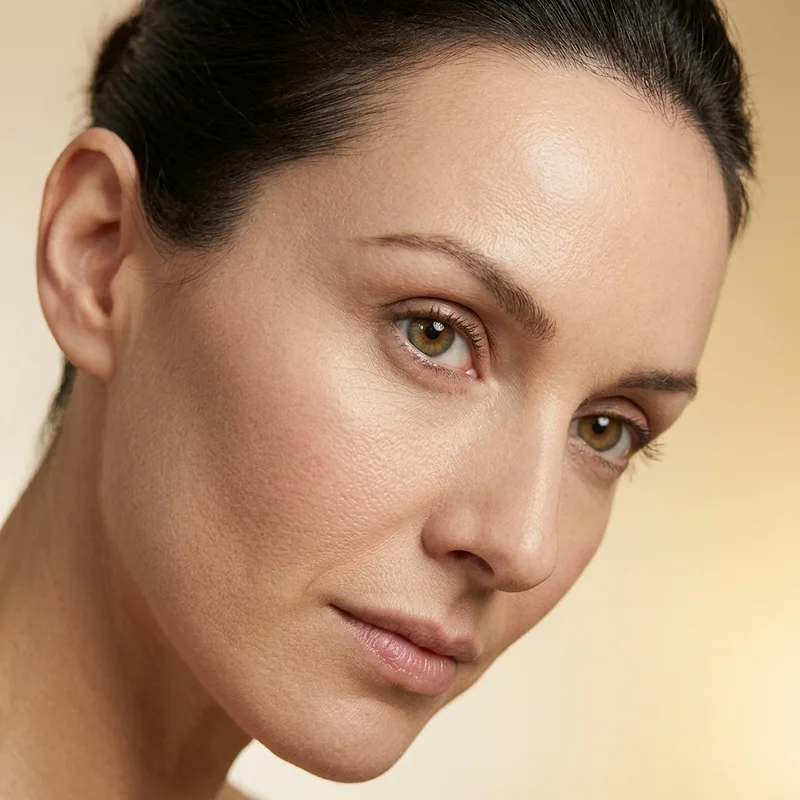
What Is Eyelid Surgery?
Also known as: Eyelid Lift · Blepharoplasty
Eyelid surgery, or blepharoplasty, is an operation that refreshes the eye area by removing excess skin and trimming or repositioning fat on the upper lids, lower lids, or both. On the upper lid it lifts the heavy hooding fold, which can also widen your field of vision when that fold blocks your sightline1,2. On the lower lid it smooths the puffy bags from forward-pushing fat. It usually takes 1 to 2 hours, and results tend to be long-lasting, often for many years.
The eyes are the first thing people read on a face, so this is delicate, millimetre-level work. Your surgeon studies your skin quality, fat pattern, and brow position, then plans how much to take and how much to keep. Too aggressive a removal leaves a hollow, startled look that ages poorly.
For most people a good result simply looks rested, brighter and less tired, without anyone being able to say why. During your consultation your surgeon will also check whether the heaviness comes from the lid itself or a descended brow, since that changes which operation is right for you.
It can address a range of concerns, including:
Am I a Good Candidate for Eyelid Surgery?
Blepharoplasty rewards careful screening, so surgeons weigh eye health, the true source of lid heaviness, and what conservative surgery can deliver.
The strongest candidates have lid-specific problems, cosmetic or functional, caused by excess skin and fat.
Hooded upper lids: heavy lids that narrow your field of vision are the classic indication, and the functional benefit is real, not just cosmetic.
Permanent bags: under-eye bags that persist regardless of sleep point to herniated fat the lower-lid procedure addresses.
Excess lid skin: skin folding over the lash line responds directly to upper blepharoplasty.
Tear-trough hollowing: a sunken look beneath the lower lids can be improved by repositioning fat rather than removing it.
Before any plan is made, the surgeon must establish whether the heaviness comes from the lid itself or from a descended brow.
Source of hooding: if a dropped brow is pushing skin over the lid, a brow lift rather than blepharoplasty may be what resolves it.
Combined cases: some patients need both procedures, and treating only one leaves an unbalanced result.
Consultation test: brow position is assessed alongside lid skin quality and fat distribution before any incision plan is drawn.
Not sure yet: if you cannot say where the heaviness originates, that question has to be answered before you are a candidate for either operation.
The condition of the eye itself gates this procedure more than general health does.
Dry eye and thyroid: untreated dry-eye disease or thyroid eye disease must be managed before lid surgery is safe.
Lid closure: existing problems closing the eyes fully rule surgery out until they are addressed.
Contact lenses: daily wearers need a planned break, switching to glasses for a week before surgery and two weeks after.
Disclosure: prescription eye drops and any dry-eye history must be raised at consultation, because they affect post-operative comfort and healing.
Eyelid results are long-lived but not permanent, and conservative surgery protects how you age afterwards.
Long-lasting: results are long-lasting before lid skin gradually relaxes again with normal ageing.
Conservative by design: over-removal of skin or fat leaves a hollow, operated look that is hard to revise, so modest goals get better outcomes.
Rested, not altered: the right result looks like you slept well, not like you had surgery.
Settling timeline: the lids settle over one to three months before final shape and symmetry can be judged.
Who is not suitable for eyelid surgery?
- Untreated dry-eye disease or thyroid eye disease
- Problems fully closing the eyes
- Facial nerve disorders affecting voluntary lid closure (e.g. Bell's palsy, Horner's syndrome)
- Eye or eyelid surgery within the past 6–12 months
- Pregnancy or breastfeeding (defer elective lid surgery)
- Daily contact-lens wearers with no planned break
- Keloid or pigment-change scarring history not yet raised at consultation
- Heaviness caused by brow descent rather than lid skin
- Smokers unwilling to stop three weeks before surgery
Pricing
How Much Will Eyelid Surgery Cost in Thailand?
What eyelid surgery costs at accredited hospitals in Thailand, and what your final quote depends on.
Get your exact price
Tell us what you're considering and we'll send a personalised quote from accredited hospitals within 24 hours.
Get my free quoteTypical prices in Thailand
Typical ranges based on recent hospital quotes. Your exact price depends on the hospital and how complex your case is, and is confirmed at your teleconsultation.
Eyelid Surgery
Excess skin is removed and fat is trimmed or repositioned on the upper lid, the lower lid, or both, to refresh a heavy or puffy eye area.
| Upper or lower blepharoplasty, one lid only One lid only, either the upper or the lower, under local anaesthetic as an outpatient. | $1,750 ฿60,000 |
| Combined upper and lower blepharoplasty Both lids treated in one session, also under local anaesthetic as an outpatient | $2,900 ฿98,000 |
Typically not included
- The second lid, where the single-lid package is the one quoted, since it covers one lid only, upper or lower
- Pre-operative medical clearance and fitness assessment
- Specialist consultant fees outside the operating surgeon
- Laboratory tests and other investigations
- Pathology and pathologist charges on any tissue removed
Get your exact price
Tell us what you're considering and we'll send a personalised quote from accredited hospitals within 24 hours.
Hospitals Trusted for Eyelid Surgery
From internationally accredited flagships to dedicated specialist hospitals, these are the kinds of facilities where international patients have this procedure.

Masterpiece Hospital
A cosmetic surgery specialty hospital in Bangkok focused on facial contouring, rhinoplasty and eyelid work.
View hospital profile
Bumrungrad International Hospital
Southeast Asia's flagship private hospital, treating over 520,000 international patients a year.
View hospital profile
Wansiri Hospital
A purpose-built cosmetic hospital known for breast and facial work.
View hospital profile
Get a Free Quote in Two Minutes
Tell us what you're considering. We'll match you with suitable specialists and provide real hospital pricing.
- Honest pricing with no markups
- Matched to a specialist for your procedure
- No obligation, no pressure


Rated 5 stars by our patients
The complete guide to Eyelid Surgery in Thailand
Everything below is for readers who want the full detail: costs broken down, types and techniques, recovery, risks and safety, and planning your trip.
Eyelid Surgery Surgeons & Clinics in Thailand
Eyelid surgery is precise, millimetre-level work. The difference between an excellent result and an average one often comes down to the surgeon's volume and eye-area experience.
Leading Hospitals in Bangkok
Our partner hospitals are JCI-accredited and handle a high throughput of blepharoplasty cases. These are full-scale hospitals with dedicated plastic surgery departments, not standalone aesthetic clinics. Onsite imaging, overnight monitoring capability, and the capacity to manage any complication without transferring to another facility are all standard at this tier.
Experienced Blepharoplasty Surgeons
Our partner surgeons hold Thai Board certification in plastic and reconstructive surgery, the local equivalent of GMC specialist registration, ABPS, or FRACS. Several trained overseas in oculoplastic or craniofacial fellowships before returning to practise in Bangkok. Eyelid surgery is one of those procedures where sub-specialisation matters. A surgeon who operates around the eye area daily handles the tissue differently from one who does it monthly.
What to Look for in a Surgeon
Board certification in plastic surgery is the starting point, not the finish line. Ask specifically about their blepharoplasty caseload, how many they do per month and whether they perform both upper and lower procedures regularly. Request before-and-after photographs showing patients with a similar lid problem to yours, taken at least three months post-operatively. Read reviews on independent platforms. If a surgeon does not have a substantial portfolio of eyelid-specific results, keep looking.
Understanding Your Results
Blepharoplasty results settle quickly compared to most facial procedures, and the difference is usually obvious within the first month.
Typical Eyelid Surgery Results
Upper blepharoplasty opens the eye area by removing the skin fold that weighted the lid down. Patients typically notice a wider, more alert eye shape and, in functional cases, a genuine improvement in their visual field. Lower blepharoplasty eliminates the bag contour and, when fat repositioning is used, smooths the lid-cheek junction for a less tired appearance. The result should look like you slept well and look well, not like you had surgery.
What Results Can You Expect?
Most patients see the majority of the result by four to six weeks, with final settling by three months. Blepharoplasty results are long-lasting, often for many years.3 Upper lid skin will gradually relax again over time as part of normal ageing, but you will always look better than you would have without surgery. During your consultation, your surgeon will evaluate lid skin quality, fat distribution, and brow position to set clear parameters on what the surgery will and will not change for your specific anatomy.
Eyelid Surgery Cost in Thailand
Average Cost of Eyelid Surgery
Our partner hospital quotes two blepharoplasty packages. One lid, either the upper or the lower, is ฿60,000, about $1,764. Both lids together in one session is ฿98,000, about $2,882. Both are done under local anaesthetic as an outpatient with no overnight stay. Note that the cheaper figure is for a single lid, which is the number most easily misread when you are comparing quotes. These are one accredited hospital's rates, current to the end of 2026, and a private hospital sits at the premium end of a wide Thai cosmetic surgery market.
Cost Breakdown
The package covers the operating theatre and recovery room, the medical supplies and the medication for the operation itself, and the surgeon and anaesthetist teams. Because both blepharoplasty packages are outpatient, there is no room charge inside them. Several things sit outside the figure. Pre-operative medical clearance, laboratory tests and other investigations, consultations with specialists outside the operating surgeon, and medication for conditions you already take are all billed on top. Ask for the quote itemised so you can see what has been counted and what has not.
What Affects the Price?
The hospital prices by how many lids are treated and nothing else. Upper and lower cost the same, ฿60,000 each, so treating the lower lid alone is no dearer than treating the upper. Doing both together is ฿98,000, which is ฿22,000 less than buying two single lids, and that discount for combining them is the only real lever on the price. Technique choices your surgeon may raise, such as repositioning the fat into the tear trough rather than simply removing it, are not separately priced in either package, so confirm at consultation whether your plan changes the figure.
Thailand vs International Price Comparison
Eyelid surgery runs $4,200–$7,500 in the US, £3,300–£5,700 in the UK and A$3,900–A$6,800 in Australia. The ฿60,000 single lid works out at about $1,764 and the ฿98,000 combined package at about $2,882, so against US and UK pricing the saving is around 60% even on the more involved package. Against Australian pricing it is closer to a third, because Australia prices blepharoplasty far nearer the Thai figure than the US does. These are one hospital's rates, and standalone Thai cosmetic clinics quote below them.
Surgical vs Non-Surgical Eyelid Rejuvenation
Several non-surgical treatments target the eye area, and they can genuinely help in the right case. For lower-lid hollowing and tear-trough shadows, hyaluronic acid filler can soften the dip and reduce the appearance of a bag in minutes, with no downtime. For fine crepey skin, fractional laser or radiofrequency devices can tighten and resurface a little, and energy-based skin-tightening (such as plasma or RF treatments) is sometimes offered for very mild upper-lid laxity. Botox relaxes the muscles that cause crow's feet and can give a subtle brow lift, but it does nothing for excess skin.
The limits are the important part. None of these remove the redundant skin fold that creates a hooded upper lid, and none clear the herniated fat pads behind a true under-eye bag, which is what blepharoplasty actually addresses. Filler in the tear trough is temporary, lasting roughly nine to eighteen months before it needs topping up, and over-filling or poor placement can leave puffiness or a bluish tint. Energy devices give modest, gradual change that fades, and they cannot reach the structural cause when real skin excess or fat is present.
When the heaviness comes from a genuine skin fold blocking your sightline, or from fat that no injection can remove, surgery is the route to a lasting, one-time result, and that is what the rest of this page covers. Many people also use filler or laser first and move to blepharoplasty once the concern outgrows what those treatments can do.
Types of Eyelid Surgery
Upper and lower lid concerns are separate problems that happen to sit next to each other. The surgical approach differs for each, and treating both at once is common but not automatic, it depends on what actually needs correcting.
Upper Blepharoplasty
Removes the excess skin fold weighing down the upper lid through an incision in the natural crease that disappears once healed. Fat pads can be trimmed or sculpted simultaneously. Most often performed for functional reasons, clearing skin from the visual axis. The simplest variant, often done under local sedation in under an hour.
- Removes redundant skin and sculpts excess fat from the upper lid
- Incision hidden in the natural eyelid crease, virtually undetectable after healing
- Can restore peripheral vision blocked by overhanging skin
- Best for: patients with heavy, hooded, or drooping upper lids, whether cosmetic or functional
Lower Blepharoplasty
Addresses fat pads and loose skin forming persistent under-eye bags. The transconjunctival approach places the incision inside the lid with no visible scar; the subciliary approach sits below the lash line. Fat can be removed or repositioned depending on the problem. Repositioning is increasingly preferred because it smooths the lid-cheek junction rather than creating a hollow.
- Transconjunctival approach leaves no external scar, incision is inside the lid
- Fat repositioning fills the tear trough while reducing the bag
- Subciliary incision allows skin tightening when laxity is also present
- Best for: patients with under-eye bags, puffiness, or tear-trough hollowing
Combined Upper & Lower Blepharoplasty
When both lids contribute to the problem, addressing them together avoids a second round of anaesthesia, bruising, and downtime. The surgeon manages swelling across the full eye area as a unit, producing a more balanced outcome than staging procedures apart. Combined cases add roughly 30–60 minutes to operating time.
- Both upper and lower lids corrected in a single session
- One recovery period instead of two separate downtimes
- More cost-effective than staging the procedures weeks apart
- Best for: patients with both upper lid heaviness and lower lid bags who want comprehensive correction
Asian Double-Eyelid Surgery
A distinct procedure that creates or refines an upper-lid crease where the natural fold is absent or low, rather than removing skin for ageing. Thailand performs this in high volume and surgeons here are very experienced with it. The incisional method creates a permanent, defined crease and can address excess skin and fat at the same time, while the non-incisional suture method places fine sutures through tiny openings for a faster recovery and no continuous scar, though it can loosen over time. The aim is a natural crease that suits your face, not a Westernised eye.
- Creates or sets a supratarsal crease rather than treating ageing skin
- Incisional method gives a permanent crease and can remove excess skin and fat
- Non-incisional suture method recovers faster but is less durable long-term
- Best for: patients wanting a defined upper-lid crease, with the method matched to their lid anatomy
Eyelid Surgery Techniques
The technique your surgeon selects depends on lid anatomy, skin quality, and whether the goal is volume reduction, volume redistribution, or both. Here is what is commonly used and why each option exists.
Transconjunctival vs External Incision
Transconjunctival blepharoplasty places the incision inside the lower lid, leaving no visible scar. It works well for fat herniation without significant skin excess. The external subciliary incision sits below the lash line, allowing skin removal and tightening simultaneously. More versatile, but leaves a fine scar that typically fades within months.
- Transconjunctival: no visible scar, ideal when skin quality is still firm
- External: allows skin excision and tightening alongside fat work
- Transconjunctival recovery tends to be slightly faster with less visible bruising
- Best for: transconjunctival suits younger patients with good skin tone; external suits patients needing skin removal
Laser-Assisted Blepharoplasty
CO2 or erbium lasers replace the scalpel and also resurface surrounding skin to improve texture and fine lines. The laser cauterises as it cuts, meaning less bleeding and often less bruising. Resurfacing addresses crepey texture that standard blepharoplasty alone would not change. Not every case benefits, thicker skin responds less predictably.
- Reduced intraoperative bleeding from simultaneous cauterisation
- Skin resurfacing addresses fine wrinkles and texture around the eye area
- Shorter bruising phase for many patients compared to scalpel techniques
- Best for: patients who want lid correction plus skin-quality improvement in the surrounding area
Fat Repositioning vs Fat Removal
Traditional blepharoplasty removed herniated fat to flatten the area, but over-removal can leave a hollowed look that ages poorly. Fat repositioning drapes that same fat over the orbital rim into the tear trough, filling the hollow rather than creating one. The result looks fuller and more youthful long-term. Technically more involved but increasingly preferred.
- Removal: simpler, effective for mild fat excess without hollowing
- Repositioning: preserves volume, fills the tear trough, better long-term aesthetic
- Over-removal is the most common cause of an operated or gaunt appearance
- Best for: repositioning suits patients with tear-trough hollows; removal suits isolated mild puffiness
Eyelid Surgery Recovery Timeline
Days 1–3
Swelling and bruising concentrate around both eyes and peak around day two. Cold compresses and head elevation help control it. Your eyes may water more than usual and feel gritty or tight. Lubricating drops are essential during this phase. You will rest at your hotel with daily check-ins from your care coordinator.
Days 5–7
Sutures are removed at your follow-up appointment. Bruising shifts from dark purple to yellowish and fades quickly from here. Most patients can read, use screens, and move around comfortably by day five, and desk-based work is usually manageable from this point, though visible bruising may still be present. The initial swelling drops noticeably once stitches come out.
Weeks 2–3
Residual bruising clears and swelling continues to reduce. Most patients are comfortable being seen socially without makeup by now. Makeup can usually be applied from around day ten. Driving can resume once swelling no longer blurs your vision and you are off frequent lubricating drops, typically around the end of week one to early week two. Strenuous activity should still wait until your surgeon gives clearance.
Months 1–3
Incision lines fade from pink to near-invisible. Any residual puffiness settles completely during this period. The final contour and symmetry become apparent by month three. Results from blepharoplasty are long-lasting, often holding for many years before the ageing process catches up again.
When Can You Fly After Eyelid Surgery?
Most patients can fly home 7–10 days after surgery, once sutures have been removed and your surgeon has confirmed that healing is progressing well. Blepharoplasty recovery is shorter than most facial procedures, and cabin pressure at cruising altitude does not pose a risk to the surgical site at this stage. Keep lubricating eye drops with you during the flight, cabin air is dry and your eyes may be more sensitive than usual for the first few weeks.
When Can You Return to Work and Exercise?
Desk-based or remote work is usually manageable within 5–7 days, though visible bruising may still be present and you might prefer to work on video-off for a few extra days. Light walking is fine from day one. Hold off on driving until swelling no longer blurs your vision and you no longer need frequent lubricating drops, usually around the end of the first week to early in the second, and never drive on the day of surgery or while your eyes feel gritty. Gym workouts, running, and anything that raises blood pressure should wait until 3–4 weeks post-surgery to avoid provoking swelling or bleeding in the healing tissues. Swimming and contact sports require at least 4–6 weeks.
When Will You See Final Results?
You will notice a visible improvement once the sutures come out at day five to seven, but some puffiness and bruising will still be present. By two weeks, most of the swelling has cleared and the shape of the lids is apparent. Incision lines take longer, they fade from pink to white over 2–3 months and become very difficult to spot. The settled result at three months is essentially the final outcome.
Anaesthesia for Eyelid Surgery
Most eyelid surgery in Thailand is done under local anaesthetic with sedation. The lid area is fully numbed, and a light sedative keeps you relaxed and drowsy throughout, so you are awake but comfortable and feel no pain. This suits blepharoplasty well, because it is delicate, millimetre-level work on a small area rather than deep surgery, and it avoids the heavier recovery that comes with being put fully under. A consultant anaesthetist or trained sedation team stays with you and monitors you for the whole procedure.
Upper-only cases are the most straightforward and are routinely handled this way, often in under an hour. For longer combined upper and lower cases, or if you would simply rather not be aware of anything, your surgeon and anaesthetist may suggest general anaesthesia instead. They make that call together based on how much work is needed and your medical history, and it is something you discuss and agree before the day.
Before you are cleared, you have a pre-operative assessment that includes a review of your medications, your eye health, and any dry-eye or thyroid eye issues. During surgery you feel nothing. Afterwards the eyes tend to feel tight, gritty, and mildly sore rather than genuinely painful, and that settles quickly with cold compresses, lubricating drops, and the medication your surgeon prescribes.
Risks and Safety of Eyelid Surgery
Blepharoplasty has a strong safety record and a low complication rate, but it involves surgery around the eye, an area that demands precision. Here is what can go wrong and how common each issue is.
- Temporary dry eyes or increased tearing, usually resolving within weeks2
- Bruising and swelling (expected, not a complication, resolves in 1–2 weeks)
- Minor lid asymmetry that may require observation or touch-up
- Difficulty fully closing the eyes temporarily, especially after upper lid surgery2,3
- Chemosis (conjunctival swelling) after lower lid surgery, more common with the transconjunctival approach, usually settling over weeks
- Ectropion or lower-lid retraction, the lid pulling away from the eye, most often after external lower lid incisions2
- Infection at the incision site (uncommon with proper sterile technique)
- Visible scarring, particularly with external lower lid incisions (rare)
- Superficial haematoma requiring drainage (very rare)
- Retrobulbar (orbital) haematoma: bleeding behind the eye causing sudden pain, swelling and vision change, a rare but time-critical emergency that needs immediate treatment to protect sight1,2
- Changes in lid sensation or numbness around the incision (temporary)
The eye area heals well because of its rich blood supply, but that same vascularity means bruising is inevitable. The most controllable risk factors are medication management (stopping blood thinners pre-operatively) and choosing a surgeon who operates on eyelids routinely, not occasionally.
Is Eyelid Surgery Safe in Thailand?
Yes. At JCI-accredited hospitals with board-certified plastic surgeons, blepharoplasty in Thailand meets the same safety and clinical standards as the UK, US, and Australia. The procedure itself has one of the lowest complication rates of any facial surgery. Thailand's leading hospitals run dedicated ophthalmic and plastic surgery units with the imaging, equipment, and nursing expertise this procedure requires.
How to Reduce Risks
Stop all blood-thinning medications and supplements (aspirin, ibuprofen, fish oil, vitamin E) at least two weeks before surgery. The eyelid area bruises readily, and anything that impairs clotting makes it worse. If you have dry-eye syndrome or use prescription eye drops, disclose this during your consultation because it can affect post-operative comfort and healing. Choose a hospital over a standalone clinic for the safety infrastructure, and verify your surgeon holds Thai Board certification in plastic surgery specifically.
When Is Revision Surgery Needed?
Revision after blepharoplasty is uncommon. The most frequent reason is minor asymmetry that becomes noticeable once all swelling has resolved, which can often be corrected under local anaesthesia as a brief procedure. Over-removal of fat or skin, leaving a hollow or tight appearance, is harder to revise and underscores the importance of conservative surgery on the first pass. Wait at least six months before evaluating whether revision is warranted. Swelling around the eyes can be deceptive, and concerns at week six often resolve by month three.
Planning Your Trip to Thailand for Eyelid Surgery
Eyelid surgery requires a shorter stay than most facial procedures. Here is how to structure your trip and what to arrange before you fly.
How Long to Stay in Thailand
Plan for 7–10 days minimum. Day one covers your consultation and pre-operative assessment. Surgery typically happens on day two or three. Most blepharoplasty cases are day procedures or require one night in hospital at most. Sutures come out around day five to seven. A final check-up with your surgeon before departure confirms healing is on track and clears you to fly. The shorter stay compared to other facial procedures reflects blepharoplasty's lighter recovery profile.
What's Included in a Medical Trip
Your care coordinator manages hospital transfers, surgery scheduling, and all follow-up appointments. The surgical quote covers surgeon fees, anaesthesia, facility charges, and post-operative care including medications and suture removal. Flights and accommodation are arranged separately, though your coordinator can recommend hotels close to the hospital and assist with booking. Many patients recover comfortably in a hotel room with room service, no special facility is needed after discharge.
Recovery in Bangkok vs Phuket
Bangkok keeps you close to your surgical team during the critical first week. Suture removal, check-ups, and any unexpected concerns are handled quickly when you are minutes from the hospital. Blepharoplasty recovery is lighter than rhinoplasty or facelift, so some patients do relocate to Phuket after suture removal for a few extra days of rest before flying home. That can work, but only once your surgeon has confirmed healing at the post-operative check. For the first five to seven days, proximity to the hospital matters more than comfort.
Related Procedures
Other procedures that address similar goals or conditions, in case one of them is a closer fit for you.
Planning your treatment in Thailand
Independent guides to help you weigh the decision, before you commit to anything.
Common Questions About Eyelid Surgery
Everything you need to know before your procedure
More About Eyelid Surgery

Medical References
Keep researching with AI
Open this guide in your AI assistant to dig deeper and ask the questions it didn't answer.
Opens in a new tab with this guide already loaded.
Medical disclaimer: This information is for educational purposes only and does not replace professional medical advice. Individual results, recovery times, and suitability vary. Always consult a qualified surgeon before making decisions about treatment.
Ready to Get Started?
Speak with our care coordinators for a free, no-obligation consultation and personalised quote.
Speak to Our Team