Abdomen
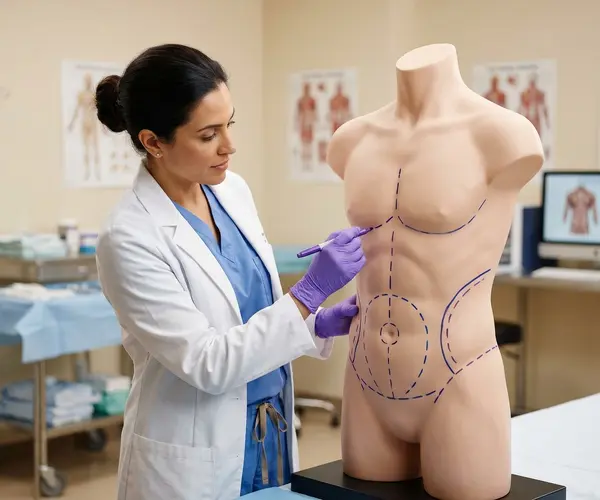
The abdomen is the single most common treatment area for VASER liposuction. For patients seeking general slimming, VASER removes stubborn fat deposits that resist diet and exercise while promoting skin retraction over the flatter contour. For athletic patients with low body fat, VASER Hi-Def takes this further by sculpting fat around the rectus abdominis and oblique muscles to reveal visible six-pack definition.
The ability to leave precisely controlled thin layers of fat over specific muscle groups is unique to VASER and is the foundation of high-definition body sculpting. Traditional liposuction cannot achieve this level of selective, contour-following fat removal because it relies on mechanical force alone.
Abdominal VASER works best when the patient is near their target weight and has reasonable skin elasticity. Patients with significant excess skin may need a tummy tuck in addition to or instead of VASER to achieve a flat result.
Flanks and Love Handles
The flanks, commonly called love handles, are a close second to the abdomen in popularity. Fat deposits in this area are notoriously resistant to exercise and create a thickened silhouette at the waistline. VASER removes flank fat with precision while the ultrasound energy promotes smooth skin retraction along the curved contour of the waist.
Flank treatment is frequently combined with abdominal sculpting in a single session to create a cohesive 360-degree body contour. This combined approach avoids the unnatural appearance that can result from treating one area in isolation.
Arms
The upper arms are an area where VASER's skin tightening properties are particularly valuable. Fat deposits on the back of the upper arm, often described as "bingo wings", can be reduced while the ultrasound-stimulated collagen contraction helps the skin conform to the slimmer contour.
Traditional liposuction of the arms carries a higher risk of loose or wavy skin post-procedure because arm skin is relatively thin and prone to laxity. VASER's tissue-preserving mechanism and collagen stimulation make it a better-suited technology for this area in many patients.
Chin and Jawline
Submental fat, the soft tissue fullness beneath the chin that creates a double chin appearance, responds well to VASER treatment. The treatment area is small, so the procedure is relatively quick, but the aesthetic impact is significant. VASER's precision is important here because the area contains important structures including the marginal mandibular nerve.
The skin tightening effect is also important under the chin, where skin laxity after fat removal can otherwise create a loose, deflated appearance. VASER helps the skin contract over the newly defined jawline.
Male Chest
VASER is one of the most effective treatments for male chest fat reduction, including mild to moderate gynecomastia where the excess tissue is predominantly fatty rather than glandular. The ultrasound energy breaks down chest fat while preserving the fibrous tissue that gives the male chest its shape, resulting in a flatter, more masculine contour.
For cases with a significant glandular component, VASER may be combined with direct gland excision. Consult your surgeon about whether your chest composition is suited to VASER alone or requires a combined approach.
Inner Thighs
The inner thighs are another area where skin quality after fat removal is a primary concern. The skin here is thinner and more prone to irregularity than abdominal or flank skin. VASER's gentle fat emulsification and connective tissue preservation reduce the risk of surface irregularities, while the collagen stimulation helps maintain skin tone.
What Makes an Area Ideal for VASER
Areas where VASER excels share common characteristics. They benefit from precision and definition rather than bulk removal alone, they involve skin that benefits from collagen stimulation, or they contain structures near the fat that benefit from VASER's tissue-selective technology. For straightforward high-volume reduction in areas with excellent skin tone, traditional liposuction may be equally appropriate. Consult your surgeon about which areas would benefit most from VASER based on your anatomy and goals.