Facelift in Thailand Your guide to cost, top surgeons & hospitals
A facelift works because it repositions the deeper structures that have dropped over time, not just the skin on the surface.
What Is Facelift?
Also known as: Face Lift · Rhytidectomy
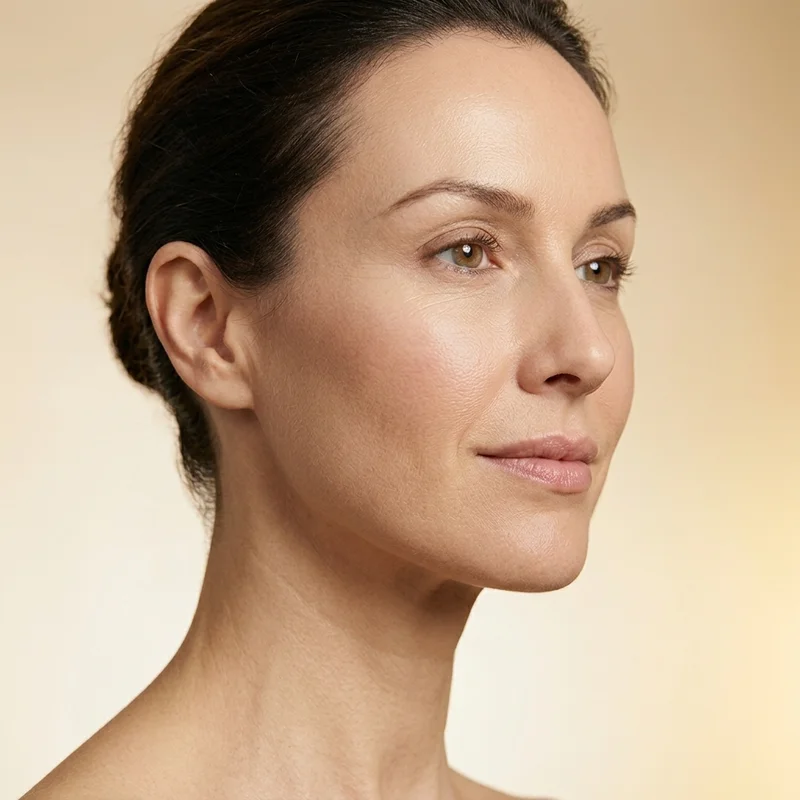
A facelift is surgery that restores a firmer, more youthful contour by lifting and repositioning the deeper support layer of the face, known as the SMAS, rather than just tightening the skin. It corrects sagging jowls, a softened jawline, deep folds around the mouth, and loose neck skin, with results that are long-lasting. Also called rhytidectomy, it is usually done under general anaesthesia in about 2 to 4 hours.
Ageing does not arrive evenly, so no two faces need the same operation. Some people only need the lower face and jawline; others need the midface, neck, and sometimes fat grafting to replace lost volume. Your surgeon plans the scope around where your own face has actually changed and what you want to soften.
A good facelift looks like a rested version of you, not a different person. For most people, suitability is judged on the degree of tissue descent rather than age, so the honest answer to whether it is right for you comes from assessing your face at consultation.
It can address a range of concerns, including:
Am I a Good Candidate for Facelift?
Facelift candidacy is judged on anatomy rather than age, and a few health factors carry far more weight than most patients expect.
Where you are in the ageing process determines whether a mini or full lift is the right operation, or whether surgery is premature.
Early jowling: patients in their 40s and early 50s with mild laxity are often better served by a mini lift focused on the lower face and jawline.
Moderate to advanced laxity: sagging across multiple facial zones, typically in patients over 50, usually calls for a full SMAS or deep-plane lift.
Anatomy, not age: most patients are 45-70, but candidacy rests on the degree of tissue descent, not the number.
Too early: mild laxity that non-surgical treatments can still manage does not yet justify a facelift.
Good candidates have structural descent the lift mechanically corrects, rather than surface lines alone.
Jowls and jawline: sagging skin along the jawline is the concern a facelift most reliably improves.
Deep folds: nasolabial folds caused by tissue descent soften when the SMAS layer is repositioned.
Neck laxity: loose, crepey neck skin is usually addressed within the same operation.
Volume loss: hollowed cheeks or temples may need fat grafting alongside the lift to make the result look complete.
A facelift is major surgery involving elevated skin flaps, so the pre-operative gating is stricter than for lighter procedures.
Blood pressure and heart: high blood pressure or cardiovascular issues need formal clearance before surgery is scheduled.
Smoking: a four-week stop is non-negotiable, because blood flow to the lifted skin determines whether it survives.
Healing-impairing history: a previous facelift with heavy scarring, prior facial or neck radiation, or a connective tissue or autoimmune disorder (Ehlers-Danlos, scleroderma, lupus) raises complication risk and may rule surgery out.
Anticoagulation: mandatory long-term blood thinners that cannot be safely paused or bridged make a facelift unsafe; this is assessed with your physician first.
Weight stability: weight that is still fluctuating, or a major loss in progress, will undermine the result; stabilise first.
Medication disclosure: several common medications and supplements affect bleeding and healing, and every one must be declared.
The goal is a younger version of your own face, and candidates need the timeline and the limits clearly in view.
Known limits: expression lines around the eyes and forehead need separate treatment; a facelift does not erase every line.
Duration: results typically hold for around 7 to 10 years before ageing gradually recurs.
Recovery runway: anyone with a fixed event less than six weeks away should wait, since the final result takes around six months to emerge.
Refreshed, not different: the best outcome reads as rested and healthier, not as a changed face.
Who is not suitable for facelift?
- Uncontrolled blood pressure or cardiovascular issues without clearance
- Smokers unwilling to stop four weeks before surgery
- Prior facelift with significant scarring or compromised tissue blood supply
- History of facial or neck radiation therapy, which impairs wound healing
- Connective tissue or autoimmune disorders affecting healing (e.g. Ehlers-Danlos, scleroderma, lupus)
- Mandatory long-term blood thinners that cannot be safely paused or bridged
- Weight still fluctuating or mid-way through major loss
- Mild laxity still manageable with non-surgical treatment
- A fixed event less than six weeks after surgery
- Expecting a different face rather than a refreshed version of their own
Pricing
How Much Will Facelift Cost in Thailand?
What facelift costs at accredited hospitals in Thailand, and what your final quote depends on.
Get your exact price
Tell us what you're considering and we'll send a personalised quote from accredited hospitals within 24 hours.
Get my free quoteTypical prices in Thailand
Typical ranges based on recent hospital quotes. Your exact price depends on the hospital and how complex your case is, and is confirmed at your teleconsultation.
Facelift, priced by how many areas you treat
Treating more areas together costs less per area than treating them separately, so your surgeon will confirm the combination that fits your face at consultation.
| 1 area Choose from upper face, mid face, lower face or neck | $6,700 ฿229,000 |
| 2 areas | $9,400 ฿320,000 |
| 3 areas | $11,800 ฿400,000 |
| 4 areas Upper face, mid face, lower face and neck together | $13,200 ฿450,000 |
Added to the above where needed
| Endotine, per pair A dissolvable fixation device, used where the lift needs extra support | $1,750 to $2,550 ฿60,000 to ฿86,250 |
Get your exact price
Tell us what you're considering and we'll send a personalised quote from accredited hospitals within 24 hours.
Hospitals Trusted for Facelift
From internationally accredited flagships to dedicated specialist hospitals, these are the kinds of facilities where international patients have this procedure.

Masterpiece Hospital
A cosmetic surgery specialty hospital in Bangkok focused on facial contouring, rhinoplasty and eyelid work.
View hospital profile
Kamol Cosmetic Hospital
The only specialist cosmetic surgery hospital in Thailand to hold JCI accreditation.
View hospital profile
Bumrungrad International Hospital
Southeast Asia's flagship private hospital, treating over 520,000 international patients a year.
View hospital profile
Get a Free Quote in Two Minutes
Tell us what you're considering. We'll match you with suitable specialists and provide real hospital pricing.
- Honest pricing with no markups
- Matched to a specialist for your procedure
- No obligation, no pressure


Rated 5 stars by our patients
The complete guide to Facelift in Thailand
Everything below is for readers who want the full detail: costs broken down, types and techniques, recovery, risks and safety, and planning your trip.
Facelift Surgeons & Clinics in Thailand
Who performs your facelift matters enormously. The line between a natural lift and one that looks pulled, uneven, or overdone is narrower than many patients realise.
Leading Hospitals in Bangkok
Our partner hospitals are JCI-accredited and operate dedicated plastic surgery departments staffed by full-time specialists. These are not clinics that bring in visiting surgeons for occasional cases, the plastic surgery teams work there daily. Facilities include advanced theatre equipment, overnight monitoring, and the capacity to manage complications in-house without transferring to another hospital.
Experienced Facelift Surgeons
Our partner surgeons are certified by the Thai Board of Plastic and Reconstructive Surgery, which is the equivalent of FRACS, ABPS, or GMC specialist registration. Several completed fellowships in South Korea, the US, or Europe before returning to Bangkok. The combination of formal international training and consistently high caseloads is a real advantage. Facelift surgery is one of the procedures where volume genuinely tends to improve judgment and consistency.
What to Look for in a Surgeon
Board certification is the minimum, verify it is specifically in plastic and reconstructive surgery, not general surgery or dermatology. Ask to see before-and-after photographs of patients with a similar degree of ageing to yours, ideally taken at least six months post-operatively so you can see settled results rather than early swelling. Read independent reviews, not just testimonials curated by the clinic. And pay attention to how the surgeon discusses limitations; anyone who guarantees a specific outcome or dismisses your concerns is not the right fit.
Understanding Your Results
Facelift results are structural and long-lasting, but they emerge gradually over months as swelling resolves and tissues settle into their repositioned shape.
Typical Facelift Results
A well-executed facelift restores the jawline contour, eliminates jowling, smooths nasolabial folds, and tightens the neck. The goal is a younger version of your own face, not a different one. The most common reaction from patients at six months is that they look rested and healthier, which is exactly the point. Results usually last around 7 to 10 years, after which gravity and continued ageing will produce some recurrence1,2, though you will always look younger than you would have without surgery.
What Results Can You Expect?
Most patients look noticeably younger after a facelift, with the biggest improvement usually seen through the jawline and neck. A facelift does not address every line on your face, expression lines around the eyes and forehead need separate treatment. During consultation, your surgeon will assess your anatomy and be clear about which areas the facelift will and will not change. Clinical photography is used to plan the procedure and set a baseline for measuring the outcome.
Facelift Cost in Thailand
Average Cost of a Facelift
A facelift in Thailand typically costs between $6,750 and $13,250. A mini facelift sits at the lower end, while a full SMAS or deep-plane lift with fat grafting and neck work will be closer to the upper range. The quote should be itemised so you can see how the total breaks down.
Cost Breakdown
The surgeon's fee is usually the biggest part of the total, because that is where the technical skill and judgment sit. Hospital and theatre fees cover the facility, nursing staff, operating room, and equipment. Anaesthesia is billed separately and covers both the anaesthetist and intraoperative monitoring. Aftercare includes your post-operative follow-ups, medications, and coordination support during your recovery in Thailand.
What Affects the Price?
The biggest variable is how much needs lifting, tightening, or restoring. A mini facelift with limited SMAS work costs significantly less than a full deep-plane lift combined with neck surgery and fat grafting. Surgeon experience also affects pricing. For a procedure like facelift surgery, paying more for a better surgeon is often where the money is best spent. Hospital tier matters too; JCI-accredited facilities cost more than smaller clinics but provide a different level of safety infrastructure.
Surgical vs Non-Surgical Facelift
A "non-surgical facelift" is really a group of treatments: thread lifts, energy devices like radiofrequency (Thermage) or focused ultrasound (Ultherapy), and dermal fillers. Threads place dissolvable sutures under the skin for a gentle lift, energy devices heat the deeper layers to tighten existing collagen, and fillers restore lost volume in the cheeks and around the mouth. For early jowling and mild laxity, they can soften the signs of ageing with little or no downtime.
What they cannot do is reposition tissue that has genuinely dropped. None of them lifts the SMAS, removes excess skin, or rebuilds a sagging jawline and neck the way surgery does, so the change is subtle rather than transformative. The results are also temporary: threads typically last around twelve to eighteen months, energy treatments need repeating, and filler is reabsorbed over time, so the cost recurs and the effect fades without maintenance.
Once there is moderate to advanced sagging across the jawline, jowls, and neck, a surgical facelift is the route to a lasting, structural result, and that is what the rest of this page covers. Many people use the non-surgical options in their forties to delay surgery, then choose a lift once tissue descent makes the difference worth it.
Types of Facelift
Not every facelift is the same procedure. What your surgeon does depends on how far the tissues have dropped, which areas are most affected, and how much recovery time you can realistically manage.
Full Facelift (SMAS or Deep Plane)
The gold standard for moderate to advanced ageing. It addresses the midface, jowls, jawline, and usually the neck by lifting the SMAS, the deeper support layer beneath the skin. A deep-plane variant releases this layer more fully for a stronger, longer-lasting correction, though the surgery is more involved.
- Addresses midface, lower face, jawline, and neck in one session
- SMAS repositioning produces results that age gracefully over around 7 to 10 years
- Deep-plane variant offers stronger lift for patients with significant laxity
- Best for: patients over 50 with moderate to advanced sagging across multiple facial zones
Mini Facelift
Shorter incisions, focused on the lower face and jawline. Good for early jowling and mild laxity where a full lift would be more surgery than needed. The trade-off is durability, a mini lift does not last as long. Recovery is quicker, with most patients presentable within 7–10 days.
- Shorter incisions, less bruising, faster recovery than a full facelift
- Focuses on the jawline and lower face rather than the midface or neck
- Well suited for patients in their 40s and early 50s
- Best for: early to moderate jowling where a full facelift would be more surgery than necessary
Neck Lift (Platysmaplasty)
Often combined with a facelift, but can be done alone when the neck is ageing faster than the face. Targets the platysma bands, removes submental fat, and tightens loose skin from jawline to collarbone. A standalone neck lift avoids the longer recovery of a full facelift.
- Corrects neck bands, submental fat, and loose skin beneath the chin
- Incisions hidden behind ears and sometimes under the chin
- Can be performed as a standalone or combined with a lower facelift
- Best for: patients whose neck ageing is disproportionate to their face, or as an add-on to facelift surgery
Facelift Techniques
Technique choice should be driven by anatomy, not marketing or patient guesswork. Skin thickness, bone structure, the degree of SMAS descent, and how the neck has aged all dictate what the surgeon does once they're in.
SMAS Plication vs SMAS Excision
Plication folds and sutures the SMAS without removing tissue, less invasive, quicker recovery, but not as strong a lift. Excision removes part of the SMAS before re-draping, producing a stronger result but requiring more dissection. Which one your surgeon uses depends on how much laxity is present.
- Plication: less invasive, shorter recovery, suitable for mild to moderate laxity
- Excision: stronger lift, longer-lasting, better for advanced sagging
- Both techniques are performed through the same incision pattern
- Best for: determined by how much SMAS descent is present, plication for milder cases, excision for more advanced
Deep Plane Facelift
The deep-plane technique releases deeper facial tissues fully rather than just tightening them in place, allowing a more natural midface and cheek lift with less skin tension. The trade-off is a longer operation and more initial bruising. Increasingly popular among high-volume surgeons for producing results that look lifted without looking pulled.
- Releases and repositions the SMAS as a single unit rather than folding it
- Less skin tension means fewer signs of a "pulled" appearance
- More bruising initially but often a smoother final result
- Best for: patients with significant midface descent who want the most durable outcome
Fat Grafting as a Complement
A facelift alone does not replace the fat lost with age. Many surgeons now combine the lift with fat transfer, harvesting from the abdomen or thighs and injecting into hollowed cheeks, temples, or under the eyes. Not every patient needs it, but in the right face fat grafting makes the result look much more complete.
- Restores volume in the cheeks, temples, and under-eye hollows
- Fat is harvested from the patient's own body, no synthetic fillers
- Not all transferred fat survives; expect 60–70% long-term retention
- Best for: patients with both tissue descent and noticeable volume depletion
MACS Lift (Minimal Access Cranial Suspension)
A short-scar technique that lifts the deeper tissues vertically using purse-string sutures anchored upward, rather than through the longer dissection of a full SMAS lift. The incisions are shorter and stay in front of the ear, so bruising and recovery are reduced. It suits the jawline and lower face well, but does less for an ageing neck than a full lift.
- Vertical suspension sutures lift the lower face through shorter, front-of-ear incisions
- Less dissection than a full SMAS lift means quicker recovery and less bruising
- Limited reach into the neck compared with a full or deep-plane lift
- Best for: patients with early to moderate lower-face and jawline laxity who want a shorter recovery
Facelift Recovery Timeline
Days 1–3
Expect tightness through the face and neck, with bruising usually most noticeable along the jawline and under the chin. A compression garment supports healing and controls swelling. You'll rest at your hotel with prescribed medication and daily check-ins from your care coordinator.
Days 7–10
Sutures are removed at your follow-up appointment. Bruising shifts from deep purple to yellow-green and starts to fade. Most patients feel comfortable going out with concealer by this point. Light walking is encouraged from the start.
Weeks 2–4
Swelling reduces steadily and your new jawline contour becomes increasingly visible. Desk work and light social activity are usually manageable by this point. Strenuous exercise, heavy lifting, and anything that raises blood pressure should wait until your surgeon clears you.
Months 3–6
Residual swelling settles completely and the final contour emerges. Scars within the hairline and around the ears continue to fade and flatten. By six months, you are usually very close to the final result, though subtle settling can continue for up to a year.
When Can You Fly After a Facelift?
Most patients are cleared to fly 10–14 days after surgery, once sutures have been removed and your surgeon has confirmed that healing is progressing without complication. Cabin pressure at cruising altitude poses no risk to your surgical result at this stage. Some patients notice mild swelling increase during the flight. This is temporary and resolves within a day or two of landing. Wearing your compression garment during the flight can help.
When Can You Return to Work and Exercise?
Desk-based work is usually manageable from around two weeks post-surgery, though visible bruising may still be present and you may prefer to wait a few extra days. Light walking is encouraged from day one. Gym sessions, running, and any vigorous activity should wait until 4–6 weeks, because elevated blood pressure can trigger swelling or bleeding in healing tissues. Contact sports and heavy lifting require at least 8 weeks.
When Will You See Final Results?
You will see a clear difference once the dressings come off, but it is still an early version of the result. Swelling distorts the result for the first few weeks. By month two, you will have a reliable sense of your new jawline and neck contour. The final result, including scar settling and full tissue softening, is usually apparent by around six months. Patients who had fat grafting alongside the lift may notice subtle volume changes over the first year as some transferred fat is reabsorbed.
Anaesthesia for Facelift Surgery
A facelift in Thailand is performed under general anaesthesia, so you are fully asleep and feel nothing throughout the operation. Because the surgery involves careful dissection over two to four hours and work close to important facial structures, being fully under is the safest and most comfortable way to do it. A consultant anaesthetist stays with you for the entire procedure and monitors you continuously, which is standard at the accredited hospitals we work with.
The decision rests with your surgeon and anaesthetist together, based on the scope of your lift and your medical history. A standalone mini lift or neck lift is occasionally suitable for deep sedation with local anaesthetic, where you are relaxed and pain-free but not fully under, though a full SMAS or deep-plane lift is almost always done under general. Either way, the airway and your vital signs are watched closely from start to finish.
Before you are cleared, you have a pre-operative assessment, including blood tests, a review of every medication and supplement you take, and cardiac clearance where your age or health calls for it. You feel nothing during surgery, and once you wake the sensation is more tightness and pressure than sharp pain. That eases steadily over the first week and is well controlled with the medication your surgeon prescribes.
Risks and Safety of Facelift Surgery
Facelift surgery has a strong safety profile in experienced hands, but it is still major surgery involving deeper tissue layers and careful dissection around important structures. Understanding the risks upfront is part of making an informed decision.
- Haematoma requiring drainage1 (the most common surgical complication; male patients have notably higher rates)
- Temporary numbness around the ears and jawline, typically resolving within weeks to months
- Nerve injury affecting facial movement (extremely rare, around a tenth of a percent)2,3
- Infection at the incision site (uncommon with proper sterile technique and aftercare)
Most complications are reduced by good surgeon selection, proper pre-operative screening, and not cutting corners where safety is concerned. Smoking is the biggest controllable risk factor here. It needs to stop at least four weeks before surgery, because blood flow to the lifted skin is critical.
Is Facelift Surgery Safe in Thailand?
Yes. Our partner hospitals are JCI-accredited and our surgeons are board-certified plastic surgeons. Thailand's leading hospitals maintain strict infection-control protocols, dedicated plastic surgery units with trained nursing staff, and full onsite emergency capability. JCI accreditation involves regular independent assessment against international standards for patient safety and quality.
How to Reduce Risks
Stop smoking at least four weeks before surgery. This is non-negotiable and directly affects skin flap survival. Choose a JCI-accredited hospital over a standalone clinic; the safety infrastructure is fundamentally different. Confirm your surgeon holds Thai Board certification in plastic and reconstructive surgery specifically, not a general surgical qualification. Complete all requested pre-operative blood work and imaging. Disclose every medication and supplement you take, because several common ones affect bleeding and healing.
When Is Revision Surgery Needed?
Revision after facelift surgery is uncommon when the first procedure has been done well. The most frequent reason is minor asymmetry that becomes apparent once all swelling has resolved, which can often be corrected under local anaesthesia. Scar revision is occasionally needed if healing produces a thickened or widened scar in a visible area. It is important to wait at least 12 months before considering any revision, tissues continue to settle and scars continue to mature well beyond what most patients expect.
Planning Your Trip to Thailand for a Facelift
A facelift trip requires 10–14 days minimum. Here is how the timeline works and what to arrange before you travel.
How Long to Stay in Thailand
Plan for a minimum of 10–14 days. The first day or two covers your consultation, pre-operative assessment, and blood work. Surgery is followed by 1–2 nights in hospital. The remaining days are spent recovering at your hotel with scheduled check-ins, suture removal around day 7–10, and a final follow-up before you fly. Staying the full two weeks gives your surgeon enough time to confirm that healing is on track before clearing you for the flight home.
What's Included in a Medical Trip
Your care coordinator manages the operational side, hospital transfers, surgery scheduling, interpreter support if needed, and all follow-up appointments. The surgical quote itself covers the surgeon's fee, anaesthesia, hospital stay, nursing care, and aftercare medications. Flights and accommodation are arranged separately, but your coordinator can suggest hotels near the hospital and help with bookings so everything stays convenient during recovery.
Recovery in Bangkok vs Phuket
Bangkok is the practical choice for facelift recovery. You are close to your surgical team for follow-ups, and if anything unexpected arises, a haematoma, unusual swelling, wound concerns, you are minutes from the hospital rather than an hour's flight away. Some patients relocate to Phuket or a resort after suture removal for a more relaxed second week, which can work if healing is straightforward. But for the critical first 7–10 days, proximity to your surgeon matters more than scenery.
Related Procedures
Other procedures that address similar goals or conditions, in case one of them is a closer fit for you.
Planning your treatment in Thailand
Independent guides to help you weigh the decision, before you commit to anything.
Common Questions About Facelift
Everything you need to know before your procedure
More About Facelift

Medical References
Keep researching with AI
Open this guide in your AI assistant to dig deeper and ask the questions it didn't answer.
Opens in a new tab with this guide already loaded.
Medical disclaimer: This information is for educational purposes only and does not replace professional medical advice. Individual results, recovery times, and suitability vary. Always consult a qualified surgeon before making decisions about treatment.
Ready to Get Started?
Speak with our care coordinators for a free, no-obligation consultation and personalised quote.
Speak to Our Team