HIFU / Ultherapy in Thailand Your guide to cost, top surgeons & hospitals
HIFU uses focused ultrasound to lift and firm the jawline, brow, and neck from deep within, with no cutting and no downtime. The change is gradual and natural as your collagen rebuilds, not the dramatic result a surgical facelift makes.
What Is HIFU / Ultherapy?
Also known as: Non-Surgical Facelift · Microfocused Ultrasound (HIFU)
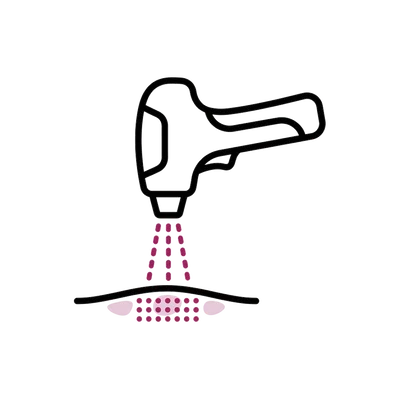
HIFU stands for High-Intensity Focused Ultrasound. It delivers focused ultrasound energy to precise depths beneath the skin, including the SMAS, the deep support layer a surgical facelift tightens. The energy heats tiny points in that layer just enough to trigger the body's natural repair response, which builds new collagen over the following months.1,3 The result is a gradual lifting and firming of the skin, with no cutting, no incisions, and no downtime.
The effect is not instant. Some tightening may be felt early, but the real change builds slowly as new collagen forms, becoming visible over two to three months and peaking at around three to six months1. Most people need only a single session.2 The result then lasts roughly one to two years before the natural ageing process catches up and a top-up is worth considering.
It is important to be honest about what HIFU can and cannot do. It suits mild to moderate laxity and gives a subtle, natural lift to the brow, jawline, neck, and under the chin. It is not a replacement for a surgical facelift. If you have significant sagging or a lot of loose, excess skin, HIFU will not match what surgery achieves, and a good clinic will tell you so plainly rather than sell you a session that disappoints.
It can address a range of concerns, including:
Am I a Good Candidate for HIFU / Ultherapy?
HIFU suits most healthy adults with mild to moderate skin laxity, but it is not right for everyone or every degree of sagging. Here is what a good clinic assesses before treating you.
Good candidates have mild to moderate laxity, where the skin is starting to soften rather than significantly sagging.
Lower face: softening jowls and a jawline losing definition are the most popular areas.
Brow & neck: a gentle brow lift and firming of crepey neck skin respond well.
Under-chin & décolletage: loosening skin under the chin and on the upper chest can be firmed.
HIFU firms and lifts subtly, it does not transform, and understanding that is what separates happy patients from disappointed ones.
It is gradual: the result builds over two to three months and peaks at three to six, not immediately.
It is subtle: a natural firming and modest lift you notice over time.
It is not surgery: significant sagging needs a surgical facelift, which HIFU cannot match.
HIFU is low-risk, but a few situations mean it should wait or be avoided.
General health: most healthy adults are suitable; mention any medication or condition at consultation.
Not during pregnancy: HIFU is not advised while pregnant or breastfeeding.
Treatment area: avoid over active infection, open lesions, or implants in the area.
Around events: allow at least three months for the result to develop.
As with any aesthetic treatment, motivation matters as much as suitability.
Your decision: the choice should be your own, not to please anyone else.
Bothered by early laxity: the best results come when there is mild to moderate softening that genuinely bothers you.
Comfortable with subtle: it suits people happy with a natural, gradual lift rather than expecting a dramatic change.
Who is not suitable for hifu / ultherapy?
- Pregnant or breastfeeding
- Significant sagging or excess loose skin that needs a surgical facelift
- Active skin infection, open lesions, or wounds in the treatment area
- Isotretinoin (Accutane) use now or within the past 6 months, or recent cystic acne in the treatment area
- A personal history of keloid or hypertrophic scarring
- On blood thinners or regular NSAIDs without clearance (raises the chance of bruising)
- Implants or metallic devices in the treatment path (semi-permanent fillers such as poly-L-lactic acid or calcium hydroxyapatite in the path may need avoiding; HA filler is usually fine, so check with the clinic)
- Expecting an immediate or dramatic lift from a single session
Pricing
How Much Will HIFU / Ultherapy Cost in Thailand?
What hifu / ultherapy costs at accredited hospitals in Thailand, and what your final quote depends on.
Get your exact price
Tell us what you're considering and we'll send a personalised quote from accredited clinics within 24 hours.
Get my free quoteTypical prices in Thailand
Typical ranges based on recent hospital quotes. Your exact price depends on the hospital and how complex your case is, and is confirmed at your teleconsultation.
HIFU / Ultherapy
HIFU delivers focused ultrasound energy to deep layers beneath the skin, heating them to trigger new collagen that gradually lifts and firms without any cutting.
| Single small area A single zone such as under the chin or the brow | $200 to $450 ฿6,800 to ฿15,300 |
| Lower face and jawline Firms early jowls and sharpens a softening jawline | $400 to $800 ฿13,600 to ฿27,200 |
| Full face and neck (Ultraformer or generic device) Treats the brow, cheeks, jawline, under-chin and neck together | $600 to $1,000 ฿20,400 to ฿34,000 |
| Full face and neck (Ultherapy) The same coverage on the branded, ultrasound-visualised system | $900 to $1,200 ฿30,600 to ฿40,800 |
Get your exact price
Tell us what you're considering and we'll send a personalised quote from accredited clinics within 24 hours.
Hospitals Trusted for HIFU / Ultherapy
From internationally accredited flagships to dedicated specialist hospitals, these are the kinds of facilities where international patients have this procedure.

Bumrungrad International Hospital
Southeast Asia's flagship private hospital, treating over 520,000 international patients a year.
View hospital profile
Kamol Cosmetic Hospital
The only specialist cosmetic surgery hospital in Thailand to hold JCI accreditation.
View hospital profile
Yanhee International Hospital
A 400-bed hospital known worldwide for high-volume cosmetic surgery.
View hospital profile
Get a Free Quote in Two Minutes
Tell us what you're considering. We'll match you with suitable specialists and provide real hospital pricing.
- Honest pricing with no markups
- Matched to a specialist for your procedure
- No obligation, no pressure


Rated 5 stars by our patients
The complete guide to HIFU / Ultherapy in Thailand
Everything below is for readers who want the full detail: costs broken down, types and techniques, recovery, risks and safety, and planning your trip.
Where to Get HIFU in Thailand
With HIFU, the clinic, the device, and the operator matter far more than the marketing. Here is what to consider when choosing where to be treated in Thailand.
Reputable Clinics & Genuine Devices
The best results come from clinics using a genuine, well-maintained device, whether a branded system like Ultherapy or Ultraformer, rather than an anonymous bargain machine (see Devices & Approaches above on why this matters). A reputable clinic treats HIFU as the medical aesthetic procedure it is, with a proper assessment of your skin first.
A Trained, Experienced Operator
The person delivering the energy matters as much as the machine. Correct depth, the right cartridges, even coverage, and the right number of lines are what produce a good, safe result, and what avoid the rare problem of over-treating. Look for a clinic where an experienced operator performs the treatment and explains how they will approach your areas, rather than rushing through a fixed package.
Honest Assessment of Suitability
The most important thing a good clinic offers is honesty about whether HIFU is right for you at all. If your laxity is mild to moderate, it is a sensible non-surgical option. If you have significant sagging or excess skin, a clinic acting in your interest will say that HIFU will underwhelm and that surgery is the better route. Be wary of anyone promising a dramatic facelift result from a non-surgical machine.
Typical HIFU Results
HIFU results are real but subtle, and they build slowly. Here is what a realistic outcome looks like and how it changes over the months after treatment.
What HIFU Realistically Achieves
HIFU gives a gradual lifting and firming of the skin, sharpening a softening jawline, firming early jowls, lifting the brow a little, and tightening loosening skin on the neck and under the chin. It is a subtle improvement that makes the skin look firmer and a touch lifted, not a transformation. It does not remove excess skin or match a surgical facelift, and on significant sagging it will underwhelm. A natural, modest lift is the realistic and intended outcome.
How Results Change Over Time
You will see little immediately, then a steady change as new collagen forms over two to three months, peaking at around three to six months. From there the result gradually softens over the next year or two as natural ageing continues. A top-up session around the one to two year mark maintains the effect. Because the change is gradual, it tends to look natural, with no obvious before-and-after moment.
HIFU Cost in Thailand
Average Cost of HIFU
HIFU in Thailand typically costs between $200 and $1,200, depending on the area treated and the device used. A single small area such as the under-chin or brow sits at the lower end, while a full face and neck on a branded system like Ultherapy sits at the top. The biggest swing is the device: a generic machine costs far less than Ultherapy, though the quality of the result depends as much on the operator as the brand. Always confirm exactly which areas and how many lines of energy a quote includes.
Per Area vs Full Face
Pricing by single area is the clearest way to buy a small, targeted treatment, because you pay only for the zone you want. Full-face-and-neck pricing is better value per area if you are treating several zones at once, which most people do. Either is fine, as long as the clinic is clear about which areas are covered and how many lines of energy are included, since lines, not just area, determine how much treatment you actually receive.
What Affects the Price?
The device is the biggest factor: Ultherapy, with its visualisation and FDA clearance, costs more than Ultraformer or a generic machine. After that comes the number of areas and the number of lines of energy delivered, which together set how much treatment you receive. The operator's experience is the variable that does not show on the price list, and an experienced operator delivering even, correctly placed energy is usually better value than the cheapest machine in town.
Thailand vs International Price Comparison
HIFU in Thailand costs far less than in the US ($1,500–$4,500), Australia (A$1,800–A$5,000), and the UK (£1,000–£3,000), largely reflecting lower operating costs rather than weaker standards, since the leading devices are the same internationally. Because a single session can save a meaningful amount, HIFU travels better than some smaller treatments. It still makes most sense combined with a trip or other treatments, where the convenience and lower price are a genuine bonus.
HIFU vs Thermage
HIFU and Thermage are often compared because both firm the skin without surgery, but they use different energy and work at different depths, so they are frequently complementary rather than direct rivals.
HIFU uses focused ultrasound to reach deep layers, including the SMAS, the same support layer a surgical facelift tightens. That depth is what gives it a genuine lifting effect on the brow, jawline, and neck. Thermage uses radiofrequency energy, which heats the skin more broadly to tighten the surface and improve texture and crepiness, working shallower than HIFU.
In short, HIFU is the better tool when the goal is lifting deeper structure, while Thermage is often chosen to tighten and smooth the skin's surface over a wider area. Some people have both, or are guided to one over the other depending on whether their main concern is lift or surface tightening. A good clinic will tell you which suits your skin, and it is a fair question to ask directly.
What HIFU Can Treat
The same focused ultrasound is tuned to different depths and areas to do different jobs. Most people treat the lower face and neck, where early laxity tends to show first, but HIFU can address several zones.
Full-Face & Neck Lift
The most complete treatment, covering the brow, cheeks, jawline, under the chin, and neck in one session. It firms the whole lower face and softens the transition into the neck, which is where age tends to show first. Results build gradually over the following months for an overall lift rather than a change to any single feature.
- Treats the brow, cheeks, jawline, under-chin, and neck together
- The most popular option for overall facial firming
- Builds gradually for a balanced, even result
- Best for: mild to moderate laxity across several areas
Brow Lift
Focused energy along the brow and upper face encourages a gentle lift that opens up the eyes and softens a heavy or lowered brow. It is a far more subtle effect than a surgical brow lift, but it suits early softening where surgery would be too much. Often combined with the rest of the upper face.
- A gentle, non-surgical lift to the brow line
- Opens up the upper face and softens a heavy brow
- Far subtler than surgery, with no downtime
- Best for: early brow descent that surgery would overtreat
Jawline & Jowl Tightening
Treating along the lower face firms softening jowls and helps sharpen a jawline that is starting to lose definition. This is one of the most popular HIFU areas because the jaw is often where laxity first becomes noticeable. The effect is a firmer, cleaner contour rather than a dramatic change.
- Firms sagging jowls and redefines the jawline
- One of the most requested HIFU treatments
- A cleaner contour rather than a dramatic lift
- Best for: early jowling and a softening lower face
Under-Chin (Submental)
The submental area beneath the chin firms with focused ultrasound, tightening loosening skin and improving the line between chin and neck. It works on skin laxity rather than fat, so it is not a substitute for treatments that remove a double chin, but it sharpens the area where mild looseness has set in.
- Firms loosening skin under the chin
- Improves the chin-to-neck transition
- Targets laxity, not fat under the chin
- Best for: mild submental skin looseness
Neck & Décolletage
The neck and upper chest are common early sites of crepey, loosening skin, and both respond to HIFU. Treatment firms the skin and improves texture, softening the lines that show ageing on areas often left out of facial routines. A natural firming rather than a transformation.
- Firms crepey skin on the neck and upper chest
- Improves texture on areas that age early
- A natural firming, not a dramatic change
- Best for: mild laxity and crepiness on the neck or décolletage
HIFU Devices & Approaches
"HIFU" covers several devices, and they are not all equal. The brand matters less than two things: that the machine is genuine and properly maintained, and that a trained operator uses the correct depth cartridges for your skin. Underpowered or counterfeit machines are a real problem in cut-price settings.
Ultherapy (Merz)
The most established branded system and the one cleared by the US FDA for lifting the brow, lifting the skin under the chin and on the neck1, and improving lines and wrinkles on the décolletage. Its defining feature is ultrasound visualisation: the operator can see the layer being treated on a screen, which helps deliver the energy to the right depth rather than working blind. It is usually the most expensive option, reflecting the device and the consumables.
- FDA-cleared for lifting the brow, chin, and neck, and for décolletage lines
- Ultrasound visualisation lets the operator see the treated layer
- The most studied and recognised HIFU brand
- Best for: those who want the established, visualised system
Ultraformer III / MPT
A widely used cartridge-based system, very popular across Asia, that delivers focused ultrasound at multiple depths through interchangeable cartridges. It is well regarded and often more affordable than Ultherapy, which is part of why it is so common in the region. As with any device, the result depends heavily on a trained operator choosing the right depths.
- A popular multi-depth cartridge system across Asia
- Often more affordable than Ultherapy
- Well regarded when used by a trained operator
- Best for: a capable, lower-cost alternative to Ultherapy
Generic & Unbranded HIFU
Many clinics advertise cheap "HIFU" on unbranded or generic machines. Some are perfectly capable, but this is also where underpowered devices and outright counterfeits appear, machines that cannot reach the right depth or deliver consistent energy, so the result is weak or unpredictable. A very low price is the most common warning sign. There is no reliable way for a patient to tell a good generic device from a poor one, which is why the clinic and operator matter so much.
- Quality ranges from capable to underpowered or counterfeit
- A very low price is the most common warning sign
- Hard for a patient to verify the device quality directly
- Best for: only where the clinic and operator are clearly reputable
The Operator & Correct Depth
The single biggest factor in a HIFU result is the person holding the handpiece. Focused ultrasound has to be delivered at the right depth for each area, using the correct cartridges, with even coverage and the right number of lines of energy. A skilled operator avoids over-treating, which is what causes the rare problem of fat loss or hollowing. The device is only as good as the hands using it.
- Correct depth and cartridge choice drives the result
- Even coverage matters more than the brand name
- Over-treating risks fat loss; skill avoids it
- Best for: everyone; the operator matters more than the device
What to Expect After HIFU
First 24 Hours
You can return to normal activity straight away.1,3 Some redness, tenderness, and a little swelling are common but usually mild and settle within hours to a day or two. There is no dressing and nothing to manage. You can fly the same day if you need to, and makeup can usually go on once any redness has eased.
First Week
Any redness or tenderness fades, and a few people notice slight tingling or a tender feeling to the touch over the treated area for a few days. There is no peeling, no bruising to wait out in most cases, and nothing that stops you carrying on with your trip. Use a gentle cleanser and moisturiser, and hold off on retinol, tretinoin, and acid exfoliants (AHAs, BHAs) for about three to five days, until any redness and tenderness have fully settled, then resume as normal. The ultrasound creates a mild inflammatory response that briefly raises photosensitivity, so wear a daily SPF 30 or higher and limit sun for the first week. At this stage you will not yet see much lifting, which is normal.
Months 2–3
This is when the real change starts to show. As new collagen forms in the deep layer, the skin gradually firms and lifts, and people around you may notice before you do. The effect is steady rather than sudden, which is part of why it looks natural.
Months 3–6
The result peaks as collagen production matures, giving the fullest lift and firming the single session will deliver. From here it gradually softens over the following year or two as natural ageing continues, which is when a top-up session is worth considering.
Can You Fly After HIFU?
Yes. There is no medical reason you cannot fly the same day as HIFU. At most you might have some mild redness or tenderness, which a flight does not affect. There is no dressing, no downtime, and nothing to manage in the air, which is part of why HIFU fits so easily into a trip.
When Can You Exercise and Wear Makeup?
You can usually resume normal activity, including exercise, the same day or the next, as there is no wound to protect. Makeup can generally be applied once any redness has eased, often within hours. Hold off on retinol, tretinoin, and acid exfoliants (AHAs, BHAs) for about three to five days until any tenderness settles, then resume your usual routine. Wear a daily SPF 30 or higher and limit sun for the first week, as the treatment briefly raises photosensitivity. Some clinics suggest avoiding very hot environments like saunas for a day or two, but the precautions are minimal compared with surgery.
When Will You See the Full Result?
HIFU is gradual, not instant. You may notice a little early tightening, but the real change builds as new collagen forms over two to three months and peaks at around three to six. This is the opposite of treatments that work immediately, so patience is part of the process. (If you are treating for a specific occasion, see Timing Around an Event under planning.)
Does HIFU Hurt?
HIFU is not painless, but it is well tolerated. As the energy is delivered, most people feel brief pulses of deep heat with a prickling or tingling sensation, strongest over bonier areas like the jawline and brow. It comes and goes with each line of energy rather than being constant, and it stops the moment the pulse ends.
A topical numbing cream can be applied beforehand to take the edge off, and is commonly offered for the more sensitive areas. Some clinics also use a mild painkiller before treatment for comfort. The sensation is a normal part of how HIFU works, since the heat is what triggers the collagen response, so a treatment you cannot feel at all may not be delivering effective energy.
There is little to manage afterwards. Any tenderness or redness settles quickly, and there is no recovery to nurse and nothing to take once you leave the clinic.
Risks and Safety of HIFU
HIFU has a good safety record when a genuine device is used by a trained operator, and almost all side effects are mild and short-lived. The risks worth knowing are mostly about the machine and the hands using it.
- Temporary nerve irritation causing brief tingling or muscle weakness (rare, resolves on its own)
- Fat loss or hollowing if an area is over-treated or the wrong settings are used (avoidable with a skilled operator)
- Weak or no result from an underpowered or counterfeit machine (the main avoidable disappointment)
The serious or lasting problems almost all trace back to two things: a poor or counterfeit device, and an undertrained operator using the wrong depth or over-treating. Both are avoidable. Choose a reputable clinic with a genuine, well-maintained machine and an experienced operator, and remember that the common side effects are minor and pass within days.
Is HIFU Safe in Thailand?
Yes, when you choose a reputable clinic with a genuine, well-maintained device and a trained operator. Focused ultrasound has a strong safety record, and the treatment itself is the same wherever it is performed. The difference between a safe, effective treatment and a poor one in any country comes down to the device and the operator, not the location. Reputable Thai clinics use recognised systems and experienced staff.
How to Reduce Your Risk
Choose a recognised device and a trained operator, and be sceptical of prices far below the market (the Devices & Approaches section above explains why). The practical question to ask is how the depth and number of lines will be set for your areas, since correct technique is what makes the result both safe and effective.
What If You Don't Like the Result?
The most common disappointment with HIFU is not a bad result but an underwhelming one, often because the laxity was too advanced for a non-surgical treatment, or the device was underpowered. This is why an honest assessment beforehand matters: a good clinic will tell you if surgery would serve you better. The treatment cannot be reversed, but it is not permanent either, so any subtle result fades gradually rather than being something you are stuck with.
Fitting HIFU Into Your Trip to Thailand
HIFU needs no recovery time, so it slots easily into a trip rather than dictating it. Here is how to plan it around the rest of your stay.
No Dedicated Stay Needed
Unlike surgery, HIFU requires no minimum stay. You can have it on your first day and carry on with your trip, or fit it in before you head home. Because the result builds over months rather than needing in-person review, there is no need to extend your stay to see how it turns out.
Combining It With Other Treatments
HIFU is often part of a broader aesthetic plan rather than done alone. It pairs naturally with Botox for the upper face and dermal fillers for volume, and with surface treatments like Thermage or skin lasers, since HIFU works deeper than those. Many people having a larger procedure add HIFU in the same trip. Your clinic will sequence treatments sensibly so nothing interferes with anything else.
Timing Around an Event
Because HIFU is gradual, plan it well ahead of any occasion. Allow at least three months before a wedding or event so the lifting effect has had time to develop, ideally closer to the three-to-six month peak. Treating too close to an event means the result will not yet be visible. This is the opposite of treatments you time a couple of weeks out, so plan early.
Related Procedures
Other procedures that address similar goals or conditions, in case one of them is a closer fit for you.
Planning your treatment in Thailand
Independent guides to help you weigh the decision, before you commit to anything.
Common Questions About HIFU
Everything you need to know before your treatment

Medical References
Keep researching with AI
Open this guide in your AI assistant to dig deeper and ask the questions it didn't answer.
Opens in a new tab with this guide already loaded.
Medical disclaimer: This information is for educational purposes only and does not replace professional medical advice. Individual results, recovery times, and suitability vary. Always consult a qualified surgeon before making decisions about treatment.
Ready to Get Started?
Speak with our care coordinators for a free, no-obligation consultation and personalised quote.
Speak to Our Team