Body Lift in Thailand Your guide to cost, top surgeons & hospitals
You did the hard part losing the weight. A body lift is the surgery that lets your body finally show it.

What Is Body Lift?
Also known as: Lower Body Lift · Belt Lipectomy
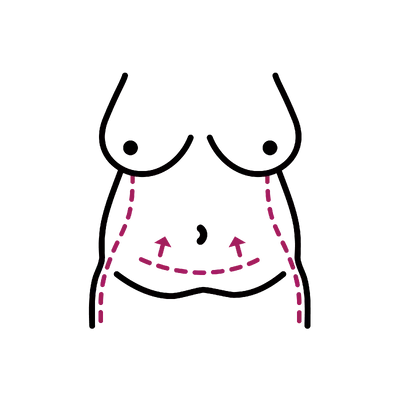
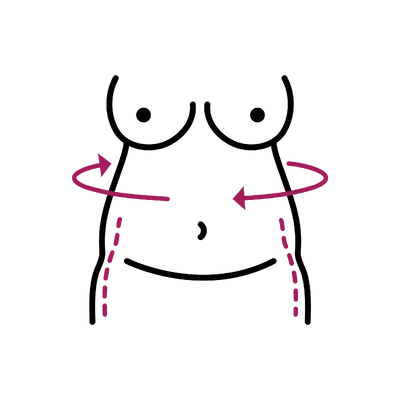
A body lift is surgery that removes a continuous belt of loose skin and fat from the lower torso through an incision running right around the waistline. Formally a belt lipectomy, it treats the abdomen, flanks, lower back, hips, and outer thighs in one operation, combining a tummy tuck, flank lift, and buttock lift. The tissue removed is gone for good, and the result lasts well as long as your weight stays stable.3,2 It is major surgery, usually under general anaesthesia over 4 to 6 hours, with a 3 to 5 night stay.
This is the operation people reach for when diet and exercise have done all they can and loose skin remains. After major weight loss, that skin can feel like it does not belong to the new you. Your surgeon plans the incision around your own pattern.
For most people with significant excess skin the change is dramatic, though it asks something honest in return: a long scar that sits where underwear covers it, and a recovery measured in months. Whether one operation is enough, or the upper body is better staged, is worth talking through at consultation.
It can address a range of concerns, including:
Am I a Good Candidate for Body Lift?
Body lift outcomes hinge on preparation as much as surgical skill, so surgeons assess weight history, healing capacity, and recovery logistics before operating.
The circumferential repair only holds if your weight has genuinely settled, which is why surgeons gate this procedure on weight history first.
12 months stable: Surgeons want your weight held steady for at least 12 months after bariatric surgery or major weight loss before they will operate.
Further loss: Losing more weight after the lift creates new laxity the surgery cannot anticipate, compromising the result.
Further gain: Regaining weight stresses the long circumferential repair around your waistline.
Contouring, not reduction: Typically 2-5kg of skin and tissue is removed. The dramatic change comes from reshaping, not the scale.
Surgeons test whether your pattern of excess genuinely needs a circumferential operation, or whether a smaller procedure would do.
The belt test: If loose skin runs all the way around your waistline rather than sitting at the front alone, a tummy tuck stops short and a body lift is the right scale of operation.
At goal, still distorted: You qualify when buttock and outer thigh sagging persists even though the scale says you have arrived. That laxity is tissue, not fat, and only excision corrects it.
Function as well as form: Recurring rashes, infections, or skin breakdown inside redundant folds make you a candidate on medical grounds, not just cosmetic ones.
The three-operation test: If isolated procedures would take three or four separate operations to cover the same ground, you are the patient this surgery was designed for.
Wound separation along the belt incision is the headline risk, so surgeons screen your health and healing reserves closely.
Anaesthesia fitness: You need good cardiovascular health to tolerate 4-6 hours under general anaesthesia.
Nutritional status: After bariatric surgery, protein, iron, and haemoglobin must be optimised before travelling. Deficits significantly increase wound separation risk, and operative blood loss can be significant.
Six nicotine-free weeks: Nicotine in any form, including vaping, is one of the strongest predictors of wound breakdown along the full incision.
This is the most demanding recovery in body contouring, and surgeons treat your ability to commit to it as part of candidacy.
Hospital and drains: Expect 3-5 nights in hospital with drains in place for 5-10 days afterwards.
Help and access: You need single-storey accommodation and dedicated help for the first 2 weeks, when mobility is severely limited.
Time in Bangkok: Plan 14-21 days near the hospital. This is the one procedure where staying close to your surgical team is non-negotiable.
Realistic pacing: Desk work returns around week 4-6 and full recovery takes 2-3 months.
The transformation is dramatic, but surgeons want you clear-eyed about what the result involves and how long it takes.
Full belt scar: The scar runs completely around the body at the waistline. It sits where underwear covers it and matures over 12-24 months.
6-12 months to final: Swelling takes 3-6 months to resolve, and most patients consider 6 months the point where the result is close to final.
Upper body staged separately: Back rolls and bra-line excess need an upper body lift 3-6 months later. It is not performed simultaneously.
Revision is possible: Minor revision after body lift is not uncommon, and tissues need 12 months of settling before it is considered.
Who is not suitable for body lift?
- BMI still above roughly 30–32, where wound-complication risk is too high until further weight loss
- Weight not stable for at least 12 months
- Planning future pregnancies that would stretch the repaired abdomen
- Unoptimised protein, iron, or vitamin levels after bariatric surgery
- Nicotine use in any form within six weeks of surgery
- No dedicated help or step-free accommodation for the first 2 weeks
- Not fit for 4-6 hours of general anaesthesia
- Anyone expecting a weight-loss operation rather than contouring
- Personal or family history of DVT or PE, or a known clotting disorder, until specialist-assessed
- Poorly controlled diabetes, given the high wound-breakdown risk along the circumferential incision
Pricing
How Much Will Body Lift Cost in Thailand?
What body lift costs at accredited hospitals in Thailand, and what your final quote depends on.
Get your exact price
Tell us what you're considering and we'll send a personalised quote from accredited hospitals within 24 hours.
Get my free quoteTypical prices in Thailand
Typical ranges based on recent hospital quotes. Your exact price depends on the hospital and how complex your case is, and is confirmed at your teleconsultation.
Body Lift
Which lift you need depends on where the loose skin has settled after weight loss, and the upper and lower body are usually treated as separate operations months apart.
| Standard lower body lift A full circuit around the waist, tightening tummy, hips and outer thighs | $5,000 to $7,500 ฿170,000 to ฿255,000 |
| Lower body lift with buttock augmentation Uses your own tissue to restore buttock volume during the lift | $7,000 to $9,000 ฿238,000 to ฿306,000 |
| Lower body lift with liposuction Adds fat contouring of the flanks or thighs to refine the shape | $7,500 to $9,500 ฿255,000 to ฿323,000 |
| Upper body lift (staged) Treats the back, bra line and outer chest, usually as a second stage | $4,000 to $6,000 ฿136,000 to ฿204,000 |
Get your exact price
Tell us what you're considering and we'll send a personalised quote from accredited hospitals within 24 hours.
Hospitals Trusted for Body Lift
From internationally accredited flagships to dedicated specialist hospitals, these are the kinds of facilities where international patients have this procedure.

Rattinan Clinic
A specialist body contouring clinic in central Bangkok with over 14,000 BodyTite treatments performed.
View hospital profile
Kamol Cosmetic Hospital
The only specialist cosmetic surgery hospital in Thailand to hold JCI accreditation.
View hospital profile
Yanhee International Hospital
A 400-bed hospital known worldwide for high-volume cosmetic surgery.
View hospital profile
Get a Free Quote in Two Minutes
Tell us what you're considering. We'll match you with suitable specialists and provide real hospital pricing.
- Honest pricing with no markups
- Matched to a specialist for your procedure
- No obligation, no pressure


Rated 5 stars by our patients
The complete guide to Body Lift in Thailand
Everything below is for readers who want the full detail: costs broken down, types and techniques, recovery, risks and safety, and planning your trip.
Body Lift Surgeons & Clinics in Thailand
Body lift is the most demanding body contouring procedure a surgeon can perform. Choosing the right team is not just important, it is the single biggest factor in your outcome.
Leading Hospitals in Bangkok
Our partner hospitals have the infrastructure body lift requires, multi-night in-patient beds, blood bank access, ICU backup, and operating theatres equipped for extended procedures. These are full-scale hospitals, not aesthetic clinics. For a 4–6 hour surgery with a 3–5 night stay, hospital capability is not a nice-to-have; it is essential.
Experienced Body Lift Surgeons
Our partner surgeons are board-certified and experienced in circumferential body contouring. This is a niche within plastic surgery, not every surgeon who performs tummy tucks is equipped to handle a belt lipectomy. The relevant credentials are post-bariatric body contouring experience, comfortable operating times of 4+ hours, and a track record of managing the wound healing challenges these cases present.
What to Look for in a Surgeon
These are the markers we screen partner surgeons for, and the same ones worth understanding as you compare options: a meaningful annual volume of body lifts rather than the occasional case, before-and-after photos shown at 12 months rather than 6 weeks, and a clear surgical plan, including whether they use an autologous flap for buttock augmentation or leave the buttocks flat, which signals the level of detail they bring. A surgeon who rushes a consultation for a procedure of this magnitude is a poor fit, and we make sure you get the time this decision deserves.
Understanding Your Results
Body lift produces the most dramatic transformation of any single contouring procedure. Here is what to expect from the change and the timeline.
Typical Body Lift Results
The redundant skin belt is gone. The abdomen is flatter, the flanks are defined, the lower back is smooth, and the buttocks are lifted and repositioned. For patients who have lost 40+ kg, the difference is transformative, their body finally reflects the work they put into losing the weight. Clothing fits properly for the first time since the weight loss.
What Results Can You Expect?
The degree of change depends on how much excess tissue you carry. Patients with the most redundant skin see the most dramatic improvement. The scar is extensive, running completely around the body at the belt line, but it sits where underwear covers it. Your surgeon will use clinical photography and physical examination to set realistic expectations during consultation.
Body Lift Cost in Thailand
Average Cost of Body Lift Surgery
Body lift in Thailand typically costs between $4,000 and $9,500. This wide range reflects the variation in surgical complexity, a straightforward lower body lift sits at the lower end, while cases involving autologous buttock augmentation, extensive liposuction, or unusually large skin excisions push toward the upper range.
Cost Breakdown
The surgeon's fee is the largest component, reflecting the 4–6 hours of operating time. Hospital fees are higher than for smaller procedures because body lift requires a multi-night stay, extended theatre time, and more intensive nursing. Anaesthesia fees reflect the duration. Aftercare costs cover drains, compression garments, daily follow-up, and medications over a 2–3 week period.
What Affects the Price?
Operating time is the biggest variable. A straightforward belt lipectomy takes 4 hours; adding an autologous buttock flap, liposuction, or medial thigh lift component extends the surgery and increases the cost. The volume of tissue removed, the number of drains needed, and the length of hospital stay all affect the final figure.
Thailand vs International Price Comparison
Body lift in Thailand costs 40–60% less than equivalent procedures in the US ($14,000–$25,000), Australia (A$13,000–A$22,500), and the UK (£11,000–£19,000). Given the magnitude of this procedure, the savings are substantial, often $10,000 or more. The cost difference comes from lower facility and staffing costs in Thailand, not a difference in surgical quality or hospital standard.
Non-Surgical Alternatives to a Body Lift
If you have searched for a way to tighten loose skin after weight loss without surgery, you will have seen energy-based devices like radiofrequency, ultrasound, and laser tightening, alongside treatments such as fat freezing or fat-dissolving injections. It is worth being clear about what these actually do. Energy devices can firm skin that is only mildly lax, and the fat treatments reduce small, localised fat pockets. None of them removes skin.
After major or post-bariatric weight loss, the problem is not fat and it is not minor slackness, it is a genuine excess of redundant skin that hangs in a belt around the lower torso. No device can shrink that, and any tightening it does offer is subtle, temporary, and needs repeat sessions to maintain. For loose folds that cause rashes, chafing, or get in the way of movement, non-surgical treatment does not address the cause at all.
A body lift is the only route that physically removes the excess skin and tissue, and the result lasts as long as your weight stays stable. If your loose skin is mild and you are close to your natural shape, a less invasive treatment may be all you need. But if skin hangs in a circumferential roll after significant weight loss, surgery is what reconnects your shape to the work you have already done, and that is what the rest of this page covers.
Types of Body Lift
Body lift is not one-size-fits-all. The extent of surgery depends on where the excess sits and whether the upper body needs attention in the same phase or a separate one. Getting the staging right is as important as the surgery itself.
Lower Body Lift (Belt Lipectomy)
The standard procedure. A circumferential incision at the waistline removes excess skin from the entire lower torso, abdomen, flanks, lower back, hips, and outer thighs. Combines what would otherwise be a tummy tuck, flank lift, and buttock lift into one operation under one anaesthetic.
- 360-degree correction of the lower torso in a single operation
- Incision positioned along the belt line, concealed by underwear
- Includes abdominal muscle repair where needed
- Best for: post-bariatric patients with circumferential lower-torso skin excess
Upper Body Lift
Addresses excess skin on the upper back, bra line, and lateral chest. Usually staged 3–6 months after a lower body lift once the first procedure has healed. Can include breast lift or arm lift components. Not performed simultaneously with a lower body lift due to combined surgical risk.
- Removes back rolls, bra-line bulging, and upper-torso laxity
- Can be combined with breast lift, breast reduction, or brachioplasty
- Staged 3–6 months after lower body lift for safety
- Best for: patients with significant upper-torso skin excess, typically as phase two
Total Body Lift (Staged)
A planned two-stage approach addressing the entire body. Lower body lift first, then upper body lift 3–6 months later. This is the most comprehensive transformation available for post-bariatric patients. Each stage is a major operation, and both require separate recovery periods.
- Stage 1 addresses lower torso, hips, buttocks, and outer thighs
- Stage 2 addresses upper back, bra line, arms, and sometimes breasts
- Total recovery spans 6–12 months across both procedures
- Best for: patients with head-to-knee skin excess after massive weight loss (40+ kg)
Body Lift Techniques
The surgical technique determines how tissue is reshaped, how the buttocks are addressed, and how blood loss is managed during what can be a 4–6 hour operation.
Standard Belt Lipectomy
The workhorse technique. The patient starts prone (face-down) for the back, flanks, and buttock portion, then is repositioned supine (face-up) for the abdominal component. Excess skin and fat are excised in a continuous belt, and the remaining tissue is pulled down and closed under tension. Drains are placed bilaterally.
- Two-position surgery, prone first, then supine
- Continuous circumferential excision with layered closure
- Drains remain for 5–10 days post-operatively
- Best for: the standard lower body lift case with moderate to severe skin excess
Autologous Buttock Lift (Flap Technique)
A modification where tissue that would otherwise be discarded is repositioned as a flap to add volume and projection to the buttocks. Useful for patients who have lost buttock volume alongside skin laxity. Adds operative time but avoids the need for separate buttock augmentation.
- Repositions local tissue to augment flat or deflated buttocks
- No implants or fat transfer required, uses tissue already being moved
- Adds 30–60 minutes to the standard body lift operating time
- Best for: post-bariatric patients with both skin excess and loss of buttock volume
Liposuction-Assisted Body Lift
Liposuction is performed on the flanks, back, or thighs before or during the belt lipectomy to improve definition in areas where fat persists alongside skin laxity. Adds precision to the contouring but must be used cautiously to avoid compromising blood supply to the skin flaps.
- Targeted fat removal in areas not fully corrected by excision alone
- Improves waist definition and flank contour
- Must be conservative to maintain skin-flap blood supply
- Best for: patients with residual fat deposits alongside circumferential skin excess
Progressive Tension Closure (Drainless)
A closure technique where the skin flap is fixed to the deeper tissue layer with a series of internal sutures along the way, rather than relying on drains alone to manage the space left behind. Spreading the tension across many points takes the pull off the final scar line and closes the dead space that fluid would otherwise collect in. Some surgeons use it to reduce or remove the need for drains, though with an incision this long many still place drains as well.
- Internal quilting sutures anchor the flap and close off dead space
- Aims to lower seroma risk, the most common body lift complication
- Can reduce drain reliance, though long incisions often still use them
- Best for: patients wanting to minimise seroma and fluid-collection risk after a large excision
Body Lift Recovery Timeline
Week 1
Hospital stay of 3–5 nights. You will be on IV pain management and blood-thinning injections. Short supervised walks start on day 1 to reduce DVT risk. Drains collect fluid bilaterally. Standing upright fully is difficult, most patients walk bent forward initially. Daily monitoring by nursing staff and your coordinator.
Weeks 2–4
Drains are removed between days 5 and 10. Swelling and bruising are substantial but beginning to settle. Walking distance increases gradually. Most patients can manage basic self-care. You remain in Bangkok for follow-up appointments. Sitting for long periods is uncomfortable.
Weeks 5–8
Significant improvement in mobility and comfort. The new body contour starts to emerge as swelling resolves. Light walking is comfortable, and desk work is realistic from week 4–6 depending on how you are healing. Avoid bending, twisting, or lifting anything over 5kg during this period.
Months 3–12
By month 3, most normal activities resume. Moderate exercise from week 10–12. Full results become apparent between 6 and 12 months as tissues settle and the circumferential scar matures. The scar fades from pink to pale over 12–24 months.
When Can You Fly After a Body Lift?
Most patients can fly home at 14 days, though some surgeons prefer 3 weeks depending on healing progress. Body lift involves the largest incision of any cosmetic procedure and DVT risk is elevated, so flying clearance is more conservative than with smaller operations. Compression garments, in-flight movement, and adequate hydration are non-negotiable. Your surgeon makes the final call at your pre-departure check.
When Can You Return to Work and Exercise?
Desk work is realistic from week 4–6 for most patients, but energy levels remain below normal for the first two months. Physical work that involves lifting, bending, or sustained standing should wait until week 8–10 at minimum. Exercise starts with flat walking and builds to moderate cardio around week 10–12. Weight training and core work are the last to return, typically at month 3–4.
When Will You See Final Results?
You will see a dramatic change in body shape within the first month, but that is still an early preview. Swelling takes 3–6 months to fully resolve, and the circumferential scar continues maturing for 12–24 months. The buttock position may change slightly as tissues settle. Most patients consider 6 months the point where the result is close to final.
Anaesthesia for Body Lift Surgery
A body lift is performed under general anaesthesia, so you are fully asleep and aware of nothing for the entire 4 to 6 hours. A consultant anaesthetist stays with you from start to finish, managing your airway, fluids, and pain relief while monitoring you continuously. This is essential for an operation of this length, where you are repositioned partway through from face-down to face-up, and it is why a body lift belongs in a full hospital with an experienced anaesthesia team rather than a day clinic.
Because the procedure is long and the tissue disruption is extensive, the pre-operative assessment is more thorough than for smaller surgery. You will have blood work, a review of your heart and lung fitness, and confirmation that your protein, iron, and haemoglobin levels are optimised, since both anaesthesia tolerance and healing depend on it. Your anaesthetist also plans steps to lower the risks that come with a long operation, including measures to reduce clotting and to keep you warm and stable throughout.
You feel nothing during surgery. Afterwards, pain is controlled with intravenous medication in hospital and stepped down to oral tablets as you recover, and most patients describe the first days as deep tightness and soreness across the torso rather than sharp pain. It eases substantially by the second week, and the anaesthesia and pain plan is tailored to you well before the day of surgery.
Risks and Safety of Body Lift Surgery
Body lift is the most extensive body contouring procedure available, and its risk profile reflects that. Understanding these risks in advance is essential, not optional.
- Wound separation, the most common complication, particularly along the back and flank portions of the incision
- Seroma (fluid collection) requiring aspiration, common with large skin excisions3,1
- Haematoma requiring surgical drainage
- Deep vein thrombosis (DVT) or pulmonary embolism, elevated risk due to operating time and immobility1,2
- Skin-flap necrosis if blood supply is compromised (more likely in smokers)1,2
- Altered sensation along the circumferential incision, numbness, hypersensitivity, or dysaesthesia across the lower torso, common early and usually improving over months though it can be permanent in patches2,1
- Asymmetry in contour or scar position between sides
- Infection along the circumferential incision line
- Need for blood transfusion in some cases due to operative blood loss
Body lift carries a higher cumulative risk than isolated contouring procedures because of its length, the circumferential incision, and the tissue disruption involved. Surgeon selection and hospital capability matter more here than with any other cosmetic procedure. Every risk above should be discussed in detail during your consultation.
Is Body Lift Surgery Safe in Thailand?
Yes, at the right facility. Body lift requires a hospital with full surgical capabilities, not a day clinic. Our partner hospitals are JCI-accredited with intensive care units, blood bank access, and experienced anaesthesia teams capable of managing a 4–6 hour procedure safely. The surgeons performing these cases are board-certified and experienced with the specific demands of post-bariatric body contouring.
How to Reduce Your Risk
Stop smoking at least six weeks before surgery, wound healing along a circumferential incision is severely compromised by nicotine. Optimise your protein intake and haemoglobin levels before travelling. Body lift belongs in a hospital with in-patient facilities rather than a clinic that discharges same-day, which is why our partner facilities are full-scale hospitals. Walk within hours of surgery to reduce DVT risk. Follow drain care and compression garment instructions precisely during the multi-week recovery period.
When Is Revision Surgery Needed?
Revision after body lift is not uncommon. The most frequent reasons are scar widening, wound separation that heals with suboptimal scarring, asymmetry, or residual laxity in areas the initial procedure did not fully correct. Minor revisions can often be done under local anaesthesia. Allow at least 12 months before pursuing revision, tissues continue settling and scars continue maturing throughout that period.
Planning Your Trip to Thailand for Body Lift Surgery
Body lift requires the most planning of any cosmetic procedure. Here is what to organise before you travel.
How Long to Stay in Thailand
Plan for a minimum of 14 days, and 3 weeks is better. You will spend 3–5 nights in hospital, with the remaining time in nearby hotel accommodation for daily follow-up appointments, drain management, and wound checks. Your surgeon needs to confirm the circumferential incision is healing before clearing you to fly.
What's Included in a Medical Trip
Your coordinator manages the entire process, hospital admission, surgery scheduling, daily check-ins during your hospital stay, drain management instructions, and all follow-up appointments. A typical surgical quote covers surgeon fees, anaesthesia, hospital stay, compression garments, and medications, though exact inclusions are set by the clinic and confirmed in writing in your quote. Flights and accommodation are separate.
Recovery in Bangkok vs Phuket
Bangkok only. Body lift is the one procedure where staying close to the hospital is non-negotiable for the full recovery period. With a circumferential incision, the risk of wound complication is higher than any other cosmetic procedure. Being minutes from your surgical team for the first two weeks is not optional, it is part of the safety plan.
Related Procedures
Other procedures that address similar goals or conditions, in case one of them is a closer fit for you.
Planning your treatment in Thailand
Independent guides to help you weigh the decision, before you commit to anything.
Common Questions About Body Lift
Everything you need to know before your procedure

Medical References
Keep researching with AI
Open this guide in your AI assistant to dig deeper and ask the questions it didn't answer.
Opens in a new tab with this guide already loaded.
Medical disclaimer: This information is for educational purposes only and does not replace professional medical advice. Individual results, recovery times, and suitability vary. Always consult a qualified surgeon before making decisions about treatment.
Ready to Get Started?
No-obligation consultation and quote within 24 hours. Speak with a coordinator who can match you to the right surgeon and hospital.
Speak to Our Team