Breast Lift with Implants in Thailand Your guide to cost, top surgeons & hospitals
When the shape needs lifting and the volume needs restoring, one surgery handles both, and the results work together, not against each other.
What Is Breast Lift with Implants?
Also known as: Breast Uplift with Implants · Mastopexy-Augmentation
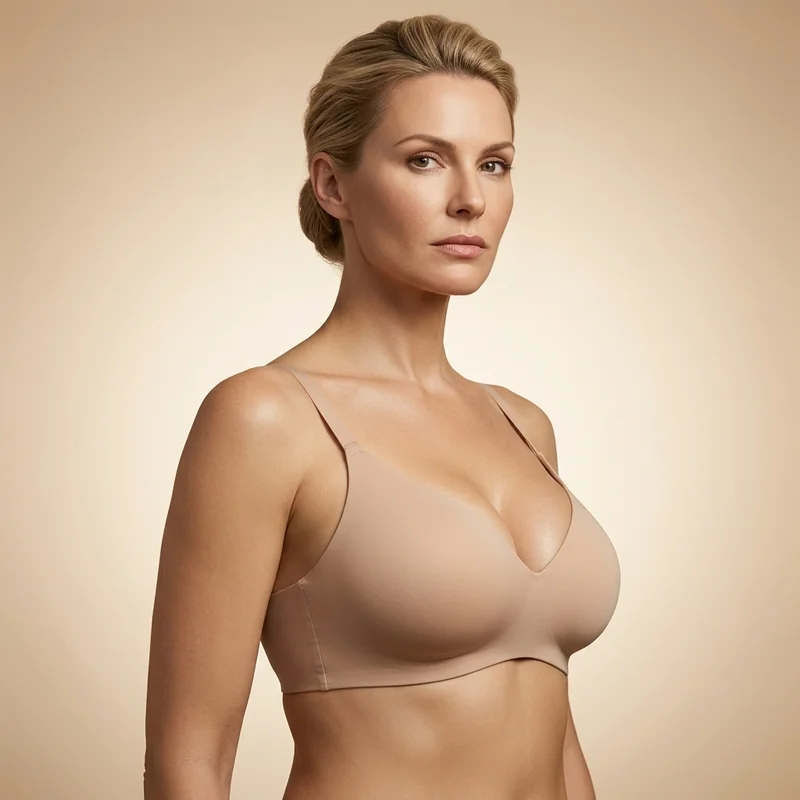
Breast lift with implants is surgery that raises and reshapes the breast while adding volume, by tightening the skin, repositioning the nipple, and placing an implant in one operation. The lift corrects sagging and lifts the nipple higher; the implant restores upper-pole fullness, the part a lift alone leaves looking deflated. Often called augmentation mastopexy, it usually takes 2.5 to 3.5 hours under general anaesthesia, with one night in hospital.
The two halves pull against each other, since the lift tightens the skin while the implant expands it. Your surgeon balances both in one plan, choosing an implant size the tightened skin can carry safely rather than the largest possible. Going too big is the most common cause of problems here.
Most people with moderate sagging and realistic sizing goals suit a single operation, though very thin tissue or significant droop can make a staged approach safer. The lift lasts well, but your breasts keep ageing over time.2 A consultation looks at your tissue and your goals, then tells you honestly what is achievable.
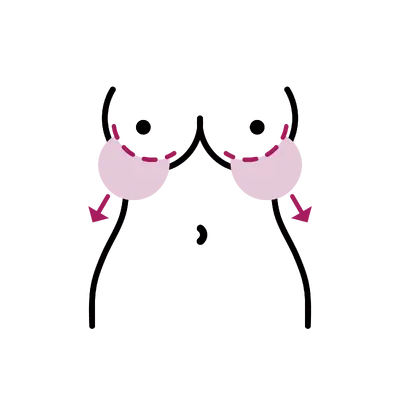
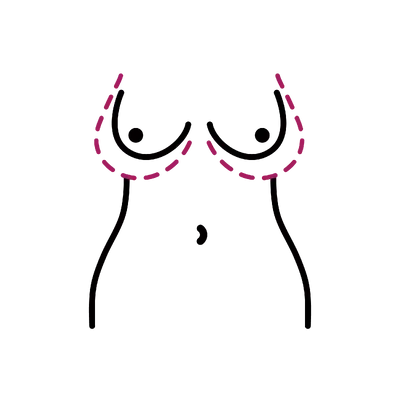
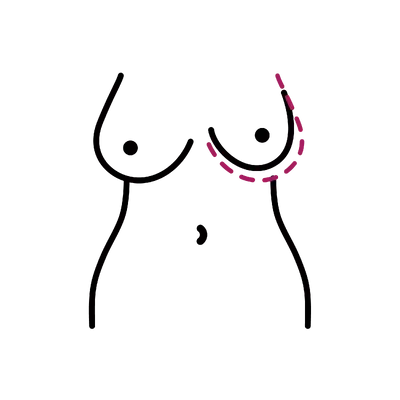
It can address a range of concerns, including:
Am I a Good Candidate for Breast Lift with Implants?
Combined surgery asks more of your tissue than either procedure alone, so surgeons screen candidates more carefully here than for standalone work.
This procedure exists for the combination a lift alone cannot fix: drooping plus deflation.
Both problems present: Sagging breasts that have also lost upper-pole fullness after pregnancy, breastfeeding, or significant weight loss are the classic presentation.
Classic markers: Nipples sitting at or below the crease with empty-looking upper poles point to the combined approach.
Lift alone falls short: If volume loss is part of the picture, a lift corrects position but leaves the breast looking deflated, which is exactly the gap the implant fills.
The lift tightens the very envelope the implant expands, so sizing discipline is a core suitability test.
Moderate volumes: Combined cases typically use 200-350cc; the tightened skin envelope sets the ceiling.
Flexible on size: Being set on a large implant the envelope cannot support is the single most common cause of complications, and it is entirely avoidable.
Tissue thickness: Skin elasticity and tissue quality determine what your envelope can safely carry long term; thin tissue narrows the options.
Whether both procedures can happen safely in one operation depends on your tissue, not your preference.
Single-stage suits most: Moderate ptosis with conservative implant goals is handled routinely in one session by experienced surgeons.
When staging is safer: Very thin tissue, severe ptosis, or a previous wound-healing issue may justify doing the lift first and augmenting 3-6 months later.
Surgeon-led call: The recommendation should come from an assessment of your tissue, not a blanket policy either way.
Future pregnancy or major weight change can undo both halves of the result.
Finished having children: Good candidates have completed their family or are not planning pregnancy in the near future.
12-18 month window: Pregnancy or significant weight loss planned within the next 12-18 months is a reason to delay surgery.
Stable weight: No major fluctuations planned, since weight change after surgery can compromise both the lift and the implant position.
Skin flaps healing under tension make blood supply the deciding health factor for this procedure.
Smoking cessation: Non-negotiable; you must stop at least 4 weeks before and after surgery, because nicotine directly impairs the tissue flap healing this operation relies on.
Healing history: Previous wound-healing complications shift the recommendation toward a staged approach.
Medication review: Blood-thinning medications, anti-inflammatory supplements, and herbal remedies all stop two weeks before surgery.
Who is not suitable for breast lift with implants?
- Set on a large implant the tightened skin envelope cannot support
- Planning pregnancy or major weight loss within 12-18 months
- Smokers not committed to stopping 4 weeks before and after
- Very thin or fragile tissue insisting on a single-stage operation
- History of wound-healing complications not disclosed or assessed
- Significant uncontrolled heart or lung disease, or otherwise not medically fit for general anaesthesia
Pricing
How Much Will Breast Lift with Implants Cost in Thailand?
What breast lift with implants costs at accredited hospitals in Thailand, and what your final quote depends on.
Get your exact price
Tell us what you're considering and we'll send a personalised quote from accredited hospitals within 24 hours.
Get my free quoteTypical prices in Thailand
Typical ranges based on recent hospital quotes. Your exact price depends on the hospital and how complex your case is, and is confirmed at your teleconsultation.
Breast implant prices
These are the implant brands available, the silicone shell and gel placed to restore upper-pole fullness once the breast has been lifted.
| Mentor The dependable option, with the longest track record of the four | $4,700 ฿159,000 |
| Motiva SilkSurface A smoother shell and a softer finish, for a more refined result | $4,950 ฿169,000 |
| Mentor XtraGel A softer, more cohesive gel that holds its shape well | $5,600 ฿189,000 |
| Motiva Ergonomix Motiva’s softest gel, designed to move and settle the way natural tissue does | $5,900 ฿199,000 |
Lift prices, added to the implant
The lift tightens loose skin and raises the nipple, with the scar pattern matched to how far the breast has dropped.
| Donut scar A single scar around the areola, for mild sagging | $2,450 ฿84,000 |
| Lollipop scar Around the areola and down to the crease, for moderate sagging | $3,200 ฿108,000 |
| Inverted T scar Around the areola, down to the crease and along it, for significant sagging | $4,250 ฿144,000 |
Added to the above where needed
| Revision case If you have had breast surgery before | $1,450 ฿50,000 |
Indicative total
Based on the options selected above. Your price is given at consultation.
$7,100 ฿243,000
Typical ranges based on recent hospital quotes. Your exact price depends on the hospital and how complex your case is, and is confirmed at your teleconsultation.
Get your exact price
Tell us what you're considering and we'll send a personalised quote from accredited hospitals within 24 hours.
Hospitals Trusted for Breast Lift with Implants
From internationally accredited flagships to dedicated specialist hospitals, these are the kinds of facilities where international patients have this procedure.
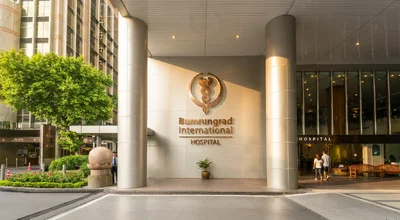
Bumrungrad International Hospital
Southeast Asia's flagship private hospital, treating over 520,000 international patients a year.
View hospital profile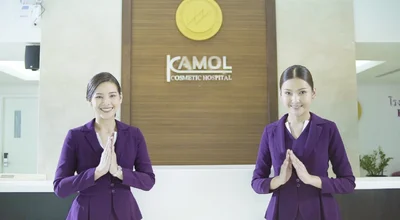
Kamol Cosmetic Hospital
The only specialist cosmetic surgery hospital in Thailand to hold JCI accreditation.
View hospital profile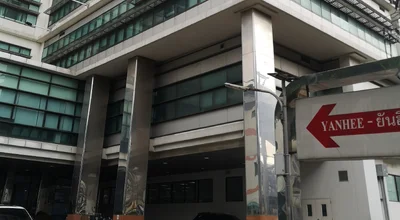
Yanhee International Hospital
A 400-bed hospital known worldwide for high-volume cosmetic surgery.
View hospital profile
Get a Free Quote in Two Minutes
Tell us what you're considering. We'll match you with suitable specialists and provide real hospital pricing.
- Honest pricing with no markups
- Matched to a specialist for your procedure
- No obligation, no pressure


Rated 5 stars by our patients
The complete guide to Breast Lift with Implants in Thailand
Everything below is for readers who want the full detail: costs broken down, types and techniques, recovery, risks and safety, and planning your trip.
Breast Lift with Implants Surgeons & Clinics in Thailand
This is one of the most technically demanding breast procedures. The surgeon you choose should have specific combined-case experience, not just separate lift and augmentation skills.
Leading Hospitals in Bangkok
Our partner hospitals are JCI-accredited international facilities in Bangkok with full plastic surgery departments. For augmentation mastopexy specifically, these facilities have the implant range, operating time flexibility, and overnight care infrastructure the procedure demands. They are hospitals, not clinics; if a wound-healing issue develops, the response is immediate and in-house.
Experienced Mastopexy-Augmentation Surgeons
Our partner surgeons hold Thai Board of Plastic and Reconstructive Surgery certification, with several having completed overseas fellowships in breast surgery specifically. Combined lift-and-augmentation is their regular workload, not a special request. The volume of international patients in Thailand means these surgeons see more tissue variation (skin types, degrees of ptosis, body types) than most surgeons in single-demographic practices elsewhere.
What to Look for in a Combined-Procedure Surgeon
Ask specifically about augmentation mastopexy, not lift and augmentation separately. Request before-and-after photos of combined cases with similar ptosis grade and body type to yours. A good surgeon for this procedure will have a clear opinion on implant size limits relative to your tissue and will tell you if your goals are unrealistic rather than agreeing to everything. If a surgeon cannot articulate why they chose a specific approach, keep looking.
Understanding Your Results
Combined lift-and-augmentation produces the most dramatic visible change of any breast procedure. Here is what to expect at each stage.
Typical Breast Lift with Implants Results
The combination addresses both ptosis and volume loss simultaneously. Nipples are repositioned to a higher, forward-facing position while implants restore upper-pole fullness and projection. The result is a breast that looks both lifted and volumised, a shape that neither procedure achieves as effectively on its own. Long-term, the lift component is stable and the implants maintain their position within the reshaped pocket.
What Results Can You Expect?
You will see an immediate improvement in shape and position, but the early result includes swelling and high-sitting implants. The true shape emerges over 3–6 months as implants settle and tissue adapts. Expect your surgeon to use clinical photography and possibly 3D imaging during the consultation to show you what is achievable with your specific anatomy and ptosis grade. Be realistic. This is a significant improvement, not a rebuild from scratch.
Breast Lift with Implants Cost in Thailand
Average Cost of Breast Lift with Implants
Augmentation mastopexy in Thailand typically costs between $7,150 and $10,100. A periareolar lift with moderate implants at the lower end, an anchor lift with submuscular placement and larger implants at the upper end. Because this is two procedures combined, the total is higher than either a standalone lift or augmentation, but significantly less than having them as two separate surgeries.
Cost Breakdown
The surgeon fee is the dominant component; this is a longer, technically demanding surgery that can run three hours or more. Hospital and theatre fees reflect the extended operating time and overnight stay. Anaesthesia is charged based on duration. Implants are itemised at cost, with price varying by brand, type, and size. Aftercare covers follow-up appointments, medication, and support garments during your recovery in Thailand.
What Affects the Price?
The lift pattern is the biggest variable. An anchor lift with extensive tissue reshaping takes longer and costs more than a periareolar or vertical lift. Implant brand and type also affect the total; anatomical or textured implants tend to cost more than smooth round ones. Surgeon experience with combined procedures is reflected in the fee, and for this particular surgery, that premium is worth paying.
Non-Surgical Alternatives to a Breast Lift with Implants
You will see "non-surgical breast lift" marketed in two forms. Thread lifts place dissolvable barbed sutures under the skin to tug the breast upward, while energy devices like radiofrequency and focused ultrasound aim to tighten skin a little. Separately, fat transfer can add modest volume by moving your own fat into the breast. Each is genuinely useful for a small, specific job: a subtle tweak on a breast that has barely started to droop, or a slight volume boost in someone who needs very little.
The limits are the whole point, though. None of these can lift a nipple that has dropped to or below the breast crease, remove excess skin, or restore real upper-pole fullness, which is exactly what augmentation mastopexy is built to do. Threads are temporary and the effect fades as the sutures dissolve, usually within a year or so; skin-tightening devices do little for true sagging; and fat transfer adds limited volume with partial reabsorption, never the structural reshaping an implant and a lift provide together. They also need repeating to maintain even a modest result.
When the nipple needs repositioning, loose skin needs removing, and the upper pole needs genuine fullness restored, surgery is the route to a lasting, structural result, and that is what the rest of this page covers.
Types of Breast Lift with Implants
The type of combined procedure depends on how much lift is needed and how much volume you want added. More ptosis means more incision, and implant size has to be calibrated to what the tightened skin can support.
Periareolar Lift with Implants
An incision around the areola only, suitable when sagging is mild and the nipple is close to its ideal position. The implant does most of the heavy lifting here. Volume fills out the upper pole and the areolar incision provides minor repositioning. Minimal scarring but limited corrective power for moderate or severe ptosis.
- Scar concealed around the areola border, least visible of all lift patterns
- Effective only for grade I ptosis where the nipple sits at or near the fold
- Implant provides most of the visual improvement; the lift is supplementary
- Best for: mild sagging with good skin tone where the main goal is volume restoration
Vertical (Lollipop) Lift with Implants
Incision around the areola and vertically down to the inframammary fold. Handles moderate ptosis effectively and gives the surgeon enough access to reshape tissue and create the implant pocket in a controlled way. The most commonly performed combination pattern because it suits the majority of candidates.
- Addresses grade II ptosis with meaningful nipple repositioning
- Vertical scar fades well and sits in a natural shadow line on the breast
- Good balance between corrective power and scar length
- Best for: moderate sagging with volume loss, the most common presentation for this combined procedure
Anchor (Inverted-T) Lift with Implants
The most extensive lift pattern, with incisions around the areola, vertically down, and along the inframammary crease. Reserved for significant ptosis with substantial excess skin. Provides maximum reshaping and repositioning control, but leaves more scarring. Implant sizing must be conservative here because the skin envelope has been tightened aggressively.
- Maximum corrective power for grade III ptosis and severe skin laxity
- Longer scar pattern but strategically placed within natural breast contours
- Implant volume is typically kept moderate to avoid overloading the tightened envelope
- Best for: significant drooping with large amounts of excess skin requiring substantial tissue removal
Breast Lift with Implants Techniques
The techniques used in augmentation mastopexy revolve around two decisions: where the implant goes and how the lift is structured around it. Both have to work together, not independently.
Implant Pocket Placement
Submuscular (under the pectoralis), subglandular (above the muscle), or dual-plane placement each affects how the implant interacts with the lifted tissue. Submuscular provides more coverage and a lower capsular contracture rate. Subglandular gives more immediate projection. Dual-plane splits the difference and is often the default for combination cases because it allows the lower pole to shape naturally.
- Submuscular: better long-term coverage, lower contracture risk, but animation possible
- Subglandular: more projection, faster recovery, but higher visibility in thin patients
- Dual-plane: lower half of the implant sits beneath breast tissue, upper half beneath muscle
- Best for: dual-plane suits most mastopexy-augmentation patients; submuscular for thin tissue; subglandular only with adequate coverage
One-Stage vs Two-Stage Approach
The staging debate is real. Performing both procedures in one session saves time and cost, but the technical difficulty is higher. Some surgeons prefer staging: doing the lift first, letting it heal for three to six months, then augmenting in a second surgery. Staging reduces the risk of wound-healing complications but doubles the recovery periods and cost.
- One-stage: single recovery, lower total cost, but higher technical demand on the surgeon
- Two-stage: lower wound-healing risk, more predictable pocket creation, but two surgeries and two recoveries
- Most experienced mastopexy-augmentation surgeons perform single-stage safely and routinely
- Best for: one-stage suits most patients with an experienced surgeon; two-stage for very high ptosis or thin, fragile tissue
Implant Sizing in Combined Surgery
Implant selection in a combined procedure is more constrained than in augmentation alone. The surgeon has to account for the tightened skin envelope, the repositioned nipple, and the blood supply to the lifted tissue. Going too large risks wound-healing problems, bottoming out, or recurrent ptosis. Conservative sizing that works with the lift rather than against it is the safer approach.
- Size is limited by the tightened skin envelope; larger is not always better here
- Moderate volumes (200–350cc) are the most common range for combined cases
- Overly large implants increase the risk of recurrent ptosis and wound breakdown
- Best for: patients who want a proportional increase in fullness that complements the lift rather than overwhelming it
Internal Bra (Mesh or Dermal Matrix Support)
An internal bra adds a layer of support inside the breast, using a resorbable mesh or an acellular dermal matrix sling to cradle the lower pole and take some of the implant's weight off the tightened skin. Because the implant constantly pulls down on tissue that has just been lifted, this internal support helps hold the shape and reduces the tendency to bottom out or droop again over time. It is not needed in every case, but it is a genuinely useful option for weaker tissue or larger implants, and not every surgeon offers it.
- A resorbable mesh or dermal-matrix sling supports the lower pole from inside
- Takes implant weight off the lifted skin, helping prevent recurrent ptosis and bottoming out
- Adds to the cost and is reserved for cases where the tissue needs the extra support
- Best for: thin or stretched tissue, larger implants, or anyone at higher risk of the lift loosening over time
Breast Lift with Implants Recovery Timeline
Days 1–3
The chest feels tight and firm from both the lift and the implant placement. Bruising concentrates around the incision lines and is more widespread than after either procedure alone. Pain medication keeps things manageable. Your coordinator checks in daily, and gentle walking is encouraged from day one to support circulation.
Weeks 1–2
Bruising fades and the acute tightness begins to ease. You can see the new lifted, fuller shape taking form even through the remaining swelling. A follow-up at the end of week one checks incision healing and removes any drains. Most patients feel comfortable enough for light daily activities by day ten.
Weeks 3–6
Swelling steadily reduces and the implants begin settling into the lifted pocket. Light lower-body exercise can resume around week four. Upper-body work, chest exercises, and heavy lifting stay off-limits until week six at minimum. Scars start the long process of fading during this phase.
Months 3–6
Full exercise, including chest and upper-body work, has already been cleared by the six-to-eight-week mark, so by this phase you are back to all activities without restriction. The final shape and position now establish themselves as the implants drop into place within the lifted tissue. By month three, the lifted contour is largely set. Scars continue maturing, moving from pink and raised to flat and pale over the following months.
When Can You Fly After Breast Lift with Implants?
Plan to stay 10–14 days before flying home. This allows time for your follow-up appointment, drain removal if applicable, and confirmation that incision healing is progressing well. The combined procedure has more incision lines under more tension than either surgery alone, so your surgeon wants to see stable wound healing before clearing you for air travel.
When Can You Return to Work and Exercise?
Most patients return to desk-based work around two weeks post-surgery. Light walking starts from day one. Driving is usually safe from around two weeks, once you are off prescription pain medication and can brace, grip the wheel, and perform an emergency stop without chest pain restricting the movement. Lower-body exercise can resume around week four, but anything involving the chest (lifting, pushing, pulling) should wait until at least six weeks, possibly longer depending on your lift pattern and how the incisions are healing. Full exercise clearance is usually given at the six-to-eight-week mark.
When Will You See Final Results?
You will see the new shape emerging within the first few weeks, but final results take 3–6 months. The implants need to settle into the lifted pocket, and the tissue needs to adapt to carrying volume in its new position. Scars take 12–18 months to fully mature. The three-month mark gives a reliable preview, but subtle refinements in shape and softness continue beyond that.
Anaesthesia for Breast Lift with Implants
Augmentation mastopexy in Thailand is performed under general anaesthesia, so you are fully asleep for the whole operation and feel nothing while the lift and the implant placement are carried out. Because this combines two procedures and usually runs two and a half to three and a half hours, a consultant anaesthetist stays with you throughout and monitors you continuously, which is standard at the accredited hospitals we work with.
General is the right choice here rather than sedation: the surgeon needs you completely still to balance the tightened skin envelope against the implant and to reshape both breasts symmetrically. Your anaesthetist reviews your history and confirms the plan with you before the day, and because of the longer operating time you stay one night in hospital so the team can watch you closely as the anaesthetic wears off.
Before you are cleared you have a pre-operative assessment, including blood tests and a review of any medications, supplements, and your smoking status, since nicotine affects the skin-flap healing this surgery depends on. You feel nothing during the procedure. When you wake, the chest feels tight and firm rather than sharply painful, more so than after a lift or an augmentation alone, and that tightness is well controlled with the pain relief your surgeon prescribes and eases over the first week or two.
Risks and Safety of Breast Lift with Implants
Combining two procedures means combining two risk profiles. The main concerns specific to augmentation mastopexy relate to wound healing under tension and implant behaviour within a newly tightened envelope.
- Wound-healing complications at incision sites: more likely than with either procedure alone due to tension on tissue1
- Capsular contracture around the implant (same risk as standard augmentation)3,4
- Nipple or areola sensation changes, temporary or permanent1,2
- Recurrent ptosis if implant weight stretches the lifted tissue over time
- Implant malposition as the pocket adjusts within the reshaped breast
- Asymmetry in nipple position, breast shape, or implant height
- Scarring that is more extensive than lift-only or augmentation-only (multiple incision patterns)
- Need for revision surgery to adjust implant position, scar appearance, or nipple placement1,3
The main risk-reduction lever is conservative implant sizing. Going too large for the tightened skin envelope is the single most common cause of complications in combined surgery, and it is entirely avoidable with proper planning.
Is Breast Lift with Implants Safe in Thailand?
Yes. At JCI-accredited hospitals with board-certified plastic surgeons, the safety profile matches that of leading international facilities. The combined procedure is well-established and performed at high volume in Thailand. The added complexity compared to standalone procedures makes surgeon selection especially important, and our partners have the combined-case experience to manage it.
How to Reduce Your Risk
Choose a surgeon who performs augmentation mastopexy as a regular part of their practice, not an occasional request. Confirm JCI accreditation for the hospital and Thai Board certification for the surgeon. Be honest about your expectations. If you want very large implants with a significant lift, your surgeon should push back rather than accommodate an unsafe plan. Follow pre-operative instructions precisely, especially regarding smoking cessation, because nicotine impairs the tissue healing that this surgery depends on.
One Surgery or Two: Which Is Safer?
The one-stage vs two-stage debate is genuinely relevant for this procedure. Single-stage is safe when performed by experienced surgeons on appropriate candidates: moderate ptosis with conservative implant sizing. Two-stage may be recommended for extreme ptosis, very thin tissue, or patients who want large implants, because it reduces wound-healing risk by separating the tension of the lift from the expansion of the augmentation. Your surgeon should make this recommendation based on your tissue, not as a blanket policy.
Planning Your Trip to Thailand for Breast Lift with Implants
Most patients need 10–14 days in Thailand for a combined lift-and-augmentation. Here is how to plan your trip and what to expect at each stage.
How Long to Stay in Thailand
Plan for 10–14 days minimum. The combined procedure has more incision lines and tissue management than standalone surgery, so your surgeon wants to see you at least once after the initial healing phase before clearing you to fly. Your trip covers the pre-operative consultation, the surgery itself with one night in hospital, and recovery including follow-up appointments.
What's Included in a Medical Trip
Your care coordinator handles hospital scheduling, transfers, and all post-operative follow-up logistics. The surgical quote covers surgeon fees, anaesthesia, implants, hospital stay, and aftercare including medication and support garments. Flights and accommodation are arranged separately, though your coordinator can recommend nearby hotels suited to surgical recovery.
Recovery in Bangkok vs Phuket
Stay in Bangkok for the full recovery period. Augmentation mastopexy has more wound-healing variables than simpler breast procedures, and being close to your surgical team during the first two weeks is not optional; it is necessary. If an incision needs attention or swelling is not resolving as expected, you want to be minutes from the hospital, not a flight away.
Related Procedures
Other procedures that address similar goals or conditions, in case one of them is a closer fit for you.
Planning your treatment in Thailand
Independent guides to help you weigh the decision, before you commit to anything.
Common Questions About Breast Lift with Implants
Everything you need to know before your procedure

Medical References
Keep researching with AI
Open this guide in your AI assistant to dig deeper and ask the questions it didn't answer.
Opens in a new tab with this guide already loaded.
Medical disclaimer: This information is for educational purposes only and does not replace professional medical advice. Individual results, recovery times, and suitability vary. Always consult a qualified surgeon before making decisions about treatment.
Ready to Get Started?
Speak with our care coordinators for a free, no-obligation consultation and personalised quote.
Speak to Our Team