Breast Implant Removal in Thailand Your guide to cost, top surgeons & hospitals
Some decisions are about going back to yourself: lighter, freer, and done with something that no longer fits your life.

What Is Breast Implant Removal?
Also known as: Breast Explant · Explantation
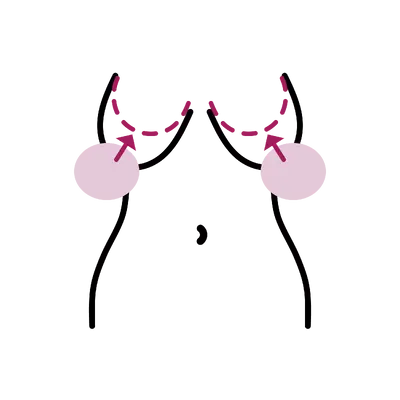
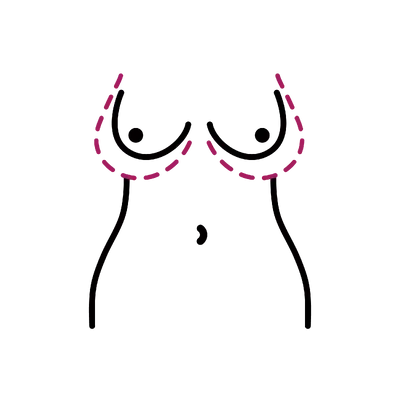
Breast implant removal is surgery that takes implants out through the existing scar, with or without removing the capsule, the shell of scar tissue that forms around each implant. It treats capsular contracture, suspected or confirmed rupture, and symptoms some people link to their implants, or simply ends years of monitoring an implant you no longer want. A simple removal can take around 30 minutes, while an en bloc capsulectomy, where the implant and its whole capsule come out as one sealed piece, can run past two hours.
Deciding to take implants out can feel as big as deciding to put them in. Your surgeon plans the approach around your records, your imaging, and how you want your chest to look afterwards. Whether you have removal only, or a lift or fat transfer too, is talked through with you.
Breasts usually settle close to their pre-implant shape, though not identical, since implant weight stretches the skin over the years. Whether removal alone is enough is best worked out at consultation.
It can address a range of concerns, including:
Am I a Good Candidate for Breast Implant Removal?
Explantation goes smoothest when the reasons, records, and post-removal plan are clear in advance; surgeons assess all three.
There is no wrong reason to remove implants, but the reason shapes the surgical approach.
Capsular contracture: Firmness, pain, or visible distortion of the breast is a clear case for removal.
Rupture concerns: Suspected or confirmed rupture, leakage, or shell degradation; en bloc capsulectomy is the standard recommendation for ruptured silicone.
BII symptoms: Fatigue, joint pain, or brain fog attributed to implants; recent blood work and autoimmune screening should rule out other causes first.
Personal choice: No longer wanting implants, or anxiety about ageing implants and ongoing monitoring, is a valid reason in itself.
What the surgeon knows before opening the pocket directly shapes the safety of the operation.
Implant card and notes: Your original implant card and operative notes tell the surgeon exactly what they are removing and how it was placed.
Pre-explant imaging: Ultrasound or MRI showing capsule condition and implant integrity is the single biggest complication-reducer in this surgery.
Send ahead: Sharing imaging and records before you travel lets your surgeon review the case remotely and arrive at your first appointment with a plan.
Stop smoking: Quitting at least 4 weeks before surgery belongs on the same pre-travel checklist; it supports wound healing along the explant incisions.
Good candidates arrive decided, or ready to decide, on what happens after the implants come out.
Simple removal: Right when the capsule is thin and healthy and you are comfortable with your natural shape.
En bloc capsulectomy: The thorough route for rupture, contracture, or BII concerns; implant and capsule come out as one sealed unit.
Lift or fat transfer: Combining removal with mastopexy or fat grafting addresses the sagging or deflation that removal alone can leave behind.
Undecided is fine: But only with a consultation that walks through each option before surgery is booked.
Breasts do not return exactly to their pre-augmentation shape, and surgeons check that you understand what removal leaves behind.
Not a rewind: Years of implant weight stretch skin and tissue, so some ptosis is normal after removal.
Skin elasticity: Patients with good elasticity and smaller implants tend to get the best removal-only results.
Size and duration: Large implants, or implants in place for more than 10 years, mean more loose skin and volume loss afterwards.
Options stay open: Fat transfer or a lift can follow later if the post-removal shape disappoints; nothing has to be decided in one appointment.
Who is not suitable for breast implant removal?
- BII symptoms without recent blood work or autoimmune screening
- Expecting breasts to return exactly to their pre-implant shape
- Unwilling to obtain pre-explant imaging or attend a consultation covering removal options
- Active infections or uncontrolled health conditions
- Not fit for general anaesthesia
- Smokers unwilling to quit at least 4 weeks before surgery
- Pregnant or breastfeeding (elective surgery and general anaesthesia are deferred until after this period)
- Active or suspected BIA-ALCL, which needs oncological staging and multidisciplinary planning beyond standard explantation before any surgery
- Prior chest or thoracic radiotherapy, which makes the capsule adhere to the ribs and impairs wound healing, raising the risk during en bloc dissection (manageable but requires careful specialist assessment)
Pricing
How Much Will Breast Implant Removal Cost in Thailand?
What breast implant removal costs at accredited hospitals in Thailand, and what your final quote depends on.
Get your exact price
Tell us what you're considering and we'll send a personalised quote from accredited hospitals within 24 hours.
Get my free quoteTypical prices in Thailand
Typical ranges based on recent hospital quotes. Your exact price depends on the hospital and how complex your case is, and is confirmed at your teleconsultation.
Breast Implant Removal
What you pay turns on how the scar capsule around the implant is handled and whether the breast is reshaped at the same time.
| Simple implant removal The implant comes out and the scar capsule is left in place | $2,000 to $2,500 ฿68,000 to ฿85,000 |
| En bloc capsulectomy Implant and the whole scar capsule taken out together as one piece | $2,500 to $3,500 ฿85,000 to ฿119,000 |
| Removal with breast lift or fat transfer Reshaping at the same time so the breast sits better afterwards | $3,500 to $4,000 ฿119,000 to ฿136,000 |
Get your exact price
Tell us what you're considering and we'll send a personalised quote from accredited hospitals within 24 hours.
Hospitals Trusted for Breast Implant Removal
From internationally accredited flagships to dedicated specialist hospitals, these are the kinds of facilities where international patients have this procedure.

Bumrungrad International Hospital
Southeast Asia's flagship private hospital, treating over 520,000 international patients a year.
View hospital profile
Kamol Cosmetic Hospital
The only specialist cosmetic surgery hospital in Thailand to hold JCI accreditation.
View hospital profile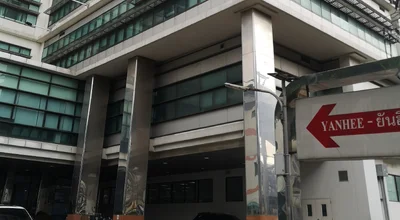
Yanhee International Hospital
A 400-bed hospital known worldwide for high-volume cosmetic surgery.
View hospital profile
Get a Free Quote in Two Minutes
Tell us what you're considering. We'll match you with suitable specialists and provide real hospital pricing.
- Honest pricing with no markups
- Matched to a specialist for your procedure
- No obligation, no pressure


Rated 5 stars by our patients
The complete guide to Breast Implant Removal in Thailand
Everything below is for readers who want the full detail: costs broken down, types and techniques, recovery, risks and safety, and planning your trip.
Breast Implant Removal Surgeons & Clinics in Thailand
Explantation is technically less demanding than augmentation in most cases, but en bloc capsulectomy and combination procedures require specific skill. Here is what to prioritise when choosing a surgeon.
Leading Hospitals in Bangkok
Our partner hospitals are JCI-accredited international facilities in Bangkok. For explantation, what matters beyond accreditation is on-site pathology (for capsule histopathology), advanced imaging suites, and operating theatres equipped for combined procedures if a lift or fat transfer is planned alongside removal. These hospitals are not clinics; they handle complications in-house if anything unexpected arises.
Experienced Explantation Surgeons
Our partner surgeons carry Thai Board of Plastic and Reconstructive Surgery certification. For explantation cases, we match patients with surgeons who perform en bloc capsulectomy regularly, not as a rare exception. Several have trained overseas and returned to Thailand where they see a higher volume of international revision and removal patients than most Western practices encounter.
What to Look for in an Explant Surgeon
For en bloc specifically, ask whether the surgeon performs true en bloc or standard capsulectomy and calls it en bloc; they are different techniques with different outcomes. Request before-and-after photos of removal cases, including what breasts look like without replacement. Check whether the hospital offers capsule histopathology on-site. And if BII is your concern, look for a surgeon who takes it seriously rather than dismissing it.
Understanding Your Results
Explantation results depend on implant size, how long they were in, and your natural breast tissue. Here is what to expect.
Typical Breast Implant Removal Results
After removal, breasts return to something close to their pre-augmentation shape, but not identical. Years of implant weight stretch the skin and tissue, so some ptosis is normal, especially with larger implants. Patients with good skin elasticity and smaller implants tend to get the best removal-only results. Adding a lift or fat transfer at the same time can significantly improve the post-removal appearance.
What Results Can You Expect?
Your surgeon will discuss realistic post-removal expectations during the consultation, including photos of similar cases. If your implants were large or in place for more than ten years, expect some degree of loose skin and volume loss. Smaller implants and shorter implant duration generally mean better skin retraction. The consultation is where you decide whether removal alone is enough or whether a secondary procedure makes sense.
Breast Implant Removal Cost in Thailand
Average Cost of Breast Implant Removal
Breast implant removal in Thailand typically costs between $2,000 and $4,000. Simple removal with the capsule left in place sits at the lower end. En bloc capsulectomy with histopathology, or removal combined with a lift or fat transfer, pushes toward the upper range. Your quote should show each component separately so you know where the money goes.
Cost Breakdown
The surgeon fee reflects the complexity and operative time; en bloc takes longer than simple removal. Hospital and theatre fees cover the facility, sterile environment, and nursing support. Anaesthesia is charged separately based on estimated duration. If fat transfer is added, liposuction and processing are itemised as additional components. Aftercare covers follow-up visits, medication, and compression garments during your stay in Thailand.
What Affects the Price?
The main price variable is capsule management. Simple removal with no capsulectomy is the least expensive. Total or en bloc capsulectomy adds operative time and surgical complexity. Combining removal with a breast lift or fat transfer adds a second procedure's worth of surgeon time and theatre costs. Capsule histopathology, if requested, is a minor additional charge.
Thailand vs International Price Comparison
Breast implant removal in Thailand costs 40–60% less than equivalent procedures in the US ($5,600–$10,000), Australia (A$5,200–A$9,000), and UK (£4,400–£7,600). The savings reflect Thailand's lower facility and operating costs. Our partner hospitals carry JCI accreditation and surgeons hold board certifications on par with their counterparts in those countries.
Non-Surgical Alternatives to Breast Implant Removal
Once there is a real problem with an implant, capsular contracture, a suspected rupture, or implant illness symptoms, there is no non-surgical way to fix it. Massage, supplements, and ultrasound or radiofrequency devices are sometimes marketed for softening a contracted breast, but none of them dissolve scar-tissue capsules, repair a ruptured shell, or remove silicone from the body. The realistic non-surgical option is to leave the implant in and monitor it with regular imaging, which is reasonable for a quiet, intact implant you are happy with, but is only watching the problem, not treating it.
Where non-surgical treatments genuinely compete is afterwards, with the shape removal leaves behind. Fat-freezing, energy-based skin tightening, and similar treatments are sometimes considered instead of a lift, and while they can make a small difference to skin texture, they cannot lift a breast, replace lost volume, or correct the sagging that years of implant weight create. They tighten at the margins; they do not reshape.
For anything structural, taking the implant out, clearing a thickened or ruptured capsule, or restoring shape with a lift or fat transfer, surgery is the route, and that is what the rest of this page covers.
Types of Breast Implant Removal
The main distinction is what happens to the capsule and whether anything else is done at the same time. The right approach is determined by your capsule condition, implant integrity, and what you want your chest to look like afterwards.
Simple Implant Removal
The implant is removed through the existing incision while the capsule is left in place. Suitable when the capsule is thin, soft, and healthy. Quickest procedure with the shortest recovery. The body reabsorbs a healthy capsule over time without issues.
- Shortest operative time, often under an hour
- Capsule left intact and reabsorbed naturally by the body
- Lowest cost option with minimal tissue disruption
- Best for: healthy capsules with no contracture, no rupture, and no BII concerns
En Bloc Capsulectomy
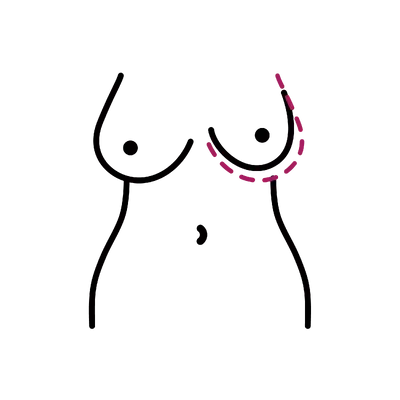
The implant and entire capsule are removed together as a single intact unit. This is the thorough approach; nothing is left behind. Preferred for ruptured silicone implants, significant capsular contracture, and patients concerned about breast implant illness who want complete removal of all foreign material and scar tissue.
- Implant and capsule removed as one piece, with no spillage into surrounding tissue
- Standard recommendation for silicone rupture and BII-related explantation
- Longer surgery and more tissue disruption than simple removal
- Best for: ruptured implants, contracture grades III–IV, or patients seeking total capsule clearance
Explantation with Breast Lift or Fat Transfer
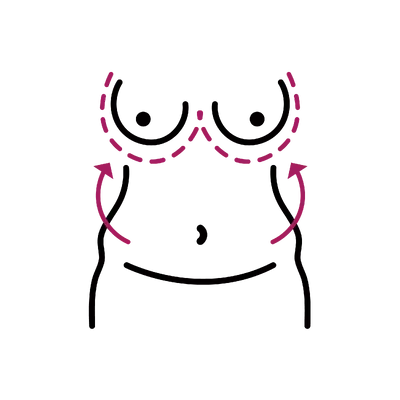
Implant removal combined with a secondary procedure to address the breast shape left behind. A lift repositions sagging tissue and removes excess skin. Fat transfer adds modest volume using your own body fat. Some patients have both. Planned when removal alone would leave an unsatisfactory aesthetic result.
- Mastopexy addresses ptosis caused by years of implant weight and skin stretch
- Fat transfer typically adds 100–200cc per breast (subtle, not dramatic)
- Both can be performed in the same session as explantation
- Best for: patients who want improved shape after removal, not just implant-free breasts
Breast Implant Removal Techniques
Technique selection comes down to the capsule condition and whether the implant is intact. Here is what your surgeon is evaluating and why each approach exists.
Total vs Partial Capsulectomy
Total capsulectomy removes every trace of the capsule. Partial capsulectomy removes only the thickened or problematic sections and leaves healthy tissue intact. Total is the standard for BII concerns and ruptured silicone. Partial may be appropriate when the capsule is mostly healthy but has localised calcification or thickening.
- Total capsulectomy: thorough but involves more tissue dissection
- Partial capsulectomy: preserves healthy tissue, shorter recovery
- Capsule specimens can be sent for histopathology if there are health concerns
- Best for: total suits BII or rupture; partial suits localised capsule problems with otherwise healthy tissue
En Bloc vs Standard Capsulectomy
En bloc removes the capsule and implant as a single sealed unit; the capsule is never opened during surgery. Standard capsulectomy removes the implant first, then strips the capsule out separately. En bloc matters most when silicone has leaked, because it prevents gel fragments from spreading into surrounding tissue during removal.
- En bloc: capsule stays sealed, preventing silicone contamination of the surgical field
- Standard: implant removed first, then capsule stripped (acceptable when implant is intact)
- En bloc is technically harder and takes longer, reflected in a higher surgeon fee
- Best for: en bloc suits ruptured silicone or patient preference for maximum thoroughness
Fat Transfer After Explantation
Autologous fat grafting harvests fat from the abdomen, flanks, or thighs via liposuction, processes it, and injects it into the breast to restore modest volume after implant removal. Typically adds one-half to one cup size. Not every patient is a candidate; you need enough donor fat and reasonable expectations about volume limits.
- Fat is harvested, purified, and injected in the same surgical session
- Adds modest, natural-feeling volume; not a like-for-like implant replacement
- Some fat reabsorption occurs in the first 3 months; the remainder is permanent
- Best for: patients who want some volume restoration without new implants
Breast Implant Removal Recovery Timeline
Days 1–3
The chest will feel bruised and tender where the implants and capsule sat. Swelling peaks around day two. Many patients report a sense of immediate physical relief; the weight and tightness of the implants is gone. Pain is moderate and managed with prescribed medication. Your coordinator checks in daily.
Week 1
Bruising starts to resolve and you can manage light activities around your hotel. A follow-up at the end of the week checks healing and removes drains if they were placed5. Most patients feel well enough to walk around comfortably and handle basic daily tasks by day five or six.
Weeks 2–4
Significant improvement in comfort. Swelling continues to go down and you can see the emerging natural shape. Most patients have already returned to light desk work in week one; light lower-body exercise can restart around week two. Continue to avoid upper-body exercise, heavy lifting, chest loading, and anything that puts direct pressure on the surgical site until around four weeks.
Months 2–6
Breasts settle into their final post-explant shape as tissue contracts and heals. If fat transfer was performed, the retained volume stabilises around month three. Scars along the existing incision lines continue to soften and pale. Full exercise and all activities resume without restriction.
When Can You Fly After Breast Implant Removal?
Most patients are cleared to fly 7–10 days after explantation, once drains are out and healing is confirmed at a follow-up appointment. Flying is generally considered safe once healing has reached this stage; long flights so soon after surgery also carry a clot risk, so move regularly, stay hydrated, and wear compression stockings. If you had en bloc capsulectomy with more extensive tissue dissection, your surgeon may recommend staying the full ten days before travelling.
When Can You Return to Work and Exercise?
Light desk work can resume within a week for most patients. Walking is encouraged from day one. Lower-body exercise can restart around week two. Upper-body exercise, heavy lifting, and anything that loads the chest should wait until four weeks post-surgery. Recovery from simple removal is notably faster than from en bloc; most simple-removal patients feel close to normal by the end of week two.
When Will You See Final Results?
Your post-explant breast shape is visible almost immediately, but it continues to evolve over the first two to three months as residual swelling resolves and breast tissue contracts. If fat transfer was performed, expect some reabsorption in the first six to eight weeks; the volume you see at month three is what stays. Skin retraction varies by patient and depends heavily on skin elasticity and how long the implants were in place.
Anaesthesia for Breast Implant Removal
Breast implant removal in Thailand is performed under general anaesthesia, so you are fully asleep and feel nothing during the operation. A consultant anaesthetist stays with you throughout and monitors you continuously, which is standard at the accredited hospitals we work with. This applies whether you are having a quick simple removal or a longer en bloc capsulectomy, where the implant and its whole capsule come out as one sealed piece.
The length of time you are under depends on the plan, since a straightforward removal can take around 30 minutes while a capsulectomy or a combined lift or fat transfer runs longer. Your surgeon and anaesthetist confirm the approach together based on your imaging, your records, and exactly what is being done, so the depth and duration of anaesthesia are matched to the surgery rather than fixed in advance.
Before you are cleared for anaesthesia you have a pre-operative assessment, including blood tests and a review of any medications you take, which is also where you stop blood thinners in good time. You feel nothing during surgery, and many patients describe an immediate sense of relief once they wake, the weight and tightness gone. Any soreness afterwards is moderate, concentrated in the first few days, and well controlled with the medication your surgeon prescribes.
Risks and Safety of Breast Implant Removal
Explantation is one of the lower-risk breast surgeries, but it still involves general anaesthesia and tissue dissection. Here are the specific risks to understand.
- Post-removal breast shape may be different from what you expect: deflation, asymmetry, or loose skin
- Haematoma or seroma formation in the space where the implant sat3
- Infection at the surgical site (uncommon with proper sterile technique)
- Incomplete capsule removal if the capsule is adherent to the chest wall or ribs
- Temporary or permanent changes in nipple sensation3
- Scarring along existing incision lines, sometimes wider than the original scar
- Need for a secondary procedure (lift or fat transfer) if post-removal appearance is unsatisfactory
- Pneumothorax during en bloc capsulectomy (very rare, occurs if capsule is densely adhered to the chest wall)
- BIA-ALCL, a rare lymphoma the FDA links to implants (mainly textured ones), develops in the scar-tissue capsule, which is why some patients choose en bloc removal of the implant and capsule together4,1
Most risks are manageable and predictable when the surgery is planned properly. The single biggest factor in reducing complications is pre-operative imaging. Knowing what the capsule looks like before the surgeon goes in changes the plan and the outcome.
Is Breast Implant Removal Safe in Thailand?
Yes. Explantation at a JCI-accredited Thai hospital is as safe as the same procedure performed in the US, UK, or Australia. The surgery is well-established, complications are uncommon, and the hospitals our patients use have full emergency support in-house. For en bloc capsulectomy specifically, surgeon experience with this technique matters; it requires more precision than standard removal to keep the capsule sealed during extraction.
How to Reduce Your Risk
Get pre-operative imaging (ultrasound or MRI) before you travel if possible. Knowing the capsule condition and implant integrity in advance gives the surgeon a head start. Choose a JCI-accredited hospital and confirm your surgeon is board-certified with explantation experience, not just augmentation. If breast implant illness is your reason for removal, discuss capsule histopathology with your surgeon so tissue can be sent for analysis during the procedure.
What If You Change Your Mind About Replacement?
Some patients come in certain they want removal only, then reconsider during the consultation. Others plan for replacement but decide during recovery that they prefer being implant-free. Both are fine. If you are undecided, your surgeon can perform the removal and leave the option for future fat transfer or new implants open; it does not have to be decided in a single appointment.
Planning Your Trip to Thailand for Breast Implant Removal
Most explantation patients need 7–10 days in Thailand. Here is how to organise your trip and what to prepare in advance.
How Long to Stay in Thailand
Plan for 7–10 days. Simple removal patients at the shorter end, en bloc or combination procedures at the longer end. Your trip covers the pre-operative consultation and imaging review, the surgery itself (day case or one night), and recovery with a follow-up appointment before you fly. If fat transfer is included, staying the full ten days is advisable.
What's Included in a Medical Trip
Your care coordinator arranges hospital transfers, surgery scheduling, and all post-operative follow-up appointments. The surgical quote covers surgeon fees, anaesthesia, hospital charges, and aftercare. Send any existing breast imaging (ultrasound or MRI) and your original implant card ahead of time so your surgeon can review your case remotely before you arrive.
Recovery in Bangkok vs Phuket
Bangkok is the sensible choice for explantation. You are close to the hospital for follow-ups and if anything needs attention (a drain issue, unexpected swelling, capsule pathology results), your surgeon is accessible without a domestic flight. Some patients relocate to a quieter area after their first-week follow-up, but for the initial recovery period, staying near the hospital is the practical move.
Related Procedures
Other procedures that address similar goals or conditions, in case one of them is a closer fit for you.
Planning your treatment in Thailand
Independent guides to help you weigh the decision, before you commit to anything.
Common Questions About Breast Implant Removal
Everything you need to know before your procedure

Medical References
- Breast enlargement (implants) (NHS)
- Breast Implant Removal (American Society of Plastic Surgeons)
- Breast Implant Removal Safety (American Society of Plastic Surgeons)
- BIA-ALCL Frequently Asked Questions (American Society of Plastic Surgeons)
- Breast Implant Removal Recovery (American Society of Plastic Surgeons)
Keep researching with AI
Open this guide in your AI assistant to dig deeper and ask the questions it didn't answer.
Opens in a new tab with this guide already loaded.
Medical disclaimer: This information is for educational purposes only and does not replace professional medical advice. Individual results, recovery times, and suitability vary. Always consult a qualified surgeon before making decisions about treatment.
Ready to Get Started?
Speak with our care coordinators for a free, no-obligation consultation and personalised quote.
Speak to Our Team