Breast Reduction in Thailand Your guide to cost, top surgeons & hospitals
Most patients say the same thing afterwards: they wish they had done it years ago.

What Is Breast Reduction?
Also known as: Boob Reduction · Reduction Mammoplasty
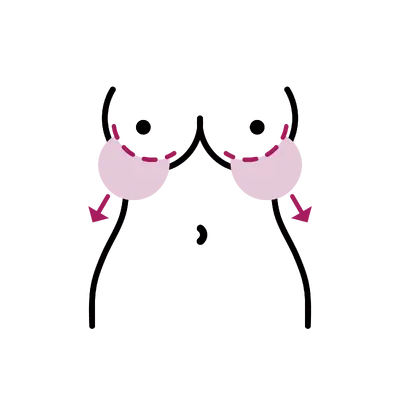
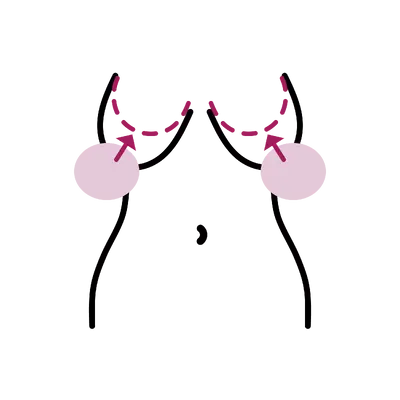
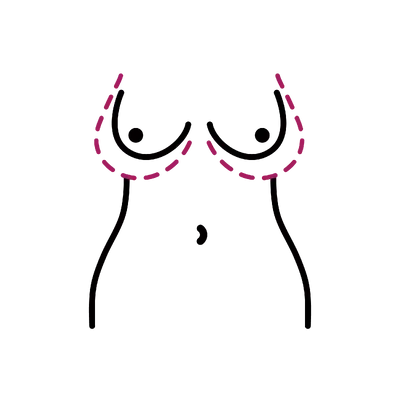
Breast reduction is surgery that makes the breasts smaller and lighter by removing excess tissue, fat, and skin, then reshaping what remains and lifting the nipple higher. It eases the strain that large breasts place on the body, including back, neck, and shoulder pain, deep bra-strap grooves, and skin irritation in the fold. Surgeons usually remove 300 grams to over a kilogram per breast, under general anaesthesia, in about 2 to 4 hours. Most patients drop 1 to 3 cup sizes, and the size change is permanent.
Large breasts affect people in very different ways, so the plan is built around your body and your symptoms. You do not need to decide the technique yourself. Your surgeon measures, listens to what bothers you, and matches the method to your starting size and the result you want.
The relief in your back and shoulders often arrives within days, because the weight is simply gone. The cosmetic shape keeps refining for months as swelling settles and scars fade. A consultation is the place to talk through how much to remove and what it means for nipple sensation and future breastfeeding.
It can address a range of concerns, including:
Am I a Good Candidate for Breast Reduction?
Breast reduction relieves real physical symptoms and rebalances proportion, but the best outcomes come from being a suitable candidate. Here is what surgeons look for.
Suitability is more about development and life stage than a specific age.
Fully developed first: usually performed once the breasts have finished developing, around age 18.
Earlier in some cases: considered sooner when very large breasts cause significant physical symptoms, such as back pain, posture strain, or persistent skin problems.
The strongest candidates have day-to-day symptoms that reduction directly relieves.
Physical strain: chronic back, neck and shoulder pain from breast weight.
Shoulder grooving: deep grooves where bra straps dig in.
Skin problems: rashes or irritation in the breast crease.
Daily limits: trouble exercising comfortably or finding clothes that fit.
Understanding what surgery involves, and what it cannot do, is part of being ready for it.
Scarring: permanent scars (usually an anchor or lollipop pattern) that fade over 12-18 months.
Sensation and feeding: nipple sensation and future breastfeeding can be affected. Ask which technique preserves these.
Settling: final shape and size settle over several months as swelling resolves.
The motivation behind surgery shapes satisfaction with the result.
Your decision: the choice should be your own, for symptom relief or proportion, not to meet anyone else's expectations.
Realistic goals: surgery relieves strain and rebalances proportion; it is not a fix for unrelated concerns.
Who is not suitable for breast reduction?
- Smokers unwilling to stop before and after surgery
- Unstable weight, or planning significant weight loss
- Planning a future pregnancy you would prefer to complete first
- Uncontrolled health conditions (e.g. diabetes, bleeding disorders)
- Body dysmorphic disorder or unrealistic expectations
- Significantly elevated BMI, which raises wound-healing and incision-breakdown risk; weight optimisation is advised first
Pricing
How Much Will Breast Reduction Cost in Thailand?
What breast reduction costs at accredited hospitals in Thailand, and what your final quote depends on.
Get your exact price
Tell us what you're considering and we'll send a personalised quote from accredited hospitals within 24 hours.
Get my free quoteTypical prices in Thailand
Typical ranges based on recent hospital quotes. Your exact price depends on the hospital and how complex your case is, and is confirmed at your teleconsultation.
Breast Reduction
How much tissue needs to come out decides the scar pattern, so your surgeon measures and agrees that plan before quoting.
| Anchor (inverted-T) reduction Full reshaping for larger reductions, with a scar around and under the breast | $3,500 to $5,000 ฿119,000 to ฿170,000 |
| Vertical (lollipop) reduction A moderate reduction with shorter scars and no crease incision | $3,000 to $4,000 ฿102,000 to ฿136,000 |
| Liposuction-only reduction Removes fat without cutting tissue away, for a modest change | $2,500 to $3,500 ฿85,000 to ฿119,000 |
| Large-volume reduction with free nipple graft For very large reductions where the nipple is moved as a graft | $4,500 to $6,000 ฿153,000 to ฿204,000 |
Get your exact price
Tell us what you're considering and we'll send a personalised quote from accredited hospitals within 24 hours.
Hospitals Trusted for Breast Reduction
From internationally accredited flagships to dedicated specialist hospitals, these are the kinds of facilities where international patients have this procedure.

Bumrungrad International Hospital
Southeast Asia's flagship private hospital, treating over 520,000 international patients a year.
View hospital profile
Kamol Cosmetic Hospital
The only specialist cosmetic surgery hospital in Thailand to hold JCI accreditation.
View hospital profile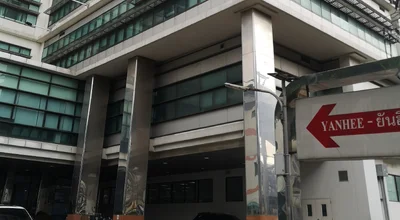
Yanhee International Hospital
A 400-bed hospital known worldwide for high-volume cosmetic surgery.
View hospital profile
Get a Free Quote in Two Minutes
Tell us what you're considering. We'll match you with suitable specialists and provide real hospital pricing.
- Honest pricing with no markups
- Matched to a specialist for your procedure
- No obligation, no pressure


Rated 5 stars by our patients
The complete guide to Breast Reduction in Thailand
Everything below is for readers who want the full detail: costs broken down, types and techniques, recovery, risks and safety, and planning your trip.
Breast Reduction Surgeons & Clinics in Thailand
Reduction surgery requires a surgeon who can balance aesthetics with functional outcomes and manage the technical demands of removing large volumes of tissue safely. Here is what to look for.
Leading Hospitals in Bangkok
Our partner hospitals are JCI-accredited international facilities in Bangkok that run dedicated plastic surgery departments with full-time specialist teams. For breast reduction specifically, these facilities offer overnight monitoring, surgical drain management, and the infrastructure to handle any post-operative complication in-house rather than referring elsewhere.
Experienced Breast Reduction Surgeons
Our partner surgeons are certified by the Thai Board of Plastic and Reconstructive Surgery. Many completed international training before returning to Bangkok. Reduction surgery benefits from high volumes because the surgeon develops an instinct for how much tissue to remove, how to shape the remaining breast, and how to handle the pedicle safely across different breast sizes and tissue types. Ask about their typical reduction caseload and their complication rates.
What to Look for in a Surgeon
Board certification in plastic surgery is the minimum. Ask specifically about their experience with your approximate breast size and the volume of reduction you are seeking. A surgeon comfortable with moderate reductions may have less experience with gigantomastia cases. Review before-and-after photos at six months or later, paying attention to scar quality, nipple position, and breast symmetry. A surgeon who asks detailed questions about your physical symptoms and functional goals, not just your desired cup size, is generally a good sign.
Understanding Your Results
Reduction results combine immediate physical relief with a progressive cosmetic improvement as swelling resolves and scars mature over the following months.
Typical Breast Reduction Results
Breast reduction produces smaller, lighter breasts that sit higher on the chest with improved projection and symmetry. The nipple is repositioned to the apex of the reshaped breast. Most patients reduce by 1–3 cup sizes, though the exact result depends on starting size, tissue composition, and target outcome. The functional improvements, resolution of back pain, shoulder grooves, and skin irritation, are usually the most valued aspect of the result.
What Results Can You Expect?
The size reduction is visible immediately, even under post-operative swelling. The breast shape refines over 3–6 months as swelling resolves and tissues settle. Scars follow the incision pattern, vertical or anchor, and mature to pale, flat lines over 6–12 months. During consultation, your surgeon will discuss your target size in the context of your body proportions and the volume of tissue that needs to be removed to achieve it. Bringing reference photos helps align expectations.
Breast Reduction Cost in Thailand
Average Cost of Breast Reduction
Breast reduction in Thailand typically costs between $2,500 and $6,000. A moderate reduction using a vertical technique sits at the lower end, while a large anchor-pattern reduction removing significant tissue sits higher. Combined reduction-lift procedures and cases requiring free nipple grafts are at the top of the range. Quotes are itemised so you can see exactly what each component costs.
Cost Breakdown
The surgeon's fee reflects the complexity and duration of the procedure: larger reductions take longer and require more precise tissue handling. Hospital fees cover the facility, theatre time, nursing support, and the 1–2 night stay that most reductions require. Anaesthesia covers the anaesthetist and monitoring during what is typically a 2–4 hour procedure. Aftercare includes follow-up appointments, prescribed medications, surgical bra, and coordination support throughout your recovery in Thailand.
What Affects the Price?
The volume of tissue being removed is the primary cost driver. A moderate vertical reduction takes less time and requires fewer resources than a large anchor-pattern reduction with nipple repositioning. Cases requiring free nipple grafts involve additional surgical complexity. Hospital tier matters. JCI-accredited facilities charge more than smaller clinics but offer a different standard of safety infrastructure, monitoring, and complication management.
Thailand vs International Price Comparison
Breast reduction in Thailand costs 40–60% less than equivalent procedures in the US ($8,400–$15,000), Australia (A$7,800–A$13,500), and UK (£6,600–£11,400). For patients whose insurance covers the procedure at home, the financial comparison is different, but the wait times often are not. Many patients choose Thailand specifically to avoid 12–18 month public system queues while paying a price comparable to insured out-of-pocket costs.
Non-Surgical Alternatives to Breast Reduction
There is no non-surgical procedure that genuinely reduces large breasts. Energy devices like radiofrequency or ultrasound, fillers, and fat-dissolving or fat-freezing treatments are marketed for body contouring elsewhere, but none of them can remove the glandular tissue and skin that make breasts heavy, none can lift the nipple, and they are not appropriate to use on the breast. The closest less-invasive option, liposuction-only reduction, is itself a surgical procedure and only suits modest, fat-predominant cases, which is why it sits in the techniques above rather than here.
The one honest alternative many people are told to try first is weight loss, often alongside a professionally fitted support bra and physiotherapy for the back and shoulders. These can ease symptoms a little and are sensible to explore. But weight loss only shrinks the fatty part of the breast, the response is unpredictable and rarely proportionate, and it does nothing for dense glandular tissue, stretched skin, a low nipple position, or the bra-strap grooving and skin irritation that come with the weight.
When large breasts cause daily back, neck and shoulder pain, and you want a lasting change in size, shape and proportion rather than temporary relief, surgical reduction is the route that delivers it, and that is what the rest of this page covers.
Types of Breast Reduction
The technique your surgeon selects depends on how much tissue needs to come out and where the nipple needs to end up. Larger reductions require more extensive incision patterns. The trade-off between scarring and correction is unavoidable, and a good surgeon will be upfront about that.
Standard Reduction (Anchor Pattern)
The most common technique for moderate to large reductions. Uses incisions around the areola, vertically down, and along the breast crease. It gives the surgeon maximum control to remove substantial tissue, reshape the breast, and reposition the nipple to a proportionate height. The resulting scars are the longest but sit within natural contours.
- Allows removal of 300–1,500+ grams per breast depending on the case
- Full control over breast shape, projection, and nipple placement
- Scars fade to thin lines over 12–18 months, concealed by bras and swimwear
- Best for: moderate to large reductions where significant tissue removal is needed
Vertical (Lollipop) Reduction
A less extensive pattern using incisions around the areola and vertically down to the crease, with no horizontal crease incision. Suitable for moderate reductions where the tissue removal required is manageable without the full anchor approach. Leaves shorter scars and often produces a slightly perkier result.
- Shorter scars than the anchor technique, with no horizontal crease line
- Good for moderate reductions removing up to approximately 500 grams per breast
- Tends to produce a rounder, more projected shape
- Best for: moderate reductions with good skin quality and manageable excess
Liposuction-Only Reduction
Removes breast volume through fat extraction only, without excising tissue or repositioning the nipple. Minimal scarring and the fastest recovery of any technique, but limited to patients with predominantly fatty breast tissue and good skin elasticity. It cannot address significant ptosis or remove glandular tissue.
- Minimal scarring; only small puncture incisions for the liposuction cannula
- No nipple repositioning and no skin removal
- Limited to modest reductions in patients with good skin retraction
- Best for: patients wanting a modest size decrease without the scars of a surgical reduction
Breast Reduction Techniques
The technical decisions in reduction surgery revolve around how much tissue to remove, how to maintain blood supply to the nipple during repositioning, and how to shape the remaining tissue into a breast that looks proportional and holds its form.
Inferior Pedicle vs Superior Pedicle
The pedicle is the tissue bridge that keeps the nipple connected to its blood supply and nerves during repositioning. An inferior pedicle suspends the nipple from below, the most commonly used approach for larger reductions. A superior pedicle suspends from above and tends to produce a perkier shape, but is less suitable for very large reductions where the nipple needs to travel a long distance.
- Inferior pedicle: reliable blood supply for large reductions with long nipple travel
- Superior pedicle: often produces a rounder, more projected shape
- Pedicle choice directly affects nipple sensation preservation rates
- Best for: surgeon determines based on reduction volume and nipple travel distance
Free Nipple Graft Technique
In cases of extremely large breasts where the nipple needs to move a very long distance, the nipple-areola complex is completely detached and re-grafted in its new position. This sacrifices nipple sensation and breastfeeding ability but is sometimes the safest option for maintaining nipple blood supply in gigantomastia cases.
- Used for very large reductions where pedicle techniques risk nipple blood supply
- Nipple sensation and breastfeeding ability are lost
- Avoids the risk of nipple necrosis in extreme cases
- Best for: gigantomastia or cases requiring nipple travel beyond safe pedicle limits
Tissue Weighing and Surgical Planning
The weight of tissue removed per breast directly affects both the physical relief and the recovery. Surgeons plan the volume to be removed based on your target size, body proportions, and the physical symptoms being addressed. The removed tissue is weighed during surgery and documented; this data matters for any future insurance claims or medical records.
- Tissue weight is measured and recorded intraoperatively for medical documentation
- Removal of 300+ grams per breast typically qualifies as medically indicated reduction
- Heavier reductions produce greater symptom relief but slightly longer healing
- Best for: all reduction patients; this is part of the standard surgical process
Internal Support (Internal Bra / Mesh)
To help the reshaped breast hold its lift, some surgeons add internal support during the reduction, using either deep internal sutures or a soft mesh sling around the lower pole. The idea is to take some load off the skin, which over years tends to stretch and let the breast settle low again. It does not replace the standard reshaping; it reinforces it, and not every surgeon offers a mesh, so it is worth asking what support is built into the plan.
- Internal sutures or a mesh sling support the lower pole and the new breast shape
- Aims to slow the gradual settling that stretches skin over the years
- Reinforces rather than replaces the standard pedicle and reshaping work
- Best for: larger or heavier reductions where long-term shape retention is a priority
Breast Reduction Recovery Timeline
Days 1–3
Soreness and tightness along the incision lines, managed with prescribed medication. Even through early swelling, most patients notice their back and shoulder pain is already improved; the weight is gone immediately. Surgical drains may be placed for the first 24–48 hours. Daily check-ins with your coordinator at your hotel.
Week 1–2
Drains are removed if placed, and a follow-up appointment checks incision healing. Bruising shifts from dark to yellow and begins to fade. Light walking and gentle daily activities are encouraged. Most patients feel significantly more comfortable upright and moving by the end of week one, and many manage desk-based work by day 10–14, around the time they are cleared to fly home.
Weeks 3–6
Desk work is already manageable from the end of week two, and moderate daily activity builds back gradually. Lower-body exercise can resume from week three. Avoid heavy lifting, overhead reaching, and upper-body workouts until cleared at your six-week check. Scars start their maturation process and the breast shape continues to refine.
Months 3–12
Breasts settle into their final size and shape as all residual swelling resolves. Scars mature from pink or red to pale, flat lines over the course of 6–12 months. Full physical activity resumes without restriction. The physical relief from reduced breast weight is the change patients appreciate most during this period.
When Can You Fly After Breast Reduction?
Most patients can fly home 10–14 days after surgery. Breast reduction involves more extensive incisions than augmentation, so surgeons typically want to see you for at least one follow-up after suture removal before clearing you to fly. Cabin pressure at altitude is safe and does not affect the surgical result. Wear your support bra during the flight and move around the cabin periodically to maintain circulation.
When Can You Return to Work and Exercise?
Desk-based work is typically manageable from 10–14 days post-surgery. Light walking is encouraged from day one. Lower-body exercise can restart at week three. Upper-body workouts, heavy lifting, and high-impact activities should wait until the six-week mark.1 The timeline is slightly longer than augmentation because the incisions are more extensive and more tissue has been rearranged. Most patients find the immediate relief from physical symptoms compensates for the recovery period.
When Will You See Final Results?
The size reduction is immediately apparent, even through post-operative swelling. The physical relief (less back pain, no more shoulder grooves) is typically noticeable within the first week. The final breast shape and scar quality continue to refine over 6–12 months. Scars progress from raised and pink to flat and pale during this time. The result at three months gives you a reliable picture of the final outcome, with only minor settling beyond that.
Anaesthesia for Breast Reduction
Breast reduction is performed under general anaesthesia, so you are fully asleep and feel nothing during the operation.1,2 This is standard for the procedure, since it is longer surgery, usually 2 to 4 hours, with extensive incisions and tissue removed and reshaped on both sides. A consultant anaesthetist stays with you for the whole procedure and monitors you continuously, which is routine at the accredited hospitals we work with.
There is no awake or local-only option for a full reduction; the amount of work involved means general anaesthesia is the safe choice, and your anaesthetist also manages your pain relief as you come round so you wake comfortable rather than sore. A liposuction-only reduction is the one exception some surgeons may offer under sedation, but your surgeon and anaesthetist decide that based on your case and medical history.
Before you are cleared, you have a pre-operative assessment, including blood tests and a review of any medications you take, such as blood thinners or hormonal contraception, which can affect timing. You feel nothing during surgery. Afterwards the discomfort is mild to moderate, more a tightness along the incision lines than sharp pain, and it is well controlled with the medication your surgeon prescribes. Many patients are struck that the relief in their back and shoulders is already noticeable even through that early soreness.
Risks and Safety of Breast Reduction
Breast reduction has high patient satisfaction rates and a well-established safety record. Like all surgery, it carries risks that you should understand before proceeding, particularly because the incisions are more extensive than in augmentation or lift procedures alone.
- Visible scarring: the anchor pattern leaves the most extensive scars, though they fade to pale lines over 12–18 months
- Temporary or permanent changes in nipple sensation (risk increases with larger reductions and longer nipple travel)1,2
- Reduced or lost ability to breastfeed, especially with larger reductions or free nipple graft technique1,2
- Fat necrosis: small areas of hardened tissue that can be felt as lumps (usually resolves without treatment)
- Asymmetry in breast size, shape, or nipple position requiring minor correction
- Wound healing complications, particularly at the T-junction where incision lines meet
- Infection at incision sites (uncommon with proper post-operative care)
- Blood clots in the legs (deep-vein thrombosis) that can travel to the lungs (pulmonary embolism)1, a low risk raised by anaesthesia and the long flight home, so keep moving and stay hydrated
- Need for revision if the desired size is not achieved or if asymmetry develops
The amount of tissue removed correlates with both the benefit and the risk. Larger reductions produce greater symptom relief but involve more extensive surgery and longer healing. Your surgeon will walk you through the specific risk profile for the volume of reduction you are planning.
Is Breast Reduction Safe in Thailand?
Yes. Breast reduction at JCI-accredited hospitals in Thailand meets the same safety standards as the US, UK, and Australia. Our partner surgeons hold Thai Board certification in plastic and reconstructive surgery and perform reductions across all volume ranges. Validated patient-reported outcome studies, such as Coriddi and colleagues using the BREAST-Q, consistently show significant improvements in satisfaction and physical, psychosocial, and sexual well-being after reduction, and complication rates at experienced centres are low.
How to Reduce Your Risk
Stop smoking at least four weeks before surgery. Nicotine restricts blood flow to the skin flaps and nipple, and the T-junction incision point is particularly vulnerable to wound healing problems in smokers. Choose a JCI-accredited hospital with overnight monitoring capacity. Breast reduction patients should be observed for at least one night. Complete all pre-operative blood work and provide a full medication history. If you are on blood thinners or hormonal contraception, discuss timing adjustments with your surgeon well before the procedure date, since some forms of the pill raise clot risk. To lower the risk of deep-vein thrombosis after general anaesthesia, start walking the day of surgery, stay well hydrated, and on the flight home keep moving around the cabin, flex your calves regularly, and wear compression stockings if your surgeon advises them.
When Is Revision Needed?
Revision after breast reduction is uncommon. The most frequent reasons are scar-related corrections (widened or thickened scars at the T-junction), minor asymmetry that becomes apparent once all swelling resolves, or a patient who feels the reduction did not go far enough. Additional reduction is possible but carries higher risk because the tissue has already been operated on. Wait at least 12 months before considering any revision, as tissue settling and scar maturation continue throughout that period.
Planning Your Trip to Thailand for Breast Reduction
Breast reduction typically requires 10–14 days in Thailand. The longer stay reflects the more extensive surgery and the need for careful wound monitoring in the early days.
How Long to Stay in Thailand
Plan for 10–14 days. Day one covers your consultation, measurements, and pre-operative blood work. Surgery is usually on day two or three, followed by 1–2 nights in hospital with drain management and monitoring. The remaining days are spent recovering at your hotel with scheduled check-ins, suture review, and a final assessment before your surgeon clears you to fly. Larger reductions may benefit from staying the full two weeks.
What's Included in a Medical Trip
Your care coordinator manages hospital transfers, surgery scheduling, interpreter services if needed, and all post-operative follow-up appointments. The surgical quote covers surgeon fees, anaesthesia, hospital stay including overnight monitoring, nursing care, surgical drains, aftercare medications, and a support bra. Flights and accommodation are arranged separately, but your coordinator can recommend nearby hotels and assist with bookings to keep everything close to the hospital.
Recovery in Bangkok vs Phuket
Stay in Bangkok for the full recovery period. Breast reduction involves longer incision lines and a higher chance of wound monitoring needs compared to smaller breast procedures. Being close to your surgical team for the entire stay is the practical choice. If your surgeon confirms straightforward healing at your suture review and you are in the second week, a move to a resort area is an option, but for most reduction patients, the comfort of proximity to the hospital outweighs the appeal of a beach setting.
Related Procedures
Other procedures that address similar goals or conditions, in case one of them is a closer fit for you.
Planning your treatment in Thailand
Independent guides to help you weigh the decision, before you commit to anything.
Common Questions About Breast Reduction
Everything you need to know before your procedure
More About Breast Reduction

Medical References
Keep researching with AI
Open this guide in your AI assistant to dig deeper and ask the questions it didn't answer.
Opens in a new tab with this guide already loaded.
Medical disclaimer: This information is for educational purposes only and does not replace professional medical advice. Individual results, recovery times, and suitability vary. Always consult a qualified surgeon before making decisions about treatment.
Ready to Get Started?
Speak with our care coordinators for a free, no-obligation consultation and personalised quote.
Speak to Our Team