BBL Package in Thailand Your guide to cost, top surgeons & hospitals
Fat transfer works because the material is already yours. The surgeon just moves it to where it belongs.
What Is BBL Package?
Also known as: BBL Package · Gluteal Augmentation Package
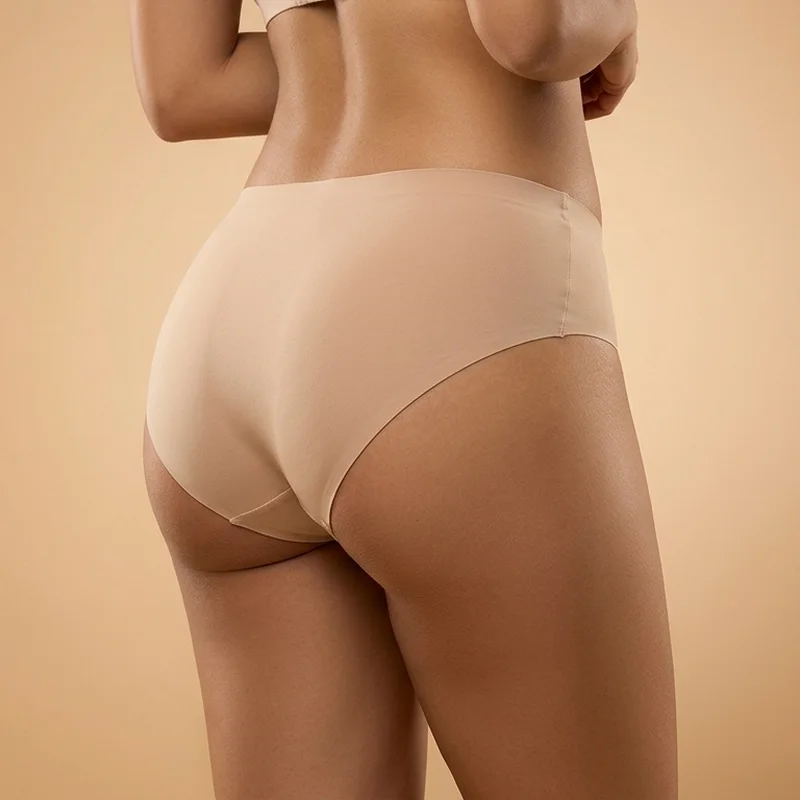
A BBL package is a body-contouring procedure that reshapes the buttocks by moving fat from elsewhere on your body to where you want more volume. The surgeon harvests fat with liposuction, usually from the abdomen, flanks, lower back, or thighs, then injects it into the buttocks in thin layers to add roundness and projection. The change is dual: slimmer donor areas, fuller buttocks, built from your own tissue rather than synthetic implants. It runs about 3 to 4 hours under general anaesthesia.
Not all the transferred fat stays. Usually around 60 to 80 percent survives long term, so surgeons over-fill slightly to allow for what the body reabsorbs in the first few months.1 Your surgeon plans the harvest and shaping around the fat you have and the curves you want.
A BBL gives a more proportional version of your own shape, not a dramatic surgical look, and the swollen early result settles by about month four to six. How strictly you follow the sitting and sleeping restrictions affects how much fat survives, which your surgeon will talk through before you decide.
It can address a range of concerns, including:
Am I a Good Candidate for BBL Package?
A BBL is only as good as the fat available and the recovery you can protect, which is exactly what surgeons assess first.
You cannot transfer fat you do not have, so the assessment starts with where the volume will come from.
BMI of 20-22 minimum: You need enough harvestable fat, typically a BMI of at least 20-22, to deliver meaningful volume.
Lean patients: Very lean patients may achieve only modest results or be advised to gain 2-3kg before surgery to build the donor supply.
Definition trade-off: The harvest cannot strip so much fat from your liposuction zones that you lose definition where you wanted to keep it. Your surgeon balances both sides of the equation.
Surgeons check that your starting anatomy matches what a single fat-transfer operation reliably corrects.
Projection to build: If your buttocks sit flat against your frame however much you train, you have the anatomy the layered transfer was designed to reshape.
Fat in the wrong place: Candidates carry fat on the abdomen, flanks, or back. That excess is not a barrier, it is the raw material the augmentation runs on.
Asymmetry to balance: Sides that differ in shape or volume suit the technique well, because the surgeon can place fat unevenly until the two match.
Implant-free preference: You are a better fit for a BBL than implant augmentation if you want curves built from your own tissue and accept the volume limits that come with it.
Fat survival depends on protecting the graft from pressure, so your ability to follow the sitting rules is a genuine suitability question.
No direct sitting: You must avoid sitting on the buttocks for 2-3 weeks, then use a BBL pillow for another 3-5 weeks.
Side or stomach sleeping: Plan to sleep off your back for at least 6 weeks.
Job and commute check: If work, home setup, or commuting would force you onto your buttocks within the first 6-8 weeks, surgeons treat that as a caution sign.
Compliance is the result: Non-compliance is the single biggest patient-controlled factor in poor outcomes.
Beyond donor fat, surgeons screen general health for a 3-4 hour operation and the immobility that follows it.
Clotting history: A clotting disorder or family history of DVT is a caution, since extended operating time and post-operative immobility increase risk.
Stable weight: Good candidates have held a stable weight for at least 6 months, since fluctuation changes both the donor zones and the graft.
Nicotine-free: Nicotine in any form constricts the blood supply the newly grafted fat depends on, so surgeons require you to stop before and after surgery.
General fitness: You need to be in good health to tolerate the combined liposuction and fat transfer under general anaesthesia.
Fat transfer follows biology, not a guarantee, and surgeons want candidates who understand the numbers.
60-80% survival: Typically 60-80% of transferred fat survives permanently, which is why surgeons over-fill slightly at the time of surgery.
Expect some shrinkage: The buttocks will look slightly smaller at 3 months than at 3 weeks. That is normal reabsorption, not a failed result.
No guaranteed volumes: Avoid any surgeon who promises specific sizes. Fat survival varies between patients, and a top-up at 6-12 months is the standard route to more volume.
Final shape at 4-6 months: Judge the result then, not earlier.
Who is not suitable for bbl package?
- BMI under 20 with insufficient donor fat
- Unable to avoid sitting on the buttocks for the first 6-8 weeks
- Clotting disorder or family history of DVT
- Nicotine use in any form around surgery, which compromises fat graft survival
- Weight not stable for the past 6 months
- Currently pregnant or breastfeeding
Pricing
How Much Will BBL Package Cost in Thailand?
What bbl package costs at accredited hospitals in Thailand, and what your final quote depends on.
Get your exact price
Tell us what you're considering and we'll send a personalised quote from accredited hospitals within 24 hours.
Get my free quoteTypical prices in Thailand
Typical ranges based on recent hospital quotes. Your exact price depends on the hospital and how complex your case is, and is confirmed at your teleconsultation.
BBL Package
The package you need comes down to how many areas the fat is harvested from and whether the hips are reshaped alongside the buttocks.
| Standard BBL package Fat taken from two or three areas and transferred to the buttocks | $4,500 to $6,000 ฿153,000 to ฿204,000 |
| Extended BBL package A wider harvest across more areas, for patients wanting greater volume | $6,000 to $7,500 ฿204,000 to ฿255,000 |
| BBL plus package Adds hip contouring for full lower-body reshaping | $7,500 to $9,000 ฿255,000 to ฿306,000 |
Get your exact price
Tell us what you're considering and we'll send a personalised quote from accredited hospitals within 24 hours.
Hospitals Trusted for BBL Package
From internationally accredited flagships to dedicated specialist hospitals, these are the kinds of facilities where international patients have this procedure.
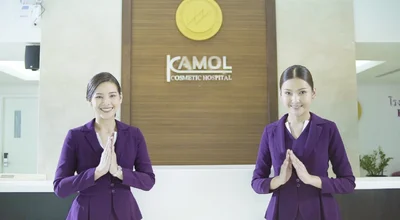
Kamol Cosmetic Hospital
The only specialist cosmetic surgery hospital in Thailand to hold JCI accreditation.
View hospital profile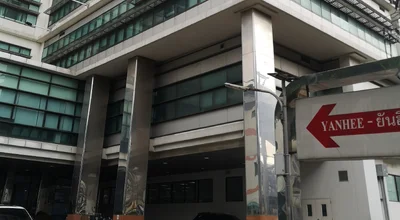
Yanhee International Hospital
A 400-bed hospital known worldwide for high-volume cosmetic surgery.
View hospital profile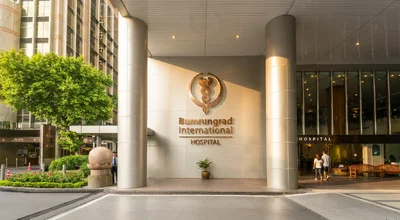
Bumrungrad International Hospital
Southeast Asia's flagship private hospital, treating over 520,000 international patients a year.
View hospital profile
Get a Free Quote in Two Minutes
Tell us what you're considering. We'll match you with suitable specialists and provide real hospital pricing.
- Honest pricing with no markups
- Matched to a specialist for your procedure
- No obligation, no pressure


Rated 5 stars by our patients
The complete guide to BBL Package in Thailand
Everything below is for readers who want the full detail: costs broken down, types and techniques, recovery, risks and safety, and planning your trip.
BBL Surgeons & Clinics in Thailand
BBL outcomes are directly tied to the surgeon's fat grafting technique and safety protocol adherence. Here is what we prioritise when selecting partner surgeons.
Leading Hospitals in Bangkok
Our partner hospitals are JCI-accredited with experienced body sculpting departments. They have the anaesthetic teams, overnight monitoring, and complication management infrastructure that BBL requires. These hospitals follow structured post-operative protocols including compression garment fitting, BBL pillow provision, and follow-up scheduling.
Experienced BBL Surgeons
Our partner surgeons are board-certified by the Thai Board of Plastic and Reconstructive Surgery and perform BBL at volumes that keep their technique sharp. They follow the Multi-Society Task Force guidelines for safe gluteal fat grafting: subcutaneous injection only, controlled cannula placement, and real-time monitoring during fat injection.
What We Look for in a Surgeon
The single most important factor is whether they inject fat subcutaneously only, above the gluteal muscle, which is the current safety standard. We also confirm their fat processing method, their experience handling asymmetry, and that they can show before-and-after photos across a range of body types. We steer clear of any surgeon who guarantees specific volumes or outcomes, because fat survival varies between patients.
Understanding Your Results
BBL results are permanent once the transferred fat stabilises, but understanding the timeline helps set realistic expectations.
Typical BBL Results
The most visible change is fuller, rounder buttocks combined with a slimmer waist and contoured donor areas. The shape looks natural because it is built from your own fat. Liposuction incisions are 3–5mm and fade to barely visible marks. Patients typically describe the result as a more proportional version of their existing body rather than a dramatic surgical look.
What Results Can You Expect?
Immediate results appear swollen and larger than the final outcome. Over the first four to six months, expected fat reabsorption reduces the volume by 20–40%.1 The fat remaining at 4–6 months is permanent. Surgeons account for this by slightly over-filling during the procedure. Donor sites refine over the same period as swelling resolves, revealing the full contouring effect.
BBL Package Cost in Thailand
Average Cost of a BBL Package
A BBL package in Thailand typically costs between $4,500 and $9,000. A standard BBL with liposuction of 2–3 donor areas sits around $4,500–$6,000. Extended versions with wider liposuction coverage or added skin tightening reach $7,000–$9,000.
Cost Breakdown
A typical quote covers the surgeon's fee for liposuction and fat transfer, anaesthesia, 1–2 nights of hospital stay, compression garments, BBL pillow, medications, and follow-up appointments, though exact inclusions are set by the clinic and confirmed in writing in your quote. VASER liposuction, if used, adds to the surgeon's fee compared to standard techniques.
What Affects the Price?
The number of liposuction donor areas is the primary variable. Treating 2–3 zones costs less than treating 5–6. VASER or PAL liposuction costs more than tumescent. Adding Renuvion skin tightening increases the total. Surgeon experience and hospital accreditation level also factor in, though the quality difference between mid-range and premium in Thailand is narrower than most patients assume.
Combined vs Separate Pricing
Having liposuction and BBL as separate procedures, even in Thailand, costs more because of duplicate anaesthesia and hospital fees:
- Liposuction alone (2–3 areas): $2,000–$4,000 in Thailand
- BBL fat transfer alone: $3,000–$5,000 in Thailand
- BBL Package combined: $4,500–$9,000. Shared anaesthesia and hospital stay reduce the total.
At home, the same combined procedure runs $12,000–$22,000 or more.
Thailand vs International Price Comparison
A BBL package in Thailand costs 40–60% less than equivalent surgery in the US ($12,600–$22,500), Australia (A$11,700–A$20,300), or UK (£9,900–£17,100). The saving comes from Thailand's lower facility costs and competitive surgeon fees, not from any compromise in equipment, technique, or safety standards.
Surgical vs Non-Surgical BBL
The non-surgical, or liquid, BBL uses injectable poly-L-lactic acid filler, such as Sculptra, to add a little volume and lift to the buttocks over a series of sessions, with no surgery, no liposuction, and no real downtime. It is genuinely useful for a subtle rounding, smoothing minor dimpling, or for someone who simply does not want an operation, and the result builds gradually as the filler stimulates your own collagen.
The limits are significant, though. Injectables add only modest volume, so they cannot deliver the projection, roundness, or dramatic reshaping a surgical BBL achieves, and crucially they do nothing for the waist, because there is no liposuction and no fat removed from the abdomen, flanks, or back. The effect is temporary, fading over roughly two years and needing repeat sessions to maintain, which adds up in both cost and time.
For meaningful volume, a fuller and more projected shape, the dual change of a slimmer waist alongside curvier buttocks, and a lasting result built from your own tissue, the surgical fat-transfer BBL is the route, and that is what the rest of this page covers.
Types of BBL Packages
The package varies depending on how many donor areas are liposuctioned and how much buttock augmentation is planned. These are the common configurations.
Standard BBL
Liposuction of 2–3 donor areas (abdomen, flanks, lower back) combined with fat transfer to the buttocks. This is the most common version, suited to patients with moderate fat deposits and realistic volume goals. Operating time is 3–4 hours.
- Liposuction of abdomen, flanks, and lower back
- Fat processing and transfer to buttocks
- Moderate volume augmentation and shape enhancement
- Best for: patients with adequate fat deposits seeking a proportional enhancement
Extended BBL
Widens the liposuction to 4–5 areas, adding thighs, upper back, or bra roll, to maximise fat harvest and contouring. More fat means more volume available for transfer and more dramatic overall body sculpting.
- Liposuction extended to thighs, upper back, or bra roll
- Larger fat harvest allows greater buttock augmentation
- More comprehensive body contouring around the torso
- Best for: patients who want maximum donor sculpting and fuller buttock projection
BBL with Skin Tightening
Adds Renuvion (J-Plasma) or BodyTite skin tightening to the liposuction zones. For patients whose skin elasticity is reduced (from ageing, prior weight loss, or genetics), this addresses the laxity that liposuction alone does not fix.
- Standard or extended BBL with energy-based skin tightening
- Renuvion or BodyTite applied to liposuction zones
- Improves skin retraction over donor areas
- Best for: patients with reduced skin elasticity who need contouring plus tightening
BBL Package Techniques
The BBL result depends on three technical stages: how fat is harvested, how it is processed, and how it is injected. Each stage affects fat survival and the final shape.
Fat Harvesting via Liposuction
Fat is harvested from donor areas using tumescent, power-assisted, or VASER liposuction. The technique matters because gentle harvesting preserves more viable fat cells for transfer. Aggressive suctioning damages cells and reduces survival rates. Donor site selection is strategic; areas with dense, fibrous fat yield better results.
- Tumescent, PAL, or VASER depending on tissue characteristics
- Gentle harvesting preserves fat cell viability for transfer
- Strategic donor site selection for optimal fat quality
- Best for: maximising the volume of viable fat available for buttock injection
Closed-System Fat Processing
Harvested fat is processed to separate viable cells from blood, oil, and debris. Closed-system processing reduces contamination risk and maintains cell integrity. The goal is a concentrated preparation of healthy fat cells that will survive once transferred.
- Centrifugation, filtration, or decanting to purify fat
- Closed system reduces contamination and improves sterility
- Concentrated preparation maximises fat survival rate
- Best for: producing the highest-quality fat preparation for long-lasting results
Subcutaneous Multi-Layer Injection
Fat is injected into the subcutaneous tissue of the buttocks using thin cannulas in a multi-layer, micro-droplet pattern. Injection is strictly above the gluteal muscle. This is the current safety standard that prevents vascular complications.1 The layered approach ensures even distribution and maximum contact with the blood supply that keeps the fat alive.
- Subcutaneous placement only, above the muscle for safety
- Micro-droplet technique for even distribution and blood supply contact
- Multi-layer injection builds volume, shape, and projection
- Best for: safe, even buttock augmentation with maximum fat survival
Ultrasound-Guided Fat Injection
Some surgeons now use real-time ultrasound during the injection stage to see the cannula tip and confirm fat is going into the subcutaneous layer, never into or below the gluteal muscle. Because intramuscular injection is what causes the most serious BBL complication, live imaging adds a layer of certainty to the same subcutaneous-only technique. It is a newer safety standard rather than something every hospital offers, so it is worth asking whether your surgeon works this way.
- Live ultrasound confirms the cannula stays above the muscle
- Directly targets the highest-risk complication in BBL surgery
- A newer safety measure, not yet standard everywhere in Thailand
- Best for: anyone who wants the highest margin of injection safety
BBL Package Recovery Timeline
Days 1–5
The buttocks and all liposuction sites will be swollen and bruised. Compression garments are worn continuously over the donor areas. Hospital stay is 1–2 nights. Walking is encouraged from day one but sitting directly on the buttocks is strictly prohibited; use a BBL pillow whenever you must sit. Sleep on your side or stomach.
Weeks 1–2
Bruising starts fading and swelling begins to reduce. Most patients manage with lighter pain relief by mid-week two. Continue strict sitting avoidance. Follow-up appointments check wound healing and assess initial fat graft integration. The shape is visible but swollen; do not judge your result yet.
Weeks 3–6
Sitting restrictions gradually ease with a BBL pillow around week 4–6 depending on your surgeon. Light walking and gentle daily activities are fine, building toward full exercise including squats and lower-body work at around week 8 with your surgeon's clearance. The waist starts showing definition as donor site swelling reduces. Buttock volume may appear to decrease slightly as expected fat reabsorption occurs.
Months 3–6
Residual swelling resolves and transferred fat stabilises. The fat that has survived is permanent, typically 60–80% of what was injected. Your final shape is visible by month 4–6, well after you returned to full training, including squats and lower-body work, at around week 8 with your surgeon's clearance.
When Can You Fly After a BBL?
Most patients can fly home 14–16 days after surgery. You will need a BBL pillow for the flight to protect the fat graft from direct pressure. Your surgeon will confirm healing is on track at a final follow-up before clearing you for travel. Stay hydrated during the flight and move your legs regularly.
Sitting and Sleeping Restrictions
These restrictions are critical to fat survival and cannot be skipped. Avoid sitting directly on the buttocks for 2–3 weeks, then transition to using a BBL pillow for another 3–5 weeks. Sleep on your side or stomach for at least 6 weeks. When you must sit (meals, transport, flights), always use the BBL pillow. Non-compliance is the single biggest patient-controlled factor in poor outcomes.
When Will You See Final Results?
The shape is visible within 2–3 weeks as initial swelling subsides, but it continues refining through months 3–6. The buttocks will look slightly smaller at 3 months than at 3 weeks. This is expected fat reabsorption. The fat that remains at 4–6 months is permanent. Donor sites refine over the same period as remaining swelling resolves.
Anaesthesia for a BBL Package
A BBL package is performed under general anaesthesia, so you are fully asleep for the entire operation and feel nothing while the fat is harvested by liposuction and transferred to the buttocks. The procedure takes around 3 to 4 hours, and because liposuction across several donor areas and fat injection are involved, a consultant anaesthetist stays with you throughout and monitors you continuously. This is standard at the accredited hospitals we work with.
General anaesthesia is the right choice here rather than local or sedation, because the donor areas being treated, the abdomen, flanks, back, or thighs, are too extensive for local anaesthetic alone, and the operation needs you fully still and comfortable for several hours. Your surgeon and anaesthetist confirm the plan together based on the scope of your liposuction and your medical history.
Before you are cleared, you have a pre-operative assessment, including blood tests and a review of any medications and supplements you take, since blood thinners and nicotine both need to be stopped beforehand. You feel nothing during surgery. Afterwards, most patients describe tightness and soreness at the liposuction sites and a swollen, heavy feeling in the buttocks rather than sharp pain, and it is well controlled with the medication your surgeon prescribes.
Risks and Safety of BBL Package
BBL carries specific risks that differ from standard liposuction because fat is being injected into a vascular-rich area. Understanding these risks, and how they are managed, is essential.
- Fat embolism (rare but the most serious risk, prevented by subcutaneous-only injection technique)2,1
- Contour irregularities or asymmetry in liposuction zones or buttocks
- Higher-than-expected fat reabsorption reducing final buttock volume
- Fat necrosis or oil cysts from poor graft survival in localised areas
- Seroma or haematoma at liposuction donor sites
- Deep vein thrombosis or pulmonary embolism, raised by the long operation and post-op immobility and worth guarding against on the flight home3
- Infection at incision or injection sites
- Skin surface irregularities or waviness from aggressive liposuction
- Numbness or altered sensation at donor sites (usually resolves within months)
The most critical risk with BBL is fat embolism from intravascular injection. The Multi-Society Task Force on Safety in Gluteal Fat Grafting established clear guidelines: fat must be injected subcutaneously, above the gluteal muscle, using controlled pressure. Our partner surgeons follow these protocols as standard practice.
Is a BBL Safe in Thailand?
Yes, at accredited hospitals with surgeons who adhere to current fat grafting safety protocols. Our partner hospitals are JCI-accredited, and our partner surgeons follow the Multi-Society Task Force guidelines mandating subcutaneous injection only, with overnight monitoring and complication-management infrastructure in place.
How to Reduce Risks
We screen partner surgeons for adherence to the Multi-Society Task Force guidelines for safe gluteal fat grafting: subcutaneous injection only, no intramuscular placement, performed at JCI-accredited hospitals with proper overnight monitoring. The biggest patient-controlled factor is aftercare: follow all post-operative instructions precisely, especially sitting restrictions and compression garment use. BBL is one procedure where technique and adherence to safety protocols matter more than anything else, which is why price alone is never the right basis for choosing where to have it.
When Is Revision Needed?
Revision may be considered if fat absorption exceeds expectations and the final buttock volume is insufficient, or if significant asymmetry persists after 6 months. A top-up fat transfer is the most common revision; it is less extensive than the original procedure and can be done during a shorter return trip. Some patients plan a second round from the outset for maximum volume.
Planning Your Trip to Thailand for a BBL Package
Most patients need 14–16 days in Thailand. The post-op restrictions are specific to BBL and need to be factored into your trip planning.
How Long to Stay in Thailand
Plan for 14–16 days minimum. Day 1–2 covers consultation and pre-operative assessment. Surgery day plus 1–2 nights in hospital follows. The remaining 10–12 days cover monitored recovery, follow-up appointments, and a final check before your surgeon clears you for the flight home.
What to Pack
A BBL pillow is essential; buy one before you travel so you have it from day one. Pack loose clothing that does not compress the buttocks, such as drawstring trousers and oversized tops. Compression garments for the donor areas are provided by the hospital. Plan for sleeping on your side or stomach, and bring a pillow or cushion to make side-sleeping comfortable.
Recovery in Bangkok
Stay in Bangkok close to the hospital for the full recovery period. The sitting restrictions mean your daily routine is different from other procedures: you will eat standing or lying down, travel with a pillow, and avoid long periods in any position that puts pressure on the buttocks. Your coordinator arranges recovery-friendly accommodation and can help with practical logistics.
Related Procedures
Other procedures that address similar goals or conditions, in case one of them is a closer fit for you.
Planning your treatment in Thailand
Independent guides to help you weigh the decision, before you commit to anything.
Common Questions About BBL Package
Everything you need to know before your procedure

Medical References
Keep researching with AI
Open this guide in your AI assistant to dig deeper and ask the questions it didn't answer.
Opens in a new tab with this guide already loaded.
Medical disclaimer: This information is for educational purposes only and does not replace professional medical advice. Individual results, recovery times, and suitability vary. Always consult a qualified surgeon before making decisions about treatment.
Ready to Get Started?
Speak with our care coordinators for a free, no-obligation consultation and personalised quote.
Speak to Our Team