Fat Transfer to Face in Thailand Your guide to cost, top surgeons & hospitals
Your own fat, relocated to where your face has lost it. Soft volume that ages with you, not against you.
What Is Fat Transfer to Face?
Also known as: Facial Fat Transfer · Facial Lipofilling
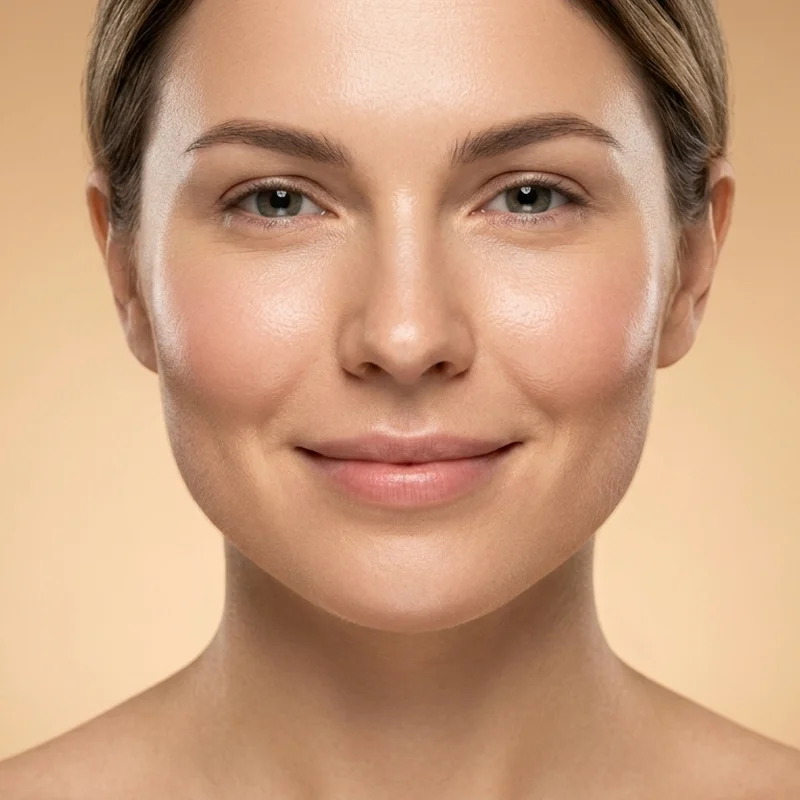
Fat transfer to face is a surgery that restores lost facial volume by harvesting your own fat, called autologous tissue, and placing it where the face has hollowed. It fills sunken cheeks, deflated temples, under-eye hollows, and deep folds, using fat taken from the abdomen, flanks, or thighs. Also called facial lipofilling, it takes about 1.5 to 2.5 hours, and because the tissue is your own, the chance of an allergic or rejection reaction is much lower2,1. Most of the transferred fat survives long-term, so results last years rather than the months fillers offer1,2.
Faces lose volume in different places and at different rates, so no two plans are the same. Some people need only cheeks or under-eyes refreshed; others want fuller restoration. Your surgeon maps where you have hollowed and decides how much fat to place.
It helps to know how this settles. Surgeons add a little extra because some fat will not survive, so you look over-filled for a week or two before the volume eases into its final shape. For most people it lasts well, though some need a top-up session, which your surgeon can talk through at consultation.
It can address a range of concerns, including:
Am I a Good Candidate for Fat Transfer to Face?
Because grafted fat is living tissue, suitability hinges on your donor fat, your weight pattern, and the circulation the graft depends on.
Good candidates have genuine volume loss the graft can fill, rather than laxity that needs lifting.
Hollowing: sunken cheeks, deflated temples, and persistent under-eye hollows are the core indications.
Deep folds: nasolabial folds and marionette lines soften when the volume behind them is restored.
Filler fatigue: patients tired of repeated filler treatments that keep wearing off are frequent and well-suited candidates.
Overall deflation: a generally gaunt or aged appearance from facial deflation responds well to multi-zone grafting.
You cannot graft what cannot be harvested, so donor-site assessment is an early gate unique to this procedure.
Sufficient donor fat: candidates need enough fat at the abdomen, flanks, or inner thighs to harvest.
Very lean patients: very low body fat with limited donor sites is an explicit caution and may rule the procedure out.
Donor-site bonus: most patients end up with a mildly contoured donor area as a secondary benefit.
Handling matters: gentle, low-pressure harvesting preserves the fat cells, which is one reason surgeon selection shapes the outcome.
Transferred fat behaves like living tissue, which makes your weight history part of the candidacy assessment.
Stable weight: a stable weight is a baseline requirement before surgery.
Weight swings: if your weight tends to swing year to year, the transferred volume will visibly change with it.
Responds like body fat: gaining weight can increase facial volume and losing it can reduce it, because the graft follows your body.
Around surgery: maintain a steady weight in the weeks before and after the procedure to protect graft survival.
Graft survival depends on microcirculation, which is why the health screen focuses on blood supply and skin condition.
Smoking: nicotine impairs the microcirculation transferred fat depends on to survive, so a four-week stop before surgery is required.
Skin infections: a history of cold sores or recurrent skin infections near the injection zones is a caution to raise at consultation.
Blood thinners: aspirin, ibuprofen, and blood-thinning supplements stop two weeks before surgery.
General health: good overall health supports both the harvest site and the graft itself.
Fat transfer is not a filler appointment, and candidates need to be comfortable with how the result develops.
Over-correction phase: surgeons deliberately inject more than the target volume because 30-40% of the fat will not survive; expect to look over-filled for one to two weeks.
Survival rate: around 60-70% of properly harvested and processed fat survives long-term.
Slow reveal: the definitive result emerges between months three and six as the surviving fat integrates.
Possible top-up: a second session is sometimes needed and is a normal part of how grafting works, not a complication.
Who is not suitable for fat transfer to face?
- Very low body fat with insufficient donor sites
- Weight that swings noticeably year to year
- Active cold sores or skin infections near the injection zones
- Smokers unwilling to stop four weeks before surgery
- Expecting instant filler-style results without a swelling phase
- Unwilling to accept that a top-up session may be needed
Pricing
How Much Will Fat Transfer to Face Cost in Thailand?
What fat transfer to face costs at accredited hospitals in Thailand, and what your final quote depends on.
Get your exact price
Tell us what you're considering and we'll send a personalised quote from accredited clinics within 24 hours.
Get my free quoteTypical prices in Thailand
Typical ranges based on recent hospital quotes. Your exact price depends on the hospital and how complex your case is, and is confirmed at your teleconsultation.
Fat Transfer to Face
What you pay tracks how many areas of the face need volume restored, which your surgeon agrees with you at consultation.
| Single-zone fat transfer Treats one area such as the cheeks or under-eyes | $2,000 to $2,500 ฿68,000 to ฿85,000 |
| Multi-zone fat transfer, two or three areas Cheeks plus temples or under-eyes in a single session | $2,500 to $3,500 ฿85,000 to ฿119,000 |
| Full-face fat transfer Volume restored across every facial zone in one procedure | $3,500 to $4,000 ฿119,000 to ฿136,000 |
| Fat transfer with a facelift Volume added at the same time as a surgical lift | $5,000 to $7,500 ฿170,000 to ฿255,000 |
Get your exact price
Tell us what you're considering and we'll send a personalised quote from accredited clinics within 24 hours.
Hospitals Trusted for Fat Transfer to Face
From internationally accredited flagships to dedicated specialist hospitals, these are the kinds of facilities where international patients have this procedure.

Masterpiece Hospital
A cosmetic surgery specialty hospital in Bangkok focused on facial contouring, rhinoplasty and eyelid work.
View hospital profile
Kamol Cosmetic Hospital
The only specialist cosmetic surgery hospital in Thailand to hold JCI accreditation.
View hospital profile
Bumrungrad International Hospital
Southeast Asia's flagship private hospital, treating over 520,000 international patients a year.
View hospital profile
Get a Free Quote in Two Minutes
Tell us what you're considering. We'll match you with suitable specialists and provide real hospital pricing.
- Honest pricing with no markups
- Matched to a specialist for your procedure
- No obligation, no pressure


Rated 5 stars by our patients
The complete guide to Fat Transfer to Face in Thailand
Everything below is for readers who want the full detail: costs broken down, types and techniques, recovery, risks and safety, and planning your trip.
Fat Transfer Surgeons & Clinics in Thailand
Fat transfer outcomes depend heavily on technique, how the fat is harvested, processed, and placed. Surgeon selection is where the outcome is largely determined.
Leading Hospitals in Bangkok
Our partner hospitals are JCI-accredited and run dedicated plastic surgery departments with the equipment fat grafting requires. Centrifuges, closed harvesting systems, and micro-cannula sets are standard at this tier. These are leading Bangkok hospitals with full-service infrastructure, not aesthetic clinics. If a complication arises, the entire infrastructure is onsite.
Experienced Fat Transfer Surgeons
Our partner surgeons hold Thai Board certification in plastic and reconstructive surgery and perform facial lipofilling as part of their regular caseload. Several trained in advanced fat grafting techniques through international fellowships before returning to practise in Bangkok. Fat handling is a skill that degrades without regular practice, so consistent surgical volume matters as much as the initial training.
What to Look for in a Surgeon
Board certification is the baseline. Beyond that, ask specifically about their fat transfer volume, how many facial lipofilling cases they perform monthly and what their typical retention rates look like. Request before-and-after photographs taken at three to six months, not two weeks, since early photos still show over-correction and swelling. Ask about their processing method and injection technique. A surgeon who injects fat in large boluses rather than small parcels across multiple planes is using an outdated approach that produces inferior results.
Understanding Your Results
Fat transfer results evolve over several months as some fat is reabsorbed and the remainder integrates permanently. Here is what the trajectory looks like and what constitutes a realistic outcome.
Typical Fat Transfer Results
Facial fat transfer restores volume where ageing, weight loss, or genetics have created hollowing. Cheeks regain fullness, under-eye hollows fill in, temples round out, and deep folds soften. The texture of the result is different from fillers, transferred fat feels soft and moves with your facial expressions rather than sitting as a defined bolus. Once the surviving fat has integrated, it ages with you rather than dissolving on a fixed timeline like hyaluronic acid.2,1
What Results Can You Expect?
Expect your face to look over-filled for the first one to two weeks. This is deliberate, surgeons inject more than the target volume because 30–40% of the fat will not survive. By month three, you have a good read on the final outcome. If you feel additional volume is needed, a top-up session can be planned at the six-month mark. During your consultation, your surgeon will assess which zones need treatment, estimate the volume required, and set clear parameters on what one session can achieve for your specific anatomy.
Fat Transfer to Face Cost in Thailand
Average Cost of Fat Transfer to Face
Facial fat transfer in Thailand typically costs between $2,000 and $7,500. A single-zone treatment like cheeks or under-eyes sits at the lower end, while comprehensive multi-zone lipofilling covering cheeks, temples, under-eyes, and nasolabial folds approaches the upper range. Your quote should break out surgeon fees, facility costs, and anaesthesia so the pricing is transparent.
Cost Breakdown
The surgeon's fee is the largest component because fat transfer is technique-intensive, harvesting, processing, and injecting all demand time and precision. Hospital and theatre fees cover the operating room, equipment, and nursing support. Anaesthesia fees cover sedation or general anaesthesia depending on the extent of the procedure. Aftercare includes follow-up visits, prescribed medications, compression garments for the donor site, and coordination support during your recovery in Thailand.
What Affects the Price?
The number of facial zones being treated is the main price driver. Treating under-eyes alone is a shorter, simpler procedure than full-face volumisation covering cheeks, temples, nasolabial folds, and jawline. Whether you opt for general anaesthesia or local with sedation also affects the total. Adding nano-fat processing for skin rejuvenation may carry a small premium at some hospitals. Surgeon experience and hospital tier round out the pricing factors.
Thailand vs International Price Comparison
Facial fat transfer in Thailand costs 40–60% less than equivalent procedures in the US ($5,600–$10,000), Australia (A$5,200–A$9,000), and the UK (£4,400–£7,600). The price difference comes from Thailand's lower facility and staffing costs, not from different equipment or lower surgical standards. Our partner hospitals hold JCI accreditation, and surgeons are certified by the Thai Board of Plastic and Reconstructive Surgery.
Fat Transfer vs Dermal Fillers
The non-surgical alternative is dermal filler, usually hyaluronic acid, injected in a clinic visit to plump hollow cheeks, soften under-eye troughs, or fill deep folds. There is no surgery, no harvest, and almost no downtime, and the effect is visible the same day. For someone testing whether more facial volume suits them, or wanting a quick refresh before an event, filler is a reasonable first step.
What it cannot do is last. Hyaluronic acid filler dissolves over roughly six to eighteen months, so the result has to be topped up indefinitely4, and the cost is per-syringe each time. It also sits as a defined product under the skin rather than becoming living tissue, so large volumes can read as heavy or unnatural, and repeated filler does nothing to improve skin quality the way grafted fat with its stem cells can. The ongoing maintenance and stacking cost are exactly the "filler fatigue" that brings many patients to fat transfer in the first place.
Fat transfer is the route when you want volume that lasts years rather than months, a softer and more natural texture that moves with your face, and a one-time procedure instead of an open-ended schedule of top-ups. Because it uses your own tissue, the surviving fat becomes a permanent part of your face, and that lasting, structural restoration is what the rest of this page covers.
Types of Fat Transfer to Face
Fat grafting is not one-size-fits-all. The processing method and injection technique vary depending on whether you need broad volume restoration, fine-line improvement, or skin-quality regeneration. Most patients benefit from a combination.
Macro-Fat Grafting
Standard fat grafting for restoring significant volume loss. Fat is harvested, centrifuged, and injected in small parcels into the cheeks, temples, jawline, or mid-face. Delivers the most noticeable volumetric change and can replace years of repeated filler sessions with a single procedure.
- Restores volume to cheeks, temples, jawline, and mid-face
- Fat parcelled into small deposits to maximise blood supply contact
- Results become stable once fat integrates, typically by month three
- Best for: patients with noticeable volume loss who want a lasting alternative to fillers
Micro-Fat Grafting
Uses finer cannulas and smaller fat deposits for precision work in delicate areas. Tear troughs, lip borders, and fine perioral lines respond well to this approach. Less volumetric impact than macro-grafting, but the control it gives around the eyes and mouth is worth the slower injection process.
- Fine cannulas allow precise placement around eyes, lips, and nasolabial area
- Lower trauma to surrounding tissues than standard-gauge injection
- High graft survival due to close contact with surrounding blood supply
- Best for: under-eye hollows, tear troughs, lip enhancement, and fine-line correction
Nano-Fat Grafting
Fat is mechanically emulsified into a liquid concentrate rich in stem cells and growth factors. Injected superficially to improve skin quality, texture, and elasticity rather than add volume. Often layered on top of macro- or micro-grafting in the same session for a combined volumetric and regenerative effect.
- Targets skin quality rather than volume, texture, tone, and elasticity
- Stem cell and growth factor concentration drives tissue regeneration
- Typically combined with other grafting techniques in the same session
- Best for: patients wanting skin rejuvenation alongside volume restoration
Fat Transfer Techniques
How fat is harvested, processed, and injected all affect how much survives and how the result looks at six months. The details matter more than patients usually expect.
Harvesting Methods
Fat is collected via low-pressure liposuction from the abdomen, flanks, or inner thighs. Gentle suction is critical, aggressive harvesting damages fat cells and reduces survival rates. The donor site is chosen based on fat availability and convenience. Most patients end up with a mildly contoured donor area as a secondary benefit.
- Low-pressure syringe liposuction preserves fat cell integrity
- Common donor sites are abdomen, flanks, and inner thighs
- Donor site heals with minimal scarring from 2–3mm incisions
- Best for: all facial fat transfer cases, harvesting quality directly determines graft survival
Processing and Purification
Harvested fat must be separated from blood, oil, and anaesthetic fluid before injection. Centrifugation and decanting are the two main methods. Centrifuging at the right speed concentrates viable fat cells without crushing them. Over-processing damages cells; under-processing leaves debris that the body absorbs, reducing retention.
- Centrifugation separates viable fat from fluid, oil, and damaged cells
- Processing speed and duration calibrated to preserve cell membranes
- Properly processed fat has higher long-term survival than poorly handled grafts
- Best for: centrifugation is the standard at experienced centres; decanting used for simpler cases
Injection Strategy
Fat is deposited in multiple small parcels across different tissue planes, muscle, deep fat, and subcutaneous layers. This layered approach maximises contact with blood supply, which is what determines whether each fat deposit survives. Injecting large boluses in one spot creates lumps and poor survival. The slower, multi-pass method takes longer but produces significantly better retention.
- Multi-plane injection distributes fat across muscle, deep, and superficial layers
- Small-parcel technique maximises blood supply contact for each deposit
- Deliberate over-correction accounts for the 30–40% of fat that will not survive
- Best for: all facial zones, this layered method is the standard at quality centres
Cell-Assisted Lipotransfer (SVF Enrichment)
Cell-assisted lipotransfer enriches the graft with the stromal vascular fraction, the regenerative and stem cell portion isolated from a separate batch of your own harvested fat. Adding these cells back into the graft is intended to improve how much fat survives and to support the surrounding tissue, particularly in thin or previously grafted areas. It is an advanced, more involved approach that not every hospital offers, and your surgeon will say whether your case warrants it.
- Concentrated stem and regenerative cells from your own fat are added to the graft
- Aims to improve long-term fat survival and tissue quality in difficult zones
- More involved processing, so offered only at selected advanced centres
- Best for: thin-skinned or previously grafted areas where standard grafts retain poorly
Fat Transfer to Face Recovery Timeline
Days 1–3
Swelling and bruising are heaviest across both the face and donor site during the first few days. Your face will look noticeably over-filled. This is intentional and expected. The donor area may feel sore, similar to post-workout muscle tenderness. Rest at your hotel with cold compresses and head elevation. Daily check-ins with your coordinator monitor progress.
Days 4–7
Facial swelling starts dropping and bruising shifts from dark to yellowish. The donor site discomfort eases significantly. You will attend a follow-up with your surgeon to assess healing at both sites. Most patients feel well enough to walk around and eat normally by this stage, though the face still looks fuller than the final result.
Weeks 2–4
Swelling continues to reduce and your face starts looking more like the intended outcome. Some of the transferred fat is reabsorbed during this phase, your surgeon accounted for this with the initial over-correction. Light exercise can resume. Most patients return to work and social activity during this window.
Months 2–6
The surviving fat cells establish a permanent blood supply and stabilise. By month three, you have a reliable preview of your long-term result. Subtle improvements in skin quality from stem cell activity may continue developing through month six. The fat that has integrated at this point behaves like normal facial tissue going forward.
When Can You Fly After Fat Transfer to Face?
Most patients can fly home 7–10 days after the procedure, once your surgeon has confirmed that both the facial injection sites and the donor area are healing well. Fat transfer recovery is lighter than bone surgery or facelift, so the travel window is shorter. Mild facial puffiness may temporarily increase during the flight due to cabin pressure and reduced movement. This is normal and settles within a day or two of landing.
When Can You Return to Work and Exercise?
Desk-based work is usually manageable within 7–10 days, though residual facial fullness may still be visible. Light walking is encouraged from day one to promote circulation at both the donor and recipient sites. Gym workouts and vigorous cardio should wait until 3–4 weeks post-procedure to avoid disrupting newly grafted fat before it establishes blood supply. The donor site may remain tender during exercise for a few weeks.
When Will You See Final Results?
You will notice volume improvement immediately, but the face will look over-filled for the first week or two. As swelling drops and some fat is reabsorbed, the contour settles into something closer to the intended result by week four. The definitive outcome becomes clear between months three and six, once the surviving fat cells have fully integrated and stabilised. Skin quality improvements from nano-fat, if used, may continue developing during this window.
Bathing, Swimming, and Alcohol After Fat Transfer
You can usually shower from 24 to 48 hours after surgery, keeping the donor-site and facial puncture points clean and patting them dry. Avoid soaking the wounds, so no baths, swimming pools, hot tubs, or the sea until the harvest incisions and injection points have fully closed, typically around two weeks, to keep infection risk down. Treat swimming as exercise and leave laps until 3 to 4 weeks, in line with returning to the gym. Sleep with your head elevated on two pillows for the first week to limit facial swelling and help the graft settle evenly. Skip alcohol for at least the first week and while you are taking prescribed pain medication or antibiotics, since it worsens swelling and bruising and thins the blood.
Anaesthesia for Fat Transfer to Face
Facial fat transfer is done under either general anaesthesia or local anaesthetic with sedation, and your surgeon and anaesthetist decide which suits your case. The choice usually comes down to how many zones are being treated and how much fat is being harvested: a single-zone top-up can often be done relaxed and pain-free under sedation, while full-face volumisation with a larger harvest is more comfortable under a general, where you are fully asleep.
Whichever route is chosen, you feel nothing during the procedure itself, at both the donor site where the fat is taken and the facial injection points. A consultant anaesthetist stays with you and monitors you throughout, which is standard at the accredited hospitals we work with. Under sedation you are deeply relaxed and aware of nothing; under general you are completely asleep.
Before you are cleared you have a pre-operative assessment, including blood tests and a review of any medication you take, and this is also where the anaesthesia plan is confirmed. Afterwards the discomfort is mild: most patients describe a workout-like ache at the donor site and a sense of tightness or pressure in the face rather than sharp pain, and it is well controlled with the medication your surgeon prescribes.
Risks and Safety of Fat Transfer to Face
Facial fat transfer has a strong safety profile because it uses autologous tissue, your own fat, greatly reducing the risk of allergic or rejection reactions. That said, it is still a surgical procedure with specific risks worth understanding.
- Asymmetry or uneven fat survival between sides (may require touch-up)
- Over-correction that takes longer than expected to settle
- Under-correction if fat survival is lower than expected
- Small palpable lumps from fat deposits that did not integrate (usually temporary)
- Oil cysts or firm calcified nodules where larger fat deposits broke down rather than survived (may be felt under the skin and occasionally need drainage or imaging)
- Infection at harvest or injection sites (uncommon with proper sterile technique)
- Prolonged swelling at the donor area or facial injection zones
- Vascular occlusion from fat injected into a blood vessel, restricting blood supply and risking skin necrosis (rare, minimised by blunt cannula and low-pressure technique)3
- Fat embolism from accidental intravascular injection travelling to the eye or brain (extremely rare but serious)2
- Need for a second session to achieve the desired volume
Most complications from fat transfer are minor and self-resolving. The serious risks, particularly fat embolism, are mitigated by proper injection technique using blunt-tipped cannulas and low-pressure delivery. Surgeon skill and fat-handling discipline are the two biggest variables in outcome quality.
Is Fat Transfer to Face Safe in Thailand?
Yes, when performed at a JCI-accredited hospital by a board-certified plastic surgeon, facial fat transfer in Thailand meets the same clinical and safety standards as the US, UK, and Australia. The procedure itself carries lower inherent risk than many facial surgeries because it uses your own tissue and does not involve bone cutting or implants. Thailand's leading hospitals use closed-system harvesting and processing to maintain sterility throughout.
How to Reduce Risks
Choose a surgeon who performs facial fat grafting regularly and can demonstrate consistent results in before-and-after photographs taken at least three months post-procedure. Verify JCI hospital accreditation and Thai Board certification in plastic surgery. Stop smoking at least four weeks before the procedure, nicotine impairs the microcirculation that transferred fat cells depend on for survival. Discontinue aspirin, ibuprofen, and blood-thinning supplements two weeks prior. Maintain a stable weight in the weeks surrounding your procedure.
When Is a Second Session Needed?
Some patients need a second fat transfer session to achieve their target volume. This is not a complication, it is a normal part of how fat grafting works. If fat survival falls below 60% in a particular zone, or if you want additional volume beyond what the first session achieved, a top-up session can be scheduled once the initial result has fully stabilised at around six months. Second sessions are typically shorter and less involved than the first.
Planning Your Trip to Thailand for Fat Transfer to Face
Fat transfer is a lighter procedure than most facial surgeries, which means a shorter stay and faster return to normal activity. Here is how to structure your trip.
How Long to Stay in Thailand
Plan for 7–10 days minimum. Day one covers your consultation and pre-operative assessment. The procedure is typically scheduled for day two or three and is performed as a day case, no overnight hospital stay is required. The remaining days cover initial recovery, swelling reduction, and a follow-up appointment with your surgeon before you are cleared to fly. Most patients feel comfortable heading home after a week, though the full ten days gives more margin.
What's Included in a Medical Trip
Your care coordinator manages hospital transfers, surgery scheduling, and all follow-up appointments. The surgical quote covers surgeon fees, anaesthesia, facility charges, fat processing, and post-operative care including medications and a donor-site compression garment. Flights and accommodation are arranged separately, though your coordinator can recommend nearby hotels and assist with booking to keep logistics straightforward.
Recovery in Bangkok vs Phuket
Bangkok is the practical choice for the first week. Proximity to your surgical team matters during the days when swelling is heaviest and follow-up checks are happening. Fat transfer recovery is relatively mild compared to bone or lift procedures, so relocating to Phuket after your final check-up for a few days of rest before flying home is a reasonable option if you want it. But stay in Bangkok until your surgeon gives clearance.
Related Procedures
Other procedures that address similar goals or conditions, in case one of them is a closer fit for you.
Planning your treatment in Thailand
Independent guides to help you weigh the decision, before you commit to anything.
Common Questions About Fat Transfer to Face
Everything you need to know before your procedure

Medical References
Keep researching with AI
Open this guide in your AI assistant to dig deeper and ask the questions it didn't answer.
Opens in a new tab with this guide already loaded.
Medical disclaimer: This information is for educational purposes only and does not replace professional medical advice. Individual results, recovery times, and suitability vary. Always consult a qualified surgeon before making decisions about treatment.
Ready to Get Started?
Speak with our care coordinators for a free, no-obligation consultation and personalised quote.
Speak to Our Team