Fat Transfer to Hips in Thailand Your guide to cost, top surgeons & hospitals
Hip dips are structural. No workout fills them in. Fat transfer does, using tissue your body already has.

What Is Fat Transfer to Hips?
Also known as: Hip Dip Surgery · Hip Lipofilling
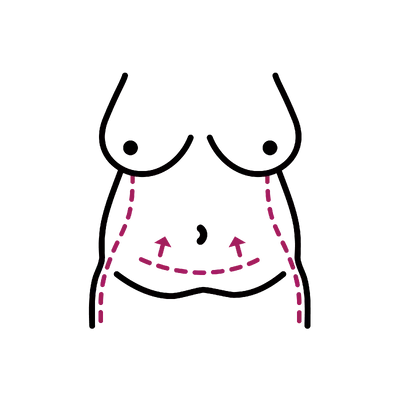
Fat transfer to the hips, also called hip lipofilling, is a surgery that adds volume to the hips by moving your own fat into the hollow between the hip bone and upper thigh. Liposuction draws the fat from the abdomen, flanks, lower back or thighs, processes it, then injects it in small amounts so it picks up a fresh blood supply. It works in two directions at once: less volume where you do not want it, more where you do, giving a rounder, more continuous curve from waist to thigh. It usually takes about 2 to 3 hours.
Not all of the grafted fat lasts, and that is expected. Some of the grafted fat does not keep its blood supply, so your surgeon deliberately over-injects.1 Because it is your own tissue, the result tends to look and feel natural, with no implant edges.
Whether it suits you depends on having enough donor fat and on what causes your hip dip. Soft-tissue hollows fill well; if it is mostly bone shape, fat can soften but not erase it. Your surgeon maps this at consultation and tells you honestly what is realistic.
It can address a range of concerns, including:
Am I a Good Candidate for Fat Transfer to Hips?
Whether hip fat transfer will work for you comes down to anatomy and aftercare, and surgeons assess both honestly at consultation.
The procedure targets soft-tissue volume gaps around the hips, so surgeons first confirm that is what you have.
Hip dips: The inward curve between hip bone and upper thigh is the classic indication, smoothed by grafting fat directly into the hollow.
Straight or narrow contour: Hips lacking curvature, or asymmetry in volume or shape between sides, respond well to targeted grafting.
Post-weight-loss deflation: Hip fullness lost to weight loss or ageing can be restored with your own tissue.
Curves without implants: Good candidates want a better waist-to-hip ratio using natural tissue rather than synthetic implants.
Fat transfer needs raw material, so your body composition is the first practical gate.
Enough to harvest: Surgeons want sufficient donor fat for roughly 300-500ml per hip for dip correction, or 500-800ml for full augmentation, taken from the abdomen, flanks, lower back, or thighs.
Very lean patients: Limited donor reserves cap how much can be safely transferred per hip. Your surgeon will tell you honestly at consultation whether you have enough to work with.
Stable weight helps: Donor fat is assessed at your current weight, and surgeons may advise maintaining or slightly increasing it before surgery.
Not every hip dip is a fat problem, and surgeons assess what is actually creating yours.
Soft tissue deficiency: Dips caused by how fat is distributed over the hip respond best, since grafting replaces exactly what is missing.
Skeletal shape: If the dip is driven by your bone structure, fat transfer can soften it but not eliminate it. Good candidates understand this limit going in.
Honest mapping: A thorough consultation includes body mapping to set expectations about how much of your contour can realistically change.
Grafted fat survives only if it establishes a blood supply, and pressure in the early weeks is its main enemy.
No direct hip pressure: Strict avoidance of sitting and side-lying directly on the hips for the first 2-3 weeks, then cushioned, careful sitting until week 6, since compression reduces graft survival.
Modified sitting: Plan for a donut cushion and sitting forward on your thighs, plus sleeping on your stomach or back.
Work and travel: Desk work resumes around day 7-10 with a modified position, and the flight home at 10-14 days follows the same rules.
Fat grafting has its own arithmetic, and surgeons look for patients who understand it before operating.
Expected reabsorption: Typically a meaningful proportion of transferred fat does not survive, which is why surgeons deliberately over-inject at the start.
A settling period: The early result looks over-corrected by design. Volume settles over weeks 3-8, with the contour close to final at month 3 and fully settled by 6 months.
Possibly two sessions: Patients wanting maximum volume often need a second round at 6-12 months. That is part of the process, not a failure.
Who is not suitable for fat transfer to hips?
- Very lean patients without adequate donor fat
- Unstable weight, still losing or gaining
- Unable to avoid direct sitting or side-lying on the hips for 2-3 weeks, then cushioned sitting until week 6
- Smokers unwilling to stop four weeks before surgery, as nicotine constricts the graft's blood supply
- Anyone expecting final volume from a single session
- Expecting fat transfer to fully correct a bone-driven hip shape
- Significant uncontrolled heart or lung disease, or otherwise not medically fit for general anaesthesia
- Currently pregnant or breastfeeding
- Bleeding disorder or blood thinners that cannot be safely stopped before surgery
Pricing
How Much Will Fat Transfer to Hips Cost in Thailand?
What fat transfer to hips costs at accredited hospitals in Thailand, and what your final quote depends on.
Get your exact price
Tell us what you're considering and we'll send a personalised quote from accredited hospitals within 24 hours.
Get my free quoteTypical prices in Thailand
Typical ranges based on recent hospital quotes. Your exact price depends on the hospital and how complex your case is, and is confirmed at your teleconsultation.
Fat Transfer to Hips
How much fat needs moving, and how many areas have to be liposuctioned to harvest it, is what sets the scope of your operation.
| Hip dip correction only Fills the hollow at the side of the hip, fat taken from one area | $2,500 to $3,500 ฿85,000 to ฿119,000 |
| Full hip augmentation Reshapes the whole hip, with fat harvested from several areas | $3,500 to $4,500 ฿119,000 to ฿153,000 |
| Lipo-360 with hip fat transfer Liposuction right around the waist and back, moved into the hips | $4,000 to $5,000 ฿136,000 to ฿170,000 |
| Revision fat transfer A later top-up session once the first result has settled | $2,000 to $3,500 ฿68,000 to ฿119,000 |
Get your exact price
Tell us what you're considering and we'll send a personalised quote from accredited hospitals within 24 hours.
Hospitals Trusted for Fat Transfer to Hips
From internationally accredited flagships to dedicated specialist hospitals, these are the kinds of facilities where international patients have this procedure.

Rattinan Clinic
A specialist body contouring clinic in central Bangkok with over 14,000 BodyTite treatments performed.
View hospital profile
Kamol Cosmetic Hospital
The only specialist cosmetic surgery hospital in Thailand to hold JCI accreditation.
View hospital profile
Yanhee International Hospital
A 400-bed hospital known worldwide for high-volume cosmetic surgery.
View hospital profile
Get a Free Quote in Two Minutes
Tell us what you're considering. We'll match you with suitable specialists and provide real hospital pricing.
- Honest pricing with no markups
- Matched to a specialist for your procedure
- No obligation, no pressure


Rated 5 stars by our patients
The complete guide to Fat Transfer to Hips in Thailand
Everything below is for readers who want the full detail: costs broken down, types and techniques, recovery, risks and safety, and planning your trip.
Fat Transfer Surgeons & Clinics in Thailand
For fat grafting procedures, the surgeon's handling technique and injection strategy matter more than with almost any other cosmetic surgery. Here is what we look for when matching you to a partner surgeon.
Leading Hospitals in Bangkok
Our partner hospitals have dedicated body contouring teams with experience in fat harvesting, processing, and grafting. They use closed-system fat processing (centrifuge or filtration) to maintain sterility and maximise cell viability. These are full-scale hospitals, not clinics, with the infrastructure to manage any complication.
Experienced Fat Grafting Surgeons
Our partner surgeons are board-certified and perform fat transfer procedures, hips, buttocks, breasts, face, as a regular part of their practice. The fat grafting skill set is specific: it requires knowing how much to harvest, how to process without destroying cells, and how to inject in micro-parcels across multiple planes. We screen partner surgeons for regular, high-volume fat grafting experience, which is the kind of practice this technique rewards.
What Sets a Strong Fat Grafting Surgeon Apart
A few things distinguish surgeons who do fat grafting well: a clear fat processing method (centrifuge vs filtration vs decanting), before-and-after photos at the 6-month mark rather than immediately post-op when the over-correction makes everything look fuller, and a considered approach to how much to inject per hip and how to handle asymmetry. A surgeon who can explain their grafting strategy is demonstrating the right level of expertise, and we screen our partner surgeons for exactly this. Your coordinator can walk you through any of these details for the surgeon you are matched with.
Understanding Your Results
Fat transfer results depend heavily on fat survival and how the grafted tissue settles. Here is what to expect over the first six months.
Typical Fat Transfer to Hips Results
The hip dip is smoothed or eliminated, and the transition from waist to thigh follows a rounder, more continuous curve. If combined with lipo-360, the overall change in body proportions is significant, a visibly narrower waist alongside fuller hips. The result looks and feels natural because it is your own tissue. At 6 months, the grafted fat is indistinguishable from native fat.
What Results Can You Expect?
Results vary based on how much donor fat is available and how much survives grafting. Patients with generous donor areas typically achieve better results because more fat can be harvested and injected. Your surgeon will discuss realistic volume expectations during consultation based on your body composition. Some patients achieve their goal in one session; others prefer a second round for additional volume.
Fat Transfer to Hips Cost in Thailand
Average Cost of Fat Transfer to Hips
Fat transfer to the hips in Thailand typically costs between $2,000 and $5,000. A focused hip dip correction sits at the lower end. Full hip augmentation with lipo-360 sits at the upper end. The exact price depends on the number of donor areas treated and the volume of fat processed.
Cost Breakdown
The surgeon's fee covers both the liposuction (donor-site) and the injection (recipient-site) components. Hospital and theatre fees cover the facility and equipment, including fat processing systems. Anaesthesia fees reflect the 2–3 hour operating time. Aftercare covers a compression garment, donor-site management, follow-up appointments, and medications.
What Affects the Price?
Price is driven by how many donor areas are liposuctioned and how much fat is transferred. A single donor site with focused hip dip correction costs less than lipo-360 with full hip augmentation. VASER-assisted harvest costs more than traditional liposuction due to equipment fees. Surgeon experience in fat grafting also affects the price.
Thailand vs International Price Comparison
Fat transfer to the hips in Thailand costs 40–60% less than equivalent procedures in the US ($7,000–$12,500), Australia (A$6,500–A$11,300), and the UK (£5,500–£9,500). The cost difference comes from Thailand's lower operating and staffing costs, not from differences in equipment, technique, or surgical capability. Our partner hospitals are JCI-accredited.
Surgical vs Non-Surgical Hip Dip Correction
The non-surgical route for hip dips is injectable filler, either hyaluronic acid or a biostimulator like Sculptra that prompts your body to build collagen. A practitioner injects it into the hollow over a few sessions to soften the dip, with no surgery, no liposuction, and almost no downtime. It is a reasonable option for a mild, purely soft-tissue dip, or for trying out a fuller curve before committing to anything permanent.
The trade-offs are real, though. Filler only adds volume to a small area, so it cannot give you the slimmer waist and broader, hourglass curve that comes from harvesting fat elsewhere and transferring it. It is temporary, fading over roughly twelve to eighteen months and needing repeat sessions to maintain, which adds up over time, and correcting a deeper dip needs large volumes that get expensive fast. It does nothing about excess fat at the waist or flanks.
For a lasting result, a meaningful change in your waist-to-hip ratio, or correction that uses your own tissue rather than synthetic material, surgical fat transfer is the route, and that is what the rest of this page covers.
Types of Fat Transfer to Hips
The approach varies depending on whether you are targeting hip dips specifically, building overall hip width, or combining the procedure with broader body contouring. Each produces a different silhouette.
Hip Dip Correction
Focused fat grafting into the trochanteric hollow, the indentation between the iliac crest and the greater trochanter. This is the most common variant, targeting the specific dip that creates a concave line between waist and thigh. The aim is a smooth, unbroken curve rather than dramatic volume addition.
- Targets the specific hollow between hip bone and upper thigh
- Moderate fat volume, typically 300–500ml per side after processing
- Produces a subtle but meaningful contour improvement
- Best for: patients whose main concern is the visible hip dip, not overall hip width
Full Hip Augmentation
A more aggressive approach grafting fat across the entire hip area, dips, lateral hip, and upper buttock transition. Requires more donor fat and produces a more dramatic curve. Often combined with lipo-360 for maximum waist-to-hip ratio improvement.
- Fat grafted across the full hip region, not just the dip
- Higher fat volume, 500–800ml per side after processing
- More dramatic change in waist-to-hip proportions
- Best for: patients wanting significant curve enhancement, not just dip correction
Lipo-360 with Hip Fat Transfer
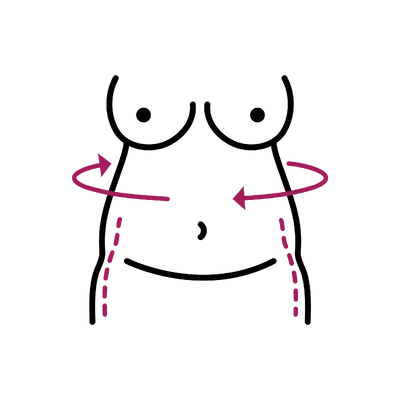
Combines circumferential liposuction of the abdomen, flanks, and lower back with fat transfer to the hips. The lipo-360 component provides the donor fat and simultaneously sculpts the waistline, maximising the visual impact of the hip augmentation. This is the most popular combination.
- Full circumferential liposuction provides donor fat and waist sculpting
- Maximum improvement in waist-to-hip ratio from a single procedure
- Longer operating time but only one recovery period
- Best for: patients wanting an hourglass transformation, slim waist plus full hips
Fat Transfer Techniques
Fat grafting technique directly affects how much of the transferred fat survives. The difference between a 50% and 70% survival rate means hundreds of millilitres of retained volume. Here is what surgeons use.
Coleman Fat Grafting Technique
The gold standard. Fat is harvested with low-pressure liposuction to minimise cell damage, centrifuged to separate viable fat cells from oil and fluid, then injected in small parcels across multiple tissue planes. The small-parcel approach maximises contact with blood supply, which is what determines survival.
- Low-pressure harvest preserves fat cell viability
- Centrifugation separates viable cells from damaged tissue
- Micro-droplet injection across multiple layers for optimal blood supply contact
- Best for: most hip fat transfer cases, the most widely validated grafting method
VASER-Assisted Fat Harvest
Uses ultrasonic energy to loosen fat cells before suctioning. The claimed advantage is less mechanical trauma to the fat cells during harvest, which may improve survival rates. Also produces better definition in the donor areas because VASER sculpts with more precision than traditional liposuction.
- Ultrasonic energy selectively loosens fat with less cell trauma
- Improved donor-site definition compared to traditional lipo
- Potentially higher fat cell viability at the point of harvest
- Best for: patients who want detailed sculpting of donor areas alongside the fat transfer
Expansion Vibration Lipofilling (EVL)
A newer technique where the recipient site is pre-expanded before injection and fat is delivered with vibration-assisted cannulas. The expansion creates space in the tissue, reducing pressure on injected fat cells and theoretically improving survival. Not yet as widely validated as Coleman technique but gaining traction.
- Recipient-site expansion creates space before fat injection
- Vibration-assisted delivery reduces injection pressure
- May improve survival rates in areas with limited tissue compliance
- Best for: revision cases or patients where prior grafting has produced scar tissue in the hip area
Power-Assisted Fat Harvest (PAL)
Power-assisted liposuction uses a cannula that vibrates rapidly to loosen fat as it is gently suctioned, rather than relying on the surgeon's manual back-and-forth motion. For fat grafting the appeal is a gentler, lower-pressure harvest that handles the fat carefully, which helps keep the cells intact for transfer, while still clearing larger volumes from the donor area efficiently. It is widely available and often used alongside or instead of traditional harvest.
- Vibrating cannula loosens fat with less manual trauma during harvest
- Gentle, efficient removal of larger donor volumes for grafting
- Helps preserve fat cell viability compared with aggressive suction
- Best for: cases needing higher fat volumes harvested while keeping cells intact for transfer
Fat Transfer to Hips Recovery Timeline
Days 1–3
Hips appear larger than the final result, this is a combination of swelling and deliberate over-injection. Donor sites are bruised and tender. You will wear a compression garment continuously and sleep on your stomach or side. Walking short distances promotes circulation. Sitting directly on the hips is restricted.
Week 1–2
Swelling reduces noticeably and donor-site bruising begins to fade. Most patients feel well enough for desk work by day 7–10, provided they can avoid prolonged direct hip pressure when sitting. Use a cushion or sit on your thighs rather than your hips.
Weeks 3–6
The reabsorption period is underway, the hips gradually settle as non-surviving fat is broken down. Hip volume decreases from the initial over-corrected state toward the final result. Light exercise resumes. Avoid direct impact or pressure on the hip area.
Months 3–6
Surviving fat has established permanent blood supply and the hip contour is settled. What you see at month 3–4 is close to your final result. The fat behaves like native tissue, it will gain and lose volume proportionally if your weight changes.
When Can You Fly After Fat Transfer to Hips?
Most patients can fly at 10–14 days. The main consideration is sitting position, you need to avoid sustained direct pressure on the hips during the flight to protect the grafted fat. Use a donut cushion or sit forward on your thighs. Long-haul flights are manageable with these adjustments. Your surgeon confirms readiness at your final follow-up.
When Can You Return to Work and Exercise?
Desk work from day 7–10 with a modified sitting position. Driving is usually fine from around week 2, once you are off prescription pain medication and can sit on a cushion and perform an emergency stop without hip discomfort. Exercise starts with walking and builds to moderate activity from week 3. Avoid any exercise that puts direct pressure or impact on the hip area, cycling, certain yoga poses, side-lying exercises, for at least 4 weeks. Running is typically fine from week 3–4.
When Will You See Final Results?
The initial result looks over-corrected by design. Over weeks 3–8, non-surviving fat is reabsorbed and the volume settles. By month 3, most of the reabsorption is complete and the contour is close to final. Subtle changes may continue to month 6. What remains at that point is permanent, assuming your weight stays stable.
Anaesthesia for Fat Transfer to Hips
Fat transfer to the hips is performed under general anaesthesia, so you are fully asleep and feel nothing during the operation.1 Because the procedure involves liposuction to harvest the fat as well as the grafting itself, being fully under keeps you comfortable and still throughout. A consultant anaesthetist stays with you for the whole procedure and monitors you continuously, which is standard at the accredited hospitals we work with.
The harvest and injection areas are also infiltrated with a local anaesthetic solution during surgery, which reduces bleeding and helps with pain control once you wake. Your surgeon and anaesthetist confirm the plan together based on how many donor sites are being treated and your medical history, since a focused hip dip correction and a full lipo-360 with hip augmentation are not the same length of operation.
Before you are cleared for anaesthesia you have a pre-operative assessment, including blood tests and a review of any medications and supplements you take. You feel nothing during surgery itself. Afterwards the liposuction donor areas tend to be more tender than the hips, with a deep-bruise soreness that peaks in the first few days and is well controlled with the medication your surgeon prescribes.
Risks and Safety of Fat Transfer to Hips
Fat transfer to the hips is lower-risk than buttock fat transfer (BBL) because the injection zone is superficial and does not involve deep gluteal muscle planes. But it still carries risks, and fat grafting carries its own set of potential complications.
- Fat reabsorption, a meaningful proportion of grafted cells typically do not survive, which is expected and accounted for in the injection volume
- Asymmetry in volume or contour between hips
- Fat necrosis (hardened lumps where grafted fat cells die), usually resolves but may need treatment1
- Oil cysts from liquefied dead fat cells
- Infection at donor or recipient sites
- Seroma or fluid collection at donor sites
- Contour irregularities at lipo donor areas
- Fat embolism (extremely rare with hip grafting compared to deep gluteal injection)
Fat embolism, the most serious risk associated with fat transfer procedures, is far less likely with hip grafting than with BBL, because the injection targets superficial tissue planes rather than deep gluteal muscle.2 The main practical concern is asymmetry and fat survival, both of which are managed through technique and follow-up.
Is Fat Transfer to Hips Safe in Thailand?
Yes. Hip fat grafting is a routine procedure at accredited Thai hospitals. It carries lower inherent risk than BBL because fat is injected superficially into the hip region, not into the deep gluteal vasculature. Our partner surgeons follow established safety protocols for fat grafting, including low-pressure harvest, multi-plane injection, and strict volume limits per session.
How to Reduce Your Risk
We match you to a surgeon experienced specifically in fat grafting, since technique matters more here than with excision-based surgery. On your side, follow post-operative sitting and sleeping instructions precisely, as prolonged pressure on grafted fat in the first 2–3 weeks reduces survival rates. Wear your compression garment continuously. Do not smoke, nicotine constricts the blood vessels that newly grafted fat depends on.3
When Is a Second Fat Transfer Needed?
Some patients opt for a second round of fat grafting 6–12 months after the initial procedure if they want more volume than the first session produced, or if reabsorption was higher than expected. A second session is common, not a failure, it is part of the process for patients who want maximum volume. Each subsequent session builds on the previous one.
Planning Your Trip to Thailand for Fat Transfer to Hips
Fat transfer to the hips requires 10–14 days in Thailand. The procedure is outpatient or one night, but post-operative positioning restrictions make the first two weeks important.
How Long to Stay in Thailand
Plan for 10–14 days. Day 1 covers your consultation, body mapping, and pre-operative assessment. Surgery is day 2 or 3, a day case or one-night stay. The remaining days are recovery with follow-up appointments at days 5 and 10. Your surgeon checks fat survival progress and clears you to fly.
What's Included in a Medical Trip
Your coordinator manages hospital scheduling, transfers, and all follow-up appointments. A typical surgical quote covers the surgeon's fee, anaesthesia, liposuction and fat processing equipment, hospital fees, compression garments, and medications, though exact inclusions are set by the clinic and confirmed in writing in your quote. Flights and accommodation are arranged separately.
Recovery in Bangkok vs Phuket
Bangkok for the full stay. The sitting and sleeping restrictions after hip fat transfer mean you need to be close to your surgical team for the first two weeks. If a complication like asymmetry or donor-site seroma develops, you want to be nearby. Phuket can wait for a holiday trip once you have healed.
Related Procedures
Other procedures that address similar goals or conditions, in case one of them is a closer fit for you.
Planning your treatment in Thailand
Independent guides to help you weigh the decision, before you commit to anything.
Common Questions About Fat Transfer to Hips
Everything you need to know before your procedure

Medical References
Keep researching with AI
Open this guide in your AI assistant to dig deeper and ask the questions it didn't answer.
Opens in a new tab with this guide already loaded.
Medical disclaimer: This information is for educational purposes only and does not replace professional medical advice. Individual results, recovery times, and suitability vary. Always consult a qualified surgeon before making decisions about treatment.
Ready to Get Started?
No-obligation consultation and quote within 24 hours. Speak with a coordinator who can match you to the right surgeon and hospital.
Speak to Our Team