Rhinoplasty in Thailand Your guide to cost, top surgeons & hospitals
Rhinoplasty is rarely about dramatic change. It is usually about refining what is already there, so everything feels more balanced and in proportion.
What Is Rhinoplasty?
Also known as: Nose Job · Rhinoplasty
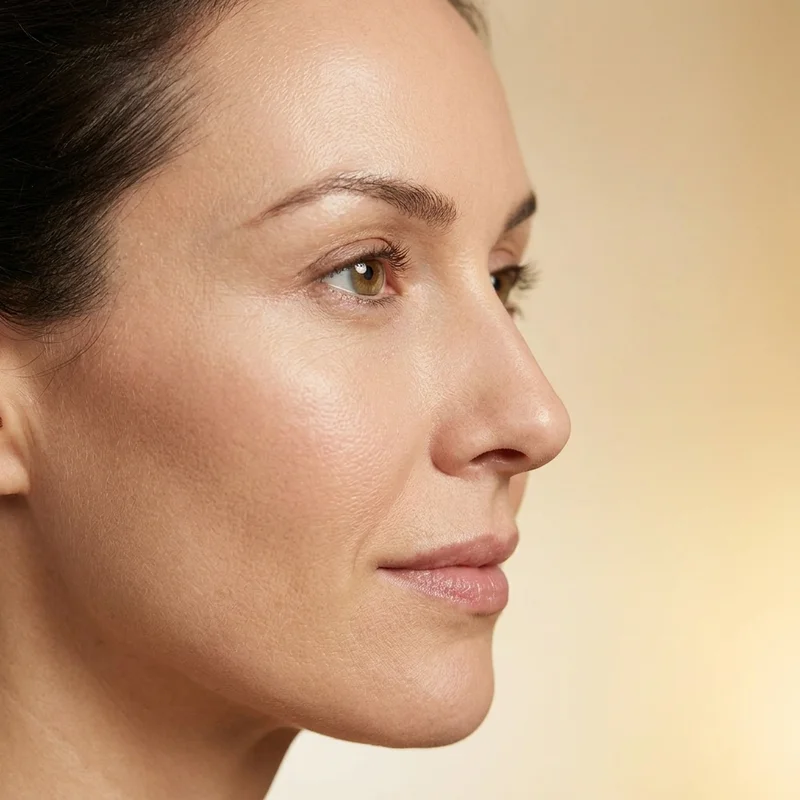
Rhinoplasty is surgery that reshapes the nose by altering its bone, cartilage and skin. It can smooth a bump, refine the tip, narrow the bridge, or rebuild support after injury, and the results are permanent. Often called a nose job, it is usually done under general anaesthesia in about 1.5 to 3 hours. If breathing is also a problem, a deviated septum can be straightened at the same time, a septorhinoplasty.
No two noses are the same, so no two operations are either. Some people need one small refinement; others need more extensive reshaping. Your surgeon plans the approach around your anatomy and what you want changed, which is why the consultation matters as much as the surgery.
A good result rarely looks "done". For most people the aim is a nose that suits the rest of the face and looks like it was always there, noticeable to you but not obvious to everyone else. Your surgeon will talk through what is realistic for your nose before you commit.
It can address a range of concerns, including:
Am I a Good Candidate for Rhinoplasty?
Rhinoplasty can deliver an excellent, natural-looking result, but only when the timing, anatomy, and reasons behind it are right. Here is what surgeons assess before recommending surgery.
Rhinoplasty is not recommended until the nose has fully developed, so timing matters more than a specific birthday.
Girls: nasal growth is usually complete around 16 to 17, so surgery is not advised before then.
Boys: noses develop slightly later, so most surgeons recommend waiting until 17 to 18.
No upper limit: there is no maximum age, as long as you are in good general health and fit for anaesthesia.
Good candidates have a specific, identifiable concern that rhinoplasty reliably improves.
Bridge and profile: smoothing a hump or dip, or narrowing a wide bridge.
Tip shape: refining a bulbous, drooping or hooked tip.
Crookedness: straightening an asymmetric or deviated nose.
Breathing: a deviated septum can be corrected alongside the cosmetic work (septorhinoplasty).
Good outcomes start with good general health, and a few habits directly affect how the nose heals.
General health: you should be in good overall health and fit for general anaesthesia. Ongoing conditions or regular medication need reviewing first.
Smoking: nicotine slows healing in the delicate nasal tissues. You will need to stop before and after surgery.
Skin and structure: skin thickness and cartilage strength shape what is achievable; your surgeon assesses both at consultation.
Motivation matters as much as anatomy, and surgeons screen for it at consultation.
Your decision: the choice should be your own, not made to please a partner, family, or anyone else.
Realistic goals: surgery refines what is already there so everything feels more balanced. It will not deliver someone else's nose, and it is not a fix for unrelated concerns.
Who is not suitable for rhinoplasty?
- Under 16-18, before nasal growth is complete
- Smokers unwilling to stop before and after surgery
- Uncontrolled health conditions (e.g. bleeding disorders, uncontrolled diabetes)
- Active nasal infection or sinusitis, which must be cleared before elective surgery
- Keloid-prone skin, where an open columellar incision carries a higher scarring risk
- Body dysmorphic disorder or unrealistic expectations
- Expecting a guaranteed, exact result from a reference photo
Pricing
How Much Will Rhinoplasty Cost in Thailand?
What rhinoplasty costs at accredited hospitals in Thailand, and what your final quote depends on.
Get your exact price
Tell us what you're considering and we'll send a personalised quote from accredited hospitals within 24 hours.
Get my free quoteTypical prices in Thailand
Typical ranges based on recent hospital quotes. Your exact price depends on the hospital and how complex your case is, and is confirmed at your teleconsultation.
Rhinoplasty
Rhinoplasty reshapes the nose by altering its bone, cartilage and skin to smooth a bump, refine the tip or narrow the bridge.
| Rhinoplasty under local anaesthetic Day case An outpatient case with no general anaesthetic and no overnight stay | $1,350 ฿46,000 |
| Reduction rhinoplasty 1 night Reducing the size or profile of the nose under general anaesthetic | $6,100 ฿207,000 |
| Rhinoplasty with reduction and septum correction 1 night The reduction plus straightening of a deviated septum in one operation, correcting breathing and appearance together | $7,800 ฿265,000 |
Typically not included
- Implants and any device not named in the package, including a silicone dorsal implant if your plan calls for one
- Hospital nights beyond the one stated in the package
- Laboratory tests and other investigations
- Pathology and pathologist charges on any tissue removed
- Pre-operative medical clearance and fitness assessment
Get your exact price
Tell us what you're considering and we'll send a personalised quote from accredited hospitals within 24 hours.
Hospitals Trusted for Rhinoplasty
From internationally accredited flagships to dedicated specialist hospitals, these are the kinds of facilities where international patients have this procedure.

Masterpiece Hospital
A cosmetic surgery specialty hospital in Bangkok focused on facial contouring, rhinoplasty and eyelid work.
View hospital profile
Kamol Cosmetic Hospital
The only specialist cosmetic surgery hospital in Thailand to hold JCI accreditation.
View hospital profile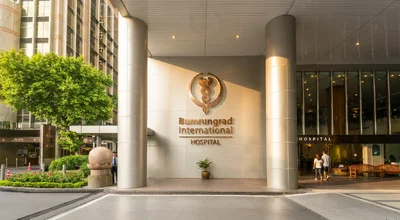
Bumrungrad International Hospital
Southeast Asia's flagship private hospital, treating over 520,000 international patients a year.
View hospital profile
Get a Free Quote in Two Minutes
Tell us what you're considering. We'll match you with suitable specialists and provide real hospital pricing.
- Honest pricing with no markups
- Matched to a specialist for your procedure
- No obligation, no pressure


Rated 5 stars by our patients
The complete guide to Rhinoplasty in Thailand
Everything below is for readers who want the full detail: costs broken down, types and techniques, recovery, risks and safety, and planning your trip.
Rhinoplasty Surgeons & Clinics in Thailand
Where you have the surgery and who does it matters more than anything else. Here is what to look for when choosing a surgeon and hospital in Thailand.
Leading Hospitals in Bangkok
Our partner hospitals are JCI-accredited and among the busiest in Southeast Asia. They have dedicated plastic surgery departments, not just visiting consultants. Equipment matters here: piezoelectric instruments, CT imaging, and 3D simulation are standard at this level. These aren't boutique clinics; they're full-scale hospitals that handle complications in-house.
Experienced Rhinoplasty Surgeons
Our partner surgeons are board-certified by the Thai Board of Plastic and Reconstructive Surgery, which is Thailand's equivalent of the UK's GMC specialist register. Many trained overseas on fellowships in South Korea, Japan, the US, or UK, then returned to Thailand where the surgical volume is higher. That combination of international training and high surgical volume is a big reason Thailand remains so competitive for rhinoplasty.
What to Look for in a Surgeon
Board certification matters far more than polished marketing. Check they're certified by the Thai Board of Plastic Surgery specifically, not just a general surgery board. Ask to see before-and-after photos of noses similar to yours: same ethnicity, same problem area. Read reviews on independent platforms, not just the clinic's own site. And pay attention to how the surgeon communicates: if they promise perfection or dismiss your concerns in consultation, that's a red flag.
Understanding Your Results
Rhinoplasty results are permanent, but they take time to fully appear. Here is what to expect at each stage and what a realistic outcome looks like.
Typical Rhinoplasty Results
Rhinoplasty makes permanent structural changes. Common improvements: smoothing a dorsal hump, refining a bulbous or drooping tip, narrowing wide nostrils, correcting asymmetry. A good result looks proportional to the rest of your face, not "done". Results are stable once healing completes, though your nose will age naturally over time like everything else.
What Results Can You Expect?
You'll see a noticeable difference as soon as the splint comes off at one week, but that's a rough preview. Your actual result emerges over 6–12 months as swelling resolves; the tip is always last. Most surgeons use clinical photography during consultation to discuss what's achievable, and some clinics offer 3D imaging to simulate the outcome. The consultation is where you find out what is realistically achievable with your anatomy. Ask direct questions and make sure the surgeon is clear about both the limits and the likely outcome.
Rhinoplasty Cost in Thailand
Average Cost of Rhinoplasty
Our partner hospital prices rhinoplasty as three packages. A case done under local anaesthetic as an outpatient is ฿46,000, about $1,352. A reduction rhinoplasty under general anaesthetic with a night in hospital is ฿207,000, about $6,088. Adding correction of a deviated septum takes it to ฿265,000, about $7,794. The jump between the first and the second is a jump between two different operations rather than a discount on one. These are the fly-in rates we hold at one accredited hospital, valid to 31 December 2026, and Thai cosmetic surgery is a wide market in which a private hospital sits at the premium end.
Cost Breakdown
Each package covers the operating theatre and recovery room, the medical supplies and the medication for the operation itself, the surgeon and anaesthetist teams, and for the two inpatient packages a standard room with nursing care and meals for the night. Several things patients reasonably assume are inside it are not. Pre-operative medical clearance, laboratory tests and other investigations, consultations with specialists outside the operating surgeon, medication for conditions you already take, and any implant or device not named in the package are all billed on top. If your plan calls for a silicone dorsal implant, get that priced before you book.
What Affects the Price?
Within those three packages the driver is how much of the nose is being rebuilt and what has to be put around the surgery to do it. The outpatient package is limited work under local anaesthetic with no admission. The reduction packages carry general anaesthetic, an anaesthetist team and a night in hospital, and that accounts for most of the difference. Adding septum correction to the reduction costs a further ฿58,000 because it is extra surgery in the same sitting. Beyond the published menu, revision cases cost more than primary ones because scar tissue distorts the anatomy and support usually has to be rebuilt, and a rib or ear cartilage graft costs more than a silicone implant.
Thailand vs International Price Comparison
Rhinoplasty runs $5,000–$9,000 in the US, A$12,000–A$20,000 in Australia and £4,000–£6,800 in the UK. The outpatient package at about $1,352 undercuts all of them heavily. The septum correction package at about $7,794 does not, because that figure sits inside the American and British ranges rather than beneath them. For the most involved of the three the case for travelling rests on the booked date and the surgeon rather than the price. Against Australian pricing the gap stays wide whichever package you need. Remember too that this is a private hospital's rate card and Thai cosmetic clinics quote well below it.
Surgical vs Non-Surgical Rhinoplasty
Non-surgical, or liquid, rhinoplasty uses temporary hyaluronic acid filler to camouflage a small dorsal bump, lift a drooping tip, or smooth a minor irregularity in around fifteen minutes, with no surgery and no downtime. It is genuinely useful for small contour tweaks, or for trialling a change before committing to surgery.
The limits matter, though. Filler adds volume, so it can only build the nose up, never make it smaller, narrow a wide bridge, or correct breathing. The result is temporary, fading after around six months5, and repeated filler in the nose carries its own risks, so it is not a lasting substitute.
For a permanent change, a smaller or narrower nose, structural correction, or anything functional like a deviated septum, surgical rhinoplasty is the route, and that is what the rest of this page covers.
Types of Rhinoplasty
The right approach depends on what needs changing structurally, not just on what the patient asks for. Skin thickness, cartilage strength, and the exact problem are usually what determine the plan.
Open Rhinoplasty
Open rhinoplasty uses a small incision across the columella, the strip of skin between the nostrils, so the surgeon can lift the skin and see the whole framework. That direct access gives the most control, which is why it is preferred for tip work, grafting, and revision. It is more common than patients assume once structural changes are involved.
- Full view of the cartilage and bone for precise reshaping
- Preferred for tip refinement, grafting, and structural change
- Leaves a tiny columella scar that typically fades within months
- Best for: complex reshaping, tip work, or revision
Closed Rhinoplasty
Closed rhinoplasty keeps every incision inside the nostrils, so there is no external scar at all. Recovery tends to be a little quicker, though the surgeon works with less direct access, so it suits more limited changes.
- No visible external scar
- Slightly quicker, less swollen recovery
- Less direct surgical access than open
- Best for: minor refinements like smoothing a bump or narrowing the bridge
Revision Rhinoplasty
Revision rhinoplasty is done to correct problems from an earlier surgery, whether functional, cosmetic, or both. It is harder than primary surgery because scar tissue alters the anatomy and structural support often has to be rebuilt.
- Fixes aesthetic problems or functional issues from a previous nose job
- Almost always done open, as the surgeon needs full visibility of scar tissue
- Costs more because the surgery takes longer and the margin for error is tighter
- Best for: anyone with a failed or unsatisfactory previous rhinoplasty, functional or cosmetic
Ethnic & Asian Rhinoplasty
One of Thailand's real strengths. Surgeons here perform high volumes of ethnic rhinoplasty and understand that every background starts from a different anatomy and aim. Asian rhinoplasty often means building up the bridge and refining the tip; Middle Eastern noses more often need a prominent hump reduced while keeping the nose strong and in character; thicker skin needs a different plan again. The goal is enhancement that suits your face, not one Western template applied to everyone.
- Tailored to your ethnic anatomy, not a one-size template
- Bridge augmentation, hump reduction, tip and alar refinement as each case needs
- Surgeons experienced with Asian, Middle Eastern, and other ethnic noses
- Best for: anyone wanting a result that respects their heritage and facial harmony
Functional Rhinoplasty (Septorhinoplasty)
Not every nose job is purely cosmetic. Functional rhinoplasty corrects the structures that control airflow, most often a deviated septum, but sometimes collapsed nasal valves or enlarged turbinates. It is commonly combined with cosmetic reshaping in a single operation, a septorhinoplasty, so breathing and appearance are addressed together rather than in two separate surgeries.
- Septoplasty straightens a deviated septum to open the airway
- Nasal valve support stops the sidewalls collapsing when you breathe in
- Turbinate reduction shrinks enlarged tissue that blocks the nasal passage
- Best for: a nose that both looks and breathes worse than it should, treated in one procedure
Rhinoplasty Techniques
Technique depends on both the changes needed and the underlying anatomy you start with. Here's what's commonly used in Thailand and when each one makes sense.
Silicone Implants
Silicone implants are a predictable, affordable, and straightforward way to build up the bridge. They give consistent results with a shorter operation, though very thin skin can show the implant edge over time.
- Consistent, predictable bridge augmentation
- Shorter surgery and lower cost
- Edge can show through very thin skin
- Best for: straightforward bridge augmentation
Cartilage Grafts
Cartilage grafts use your own tissue, taken from the septum, ear, or rib, so they integrate naturally and avoid an implant altogether. They add time and cost to the operation, but they are usually the stronger choice for revision cases or thinner skin.
- Uses your own tissue, integrates naturally
- Stronger option for revision or thin skin
- Longer surgery and higher cost
- Best for: revision, thin skin, or anyone who prefers no implant
Piezo Rhinoplasty (Ultrasonic)
Piezo uses ultrasonic energy to reshape bone precisely while causing less trauma to surrounding tissue. The practical benefit is less bruising, less swelling, and easier early recovery. Not available everywhere in Thailand, but the top Bangkok hospitals have it. The key advantage is finer surgical control over bone reshaping.
- Cuts bone precisely without collateral tissue damage
- Noticeably less bruising and quicker recovery than traditional osteotomy
- Available at Thailand's leading plastic surgery hospitals
- Best for: cases involving bone reshaping where you want minimal downtime
Tip Refinement Techniques
Tip work is the most technically demanding part of rhinoplasty. Surgeons use suturing, cartilage scoring, and grafting to reshape a bulbous, drooping, or crooked tip. It is often what separates an average result from an excellent one, which is why most surgeons prefer an open approach for tip refinement.
Preservation Rhinoplasty
Preservation rhinoplasty lowers the bridge by repositioning the natural bone and cartilage rather than removing the hump and rebuilding the framework. Keeping the structure intact tends to preserve the natural dorsal lines and can mean less swelling and fewer bridge irregularities later. It suits the right anatomy rather than every nose, and not every surgeon offers it.
- Reduces the hump by letting the natural bridge down, not cutting it away and rebuilding
- Preserves the natural dorsal lines, which often reads as more natural in profile
- Less disruption to the bridge, so frequently less early swelling
- Best for: small-to-moderate humps on an otherwise straight, well-aligned bridge
Rhinoplasty Recovery Timeline
Week 1
Swelling and bruising peak around days 2–3, concentrated around the eyes and bridge. If your bone was reshaped with piezo (ultrasonic) instruments rather than a traditional osteotomy, expect noticeably less bruising at this stage. A nasal splint protects the nose and supports its new shape. You'll rest at your hotel with daily check-ins from your care coordinator. The splint is removed at your day-7 follow-up appointment.
Weeks 2–4
Bruising fades and visible swelling reduces significantly.2 Most patients feel comfortable in public and return to non-strenuous work; piezo patients often reach that social presentability a few days sooner. You can typically fly home after 10–14 days once your surgeon confirms healing is on track. Avoid contact sports and heavy lifting.
Months 1–3
Residual swelling continues to settle, especially around the tip. Your nose shape becomes more defined each week. Most social and professional activities can resume fully. The shape you see at three months is close to final, but not quite there yet.
Month 6+
Final results are typically visible by 6 months as the last swelling resolves and nasal tissues fully mature.2 In some cases, subtle refinements continue for up to 12 months, particularly for patients with thicker skin or more complex structural work.
When Can You Fly After Rhinoplasty?
Most patients can fly home 10–14 days after surgery, once the nasal splint has been removed at the day-7 follow-up and your surgeon has confirmed healing is progressing well. Cabin pressure at cruising altitude is safe at this stage and won't affect your surgical result. Mild swelling may temporarily increase during the flight due to pressure changes and reduced movement. This is normal and settles within a day or two of landing.
When Can You Return to Work and Exercise?
Desk-based work can typically resume 1–2 weeks after surgery, once the splint is off and initial bruising has faded. Light walking is encouraged from day one to promote circulation. Gym workouts and cardio should wait until 4–6 weeks post-surgery to avoid raising blood pressure around healing tissues.2,3 Contact sports, swimming, and any activity with risk of impact to the nose should be avoided for at least 3 months.
When Will You See Final Results?
You'll notice a clear improvement as soon as the splint comes off at one week, but that's not your final result. Swelling reduces in stages: most visible swelling resolves within 4–6 weeks, giving you a good sense of your new profile. The tip takes longest to settle, with subtle changes continuing for 6–12 months. Patients with thicker skin should expect the tip to refine over a longer period.
Anaesthesia for Rhinoplasty
Rhinoplasty in Thailand is almost always performed under general anaesthesia, so you are fully asleep and feel nothing during the operation. A consultant anaesthetist stays with you throughout and monitors you continuously, which is standard at the accredited hospitals we work with.
Some minor closed cases, such as a small bridge refinement, can be done under local anaesthetic with sedation, where you are relaxed and pain-free but not fully under. Your surgeon and anaesthetist decide what is safest based on how much work the nose needs and your medical history.
Before you are cleared for anaesthesia you have a pre-operative assessment, including blood tests and a review of any medications you take. You feel nothing during surgery, and any discomfort once you wake is mild: more a sense of pressure and congestion than sharp pain, and well controlled with the medication your surgeon prescribes.
Risks and Safety of Rhinoplasty
All surgery carries some risk. Rhinoplasty has a strong safety record when performed by experienced surgeons in accredited facilities, but you should understand the potential complications before making your decision.
- Infection at the incision site (rare with proper aftercare)
- Asymmetry or shape irregularities requiring assessment
- Breathing difficulties or nasal obstruction post-surgery
- Need for revision rhinoplasty (reported in 5–15% of cases globally)1
- Temporary numbness or reduced sensation around the nose
- Prolonged swelling, particularly in the nasal tip
- Scarring (minimal with closed technique, very small with open)
- Septal perforation (very rare)
- Polly beak deformity (fullness above the tip from scar tissue or over-resection)
- Saddle nose, where over-removal of cartilage collapses the bridge
- Alar retraction, an over-lifted nostril rim that can leave a notched look
- Nasal valve collapse causing breathing obstruction on inhaling
- With silicone implants, displacement or shifting of the implant
- With silicone implants, biofilm infection or capsular contracture that may require removal
Risk reduction is mostly about surgeon selection, hospital standard, and proper pre-operative assessment rather than trying to cut corners on price. Every risk listed above should be discussed with your surgeon in relation to your specific anatomy before you go ahead.
Is Rhinoplasty Safe in Thailand?
Yes. When performed at a JCI-accredited hospital by a board-certified plastic surgeon, rhinoplasty in Thailand meets the same safety standards as the UK, US, and Australia. Thailand's top hospitals maintain rigorous infection-control protocols and employ surgeons certified by the Thai Board of Plastic and Reconstructive Surgery. At accredited hospitals, the overall safety profile is comparable to published figures from other established centres.
How to Reduce Your Risk
Choosing a JCI-accredited hospital is the single most important step, as these facilities meet the same safety and infection-control standards as leading Western hospitals. Verify your surgeon is certified by the Thai Board of Plastic Surgery and has specific rhinoplasty experience, not just general cosmetic surgery. A thorough pre-operative assessment including CT imaging and blood work helps identify any issues before you reach the operating table. Make sure communication with your surgical team is clear and direct. If there's a language gap, use a coordinator or interpreter.
When Is Revision Surgery Needed?
Revision rhinoplasty may be considered if you experience persistent breathing difficulties, significant asymmetry, implant displacement, or an aesthetic outcome that doesn't match what was agreed. Globally, revision rates sit between 5–15% across all rhinoplasty patients. The important thing is to wait at least 12 months before considering revision, as swelling takes that long to fully resolve and early results can be misleading. Many concerns at month 3 resolve by month 9.
Planning Your Trip to Thailand for Rhinoplasty
Most patients need 10–14 days in Thailand. Here is how to plan your trip, what is included, and where to base yourself during recovery.
How Long to Stay in Thailand
Plan for a minimum stay of 10–14 days. This covers your initial consultation and pre-operative assessment (day 1–2), the procedure itself, one night in hospital, and the critical first week of recovery when daily check-ins and the splint removal occur. Staying the full two weeks gives your surgeon time to assess healing at a follow-up appointment before clearing you to fly home.
What's Included in a Medical Trip
Your care coordinator handles the logistics: hospital transfers, surgery scheduling, interpreter services if needed, and all post-operative follow-up appointments. Surgical quotes cover surgeon fees, anaesthesia, hospital stay, and aftercare. Flights and accommodation are arranged separately, but your coordinator can recommend nearby hotels and help with bookings to keep everything convenient and close to your hospital.
Recovery in Bangkok vs Phuket
For most people, Bangkok is the obvious choice. You're close to the hospital for follow-ups and if anything unexpected comes up, you're minutes away from your surgical team. Some patients move to Phuket after the first week for a more relaxed recovery, but you're then a 1-hour flight from your surgeon if a complication arises. Unless your surgery is very straightforward and you're past the critical first week, stick with Bangkok.
Related Procedures
Other procedures that address similar goals or conditions, in case one of them is a closer fit for you.
Planning your treatment in Thailand
Independent guides to help you weigh the decision, before you commit to anything.
Common Questions About Rhinoplasty
Everything you need to know before your procedure
More About Rhinoplasty

Medical References
- Six things to know before booking a rhinoplasty (American Society of Plastic Surgeons)
- Cosmetic procedures - Nose reshaping rhinoplasty (NHS)
- Rhinoplasty Nose Job Surgery and Recovery (Cleveland Clinic)
- Rhinoplasty Recovery (American Society of Plastic Surgeons)
- Nonsurgical Rhinoplasty Nose Job (Cleveland Clinic)
Keep researching with AI
Open this guide in your AI assistant to dig deeper and ask the questions it didn't answer.
Opens in a new tab with this guide already loaded.
Medical disclaimer: This information is for educational purposes only and does not replace professional medical advice. Individual results, recovery times, and suitability vary. Always consult a qualified surgeon before making decisions about treatment.
Ready to Get Started?
Speak with our care coordinators for a free, no-obligation consultation and personalised quote.
Speak to Our Team