Breast Lift in Thailand Your guide to cost, top surgeons & hospitals
A lift restores the position and shape that gravity and time have changed. No implants required.
What Is Breast Lift?
Also known as: Boob Lift · Mastopexy
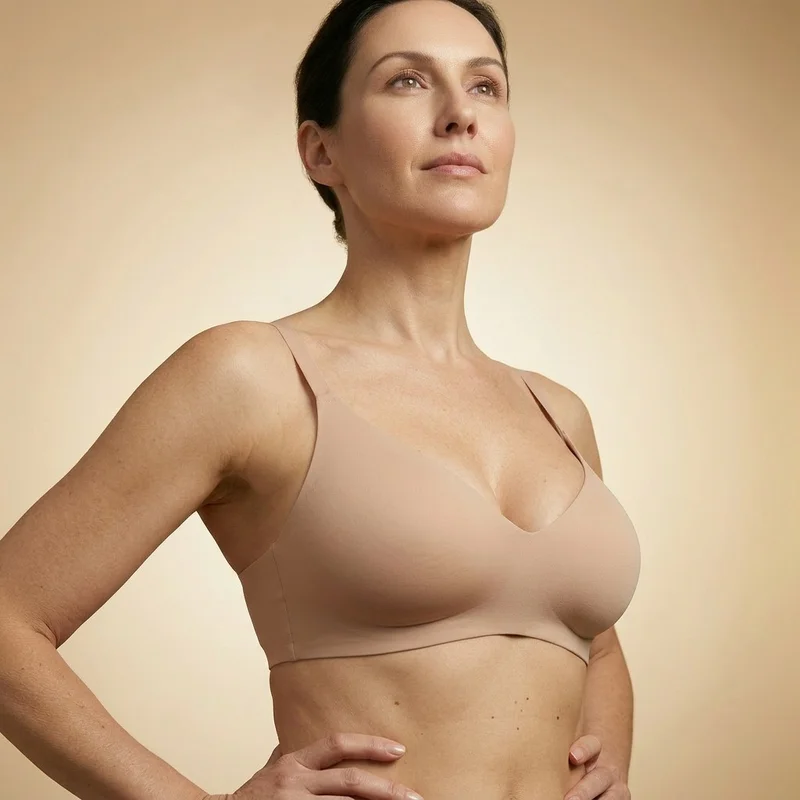
A breast lift, or mastopexy, is surgery that raises and reshapes sagging breasts by removing loose skin, tightening the tissue into a firmer mound, and moving the nipple up to the apex of the new shape. It corrects ptosis, where the nipple has dropped to or below the breast crease. A lift repositions rather than adds size, so if you want more volume, a small implant or fat transfer is combined in the same operation. It is usually done under general anaesthesia in about 2 to 3 hours, and the result holds for years, though the breasts still age naturally1.
How much lifting you need varies from person to person. Your surgeon chooses the incision pattern based on how much skin has to come away and how far the nipple needs to travel.
A good lift looks natural rather than tight, aiming for a higher, firmer shape that suits your frame. Scars settle within areas a bra or bikini top covers, and your surgeon will set out a realistic outlook once your breasts have been examined.
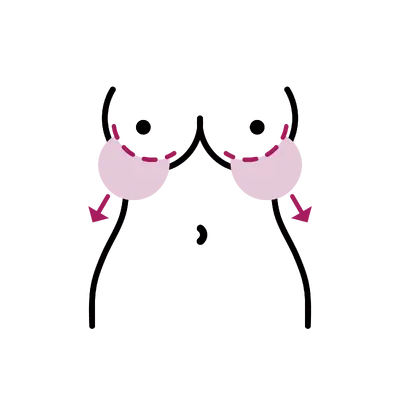
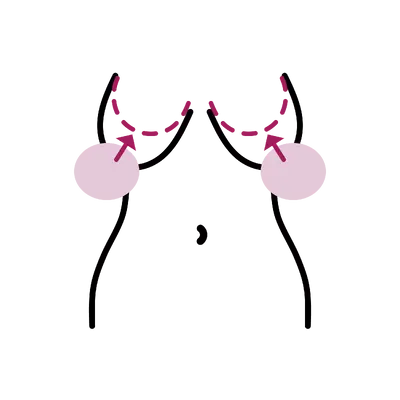
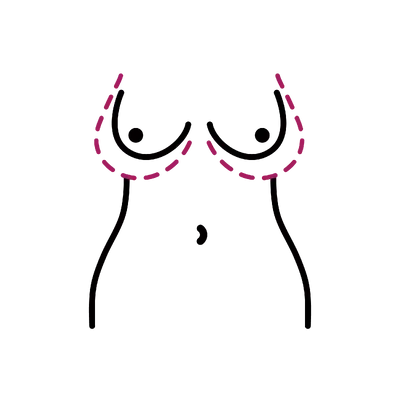
It can address a range of concerns, including:
Am I a Good Candidate for Breast Lift?
Lift outcomes turn on your ptosis grade, your healing capacity, and your timing; surgeons evaluate each before recommending a technique.
Where your nipple sits relative to the breast crease drives everything from technique choice to scar length.
Nipple position: Nipples that point downward or sit at or below the fold are the classic markers a lift corrects.
Skin excess: How much loose skin needs removing determines whether a donut, lollipop, or anchor pattern is used.
Stretched areolae: Areolae that have enlarged over time can be reduced during the same procedure.
Mild to severe: Mild ptosis may need only a periareolar incision; severe sagging reliably requires the anchor pattern, and there is no shortcut around that.
A lift reshapes the tissue you have today, so your weight needs to be where it will stay.
Stable now: Good candidates are at a weight they intend to maintain, in good general health.
6-month rule: Being within 6 months of a significant weight loss or gain is a reason to wait until things settle.
Protecting the result: Weight fluctuation after surgery is one of the main reasons a lift stretches out again; stable weight is what keeps results holding for 10-15 years.
Future pregnancy and breastfeeding both interact with mastopexy, so surgeons ask before planning anything.
Not pregnant or nursing: You should not be pregnant, breastfeeding, or planning pregnancy in the near term.
Duct function: Mastopexy can affect milk duct function, particularly with more extensive lift patterns; if future breastfeeding matters, it needs discussing at consultation.
Children first: Pregnancy after a lift can undo some of the correction, so most surgeons advise completing your family before surgery.
Skin flap and nipple healing depend on blood supply, which makes lifestyle factors decisive for this procedure.
Smoking: The single most significant controllable risk; nicotine restricts blood flow to the skin flaps and nipple, so stopping at least 4 weeks before and after surgery is mandatory.
General health: Good health and circulation reduce wound-healing complications along the longer incision lines.
Medication review: Aspirin, anti-inflammatory medications, and vitamin E supplements need stopping two weeks before surgery.
A lift changes position and shape, not size, and surgeons look for candidates who want exactly that.
Reshape, not enlarge: Expecting a significant size change from the lift alone is a caution flag; adding volume means implants or fat transfer as a combined procedure.
10-15 year horizon: Most patients maintain a noticeable improvement for 10-15 years, but gravity and ageing continue working after that.
Scar trade-off: Meaningful correction means accepting the incision pattern your ptosis grade actually requires, not the one with the least scarring.
Who is not suitable for breast lift?
- Smokers unwilling to stop 4 weeks before and after surgery
- Planning pregnancy or breastfeeding in the near term
- Within 6 months of significant weight loss or gain
- Weight not yet at a stable, maintainable level
- Expecting a size increase from the lift alone
- Prior radiation to the breast, which significantly impairs skin flap blood supply and healing along the incision lines
- Active untreated breast condition or a suspicious finding not yet investigated
Pricing
How Much Will Breast Lift Cost in Thailand?
What breast lift costs at accredited hospitals in Thailand, and what your final quote depends on.
Get your exact price
Tell us what you're considering and we'll send a personalised quote from accredited hospitals within 24 hours.
Get my free quoteTypical prices in Thailand
Typical ranges based on recent hospital quotes. Your exact price depends on the hospital and how complex your case is, and is confirmed at your teleconsultation.
Breast lift without an implant
Which scar pattern you need depends on how far the breast has dropped rather than on preference, so your surgeon confirms it at consultation.
| Donut scar A single scar around the areola, for mild sagging | $2,450 to $5,900 ฿84,000 to ฿200,000 |
| Lollipop scar Around the areola and down to the crease, for moderate sagging | $3,150 to $6,300 ฿108,000 to ฿212,000 |
| Inverted T scar Around the areola, down to the crease and along it, for significant sagging | $4,200 to $6,300 ฿144,000 to ฿212,000 |
Added to the above where needed
| Revision case If you have had breast surgery before | $1,450 ฿50,000 |
Get your exact price
Tell us what you're considering and we'll send a personalised quote from accredited hospitals within 24 hours.
Hospitals Trusted for Breast Lift
From internationally accredited flagships to dedicated specialist hospitals, these are the kinds of facilities where international patients have this procedure.
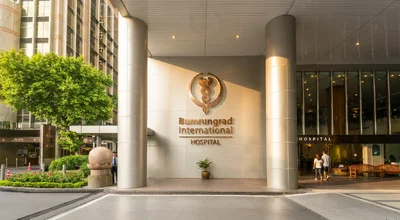
Bumrungrad International Hospital
Southeast Asia's flagship private hospital, treating over 520,000 international patients a year.
View hospital profile
Kamol Cosmetic Hospital
The only specialist cosmetic surgery hospital in Thailand to hold JCI accreditation.
View hospital profile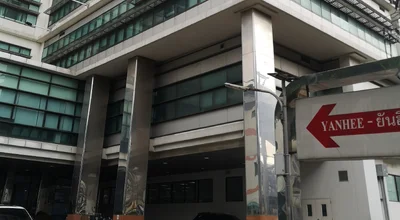
Yanhee International Hospital
A 400-bed hospital known worldwide for high-volume cosmetic surgery.
View hospital profile
Get a Free Quote in Two Minutes
Tell us what you're considering. We'll match you with suitable specialists and provide real hospital pricing.
- Honest pricing with no markups
- Matched to a specialist for your procedure
- No obligation, no pressure


Rated 5 stars by our patients
The complete guide to Breast Lift in Thailand
Everything below is for readers who want the full detail: costs broken down, types and techniques, recovery, risks and safety, and planning your trip.
Breast Lift Surgeons & Clinics in Thailand
Mastopexy is one of the more technically demanding breast procedures because the surgeon is sculpting shape from existing tissue rather than adding an implant. Choosing the right surgeon matters considerably.
Leading Hospitals in Bangkok
Our partner hospitals are JCI-accredited international facilities with permanent plastic surgery departments. They have full-time specialist teams, not visiting surgeons who operate on an ad hoc basis. The infrastructure includes dedicated breast surgery theatres, overnight monitoring, and the capacity to manage any post-operative issue in-house.
Experienced Breast Lift Surgeons
Our partner surgeons are certified by the Thai Board of Plastic and Reconstructive Surgery and many completed international fellowships before practising in Bangkok. Mastopexy skill develops with volume. A surgeon who performs lifts across all ptosis grades weekly develops a feel for tissue handling and nipple placement that lower-volume surgeons simply lack. Ask specifically about their lift caseload, not just their general plastic surgery experience.
What to Look for in a Surgeon
Check that board certification is specifically in plastic and reconstructive surgery. Ask to see before-and-after photographs of lift patients with a similar degree of ptosis to yours. Pay attention to nipple position, breast shape, and scar quality at six months or later. Read independent reviews rather than curated testimonials. During consultation, a good surgeon will be honest about which incision pattern your anatomy actually needs rather than promising minimal scarring on a case that requires an anchor lift.
Understanding Your Results
Breast lift results are visible immediately and continue to refine over months as swelling resolves and scars mature.
Typical Breast Lift Results
A successful lift repositions the nipple to the apex of the breast mound, removes excess skin, and produces a firmer, higher-sitting profile. The breast shape looks rounder and more projected from the side. Areolae that were stretched can be reduced in diameter during the same procedure. The result is stable for years, though gravity continues to act on the tissue over time. Maintaining a stable weight is the best way to preserve the outcome long-term.
What Results Can You Expect?
The degree of improvement depends on your starting point. Mild ptosis with good tissue quality produces a subtle but noticeable correction. Severe ptosis with an anchor lift produces a dramatic transformation. During consultation, your surgeon will assess your ptosis grade, skin elasticity, and tissue volume, then walk you through what is achievable with each technique. Clinical photography provides a before-and-after reference point and helps set expectations clearly.
Breast Lift Cost in Thailand
Average Cost of a Breast Lift
A breast lift in Thailand typically costs between $2,500 and $6,200. A straightforward periareolar or vertical lift sits at the lower end, while an anchor pattern with significant reshaping or a combined lift-augmentation costs more. Every quote should be itemised clearly so you know where the total is going.
Cost Breakdown
The surgeon's fee makes up the largest portion of the total because this is a procedure where technical precision directly determines the outcome. Hospital and theatre fees cover the facility, operating room, nursing support, and surgical instruments. Anaesthesia is billed separately and covers both the anaesthetist and intraoperative monitoring. Aftercare includes your post-operative follow-ups, medications, surgical bra, and coordination support.
What Affects the Price?
The main variable is how much work the lift requires. A periareolar lift is shorter and less complex, so it costs less. An anchor lift with full nipple repositioning takes longer and requires more surgical precision. Adding implants to the lift increases both the operating time and the total cost. Surgeon experience is another factor. For mastopexy specifically, paying more for a surgeon with high lift volumes is usually worth it because the margin between a good and average result is noticeable.
Non-Surgical Alternatives to a Breast Lift
The "non-surgical breast lift" you see advertised usually means radiofrequency or ultrasound skin-tightening devices, sometimes paired with threads (a thread lift) or fat transfer for a little extra fullness. Energy devices tighten the skin envelope slightly by stimulating collagen, and threads can hold tissue marginally higher for a time, so for very mild laxity in someone with good skin quality they can give a subtle improvement with no scars and little downtime.
Honesty matters here, though. None of these address true ptosis, where the nipple has dropped to or below the breast crease, because they cannot remove excess skin, reshape the breast tissue into a firmer mound, or reposition the nipple. The effect is mild and temporary: skin-tightening results fade and need repeat sessions, and threads typically dissolve and lose their hold within a year or two. They reshape nothing structurally, so for moderate or severe sagging they tend to disappoint.
When the nipple sits at or below the fold, when the breast hangs flat, or when you want a higher, firmer shape that lasts for years, a surgical lift is the route, and that is what the rest of this page covers. It is the only option that removes loose skin, rebuilds the shape from your own tissue, and moves the nipple to the apex of the new mound.
Types of Breast Lift
The incision pattern your surgeon uses is determined by how much ptosis you have and how far the nipple needs to travel. More ptosis means longer incisions and more reshaping; there is no way to shortcut that without compromising the result.
Periareolar (Donut) Lift
A circular incision around the areola only. Suitable for mild ptosis where the nipple needs minimal repositioning. Scarring is limited to the areola border and heals well. The trade-off is that it cannot correct moderate or severe sagging and may cause areola stretching over time if asked to do too much.
- Single scar around the areola, least visible of all lift patterns
- Can also reduce areola diameter during the same procedure
- Limited lifting capacity; not suitable if nipples sit below the fold
- Best for: mild sagging with good skin quality and minimal nipple descent
Vertical (Lollipop) Lift
An incision around the areola and vertically down to the breast crease. Handles moderate ptosis with more reshaping power than a periareolar lift while avoiding the longer horizontal scar of the anchor technique. The most commonly performed lift pattern for patients seeking meaningful correction without maximum scarring.
- Addresses moderate ptosis with good control over breast shape and projection
- Vertical scar fades to a thin line within 12–18 months for most patients
- Allows significant nipple repositioning and tissue tightening
- Best for: moderate sagging where a periareolar alone would not be enough
Anchor (Inverted-T) Lift
Incisions around the areola, vertically down, and along the breast crease. The most comprehensive pattern, reserved for severe ptosis with substantial excess skin. It gives the surgeon maximum control over reshaping and nipple placement but leaves the longest scars. When the ptosis is severe, this is the only pattern that produces a reliable result.
- Maximum reshaping and lifting capacity of any technique
- Necessary for severe ptosis, very large areolae, or heavy breasts
- Scars are longer but sit within natural contours and under clothing
- Best for: severe sagging requiring major skin removal and full nipple repositioning
Breast Lift Techniques
Beyond the incision pattern, your surgeon makes decisions about how the internal breast tissue is reshaped and supported. These internal techniques are what determine whether the lift holds its shape over time or stretches out again.
Internal Tissue Reshaping (Auto-Augmentation)
Rather than simply removing skin and hoping the breast holds its new shape, many surgeons now rearrange the internal breast tissue into a tighter, more projected mound. This auto-augmentation creates upper-pole fullness without implants and gives the lift structural support from within. It is a more involved technique but produces a longer-lasting shape.
- Redistributes existing breast tissue to improve projection and upper-pole fullness
- Adds internal support so the lift holds its shape longer
- No implant required; works with your own tissue
- Best for: patients who want improved projection without adding an implant
Combined Lift with Augmentation
For patients who have both ptosis and volume loss, a lift alone may correct the position but leave the breast looking deflated. Combining mastopexy with a small implant addresses both problems in one operation. The technical challenge is balancing the lift tension with the implant pocket, which is why this combination requires a surgeon experienced in both procedures.
- Addresses sagging and volume loss in a single operation
- Implant size is typically modest; the goal is fullness, not dramatic enlargement
- Slightly longer recovery than a lift alone but avoids a second surgery
- Best for: patients with both ptosis and loss of upper-pole volume after pregnancy or weight loss
Nipple and Areola Repositioning
In every breast lift, the nipple-areola complex is moved to a higher position on the reshaped breast mound. How it is moved depends on the distance. For short distances, the nipple stays attached to its blood supply the entire time (pedicle technique). For extreme ptosis requiring very long nipple travel, a free nipple graft may be necessary, though this is rare and involves loss of nipple sensation.
- Pedicle technique preserves blood supply and sensation in most cases
- Areola diameter can be reduced simultaneously if stretched or enlarged
- Free nipple graft used only in extreme cases; results in sensation loss
- Best for: all lift patients; the specific pedicle design depends on nipple travel distance
Internal Bra (Mesh or Scaffold Support)
An internal bra reinforces the lift from the inside using an absorbable mesh or scaffold, often a bioabsorbable material such as GalaFLEX, that is fixed within the breast to cradle the tissue in its new position. As the mesh slowly absorbs over months, it leaves behind stronger supportive tissue. The aim is to take tension off the skin and slow the gradual return of sagging, which matters most for heavier breasts or thinner, stretchier skin that would otherwise drop again sooner.
- Absorbable mesh or scaffold supports the reshaped tissue from within
- Reduces tension on the skin and helps the lift hold its shape longer
- Most useful for heavier breasts or poor-quality, stretchy skin
- Best for: patients at higher risk of recurrent ptosis who want added internal support
Lift with Fat Transfer
Instead of an implant, some volume loss can be addressed by transferring your own fat. Fat is harvested by liposuction from an area such as the abdomen or thighs, purified, and injected into the upper pole of the lifted breast to restore fullness. It avoids an implant entirely and refines contour and cleavage in a natural way, though the volume gain is modest and a portion of the transferred fat is reabsorbed, so the result is more subtle than an implant.
- Uses your own fat to restore upper-pole fullness, with no implant
- Doubles as light contouring of the donor area through liposuction
- Volume gain is modest and some fat reabsorbs over the first months
- Best for: patients wanting a natural touch of fullness without an implant
Breast Lift Recovery Timeline
Days 1–3
Moderate soreness and tightness across the chest, particularly along the incision lines. Bruising is common around the lower breast and crease area. You will wear a supportive surgical bra from day one. Light movement around your hotel is encouraged, with daily check-ins from your coordinator.
Week 1–2
Swelling begins to reduce and the lifted shape starts to emerge. A follow-up appointment checks incision healing and removes any non-dissolvable sutures. Most patients feel well enough for short outings and light desk work by the end of week one. Avoid reaching overhead or lifting anything heavy.
Weeks 3–6
Incisions continue to heal and scars begin the maturation process. You can gradually return to moderate activities and lower-body exercise. Upper-body exercise and anything that stretches the chest should wait until your surgeon clears you at the six-week mark.
Months 3–12
The breast shape settles into its final position as all internal swelling resolves. Scars progress from pink or red to pale, flat lines over 6–12 months. The lifted contour you see at three months is close to permanent, though subtle settling continues through the first year.
When Can You Fly After a Breast Lift?
Most patients can fly home 7–10 days after surgery, once sutures have been checked or removed and your surgeon has confirmed that healing is progressing well. Cabin pressure at altitude does not affect the surgical result. Some patients experience mild swelling during the flight. Wearing your surgical support bra helps, and any temporary increase resolves within a day of landing.
When Can You Return to Work and Exercise?
Light desk work is manageable from around 7–10 days for most patients. Walking is encouraged from day one. Lower-body exercise can restart at two weeks. Upper-body work, chest stretching, and heavy lifting should wait until the six-week mark when incisions have healed and internal tissue has stabilised1. High-impact activities and sports that involve arm movement can resume at 6–8 weeks once cleared.
When Will You See Final Results?
The lifted position is visible immediately, but swelling and tightness obscure the final shape for several weeks. By month two, you will have a reliable sense of the new breast contour and nipple position. Scars continue to mature for 6–12 months, progressing from pink or red to pale lines. The shape at three months is close to final, with only minor settling beyond that point. Weight fluctuations after surgery can affect how long the lift lasts.
Anaesthesia for a Breast Lift
A breast lift in Thailand is performed under general anaesthesia, so you are fully asleep and feel nothing during the operation. This is standard for mastopexy because the surgery involves reshaping tissue across both breasts and repositioning the nipple, which takes around two to three hours and needs you completely still and comfortable throughout. A consultant anaesthetist stays with you the whole time and monitors you continuously, which is routine at the accredited hospitals we work with.
The general anaesthetic is not a decision left to the patient on the day. Your surgeon and anaesthetist confirm the plan together based on your medical history and the extent of the lift, and a longer combined lift with augmentation is handled the same way under a single general anaesthetic rather than split into separate procedures.
Before you are cleared you have a pre-operative assessment, including blood tests and a review of every medication and supplement you take, since some, such as aspirin and anti-inflammatories, need stopping beforehand. You feel nothing during surgery itself. When you wake, the sensation is tightness and pulling along the incision lines rather than sharp pain, it peaks in the first few days, and it is well controlled with the medication your surgeon prescribes.
Risks and Safety of Breast Lift Surgery
A breast lift is a well-established procedure with a strong safety profile, but it involves more incisions and more tissue rearrangement than augmentation alone. Understanding the specific risks is part of making a sound decision.
- Visible scarring: extent depends on the incision pattern used1,3 (periareolar scars are minimal; anchor scars are longer but concealed)
- Numbness or altered sensation in the nipples, which is usually temporary but can be permanent2,3
- Asymmetry in nipple position or breast shape that may need minor correction
- Reduced ability to breastfeed, particularly with more extensive lift patterns1
- Wound healing complications, especially in smokers or patients with poor circulation
- Partial nipple or areola loss (very rare)2,1: most often linked to smoking, but it can also follow excessive nipple travel distance, pedicle design that strains the blood supply, or tight wound closure even in non-smokers
- Recurrent ptosis over time due to gravity, ageing, or weight fluctuation
- Need for revision if the initial lift does not achieve the intended result
Smoking is the single most significant controllable risk factor for breast lift surgery. Nicotine restricts blood flow to the skin flaps and nipple, which is why all reputable surgeons require patients to stop at least four weeks before the procedure.
Is a Breast Lift Safe in Thailand?
Yes. When performed at a JCI-accredited hospital by a board-certified plastic surgeon, a breast lift in Thailand meets the same safety standards as equivalent procedures in the US, UK, and Australia. Our partner hospitals maintain strict sterile protocols, dedicated plastic surgery nursing teams, and full onsite emergency capability. The procedure itself has a strong global safety record with low complication rates at experienced centres.
How to Reduce Your Risk
Stop smoking at least four weeks before surgery. This is the single most important thing you can do to reduce your risk. Nicotine constricts blood vessels and directly threatens the blood supply to skin flaps and the nipple-areola complex. Choose a JCI-accredited hospital with a dedicated plastic surgery unit. Verify your surgeon's Thai Board certification in plastic and reconstructive surgery. Complete all pre-operative blood work and disclose every medication and supplement you take.
When Is Revision Needed?
Revision after a breast lift is uncommon when the procedure is well-planned and executed. The most frequent reason is scar-related: a widened or thickened scar that benefits from scar revision, usually a minor procedure under local anaesthesia. Recurrent ptosis can occur over years due to gravity, ageing, or significant weight changes, and may eventually warrant a secondary lift. Wait at least 12 months before assessing whether any correction is needed, because tissue settling and scar maturation continue throughout that period.
Planning Your Trip to Thailand for a Breast Lift
Most patients need 7–10 days in Thailand for a lift, or 10–14 days if combining with augmentation. Here is how to structure your trip.
How Long to Stay in Thailand
Plan for 7–10 days. Your consultation and pre-operative assessment happen on day one. Surgery is typically scheduled for the following day, with one night in hospital afterwards. The remaining days cover recovery at your hotel, check-ins with your coordinator, suture review, and a final follow-up before you are cleared to fly. If you are combining the lift with implants, allow 10–14 days for the slightly longer recovery.
What's Included in a Medical Trip
Your care coordinator arranges hospital transfers, surgery scheduling, interpreter support where needed, and all post-operative appointments. The surgical quote covers surgeon fees, anaesthesia, hospital stay, nursing care, and aftercare including medications and a surgical support bra. Flights and accommodation are organised separately, but your coordinator can suggest convenient hotels near the hospital and assist with bookings.
Recovery in Bangkok vs Phuket
Stay in Bangkok for the first week. You need to be close to your hospital for follow-up appointments and accessible to your surgical team if any wound-healing concerns arise, something that matters more with a lift than with simpler procedures because of the longer incision lines involved. After your surgeon confirms healing is progressing well, moving to Phuket for a quieter recovery environment is reasonable for the second week.
Related Procedures
Other procedures that address similar goals or conditions, in case one of them is a closer fit for you.
Planning your treatment in Thailand
Independent guides to help you weigh the decision, before you commit to anything.
Common Questions About Breast Lift
Everything you need to know before your procedure
More About Breast Lift

Medical References
Keep researching with AI
Open this guide in your AI assistant to dig deeper and ask the questions it didn't answer.
Opens in a new tab with this guide already loaded.
Medical disclaimer: This information is for educational purposes only and does not replace professional medical advice. Individual results, recovery times, and suitability vary. Always consult a qualified surgeon before making decisions about treatment.
Ready to Get Started?
Speak with our care coordinators for a free, no-obligation consultation and personalised quote.
Speak to Our Team