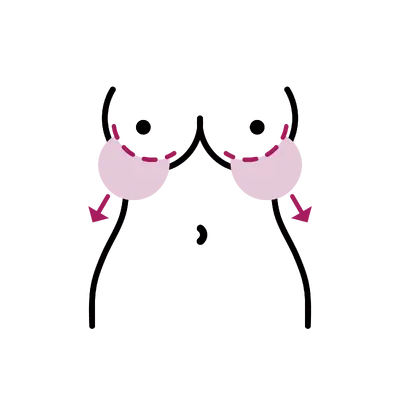
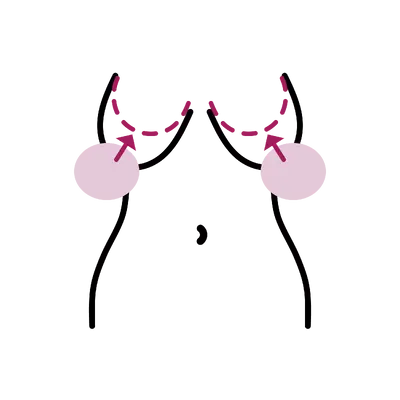
Nipple & Areola Correction in Thailand Your guide to cost, top surgeons & hospitals
Small details finish the picture. Proportion at this level makes the whole breast look right.
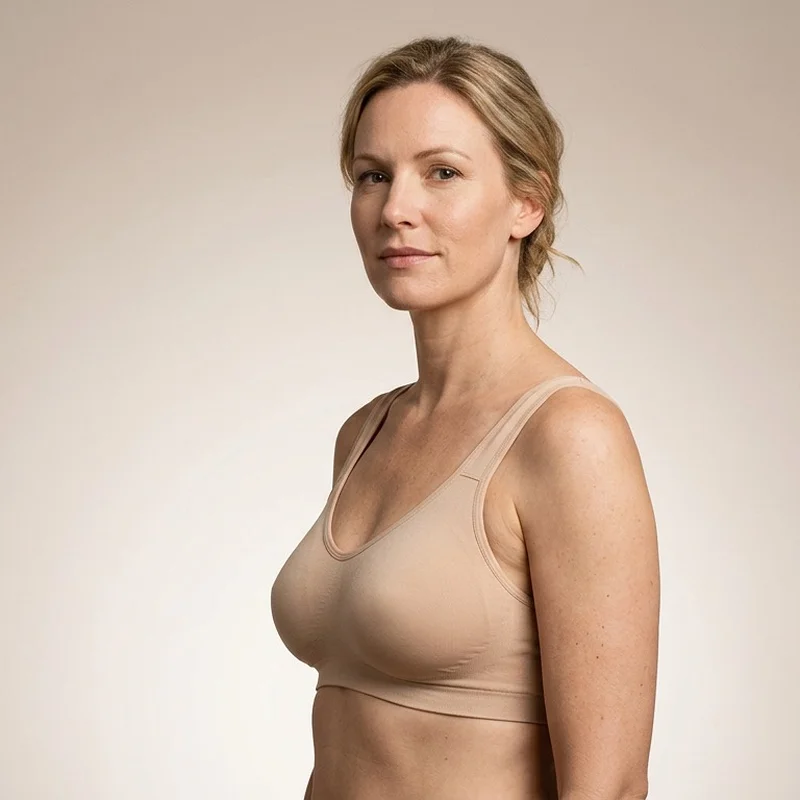
What Is Nipple & Areola Correction?
Also known as: Nipple Surgery · Nipple & Areola Correction
Nipple and areola correction is a group of small procedures that reshape the nipple-areola complex by releasing, trimming, or reducing tissue. Inverted nipple correction divides the tight fibrous bands that pull a nipple inward. Areola reduction removes a ring of stretched skin to bring an oversized areola back into proportion. Nipple reduction trims a nipple that is too long or wide. Most are done under local anaesthesia in under an hour as a day case, alone or alongside a larger breast procedure.
These are among the smallest operations on the breast, yet they often address something you have been self-conscious about for years. Your surgeon matches the technique to what is bothering you, whether one correction or several combined. Raise breastfeeding early: some techniques keep the milk ducts intact and some divide them, so if you may want to nurse later, say so.
Results vary with your tissue and the technique. For most people the corrected shape holds well and the small scars heal discreetly at the areola edge or nipple base. A consultation confirms what is realistic for you, including an honest word about recurrence for severe inverted nipples.
It can address a range of concerns, including:
Am I a Good Candidate for Nipple & Areola Correction?
These are small procedures with one large pre-operative question, breastfeeding, plus a few checks surgeons make before agreeing a technique.
Good candidates have one of a few specific, correctable problems with the nipple-areola complex.
Inverted nipples: Nipples that sit flat or retract inward respond to fibrous band release with permanent outward projection.
Stretched areolae: Areolae enlarged after pregnancy or breastfeeding are reduced to proportion with a purse-string closure at the border.
Prominent nipples: Nipples that are overly long, wide, or visible through clothing are reduced and reshaped.
Side-to-side mismatch: Noticeable size or shape differences between left and right are correctable within the same session.
If inversion is your concern, its grade determines the technique, the duct trade-off, and the recurrence risk.
Grades 1-2: Milder inversion is usually correctable under local anaesthesia with milk ducts preserved or partially preserved.
Grade 3: Severe inversion often requires duct division and carries a meaningfully higher recurrence risk; counselling on both points is essential before surgery.
Holding the result: Internal permanent sutures act as scaffolding against re-inversion, and whether the projection holds is clear within the first month.
Some techniques preserve milk duct function and some divide it, so this conversation has to happen before a technique is chosen.
Duct-sparing options: Areola reduction and Grade 1-2 inversion correction typically preserve duct function.
Techniques that divide: Severe inversion correction and some nipple reduction methods divide ducts, reducing or ending breastfeeding ability.
Decide first: If future nursing matters to you, the technique must be chosen around it; good surgeons raise this unprompted.
Cosmetic correction waits until any unexplained breast symptom has been properly assessed.
Unexplained symptoms: Undiagnosed nipple discharge, pain, or skin changes need review by a breast specialist before cosmetic surgery.
No active conditions: Good general health with no active breast conditions is the baseline requirement.
Bigger plans: A larger breast procedure planned within the next 6-12 months is usually better combined with the nipple-areola work than done separately, and often costs less that way.
Who is not suitable for nipple & areola correction?
- Undiagnosed nipple discharge, pain, or skin changes
- Wanting future breastfeeding without accepting technique trade-offs
- Grade 3 inversion expecting zero recurrence risk
- Planning a larger breast procedure within 6-12 months that should be combined instead
- Active breast conditions awaiting assessment
Pricing
How Much Will Nipple & Areola Correction Cost in Thailand?
What nipple & areola correction costs at accredited hospitals in Thailand, and what your final quote depends on.
Get your exact price
Tell us what you're considering and we'll send a personalised quote from accredited hospitals within 24 hours.
Get my free quoteTypical prices in Thailand
Typical ranges based on recent hospital quotes. Your exact price depends on the hospital and how complex your case is, and is confirmed at your teleconsultation.
Nipple & Areola Correction
How many corrections you have in one session, and whether that means a local or a general anaesthetic, is what moves the price most.
| Inverted nipple correction, one side Releases the tight band holding the nipple in, done under local | $1,500 to $2,000 ฿51,000 to ฿68,000 |
| Inverted nipple correction, both sides The same release carried out on both nipples in one visit | $2,000 to $2,800 ฿68,000 to ฿95,200 |
| Areola reduction, both sides Narrows a wide areola and closes it with a purse-string stitch | $1,800 to $2,500 ฿61,200 to ฿85,000 |
| Nipple reduction, both sides Shortens or narrows nipples that project more than you want | $1,500 to $2,200 ฿51,000 to ฿74,800 |
| Combined corrections Two or more of the above addressed in a single session | $2,500 to $3,000 ฿85,000 to ฿102,000 |
Get your exact price
Tell us what you're considering and we'll send a personalised quote from accredited hospitals within 24 hours.
Hospitals Trusted for Nipple & Areola Correction
From internationally accredited flagships to dedicated specialist hospitals, these are the kinds of facilities where international patients have this procedure.

Bumrungrad International Hospital
Southeast Asia's flagship private hospital, treating over 520,000 international patients a year.
View hospital profile
Kamol Cosmetic Hospital
The only specialist cosmetic surgery hospital in Thailand to hold JCI accreditation.
View hospital profile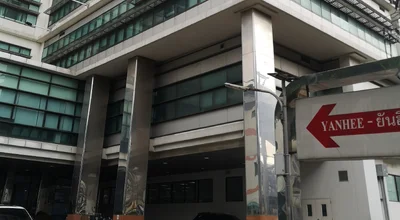
Yanhee International Hospital
A 400-bed hospital known worldwide for high-volume cosmetic surgery.
View hospital profile
Get a Free Quote in Two Minutes
Tell us what you're considering. We'll match you with suitable specialists and provide real hospital pricing.
- Honest pricing with no markups
- Matched to a specialist for your procedure
- No obligation, no pressure


Rated 5 stars by our patients
The complete guide to Nipple & Areola Correction in Thailand
Everything below is for readers who want the full detail: costs broken down, types and techniques, recovery, risks and safety, and planning your trip.
Nipple & Areola Correction Surgeons & Clinics in Thailand
Nipple and areola work is detail surgery. The skill is in precision and proportion rather than scale.
Leading Hospitals in Bangkok
Our partner hospitals are JCI-accredited international facilities that perform these procedures in dedicated plastic surgery suites. Even though the surgery itself is minor, the facility standard matters for sterility, anaesthesia monitoring, and the comfort of the experience. These hospitals handle nipple and areola correction as part of their high-volume breast surgery departments.
Experienced Correction Surgeons
Our partner surgeons are board-certified by the Thai Board of Plastic and Reconstructive Surgery. Nipple and areola correction requires a steady hand and an eye for proportion; the difference between a good and average result is measured in millimetres. These surgeons perform the full range of breast procedures, which means they understand how nipple correction fits within the overall breast aesthetic.
What to Look for in a Surgeon
Ask to see before-and-after photos specifically of nipple and areola work, not just general breast surgery. Check that they discuss breastfeeding implications unprompted; a surgeon who does not raise this topic may not be thinking about duct preservation. Ask about their approach to inversion grading if that applies to you. Specific questions get specific answers, which tells you a lot about their experience level.
Understanding Your Results
Results are visible almost immediately, which is one of the more satisfying aspects of these procedures. Here is what to expect.
Typical Nipple & Areola Correction Results
Areola reduction produces a smaller, rounder, better-defined border that suits the breast size. Nipple reduction creates a less prominent profile that does not show through clothing. Inverted nipple correction gives permanent outward projection where there was none before. The changes are subtle but they complete the breast shape, the kind of detail that is hard to describe but obvious when you see it.
What Results Can You Expect?
The corrected shape is visible from day one, though swelling slightly exaggerates things in the first week. By 4–6 weeks, the final proportions are clear. Scars at the areola border or nipple base are among the best-healing in the body; most become virtually invisible within a few months. For inverted nipple correction, the main question is whether the projection holds, which is clear within the first month.
Nipple & Areola Correction Cost in Thailand
Average Cost of Nipple & Areola Correction
Nipple and areola correction in Thailand typically costs between $1,500 and $3,000. A single correction (just areola reduction or just inverted nipple release) sits at the lower end. Combining two or three techniques, or correcting both sides, increases the total. Day-case procedures under local anaesthesia cost less than those requiring general anaesthesia.
Cost Breakdown
The surgeon's fee covers the precision work; this is meticulous surgery on a small area, so the fee reflects skill rather than operating time. Facility fees cover the clinic or hospital room, local or general anaesthesia, and monitoring. Aftercare is typically straightforward: dressings, a follow-up visit, and basic pain relief. The short procedure time and day-case format keep total costs lower than most breast surgeries.
What Affects the Price?
The main factors are how many corrections are being done and whether general anaesthesia is needed. A single nipple inversion release under local takes 30–45 minutes and sits at the lower end. Combining areola reduction with nipple reduction on both sides under general anaesthesia is a longer session and costs more. If the correction is added to another breast procedure like augmentation or a lift, it is usually bundled at a reduced rate.
Thailand vs International Price Comparison
Nipple and areola correction in Thailand costs 40–60% less than equivalent procedures in the US ($4,200–$7,500), Australia (A$3,900–A$6,800), and the UK (£3,300–£5,700). At home, these are classified as purely cosmetic and priced at private-clinic rates with no public-system or insurance coverage. Thailand offers the same surgical precision at accredited hospitals for a fraction of that cost.
Non-Surgical Alternatives to Nipple & Areola Correction
For inverted nipples specifically, there is a non-surgical option worth knowing about: a suction device, sometimes sold as the Niplette, that uses gentle continuous suction to draw the nipple outward3 and gradually stretch the short fibrous bands holding it in. Worn for several hours a day over weeks or months, it can coax a mild, Grade 1 nipple into projecting, and because it touches nothing internally it leaves the milk ducts fully intact, which appeals if you may want to breastfeed.
The limits are real, though. Suction only works on milder inversions where the bands still have some give, and the result tends to relapse once you stop wearing the device, so it is closer to ongoing maintenance than a fix. It does nothing for a tethered Grade 2 or 3 nipple, and it has no equivalent at all for the other concerns this page covers, as no device can shrink a stretched areola or reduce an oversized nipple. Those are tissue-removal problems, not stretching ones.
For a permanent result, a moderate or severe inverted nipple, or any areola or nipple reduction, surgery is the route. Releasing the fibrous bands and holding the nipple forward with internal sutures gives lasting projection rather than a shape that retracts the moment suction stops, and that is what the rest of this page covers.
Types of Nipple & Areola Correction
Each procedure targets a different part of the nipple-areola complex. Some patients need one, others need two or three combined. The consultation determines which applies.
Inverted Nipple Correction
Releases the fibrous bands that pull the nipple inward so it projects naturally and permanently. Graded from mild (nipple can be pulled out manually but retracts) to severe (nipple is permanently retracted). The grade determines the technique and whether milk ducts are preserved.
- Grade 1: mild inversion, ducts usually preserved, local anaesthesia
- Grade 2: moderate inversion, partial duct preservation possible
- Grade 3: severe, often requires duct division (breastfeeding affected)1
- Best for: nipples that sit flat or retract inward, causing functional or aesthetic concern
Areola Reduction
Removes a ring of excess areola tissue around the perimeter, reducing the diameter to match the breast size. Common after pregnancy or weight loss stretches the areola beyond proportion. A purse-string suture holds the new border and the scar sits at the areola edge where it blends with the colour change.
- Circular excision of outer areola tissue to a proportionate diameter
- Purse-string closure technique maintains a round, defined border
- Scar hidden at the natural areola-skin junction
- Best for: areolae that are wider than the breast proportion warrants
Nipple Reduction
Decreases nipple height, width, or both. Excess tissue is excised and the nipple is reshaped to a proportionate size. Particularly useful when prominent nipples show through clothing or cause self-consciousness. The procedure preserves sensation in the majority of cases.
- Wedge or circumferential excision depending on whether height or width is the issue
- Duct preservation possible with careful technique, though not guaranteed
- Performed under local anaesthesia in 30–45 minutes
- Best for: nipples that protrude excessively or are disproportionately large
Nipple & Areola Correction Techniques
The technical approach depends on the specific problem. Inversion, enlargement, and asymmetry each call for a different surgical method. Here is what is commonly used.
Fibrous Band Release (for Inversion)
Short fibrous bands beneath the nipple are divided or stretched to allow the nipple to evert and project forward. In mild cases, this can be done through a small incision at the nipple base with duct preservation. In severe cases, the bands and some ducts are divided, and internal sutures hold the nipple in its new position.
- Small incision at the nipple base, often under local anaesthesia
- Internal permanent sutures act as scaffolding to prevent re-inversion
- Duct-sparing techniques available for Grade 1–2 inversions
- Best for: inverted nipples where the goal is permanent outward projection
Periareolar Excision (for Areola Reduction)
A doughnut-shaped strip of areola tissue is removed around the outer edge. The remaining areola is then sutured to the surrounding breast skin using a purse-string technique that controls the final diameter precisely. The scar sits at the junction where areola meets skin, one of the least visible scar locations on the breast.
- Outer areola ring excised to bring the diameter into proportion with the breast
- Purse-string suture prevents the areola from stretching back over time
- Scar blends with the natural colour transition at the areola border
- Best for: disproportionately large or stretched areolae after pregnancy, weight change, or genetics
Wedge Excision (for Nipple Reduction)
A wedge of tissue is removed from the nipple tip or sides to reduce projection and width. The remaining tissue is sutured into a smaller, proportionate shape. This technique preserves the internal structure better than full amputation and in many cases maintains sensation and some duct function.
- Removes tissue from the tip for height reduction or sides for width reduction
- Preserves core nipple structure and blood supply
- Sutures dissolve within 2–3 weeks, leaving minimal scarring
- Best for: nipples that are too tall, too wide, or both, where proportion is the primary concern
Dermal Flap Technique (for Inversion)
For moderate to severe inversion, the surgeon raises one or two small dermal flaps from the base of the nipple and folds them underneath to bulk up the support beneath it. This fills the space the divided bands leave behind and props the nipple forward, which is part of why it holds up better than band release alone in the more tethered grades.
- Local dermal flaps add bulk under the nipple to resist re-inversion
- Often combined with band division for Grade 2–3 cases
- May divide some ducts, so breastfeeding is discussed beforehand
- Best for: moderate to severe inversion where durable projection matters most
Nipple & Areola Correction Recovery Timeline
Days 1–3
Localised tenderness and mild swelling around the treated area. Most patients manage with over-the-counter pain relief rather than prescription medication. The area is covered with a light dressing and a soft bra is worn for support. No heavy lifting or chest-level arm movements.
Week 1
Follow-up appointment to check healing and change dressings. Swelling reduces and you can see the corrected shape emerging. Most patients return to desk work and daily activities within 3–5 days. Avoid friction, tight clothing, and direct water pressure on the area.
Weeks 2–4
Sutures dissolve or are removed. Sensitivity begins returning to normal; some patients experience temporary heightened sensitivity before it settles. Light exercise can resume. The area is still healing internally, so avoid contact sports or anything that impacts the chest.
Months 1–3
Scars fade and flatten. The corrected shape and projection are now stable. Full sensation typically returns, though inverted nipple correction may take longer. All normal activities including swimming and sport can resume without restriction.
When Can You Fly After Nipple & Areola Correction?
Most patients can fly home after 5–7 days. These are minor procedures with minimal post-operative restrictions. Your surgeon will check the healing at a follow-up before clearing you to travel. The main precaution is avoiding pressure on the chest from seatbelts; use a small cushion as a buffer if needed.
When Can You Return to Work and Exercise?
Desk work and light daily activities can resume within 3–5 days. The area is tender but manageable with simple pain relief. Avoid chest-level exercise and heavy lifting for 2–3 weeks. Swimming and contact sports should wait until 4–6 weeks to allow internal healing to complete. Most patients are surprised at how quickly they feel normal.
When Will You See Final Results?
You will see the corrected shape immediately after surgery, but expect some swelling to distort it for the first week or two. The final result is clear by 4–6 weeks as swelling resolves and scars begin to fade. For inverted nipple correction, the projection is visible straight away; the key is whether the internal sutures hold, which is confirmed during the first few weeks of healing.
Anaesthesia for Nipple & Areola Correction
Standalone nipple and areola correction in Thailand is almost always done under local anaesthesia.1 The skin around the nipple is numbed with an injection, so you stay fully awake but feel no pain while the surgeon works, and you go home the same day. A nurse stays with you throughout, and because there is no general anaesthetic there is no grogginess to recover from afterwards.
If you are nervous, or having two or three corrections at once, light sedation can be added to keep you relaxed while the area stays numb. General anaesthesia is reserved for cases where the correction is combined with a larger breast procedure such as an augmentation or lift, or where you simply prefer to be asleep. Your surgeon decides what suits your case at consultation, and you have a short pre-operative check of your health and any medication beforehand.
You feel nothing during the procedure beyond a little pressure or tugging. Once the local wears off there is mild tenderness around the nipple, more a soreness than sharp pain, and most patients manage it with simple over-the-counter pain relief rather than anything stronger.
Risks and Safety of Nipple & Areola Correction
These are small-scale procedures with a straightforward risk profile. Complications are uncommon, but the specific technique used determines which risks apply to your case.
- Asymmetry between sides if healing differs
- Infection at the surgical site (rare given the small incision size)
- Over-correction or under-correction requiring minor revision
- Wound separation at the purse-string suture line (uncommon)
The most important pre-operative discussion is breastfeeding. If you may want to nurse in future, make sure your surgeon explains which techniques preserve duct function and which do not. This affects the approach chosen.
Is Nipple & Areola Correction Safe in Thailand?
Yes. These are well-established, low-risk procedures. When performed at a JCI-accredited hospital by a board-certified surgeon, the safety profile is equivalent to any Western facility. The short operative time and minimal tissue disruption contribute to a very low complication rate.
How to Reduce Your Risk
Choose a surgeon who performs nipple and areola correction regularly, ideally as part of a broader breast surgery practice. Verify JCI accreditation for the facility. Follow aftercare instructions precisely: keeping dressings clean and dry, wearing a soft supportive bra, and avoiding friction or pressure on the area. If breastfeeding preservation matters, confirm the technique chosen before surgery day.
Can Inverted Nipples Recur After Correction?
Recurrence is uncommon with modern techniques that use internal permanent sutures for support. The risk is highest in Grade 3 inversions where the constricting tissue is most severe. If recurrence does happen, revision surgery is straightforward. Your surgeon can advise on the expected permanence based on your specific grade of inversion.
Planning Your Trip to Thailand for Nipple & Areola Correction
These are quick procedures with fast recovery. Most patients need only 5–7 days in Thailand.
How Long to Stay in Thailand
A minimum of 5–7 days covers your consultation, the procedure itself (usually same-day or next-day), and a follow-up appointment before flying home. Some patients combine this with a short holiday since the recovery is light. If you are adding nipple correction to a larger breast procedure, the stay is dictated by the more extensive surgery.
What's Included in a Medical Trip
Your coordinator arranges hospital appointments, transfers, and any interpreter support needed. The surgical quote includes the surgeon's fee, anaesthesia, facility charges, dressings, and follow-up. Because these are day-case procedures, there is usually no overnight hospital stay to factor in. Flights and accommodation are booked independently, with coordinator recommendations available.
Recovery in Bangkok vs Phuket
For standalone nipple or areola correction, location matters less than for larger procedures. The recovery is light enough that you could comfortably be in Phuket after your follow-up appointment in Bangkok. If your surgeon is Bangkok-based, do the consultation and surgery there, attend your follow-up, then relocate if you want. The post-operative restrictions are minimal, mostly just keeping the area clean and protected.
Related Procedures
Other procedures that address similar goals or conditions, in case one of them is a closer fit for you.
Planning your treatment in Thailand
Independent guides to help you weigh the decision, before you commit to anything.
Common Questions About Nipple & Areola Correction
Everything you need to know before your procedure

Medical References
Keep researching with AI
Open this guide in your AI assistant to dig deeper and ask the questions it didn't answer.
Opens in a new tab with this guide already loaded.
Medical disclaimer: This information is for educational purposes only and does not replace professional medical advice. Individual results, recovery times, and suitability vary. Always consult a qualified surgeon before making decisions about treatment.
Ready to Get Started?
Speak with our care coordinators for a free, no-obligation consultation and personalised quote.
Speak to Our Team