Lipo 360 in Thailand Your guide to cost, top surgeons & hospitals
One procedure addresses the entire midsection. Front, sides, and back, treated as a single unit for the first time.
What Is Lipo 360?
Also known as: 360 Lipo · Circumferential Liposuction
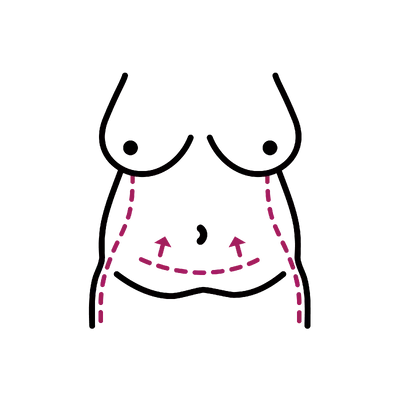
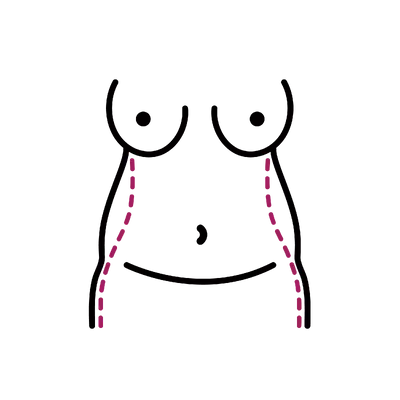
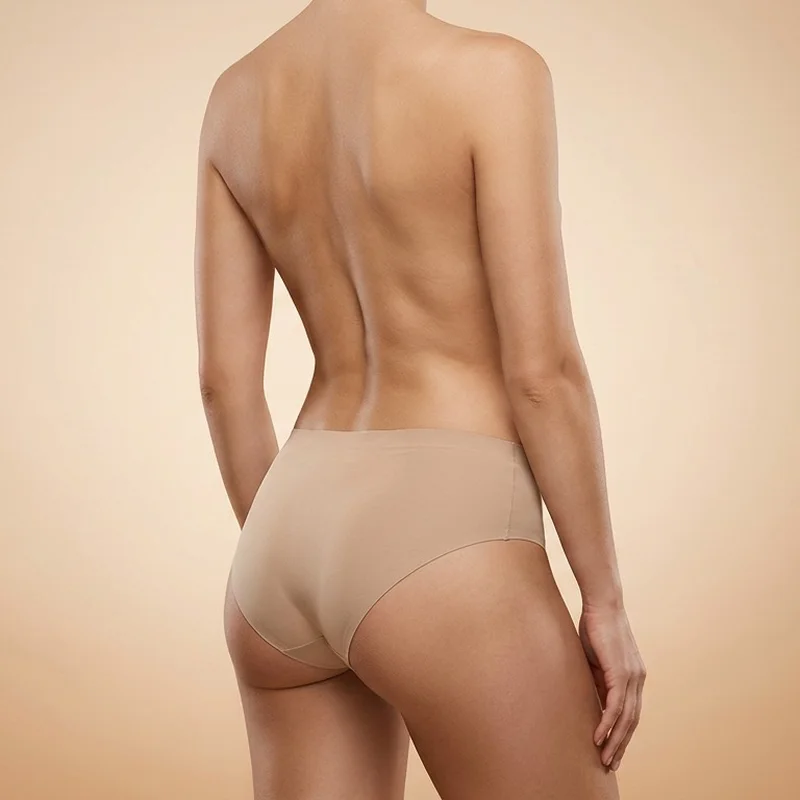
Lipo 360 is liposuction that contours the whole midsection in one operation by removing fat from its full circumference, working four zones: the front abdomen, the obliques, the flanks, and the lower back. Treating every zone in the same session keeps the transitions smooth, rather than leaving the step-offs that single-area lipo can create. Also called circumferential liposuction, it is usually done under general anaesthesia in about 2 to 3 hours. The fat cells removed do not grow back, so the result lasts as long as your weight stays stable.1
Fat sits differently from person to person, denser in some zones, softer in others. Some people want a defined waist from one angle; others carry fullness that wraps all the way round. Your surgeon judges how much to take from each zone so the shape reads as one from front, side, and back.
Lipo 360 reshapes; it does not tighten loose skin or replace weight loss. It tends to suit people near a stable target weight with skin firm enough to retract over a large area, which a consultation checks before anything is planned.
It can address a range of concerns, including:
Am I a Good Candidate for Lipo 360?
Circumferential contouring asks more of your body than single-area lipo, and surgeons screen accordingly before planning a 360 case.
Lipo 360 exists for fat that wraps the whole midsection rather than sitting in one spot.
Circumferential fullness: Good candidates carry excess fat around the front, sides, and back, which the procedure treats as one continuous unit.
Flanks and bra rolls: Love handles, flank fullness, and lower back rolls that thicken the waistline respond well because adjacent zones are blended in the same session.
Uneven prior lipo: Patients left with obvious treated-versus-untreated boundaries after single-area liposuction are strong candidates for circumferential correction.
Because the treatment area is large, skin has to retract evenly across four zones, and laxity anywhere shows.
Adequate elasticity: Surgeons look for skin firm enough to contract over the full circumference of the midsection.
Laxity or diastasis recti: Significant abdominal skin laxity or separated muscles cannot be fixed by Lipo 360 alone. A tummy tuck or combined procedure is the right plan instead.
VASER for borderline skin: Ultrasound-assisted technique improves retraction through collagen stimulation, which matters more over a large 360 area than over a single zone.
The volume limits and contour gains of Lipo 360 assume you start near your target weight.
Near-target starting point: Safe removal is capped at roughly 4-5 litres per session, which is contouring volume, not weight-loss volume.
Stable, not shifting: Unstable weight, or using the procedure as a substitute for weight loss, undermines the planned contour.
Proportion, not kilograms: Expect to lose perhaps 2-4kg. The benefit is a defined waistline visible from every angle, not a smaller number on the scale.
A circumferential procedure means longer anaesthesia and bigger fluid shifts than standard liposuction, so the health bar sits higher.
Cardiac and renal health: Conditions affecting your heart or kidneys make the fluid demands of a 360 case unsuitable.
Non-smoker: You need to stop smoking at least four weeks each side of surgery to protect healing across all four zones.
Anaesthesia fitness: The procedure runs 2-3 hours under general anaesthesia, which requires good general health and a clean pre-operative screen.
An even 360 result depends on consistent compression across every treated zone, and surgeons treat this as a condition of surgery.
Continuous at first: The 360-degree garment is worn day and night for roughly the first 3-4 weeks, which surgeons describe as non-negotiable for a smooth result.
Through week 6: From around week 3-4 the garment switches to daytime and exercise wear, continuing until week 6 as the contour settles.
Why it matters: Consistent compression across all treated zones supports even skin retraction and lowers seroma risk, the difference between a smooth contour and a wavy one.
Who is not suitable for lipo 360?
- Significant abdominal skin laxity or diastasis recti
- Anyone using Lipo 360 as a substitute for weight loss
- Cardiac or renal conditions affecting fluid tolerance
- Smokers unwilling to stop four weeks before surgery
- Unwilling to wear the 360 compression garment day and night
- History of DVT or PE, or a clotting disorder or other significant VTE risk not medically cleared
- Significantly elevated BMI, where large-volume circumferential liposuction carries higher complication risk
Pricing
How Much Will Lipo 360 Cost in Thailand?
What lipo 360 costs at accredited hospitals in Thailand, and what your final quote depends on.
Get your exact price
Tell us what you're considering and we'll send a personalised quote from accredited hospitals within 24 hours.
Get my free quoteTypical prices in Thailand
Typical ranges based on recent hospital quotes. Your exact price depends on the hospital and how complex your case is, and is confirmed at your teleconsultation.
Lipo 360
The price follows the technique your surgeon uses and how far the treatment extends beyond the four core zones of the midsection.
| Standard Lipo 360, tumescent The four core zones treated with the long-established technique | $3,000 to $4,000 ฿102,000 to ฿136,000 |
| VASER Lipo 360 Ultrasound-assisted for smoother results and better skin retraction | $4,000 to $5,500 ฿136,000 to ฿187,000 |
| Extended Lipo 360 Adds zones beyond the midsection, such as the bra line or thighs | $4,500 to $6,000 ฿153,000 to ฿204,000 |
| Lipo 360 with a Brazilian butt lift Fat taken during the liposuction is transferred to the buttocks | $5,500 to $8,000 ฿187,000 to ฿272,000 |
Get your exact price
Tell us what you're considering and we'll send a personalised quote from accredited hospitals within 24 hours.
Hospitals Trusted for Lipo 360
From internationally accredited flagships to dedicated specialist hospitals, these are the kinds of facilities where international patients have this procedure.

Rattinan Clinic
A specialist body contouring clinic in central Bangkok with over 14,000 BodyTite treatments performed.
View hospital profile
Kamol Cosmetic Hospital
The only specialist cosmetic surgery hospital in Thailand to hold JCI accreditation.
View hospital profile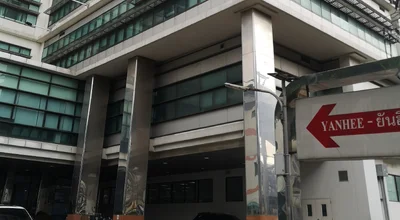
Yanhee International Hospital
A 400-bed hospital known worldwide for high-volume cosmetic surgery.
View hospital profile
Get a Free Quote in Two Minutes
Tell us what you're considering. We'll match you with suitable specialists and provide real hospital pricing.
- Honest pricing with no markups
- Matched to a specialist for your procedure
- No obligation, no pressure


Rated 5 stars by our patients
The complete guide to Lipo 360 in Thailand
Everything below is for readers who want the full detail: costs broken down, types and techniques, recovery, risks and safety, and planning your trip.
Lipo 360 Surgeons & Clinics in Thailand
Circumferential work requires a different skill set to isolated liposuction. Here is what matters when choosing a surgeon for Lipo 360 in Thailand.
Leading Hospitals in Bangkok
Our partner hospitals are JCI-accredited international facilities in Bangkok with dedicated plastic surgery departments, offering the theatre time, anaesthesia teams, and monitoring infrastructure that circumferential procedures demand. These are full-scale hospitals, not clinics. For a procedure that involves 2–3 hours under general anaesthesia with significant fluid management, hospital-grade facilities are the appropriate setting.
Experienced Lipo 360 Surgeons
Our partner surgeons hold board certification from the Thai Board of Plastic and Reconstructive Surgery and perform 360 contouring as a regular part of their practice. Many have completed international fellowships in body sculpting and returned to Thailand where the surgical volume allows them to maintain high caseloads across tumescent, VASER, and power-assisted techniques.
What to Look for in a Surgeon
When we screen partner surgeons for Lipo 360, what matters is genuine experience with circumferential cases, not just standard liposuction. The difference is real, 360 work requires balancing fat removal across four distinct zones with different tissue characteristics. We look for surgeons who can show before-and-after work covering the full 360 result (front, side, and back views) and who handle the transitions between zones cleanly, since visible step-offs between treated and untreated areas are the hallmark of less experienced hands. You are welcome to ask your matched surgeon about any of this directly at consultation.
Understanding Your Results
Lipo 360 results are best evaluated from multiple angles. Here is what a realistic outcome looks like and when to expect it.
Typical Lipo 360 Results
A successful Lipo 360 produces a visibly narrower waistline with smooth contour transitions from the front abdomen through the obliques, around the flanks, and into the lower back. The change is most apparent from behind and in profile, where the improved waist-to-hip ratio is most visible. There should be no obvious boundaries between treated zones, the entire midsection reads as one cohesive contour.
What Results Can You Expect?
You will see an immediate reduction in midsection volume, even through the swelling. The real shape emerges over 4–6 weeks as swelling drops and continues refining for 3–6 months. Back and flank zones tend to settle last. Patients with good skin elasticity see the tightest final contour. If skin laxity is present, a tummy tuck may be needed alongside Lipo 360, liposuction alone does not tighten loose skin.
Lipo 360 Cost in Thailand
Average Cost of Lipo 360
Lipo 360 in Thailand typically costs between $3,000 and $8,000 depending on the technique used, whether additional zones are included, and the hospital. A standard four-zone circumferential case using tumescent technique sits at the lower end, while VASER-assisted or extended cases with additional treatment areas cost more.
Cost Breakdown
A typical quote is built from the surgeon's fee (reflecting the technical demands of circumferential work), hospital and theatre fees for the facility and equipment, anaesthesia fees for the longer operative time, and aftercare such as follow-up visits, compression garments, and medications, though exact inclusions are set by the clinic and confirmed in writing in your quote. Lipo 360 costs more than single-area liposuction because it takes longer and involves more tissue, but it usually costs less than treating each zone as a separate staged procedure.
What Affects the Price?
Technique is a significant factor, VASER adds cost over tumescent due to the specialised equipment and longer procedure time. Extending the treatment beyond the core four zones (adding bra line, upper back, or thighs) increases the price. Combining Lipo 360 with a BBL roughly doubles the overall cost because it adds fat processing and injection time. Hospital tier and surgeon seniority also affect the final number.
Thailand vs International Price Comparison
Lipo 360 in Thailand costs 40–60% less than equivalent procedures in the US ($8,400–$15,000), Australia (A$7,800–A$13,500), and the UK (£6,600–£11,400). The saving is particularly significant for circumferential work because per-area pricing in Western countries compounds quickly. Our partner hospitals are JCI-accredited and meet international standards.
Surgical vs Non-Surgical Body Contouring
The non-surgical route to slimming the midsection is fat reduction without an operation: fat freezing (cryolipolysis, often known by the CoolSculpting brand), fat-dissolving injections, and energy devices such as radiofrequency or ultrasound. Each works on a single applicator-sized pocket of fat at a time, gradually reducing it over weeks with no incisions, no general anaesthesia, and little to no downtime. For one stubborn area, like a small lower-belly bulge or a single flank, they can genuinely take the edge off.
The limits are the whole point with Lipo 360, though. These treatments reduce fat modestly in one zone per session, so recreating a full circumferential result, front, sides, and back blended into one smooth waistline, would mean many repeated sessions over months with no guarantee the zones match. Fat freezing removes a far smaller percentage of fat than liposuction, results take months to appear, and a rare complication called paradoxical adipose hyperplasia can actually enlarge the treated area.6 None of these tighten skin or sculpt the defined transitions that make a 360 result read as one cohesive shape.
For the all-the-way-round contour, a clear waistline visible from every angle, and a single permanent result from one session, surgical Lipo 360 is the route, and that is what the rest of this page covers.
Types of Lipo 360
The scope varies depending on how far the treatment extends and whether Lipo 360 is combined with another procedure. Here is how the main variants differ.
Standard Lipo 360
The core procedure treating the four primary zones, upper and lower abdomen, obliques/flanks, and lower back. This is what most patients mean when they request Lipo 360. The goal is a defined waistline visible from every angle. Suitable for patients with moderate fat deposits and reasonable skin quality.
- Treats front abdomen, obliques, flanks, and lower back in one session
- Creates a cohesive waistline visible from all angles
- Typically 2–3 hours under general anaesthesia
- Best for: patients wanting comprehensive midsection contouring without additional procedures
Lipo 360 with BBL
The harvested fat is purified and transferred to the buttocks for volume and projection. This is one of the most popular combination procedures globally because the dual effect, slimmer midsection plus fuller buttocks, produces a dramatic body shape change. Requires adequate donor fat and adds operative time.
- All harvested fat is processed and available for buttock augmentation
- Produces a significant waist-to-hip ratio transformation
- Longer procedure and overnight stay required
- Best for: patients wanting both midsection slimming and buttock enhancement in one operation
Extended Lipo 360
Adds treatment zones beyond the core four, commonly the upper back, bra line, and inner or outer thighs. Produces a more comprehensive body contour change but involves larger treatment volumes and longer operative time. Your surgeon will advise on safe volume limits based on your body weight.
- Extends beyond the midsection to include back, bra line, or thighs
- Larger total treatment volume requires careful fluid management
- Single recovery period covers a broader body transformation
- Best for: patients with fat deposits extending beyond the midsection who want maximum contouring in one session
Lipo 360 Techniques
Because Lipo 360 covers a large surface area, technique choice affects both recovery time and the smoothness of the final result. Different zones of the midsection often benefit from different approaches.
VASER-Assisted Lipo 360
Ultrasound energy liquefies fat before extraction, producing smoother results and better skin retraction than manual suction alone. Particularly effective for the flanks and lower back where fat tends to be denser and more fibrous. The trade-off is higher cost and slightly longer operative time, but many surgeons consider it the superior option for circumferential work.
- Ultrasound breaks down fat selectively, preserving connective tissue
- Superior skin retraction compared to tumescent alone, important over large areas
- Handles fibrous fat in the flanks and back more effectively
- Best for: patients wanting the smoothest possible result, especially those with dense or fibrous fat
Power-Assisted Lipo 360
A mechanically vibrating cannula reduces the physical effort needed to extract fat, producing more uniform results across the large treatment area. Less expensive than VASER and faster to perform. A strong middle-ground option that handles the volume demands of 360 work well.
- Mechanical vibration enables consistent fat removal across all four zones
- Faster procedure than VASER with less surgeon fatigue
- Good uniformity across the large circumferential treatment area
- Best for: standard Lipo 360 cases where cost and procedure time are considerations
Tumescent Lipo 360
The traditional approach using infiltrated fluid to firm fat and reduce bleeding. Reliable and well-proven, with decades of safety data. Lower cost than VASER or PAL. The potential trade-off is slightly less skin retraction over the larger treatment area, though results are still strong in patients with good skin elasticity.
- Infiltrated solution reduces bleeding and provides built-in pain relief
- Most affordable option with an established safety record
- Works well for patients with good skin elasticity and moderate fat deposits
- Best for: budget-conscious patients with good skin quality who want proven, reliable contouring
Laser-Assisted Lipo 360
Laser energy is delivered through a thin fibre to melt fat before removal, with the added effect of heating the underside of the skin to stimulate collagen and encourage tightening. Over a large circumferential area, that mild skin-tightening benefit can be useful for patients with borderline elasticity. It adds cost and a little operative time, and the heat means careful technique is needed to avoid burns, so it suits selected cases rather than every 360.
- Laser melts fat and heats the dermis to prompt collagen and modest skin tightening
- A useful option where elasticity is borderline over the full midsection
- Higher cost and longer procedure than tumescent, with careful heat control required
- Best for: patients with mild skin laxity who want a tightening effect alongside fat removal
Lipo 360 Recovery Timeline
Days 1–3
The entire midsection feels tender and swollen, wrapping from the front around the sides to the lower back. Bruising is widespread. The compression garment goes on immediately and stays on 24/7. Light walking starts from day one in short intervals. Your care coordinator checks in daily.
Week 1
Swelling peaks around day 3–5 then begins to drop. You attend your first follow-up appointment. Most patients feel noticeably better by day 7 and can manage short outings, though energy levels are still low. Bruising starts shifting from purple to yellow.
Weeks 2–4
Visible swelling reduces significantly and your new waistline starts to emerge. Most patients return to desk work and light daily routines during this period. The compression garment switches to daytime-only wear around week 3–4. Contours sharpen each week.
Months 2–6
Residual swelling resolves completely and skin retracts fully over the treated areas. Your circumferential contour is established. Tiny incision points fade to barely visible marks. The result at 3–6 months is your permanent shape, provided weight stays stable.
When Can You Fly After Lipo 360?
Most patients can fly home 7–10 days after surgery. The compression garment should be worn during the flight, and you should move around the cabin regularly to support circulation. Swelling may temporarily increase during travel due to cabin pressure and limited movement; this is normal and settles within a couple of days. Your surgeon will confirm you are healing well before clearing you for the flight.
When Can You Return to Work and Exercise?
Desk work is realistic from around day 10–14. Physical jobs that involve bending, lifting, or prolonged standing need 3–4 weeks. Walking is the primary exercise during early recovery and should start on day one. Driving is usually off the table for the first week or so: never drive within 24 hours of a general anaesthetic, while taking prescription pain relief, or until you can turn, brace, and perform an emergency stop without the circumferential tenderness holding you back, which for most patients is around 7–10 days. Gym workouts can resume at 4–6 weeks, starting with light cardio and building gradually. Core-intensive exercises and heavy lifting should wait until 6 weeks minimum. The compression garment is worn during exercise for the first 6 weeks.
When Will You See Final Results?
You will notice immediate improvement in your waistline, but swelling obscures the true result for several weeks. By week 4–6 you have a strong preview of your new shape. Skin retraction continues for 3–6 months, the areas treated last (usually the back and flanks) tend to settle last. The final contour at month 6 is permanent as long as your weight remains stable.
Anaesthesia for Lipo 360
Lipo 360 in Thailand is performed under general anaesthesia, so you are fully asleep and feel nothing while the surgeon works around all four zones. Because circumferential liposuction takes 2 to 3 hours and involves larger fluid shifts than single-area lipo, a consultant anaesthetist stays with you throughout, managing your fluids and monitoring you continuously. That level of monitoring is one of the reasons this procedure belongs in a full hospital rather than a day clinic.
The longer operative time and the volume of fat being removed are exactly why general anaesthesia is the safe choice here rather than local with sedation. Your surgeon and anaesthetist confirm the plan together based on how many zones are being treated, the total volume involved, and your medical history, particularly any cardiac or kidney conditions that affect how your body handles fluid.
Before you are cleared, you have a pre-operative assessment with blood tests and a review of any medications you take, which is where conditions that affect fluid tolerance get flagged. You feel nothing during surgery. When you wake, the whole midsection feels tender and tight, more like deep soreness after an intense workout than sharp pain, and it is well controlled with the medication your surgeon prescribes.
Risks and Safety of Lipo 360
Lipo 360 involves a larger treatment area than standard liposuction, which means slightly higher volume demands and more tissue handling. The risks are manageable but worth understanding.
- Contour irregularities or asymmetry, particularly at transition zones between treated areas
- Seroma or haematoma requiring drainage (more common with larger treatment areas)
- Temporary numbness or altered sensation around the midsection (usually resolves within months)5
- Infection at incision sites (uncommon with proper wound care)
- Fat embolism (very rare, risk correlates with total fat volume removed)3
- Skin retraction issues, loose or wavy skin if elasticity is poor (uncommon in well-selected patients)
- Fluid overload from excessive tumescent infiltration (monitored intraoperatively)
- DVT from the longer procedure time (early mobilisation and compression stockings reduce this)4,5
The main risk variable with Lipo 360 is total volume. Staying within safe fat removal limits, generally around 5 litres per session, is essential.2,3 Your surgeon's fluid management protocol, anaesthesia monitoring, and adherence to volume guidelines are the most important safety factors.
Is Lipo 360 Safe in Thailand?
At JCI-accredited hospitals with board-certified plastic surgeons, Lipo 360 in Thailand is performed in a tightly controlled surgical setting. The key safety factors are fluid management, total fat volume limits, and intraoperative monitoring, all of which are rigorously controlled at our partner hospitals. Circumferential liposuction is a routine procedure at these facilities, handled by surgical teams experienced in managing the volume and time demands it requires.
How to Reduce Your Risk
We match you only to JCI-accredited hospitals and surgeons certified by the Thai Board of Plastic Surgery, so the facility and credentials are screened before you book. On your side, be honest about your medical history and any medications during pre-operative screening. Follow the compression garment protocol precisely, for 360 work, consistent compression across all treated zones is critical for even healing and minimising seroma. Start walking within hours of surgery and maintain mobility throughout recovery. Do not exceed safe volume limits in a single session, if your surgeon recommends staging, take the advice.
When Is Touch-Up Treatment Needed?
Most patients are satisfied after a single Lipo 360 session. Minor contour refinements may be considered if there are small irregularities once swelling has fully resolved, typically assessed at the 6-month mark. Areas where the fat was denser (usually the flanks) occasionally retain slightly more volume than thinner zones, and a targeted touch-up can address this. Wait until the full result is visible before making any decisions.
Planning Your Trip to Thailand for Lipo 360
Most patients need 7–10 days in Thailand for Lipo 360. Here is how the timeline breaks down.
How Long to Stay in Thailand
Plan for 7–10 days. Your consultation and pre-operative assessment take a day, surgery follows within a day or two, and the rest is recovery and follow-up. You will attend at least one post-operative appointment before your surgeon clears you to fly. For Lipo 360 combined with BBL, extend your stay to 10–14 days to account for the additional recovery demands.
What's Included in a Medical Trip
Your care coordinator arranges scheduling, hospital transfers, and post-operative appointments. A typical surgical quote covers the surgeon, anaesthesia, hospital stay, compression garments, and medications, though exact inclusions are set by the clinic and confirmed in writing in your quote. Flights and accommodation are usually separate, though your coordinator will recommend hotels close to the hospital. For Lipo 360 specifically, your compression garment is typically fitted at the hospital before discharge.
Recovery in Bangkok
Bangkok is the right base for Lipo 360 recovery. Proximity to the hospital matters in the first week, you need access for follow-up appointments and in case any fluid collection needs draining. Most patients feel well enough for short outings by day 5–7, though the compression garment under clothing is noticeable. Air-conditioned hotels near the hospital make the first few days considerably more comfortable.
Related Procedures
Other procedures that address similar goals or conditions, in case one of them is a closer fit for you.
Planning your treatment in Thailand
Independent guides to help you weigh the decision, before you commit to anything.
Common Questions About Lipo 360
Everything you need to know before your procedure

Medical References
- Liposuction What It Is, Surgery, Recovery and Results (Cleveland Clinic)
- How Much Liposuction Is Safe, The Answer Varies by Body Weight (American Society of Plastic Surgeons)
- Liposuction (Better Health Channel)
- Liposuction Risks and Safety (American Society of Plastic Surgeons)
- Liposuction (NHS)
- Fat Freezing (Cryolipolysis) (Cleveland Clinic)
Keep researching with AI
Open this guide in your AI assistant to dig deeper and ask the questions it didn't answer.
Opens in a new tab with this guide already loaded.
Medical disclaimer: This information is for educational purposes only and does not replace professional medical advice. Individual results, recovery times, and suitability vary. Always consult a qualified surgeon before making decisions about treatment.
Ready to Get Started?
No-obligation consultation and quote within 24 hours. Speak with a coordinator who can match you to the right surgeon and hospital.
Speak to Our Team