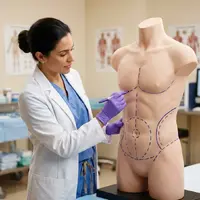
How Traditional Liposuction Works
Traditional liposuction, also called suction-assisted lipectomy (SAL), has been the standard fat removal method for decades. The surgeon inserts a thin hollow tube called a cannula through small incisions and moves it back and forth to mechanically break up fat deposits. The dislodged fat is then suctioned out through the same cannula using negative pressure.
This technique is effective for removing significant volumes of fat and is well proven for body contouring across virtually all treatment areas. However, the mechanical action of the cannula does not distinguish between fat cells and the surrounding connective tissue, blood vessels, and nerves. This can result in more bruising, swelling, and a longer initial recovery compared to energy-assisted methods.
Traditional liposuction remains a reliable and widely performed procedure. For straightforward volume reduction in patients with good skin elasticity, the results can be excellent.
How VASER Liposuction Works
VASER liposuction adds an ultrasound energy step before suction. A small solid probe is inserted through the same type of incision used in traditional lipo. This probe emits ultrasound waves at a specific frequency that causes fat cell membranes to break apart while leaving surrounding structures largely intact. The ultrasound mechanism is tissue-selective, meaning it preferentially targets fat.
Once the fat has been liquefied, it is removed using a cannula, similar to the suction phase of traditional liposuction. Because the fat is already in a liquid or semi-liquid state, less mechanical force is needed during extraction. This translates to less trauma to the blood vessels, nerves, and connective tissue in the treatment area.
The preservation of connective tissue has a secondary benefit. The intact collagen network within the treated area contracts during healing, which promotes better skin retraction than typically seen with traditional liposuction.
Key Differences Compared
The main clinical differences between the two techniques centre on tissue trauma, skin tightening, and precision. VASER generally produces less bruising and swelling due to the gentler fat removal process. Patients often report a quicker return to normal activities, though individual recovery varies.
Skin retraction is one of VASER's most significant advantages. The ultrasound energy stimulates collagen production and the preserved connective tissue scaffold supports the skin as it contracts over the newly sculpted contour. Traditional liposuction can leave the skin looking loose in areas with moderate skin laxity, whereas VASER often achieves a tighter result in the same scenario.
VASER also enables high-definition body sculpting, a technique where fat is precisely removed around muscle groups to reveal underlying definition. This level of precision is difficult to achieve with traditional mechanical liposuction because the cannula cannot selectively leave thin, even layers of fat over specific muscle contours.
When Traditional Liposuction May Be Preferred
Traditional liposuction is not obsolete. It remains a sound choice for large-volume fat removal where the primary goal is reduction rather than definition. It is widely available, well understood, and typically costs less than VASER. Patients with excellent skin elasticity who need straightforward volume reduction may see comparable results from either technique.
The best body areas for VASER tend to be those where definition, skin tightening, and precision matter most. For bulk reduction in areas with good skin tone, traditional liposuction may be equally appropriate. Consult your surgeon about which technique best matches your anatomy and goals.