Full Face Rejuvenation in Thailand Your guide to cost, top surgeons & hospitals
Addressing the whole face at once produces something that isolated procedures never achieve: coherence.

What Is Full Face Rejuvenation?
Also known as: Full Face Surgery · Comprehensive Facial Restoration
Full face rejuvenation is a combined surgical package that treats ageing across the whole face in one session by addressing the upper, mid, and lower zones together. It usually brings together a facelift with neck lift to tighten the jawline, upper and lower blepharoplasty (eyelid surgery) to open the eyes, a brow lift to raise heavy brows, and fat transfer to refill cheeks and temples that have hollowed. It runs around four to six hours under general anaesthesia, and for most people the lift lasts roughly seven to ten years1.
Faces rarely age in just one place, so treating everything together tends to look more natural than fixing one area alone. Your surgeon maps your own zones, skin quality, and what bothers you, then calibrates how much to correct in each so nothing looks overdone.
A good outcome reads as rested rather than altered, looking well without anyone quite saying why. If your ageing sits in a single area, a full four-procedure package may be more than you need, and a smaller, focused option could suit you better. Your surgeon will say so honestly at consultation.
It can address a range of concerns, including:
Am I a Good Candidate for Full Face Rejuvenation?
A combined facial package suits a specific pattern of ageing, so surgeons map your zones, tissue quality, and habits before recommending it.
The package is built for faces ageing in several places at once, not for a single isolated concern.
Multi-zone ageing: Good candidates show changes across the brow, eyes, cheeks, jawline, and neck rather than in one area.
Single-zone concerns: If your concern is concentrated in one zone, a full facelift, brow lift, blepharoplasty, and fat transfer may be more than your anatomy needs, and a smaller procedure suits better.
Why coherence matters: Treating all zones together lets the surgeon calibrate the degree of correction so nothing looks overdone relative to the rest.
What your tissues can support determines both the technique and the durability of the result.
Good elasticity: Candidates need good skin elasticity with reasonable tissue quality for the lift to hold.
Technique follows laxity: Deep plane lifting suits significant sagging, while SMAS techniques handle mild to moderate laxity. The examination decides which applies to you.
Volume to restore: Hollowed cheeks, temples, or under-eye troughs point to the fat transfer component, with around half of grafted fat surviving long term.
Facial skin flaps and delicate periorbital tissue make the health screening more specific here than for most procedures.
Six nicotine-free weeks: Nicotine in any form, including vapes and patches, compromises skin-flap survival after a facelift. Six weeks clear before and after is the requirement.
Blood thinners paused: Medications and supplements that thin the blood, including aspirin, fish oil, and vitamin E, must be safely pausable for two weeks either side of surgery.
Dry-eye history: Blepharoplasty can temporarily worsen tear film, so a history of dry eye is a stated caution for the eyelid component.
The goal is looking rested rather than altered, and good candidates share that goal.
Rested, not different: The aim is that people notice you look well without pinpointing why. If you want a different face, this is the wrong operation.
7-10 year duration: A well-executed facelift typically lasts 7-10 years, and blepharoplasty 7-10. Your face keeps ageing, from a younger starting point.
4-6 months to final: Fat transfer takes the longest to settle, with around half surviving. The full result emerges at 4-6 months.
Visible recovery: Expect 2-3 weeks before you are comfortably presentable in public.
Who is not suitable for full face rejuvenation?
- Concerns confined to a single facial zone
- Significant dry eye that has not been assessed before the eyelid component
- A tendency to keloid or hypertrophic scarring, which affects the facelift and eyelid incisions and must be weighed before surgery
- Thyroid eye disease (Graves orbitopathy) or prior retinal or orbital surgery, which change blepharoplasty planning and must be raised with your surgeon
- Significant lower-eyelid laxity or poor orbicularis tone, which raises ectropion risk and usually needs canthal support rather than standard transconjunctival blepharoplasty
- Nicotine use that cannot stop for six weeks
- Blood thinners that cannot be safely paused
- Expecting a different face rather than a refreshed one
- Uncontrolled high blood pressure, until controlled, given the raised facelift haematoma risk
- Significant uncontrolled heart or lung disease, or otherwise not medically fit for general anaesthesia
Pricing
How Much Will Full Face Rejuvenation Cost in Thailand?
What full face rejuvenation costs at accredited hospitals in Thailand, and what your final quote depends on.
Get your exact price
Tell us what you're considering and we'll send a personalised quote from accredited hospitals within 24 hours.
Get my free quoteTypical prices in Thailand
Typical ranges based on recent hospital quotes. Your exact price depends on the hospital and how complex your case is, and is confirmed at your teleconsultation.
Full Face Rejuvenation
How wide the package needs to be depends on how many facial zones have aged, which your surgeon maps against your own anatomy at consultation.
| Essential face package Facelift with eyelid surgery, covering the two areas that age most visibly | $5,000 to $6,500 ฿170,000 to ฿221,000 |
| Standard face package Adds a neck lift when jowls and loose neck skin need addressing too | $6,500 to $8,500 ฿221,000 to ฿289,000 |
| Premium face package Adds fat grafting to refill cheeks and temples that have hollowed | $8,500 to $10,000 ฿289,000 to ฿340,000 |
Get your exact price
Tell us what you're considering and we'll send a personalised quote from accredited hospitals within 24 hours.
Hospitals Trusted for Full Face Rejuvenation
From internationally accredited flagships to dedicated specialist hospitals, these are the kinds of facilities where international patients have this procedure.
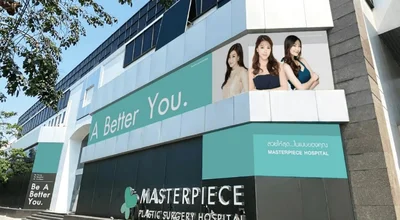
Masterpiece Hospital
A cosmetic surgery specialty hospital in Bangkok focused on facial contouring, rhinoplasty and eyelid work.
View hospital profile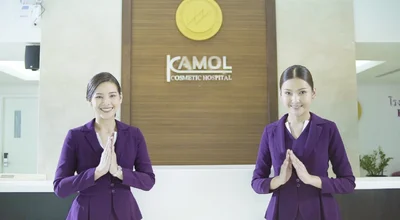
Kamol Cosmetic Hospital
The only specialist cosmetic surgery hospital in Thailand to hold JCI accreditation.
View hospital profile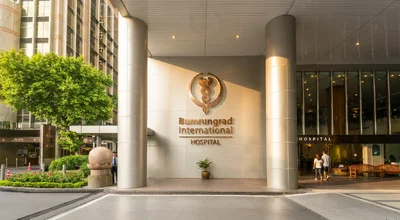
Bumrungrad International Hospital
Southeast Asia's flagship private hospital, treating over 520,000 international patients a year.
View hospital profile
Get a Free Quote in Two Minutes
Tell us what you're considering. We'll match you with suitable specialists and provide real hospital pricing.
- Honest pricing with no markups
- Matched to a specialist for your procedure
- No obligation, no pressure


Rated 5 stars by our patients
The complete guide to Full Face Rejuvenation in Thailand
Everything below is for readers who want the full detail: costs broken down, types and techniques, recovery, risks and safety, and planning your trip.
Facial Rejuvenation Surgeons & Clinics in Thailand
Facial surgery is technically demanding, and combining four procedures in one session requires a surgeon with genuine multi-procedure experience. Here is how to assess your options.
Leading Hospitals in Bangkok
Our partner hospitals are JCI-accredited with dedicated plastic surgery departments. These leading Bangkok hospitals have experienced facial surgery teams with access to advanced equipment including endoscopic instruments, fat processing systems, and dedicated post-operative monitoring. They are full-scale hospitals, not day clinics; they handle complications in-house.
Experienced Facial Surgery Surgeons
Our partner surgeons are board-certified by the Thai Board of Plastic and Reconstructive Surgery and many have trained at international centres specialising in facial rejuvenation. The surgical volume in Thailand means these surgeons see a steady stream of combined facial cases, building the pattern recognition and technical fluency that come from repetition.
What to Look for in a Surgeon
Ask specifically about combined facial procedure experience; a surgeon who performs excellent facelifts may not routinely combine them with blepharoplasty and fat transfer. Request before-and-after photos of combined cases, not just individual procedures. Check that board certification is in plastic surgery specifically. And pay attention to the consultation; a surgeon who rushes through it or overpromises is not the right fit for a multi-component procedure.
Understanding Your Results
Combined facial rejuvenation produces a more unified result than staged procedures. Here is what to expect at each stage and what constitutes a realistic outcome.
Typical Full Face Rejuvenation Results
The overall effect is a younger, more rested appearance without any single feature looking obviously altered. Jowls are tightened, the neck is smoother, the eyes are more open, and volume is restored where the face had hollowed. Most patients look refreshed and somewhat younger, though the exact degree varies with your starting anatomy, skin quality, and how the tissues heal. Incision scars fade into natural creases around the ears and hairline over 6–12 months.
What Results Can You Expect?
The first week is bruised and swollen; do not judge your result then. By week 3, you will see a genuine improvement. The full result emerges at 4–6 months as fat transfer stabilises and all swelling resolves. The key advantage of combining procedures is that no single area looks overdone relative to the rest. Everything ages together, and everything is corrected together.
Full Face Rejuvenation Cost in Thailand
Average Cost of Full Face Rejuvenation
Full face rejuvenation in Thailand typically costs between $5,000 and $10,000, depending on the scope of procedures included and the surgeon. A comprehensive package with facelift, blepharoplasty, brow lift, and fat transfer sits around $7,000–$9,000. Leaving out one component brings the cost lower.
Cost Breakdown
The total covers the surgeon's fee for all facial components, anaesthesia for the combined session, 1–2 nights of hospital stay with nursing care, and all follow-up appointments. The surgeon's fee is the largest portion, reflecting the technical demands of coordinating multiple facial procedures under one plan.
What Affects the Price?
The number of procedures included is the primary factor. A four-component package (facelift, blepharoplasty, brow lift, and fat transfer) costs more than a two-component version. Deep plane facelift techniques add surgical time and cost more than SMAS approaches. Fat transfer complexity (how many zones are injected) also affects the total. Surgeon experience and hospital accreditation level contribute, though the spread between hospitals in Thailand is less extreme than in the US.
Combined vs Separate Pricing
Booking each facial procedure individually at home means separate surgeon fees, separate anaesthetics, and separate recoveries. In Thailand, the combined approach delivers substantial savings:
- Facelift alone: $4,000–$7,000 in Thailand vs $10,000–$20,000 in the US
- Blepharoplasty alone: $1,500–$3,000 in Thailand vs $4,000–$7,000 in the US
- Brow lift alone: $1,500–$3,000 in Thailand vs $4,000–$8,000 in the US
- Combined package: $5,000–$10,000, less than a facelift alone at most US practices
One anaesthetic, one recovery, and a cohesive result that separate procedures cannot replicate.
Thailand vs International Price Comparison
Full face rejuvenation in Thailand costs 40–60% less than equivalent combined surgery in the US ($14,000–$25,000), Australia (A$13,000–A$22,500), or UK (£11,000–£19,000). The saving reflects Thailand's lower operating costs, not inferior standards. Our partner hospitals are JCI-accredited and surgeons hold board certifications equivalent to their Western counterparts.
Surgical vs Non-Surgical Facial Rejuvenation
The non-surgical version of this is often called a liquid facelift: a combination of dermal filler to replace lost volume in the cheeks and temples, Botox to soften forehead and eye lines, and energy devices like radiofrequency or HIFU ultrasound to tighten skin a little. PRP and thread lifts sometimes get added in. Done well, it can freshen the face with no general anaesthetic and almost no downtime, which is why so many people try it first.
What it cannot do is lift. Filler and devices restore volume and tone, but they do not remove the loose skin, sagging jowls, or neck banding that a facelift and neck lift address, and they cannot reposition heavy brows or trim hooded eyelids the way a brow lift and blepharoplasty do. Everything is also temporary: filler lasts roughly a year to eighteen months, Botox three to four months, and device tightening fades, so you are committing to ongoing top-ups, repeat cost, and the gradual stacking of filler that can itself look unnatural over time.
So the non-surgical route suits early, volume-led ageing and people who want a subtle refresh without surgery. Once the ageing is across multiple zones, with real skin laxity, jowls, brow descent, and hollowing together, a combined surgical package is the route to a single lasting correction that reads as genuinely rested, and that is what the rest of this page covers.
Types of Full Face Rejuvenation Packages
The scope of the package depends on which facial zones need correction and how advanced the ageing changes are. Most patients fall into one of three tiers.
Comprehensive Rejuvenation
The full package: deep plane or SMAS facelift with neck lift, upper and lower blepharoplasty, endoscopic brow lift, and fat transfer to cheeks and temples. Addresses every facial zone in one session. This is the version that delivers the most cohesive result.
- Facelift with neck lift for jawline and neck tightening
- Upper and lower eyelid surgery to open the eye area
- Brow lift and fat transfer for volume and position
- Best for: patients with significant ageing across all facial zones
Mid and Lower Face Focus
Concentrates on the areas that age most visibly (facelift, neck lift, and fat transfer) without brow or eyelid surgery. Appropriate when the upper face is relatively well-preserved and the jawline and midface volume are the primary concerns.
- Facelift and neck lift for jowls and neck laxity
- Fat transfer to cheeks and nasolabial folds
- No brow or eyelid component
- Best for: patients whose upper face has aged less dramatically than the lower
Upper Face and Eyes Focus
Combines blepharoplasty and brow lift with targeted fat transfer. Suited to patients whose ageing is concentrated around the eyes, brow, and temples, with a jawline that still holds its shape. Shorter surgery and faster recovery than the comprehensive package.
- Upper and lower blepharoplasty for hooded lids and eye bags
- Endoscopic or temporal brow lift
- Fat transfer to temples and under-eye hollows
- Best for: patients with early to moderate ageing concentrated around the upper face
Full Face Rejuvenation Techniques
The technique for each component varies depending on anatomy, skin quality, and how much correction is needed. Here is what is commonly used and when.
Deep Plane vs SMAS Facelift
Deep plane facelifts reposition the deeper facial tissues as a single unit, producing a more durable lift with less tension on the skin. SMAS techniques are quicker with a slightly shorter recovery. The choice depends on tissue laxity and how much repositioning the midface needs.
- Deep plane lifts the fat pads and muscle layer together
- SMAS technique is effective for mild to moderate laxity
- Both include neck work and platysma tightening
- Best for: deep plane suits significant sagging; SMAS suits moderate cases
Endoscopic Brow Lift
Small incisions behind the hairline allow the surgeon to elevate the brow using an endoscope, avoiding the longer coronal incision of older techniques. Recovery is faster and scarring is minimal. The lift is subtle but opens the entire upper face.
- 3–5 small incisions hidden behind the hairline
- Shorter recovery than traditional brow lift approaches
- Restores natural brow arch without an overdone look
- Best for: brow descent and forehead heaviness without significant skin excess
Fat Transfer and Volume Restoration
Fat harvested from the abdomen or thighs is purified and injected into hollowed cheeks, temples, under-eye troughs, and nasolabial folds. This adds volume that integrates with your own tissue and typically lasts longer than synthetic fillers. Around half of transferred fat survives long term, though volume still shifts gradually with weight change and ongoing ageing.
- Uses your own fat, with no synthetic materials
- Targets cheeks, temples, tear troughs, and folds
- Approximately half of transferred fat volume survives long-term2
- Best for: volume loss and hollowing across the midface and temples
Transconjunctival Lower Blepharoplasty
For the lower eyelid component, the transconjunctival approach works through the inside of the eyelid, leaving no external scar. It removes or repositions the fat that causes under-eye bags while preserving the lid's natural shape. A skin-incision (subciliary) approach is used instead when loose lower-lid skin also needs trimming.
- No external scar, as the incision sits inside the lower lid
- Repositions or removes fat to smooth under-eye bags
- Subciliary skin incision is chosen when excess lid skin needs removing too
- Best for: under-eye bags and fat herniation without significant lower-lid skin laxity
Full Face Rejuvenation Recovery Timeline
Days 1–5
Expect swelling concentrated around the eyes, cheeks, and jawline. Bruising is typically worst around the eyelids and can spread down toward the neck. Pain is moderate and well-managed with prescribed medication. Keep your head elevated at 30–45 degrees day and night. Stick to a soft diet with minimal chewing, as limiting jaw movement protects the tightened SMAS layer. Your care coordinator checks in daily.
Weeks 1–2
Sutures come out between days 5 and 10. Bruising shifts from purple to yellow-green and becomes concealable with makeup. The swelling reduces noticeably, and the refreshed contours underneath start to emerge. Keep meals soft and easy to chew through about day 14 to spare the jaw and healing facelift layer, then ease back to a normal diet. Most patients feel comfortable going out with sunglasses and light coverage by day 10–12.
Weeks 3–6
Most bruising has resolved and residual swelling continues settling. Incision lines fade into natural creases around the ears and hairline. Light exercise like walking is fine, but avoid anything that raises blood pressure significantly. Social and professional activities can resume for most patients.
Months 3–6
The final result becomes apparent as all swelling resolves and fat transfer stabilises. Scars continue maturing and fading. The rejuvenation effect typically looks strongest at the 4–6 month mark when tissues have fully settled into their new position.
When Can You Fly After Full Face Rejuvenation?
Most patients can fly home 14–21 days after surgery, once sutures are removed and your surgeon confirms healing is progressing well. Cabin pressure does not affect facial surgery results at this stage. Some temporary increase in facial puffiness during the flight is normal and resolves within a day.
When Can You Return to Work and Exercise?
Desk work can resume at 2–3 weeks if you are comfortable being seen with residual bruising that makeup can cover. Physical jobs requiring bending or straining should wait 4–6 weeks. Light walking is encouraged from day one. Vigorous exercise, swimming, and anything that significantly raises blood pressure should wait until 6 weeks post-surgery.
When Will You See Final Results?
You will see a noticeable improvement once bruising clears around week 2–3, but that is not the final result. Swelling continues resolving for 3–6 months, with the fat transfer taking the longest to settle. Most patients describe the 4–6 month mark as when everything comes together and the result looks completely settled.
Anaesthesia for Full Face Rejuvenation
A combined facial package is performed under general anaesthesia, so you are fully asleep for the whole operation and feel nothing throughout. With a facelift, neck lift, eyelid surgery, brow lift, and fat transfer all carried out in one sitting, this is a longer procedure than a single component, which is exactly why a general anaesthetic is the standard and safest approach. A consultant anaesthetist stays with you for the full four to six hours and monitors you continuously, which is routine at the accredited hospitals we work with.
Because the surgery is extended, your fitness for a longer anaesthetic is assessed carefully beforehand. The pre-operative work-up includes blood tests, cardiac screening where appropriate, and a review of any medications and supplements you take, since blood thinners such as aspirin, fish oil, and vitamin E need pausing for two weeks either side. The anaesthetist leads this assessment and confirms you are cleared before the day of surgery.
You feel nothing while the work is done. When you wake, most patients describe the face as tight, swollen, and a little tender rather than sharply painful, and that discomfort is well controlled with the medication your surgeon prescribes. Many move on to simple painkillers like paracetamol by the end of the first week.
Risks and Safety of Full Face Rejuvenation
Facial surgery involves delicate structures: nerves, blood vessels, and thin periorbital tissue. Combining multiple procedures demands careful planning and precise execution.
- Haematoma requiring drainage (the most closely monitored risk in the first 24 hours)
- Temporary facial nerve weakness causing asymmetry (usually resolves within weeks)
- Permanent facial nerve injury (a rare but recognised complication)3
- Temporary scalp numbness behind the brow-lift incisions, common after an endoscopic brow lift and usually settling over weeks to months
- Small patch of hair thinning (alopecia) near the brow-lift or temporal incisions, usually temporary
- Skin necrosis from excessive tension on flaps, particularly in smokers
- Partial fat reabsorption requiring potential touch-up injection
- Scarring that remains visible, though incisions are placed in natural creases
- Dry eye or temporary difficulty closing the eyelid fully after blepharoplasty5,6
- Infection at incision sites (uncommon with proper aftercare)
The layered nature of combined facial surgery means each component has its own distinct risk profile. Your surgeon will explain how facelift, blepharoplasty, brow lift, and fat transfer risks interact and what specific precautions apply to your anatomy and skin type.
Is Full Face Rejuvenation Safe in Thailand?
Yes, when performed at JCI-accredited hospitals by board-certified plastic surgeons. Thailand's leading surgeons are certified by the Thai Board of Plastic and Reconstructive Surgery and many hold fellowships from international centres. Accredited hospitals maintain strict protocols for haematoma monitoring, anaesthetic safety, and post-operative observation.
How to Reduce Risks
Stop smoking at least 6 weeks before surgery; nicotine drastically impairs blood flow to skin flaps and increases necrosis risk4. Discontinue blood-thinning medications and supplements including aspirin, ibuprofen, fish oil, and vitamin E for two weeks prior. Make sure your surgeon has specific experience with combined facial procedures, not just individual components. A thorough pre-operative assessment with blood work and cardiac screening ensures you are fit for an extended general anaesthetic.
When Is Revision Needed?
Revision is uncommon for facial surgery when performed by experienced surgeons. It may be considered for persistent asymmetry, visible scarring, overcorrection, or insufficient fat transfer volume. Wait at least 9–12 months before evaluating, as facial tissues take that long to fully settle. Some patients opt for a small fat transfer top-up at 12 months if volume absorption was higher than expected.
Planning Your Trip to Thailand for Full Face Rejuvenation
Most patients need 14–21 days in Thailand. Here is how to structure your stay, what is covered, and where to recover.
How Long to Stay in Thailand
Allow 14–21 days minimum. Day 1–2 is consultation and pre-operative assessment. Surgery takes 4–6 hours followed by 1–2 nights in hospital. The remainder covers suture removal, follow-up checks, and monitored recovery before your surgeon clears you for the flight home.
What Is Included in a Medical Trip
Your coordinator manages hospital bookings, surgeon scheduling, airport-to-hospital transfers, and all follow-up appointments. The surgical quote includes all surgeon fees, anaesthesia, hospital stay, nursing care, and aftercare medications. Flights and accommodation are arranged separately, with recommendations provided for recovery-friendly hotels near the hospital.
Recovery in Bangkok
Bangkok is the right base for combined facial surgery. You need proximity to the hospital for suture removal, wound checks, and any adjustments. Recovering nearby also means your surgeon can assess you quickly if anything unexpected occurs. Most recovery hotels are within 15 minutes of the hospital, with quiet rooms and room service so you can rest comfortably between appointments.
Related Procedures
Other procedures that address similar goals or conditions, in case one of them is a closer fit for you.
Planning your treatment in Thailand
Independent guides to help you weigh the decision, before you commit to anything.
Common Questions About Full Face Rejuvenation
Everything you need to know before your procedure

Medical References
- Facelift (Rhytidectomy) What Is It, Recovery and What to Expect (Cleveland Clinic)
- Under Eye Fat Transfer What To Expect, Recovery and Side Effects (Cleveland Clinic)
- Facelift Risks and Safety (American Society of Plastic Surgeons)
- How Nicotine Sabotages Plastic Surgery (American Society of Plastic Surgeons)
- Blepharoplasty (Eyelid Surgery) Details and Recovery (Cleveland Clinic)
- Is It Possible to Have Eyelid Surgery If I Suffer From Dry Eye (American Academy of Ophthalmology)
Keep researching with AI
Open this guide in your AI assistant to dig deeper and ask the questions it didn't answer.
Opens in a new tab with this guide already loaded.
Medical disclaimer: This information is for educational purposes only and does not replace professional medical advice. Individual results, recovery times, and suitability vary. Always consult a qualified surgeon before making decisions about treatment.
Ready to Get Started?
Speak with our care coordinators for a free, no-obligation consultation and personalised quote.
Speak to Our Team