Post-Bariatric Body Contouring in Thailand Your guide to cost, top surgeons & hospitals
You did the hard part already. This is the step that finally lets your body match the work you put in.

What Is Post-Bariatric Body Contouring?
Also known as: After Weight Loss Surgery · Post-Bariatric Reconstruction
Post-bariatric body contouring is a set of operations that reshape the body after major weight loss by surgically removing the loose, hanging skin left behind. It treats redundant skin across the abdomen, arms, thighs, chest, and back that diet and exercise cannot tighten, and eases the fold infections, rashes, and hygiene problems it causes. The skin removed is gone for good, so results last as long as your weight stays stable.1,2 The wounds are long, so it is usually staged under general anaesthesia1, often the lower body first and the arms, breasts, and upper back 3 to 6 months later.
It helps to think of this as a plan, not a single operation. Some people need one area treated, others need work across several. Your surgeon maps the sequence around your body, your healing, and what bothers you most.
Honestly, this surgery is a trade: long, permanent scars in exchange for a shape that matches the weight you lost. For most people who have kept their weight steady, it is an exchange worth making, and a consultation is the place to weigh it up properly.
It can address a range of concerns, including:
Am I a Good Candidate for Post-Bariatric Body Contouring?
After massive weight loss, readiness for contouring is as much about healing capacity as anatomy, and surgeons screen for both.
This surgery exists for the problems that excess skin creates once the weight is gone.
Hanging skin aprons: Redundant skin across the abdomen, arms, thighs, or chest that no amount of exercise can correct.
Skin fold problems: Recurrent fold infections, rashes, and hygiene difficulties are functional indications, not just cosmetic ones.
Shape mismatch: Good candidates have done the hard part, lost 30kg or more, and are left with a body that does not reflect their actual weight.
Mobility and confidence: Physical restriction from excess tissue and the psychological weight of loose skin both count in the assessment.
Timing gates are firm here, because operating on a still-changing body wastes the surgery.
6-12 months stable: Your weight should have been steady for at least six months, ideally twelve, before the first stage.
12-18 months post-bariatric: Most surgeons want you that far out from gastric bypass or sleeve surgery before contouring begins.
Still dropping disqualifies: If you are losing more than a few kilograms a month, further loss will leave fresh sagging below the repair, so the plan waits.
Bariatric surgery changes how you absorb nutrients, and your levels directly determine how long incisions heal.
Protein first: Adequate protein intake is essential for healing the long wounds this surgery creates.
Iron, B12, vitamin D: Deficiencies are common after bariatric procedures and directly impair wound healing, so blood work comes before approval.
Optimisation before surgery: Responsible surgeons insist on dietary assessment and correction months ahead, working with a nutritionist where needed. This is the most controllable risk factor you bring to theatre.
This is a treatment plan rather than a single operation, and candidates need to accept its shape.
A staged plan: Extensive cases run across 2-3 procedures over 12-18 months, lower body first, upper body 3-6 months later, each with its own recovery.
Extensive scarring: Removing kilograms of skin leaves long, permanent scars. They are placed strategically and fade over 12-24 months, but they are part of the exchange.
Two trips to Thailand: Each stage needs 14-21 days in-country, and your coordinator schedules the second stage before you fly home from the first.
Who is not suitable for post-bariatric body contouring?
- Less than 12 months out from bariatric surgery
- Weight still actively dropping
- BMI still above 30–32, where complication rates rise sharply and most surgeons defer surgery
- Uncorrected protein, iron, B12, or vitamin D deficiencies
- Planning future pregnancies, which would stretch and undo the abdominal repair
- Nicotine use in any form
- Unwilling to accept a staged plan or extensive scarring
- Significant uncontrolled heart or lung disease, or otherwise not medically fit for general anaesthesia
- Uncorrected anaemia or uncontrolled diabetes, which impair healing of long incisions
Pricing
How Much Will Post-Bariatric Body Contouring Cost in Thailand?
What post-bariatric body contouring costs at accredited hospitals in Thailand, and what your final quote depends on.
Get your exact price
Tell us what you're considering and we'll send a personalised quote from accredited hospitals within 24 hours.
Get my free quoteTypical prices in Thailand
Typical ranges based on recent hospital quotes. Your exact price depends on the hospital and how complex your case is, and is confirmed at your teleconsultation.
Post-Bariatric Body Contouring
Almost nobody has everything done at once, so the cost follows how many areas are treated in a single operation and how many trips you spread them over.
| Abdominoplasty only Removes the loose apron of skin across the tummy | $4,000 to $6,000 ฿136,000 to ฿204,000 |
| Lower body lift, belt lipectomy Goes right around the waist, treating tummy, flanks and buttocks | $6,000 to $9,000 ฿204,000 to ฿306,000 |
| Brachioplasty, arm lift Removes hanging skin from both upper arms | $2,500 to $4,000 ฿85,000 to ฿136,000 |
| Mastopexy, breast lift Lifts and reshapes the breasts, with or without implants | $2,500 to $4,500 ฿85,000 to ฿153,000 |
| Medial thigh lift Removes loose skin from the inner thighs | $3,000 to $5,000 ฿102,000 to ฿170,000 |
| Comprehensive two-stage plan Lower body first, upper body second, across two separate trips | $10,000 to $18,000 ฿340,000 to ฿612,000 |
Get your exact price
Tell us what you're considering and we'll send a personalised quote from accredited hospitals within 24 hours.
Hospitals Trusted for Post-Bariatric Body Contouring
From internationally accredited flagships to dedicated specialist hospitals, these are the kinds of facilities where international patients have this procedure.
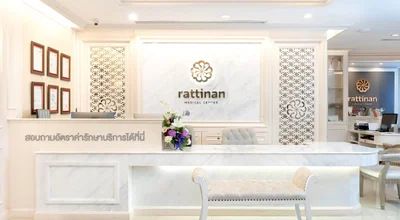
Rattinan Clinic
A specialist body contouring clinic in central Bangkok with over 14,000 BodyTite treatments performed.
View hospital profile
Kamol Cosmetic Hospital
The only specialist cosmetic surgery hospital in Thailand to hold JCI accreditation.
View hospital profile
Yanhee International Hospital
A 400-bed hospital known worldwide for high-volume cosmetic surgery.
View hospital profile
Get a Free Quote in Two Minutes
Tell us what you're considering. We'll match you with suitable specialists and provide real hospital pricing.
- Honest pricing with no markups
- Matched to a specialist for your procedure
- No obligation, no pressure


Rated 5 stars by our patients
The complete guide to Post-Bariatric Body Contouring in Thailand
Everything below is for readers who want the full detail: costs broken down, types and techniques, recovery, risks and safety, and planning your trip.
Post-Bariatric Contouring Surgeons & Clinics in Thailand
Post-bariatric patients need surgeons who understand the specific challenges of operating on skin that has been stretched, nutritional status that may be compromised, and bodies that need multiple procedures sequenced safely.
Leading Hospitals in Bangkok
Our partner hospitals are JCI-accredited international facilities in Bangkok with dedicated plastic surgery departments. They handle extended body contouring operations routinely, with operating theatres, anaesthesia teams, and post-operative monitoring set up for procedures lasting 4–8 hours. In-house ICU availability provides an additional safety net for complex or combined cases.
Experienced Post-Bariatric Surgeons
Our partner surgeons hold certification from the Thai Board of Plastic and Reconstructive Surgery. Several have completed fellowships in body contouring at international centres and returned to Thailand where the patient volume supports ongoing specialisation. They understand the tissue-handling differences in post-bariatric patients, thinner dermis, less elastic collagen, higher wound complication rates, and plan accordingly.
What We Screen For in a Surgeon
When we match you to a surgeon, we look specifically for documented experience with massive weight loss patients, not just general cosmetic seniority, since the two do not automatically translate. We confirm they have a protocol for pre-operative nutritional assessment and that they take a full bariatric history, current supplements, and protein levels into the planning. During your consultation you can also ask to see before-and-after photos of patients who lost amounts of weight similar to you, and we are happy to help arrange that.
Understanding Your Results
Post-bariatric body contouring produces some of the most dramatic transformations in plastic surgery. Here is what realistic outcomes look like.
Typical Post-Bariatric Contouring Results
The procedure removes kilograms of excess skin and tissue, revealing a body contour that reflects your actual weight. Patients who had significant abdominal aprons, bat-wing arms, or deflated breasts see the most striking change. The trade-off is extensive scarring, scars are permanent, though they are placed strategically and fade substantially over 12–24 months. For most patients, the scars are a worthwhile exchange for the contour improvement.
What Results Can You Expect?
You will see a major difference within weeks, but the full result takes 6–12 months per stage to emerge. Post-bariatric skin heals more slowly than average, and swelling takes longer to resolve. Your surgeon will use clinical assessment and photography to plan each stage and set expectations about what can be achieved given your tissue quality and the amount of excess. If you have maintained your weight loss, the results are long-lasting.
Post-Bariatric Body Contouring Cost in Thailand
Average Cost of Post-Bariatric Contouring
A single-stage procedure in Thailand typically costs between $2,500 and $18,000 depending on the areas treated and the complexity. A comprehensive multi-stage plan addressing lower body, upper body, arms, and thighs may total $10,000–$18,000 across both stages, still significantly less than a single-stage lower body lift in many Western countries.
Cost Breakdown
The surgeon's fee is usually the largest component and reflects the operating time, which for post-bariatric cases is longer than most cosmetic procedures. Hospital fees typically cover the facility, theatre, nursing, and the extended inpatient stay required (2–4 nights). Anaesthesia fees reflect the longer anaesthesia time. Aftercare generally covers drain management, wound checks, follow-up appointments, and coordinator support. Exact inclusions are set by the clinic and confirmed in writing in your quote, and for staged procedures each stage is quoted and billed separately.
What Affects the Price?
The number of areas being treated in a single stage is the biggest cost driver. A lower body lift costs more than an isolated abdominoplasty because it takes longer and involves more tissue handling. Adding brachioplasty or mastopexy to a lower body lift pushes the cost higher still. Surgeon seniority, hospital tier, and the patient's BMI (which affects operating difficulty) also influence the final number.
Thailand vs International Price Comparison
Post-bariatric contouring in Thailand costs 40–60% less than equivalent procedures in the US ($14,000–$25,000 per stage), Australia (A$13,000–A$22,500), and the UK (£11,000–£19,000). For patients needing multiple stages, the total savings can reach $20,000–$40,000. Our partner hospitals hold JCI accreditation, the same international standard used to benchmark hospitals worldwide.
Non-Surgical Alternatives to Body Contouring
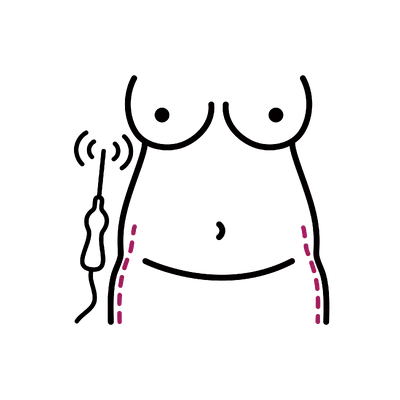
Energy-based skin-tightening devices, radiofrequency, high-intensity focused ultrasound, and microneedling RF, are often marketed as a way to firm loose skin without surgery. They work by heating the deeper layers of skin to stimulate some collagen, and they can make a genuine, if modest, difference to mild laxity, such as slight crepiness or early sagging. Fat-freezing and fat-dissolving injections, sometimes mentioned in the same breath, target small pockets of fat rather than skin, so they address a different problem entirely.
The limits are stark once weight loss has been significant. These devices tighten skin by a fraction; they cannot remove a hanging apron, lift a deflated chest, or close a circumferential roll of redundant tissue, and the effect is temporary and needs repeat sessions to maintain. After 30kg or more of weight loss, the skin has lost the elasticity these treatments rely on, so the realistic outcome is little to no visible change on the volume of excess that post-bariatric patients carry.
When loose skin is hanging, causing fold infections, or simply not matching the weight you have lost, surgical removal is the only route that delivers a lasting, structural result. The excess skin is physically excised, not coaxed to shrink, which is why the rest of this page focuses on the surgical procedures that actually reshape the body after major weight loss.
Types of Post-Bariatric Body Contouring
No two post-bariatric patients present the same way. The procedures selected depend on where the skin excess is worst, how much tissue needs removing, and what can safely be combined in a single operation. Here are the main categories.
Lower Body Lift (Belt Lipectomy)
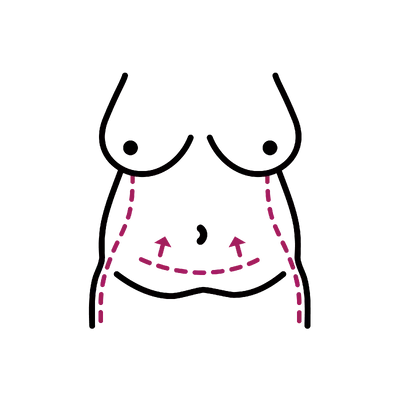
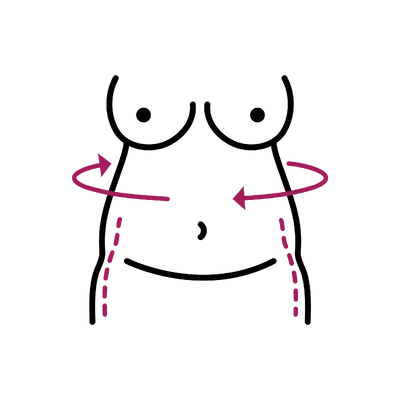
A circumferential incision around the torso removes the abdominal apron, lifts the buttocks, and tightens the flanks and outer thighs in one operation. This is the centrepiece procedure for most post-bariatric patients because it addresses the largest area of skin excess in a single session.
- Removes abdominal apron and tightens the entire lower torso
- Lifts and reshapes buttocks, flanks, and outer thighs
- Typically the first-stage procedure in a multi-stage plan
- Best for: patients with circumferential skin excess around the lower trunk
Upper Body Contouring
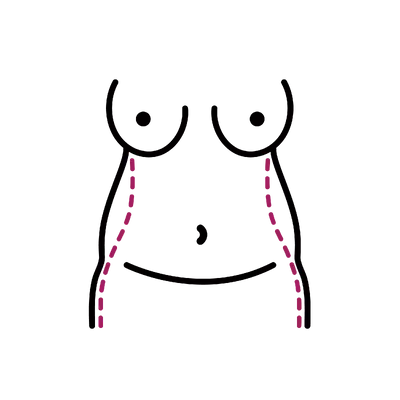
Addresses the arms, breasts, and upper back. Brachioplasty removes hanging arm skin. Mastopexy lifts deflated breasts. Upper back lifts remove bra-line rolls. Usually performed as a second stage 3–6 months after lower body work to keep surgical risk manageable.
- Brachioplasty eliminates excess upper arm skin
- Breast lift (with or without implants) restores volume and position
- Upper back lift addresses rolls along the bra line
- Best for: patients who have completed lower body surgery and have upper body skin excess
Medial Thigh Lift
Removes excess skin from the inner thighs, which is one of the most persistent problem areas after massive weight loss. The incision runs from the groin crease downward along the inner thigh. Can be combined with lower body lift or performed separately depending on the surgical plan.
- Addresses inner thigh skin laxity that other procedures miss
- Incision placed in the groin crease for concealment
- Can be staged or combined with lower body lift
- Best for: patients with significant inner thigh skin excess
Panniculectomy
Panniculectomy removes only the hanging abdominal apron (the pannus) without the muscle tightening or repositioning of a full tummy tuck. It is a more limited operation focused on the overhang that causes rashes, fold infections, and hygiene problems, rather than on overall abdominal shape. Because the indication is often functional rather than purely cosmetic, it is sometimes the component an insurer will consider where medical necessity is documented.
- Removes the hanging lower abdominal apron only
- No muscle repair or belly-button repositioning, so a shorter, simpler operation
- Often the medically indicated option for recurrent fold infections or rashes
- Best for: patients whose main problem is a heavy overhanging pannus rather than overall contour
Post-Bariatric Contouring Techniques
The techniques below determine how the procedures are sequenced, how much can be safely combined, and what trade-offs are involved.
Staged vs Combined Surgery
Staging means performing the lower body first, then returning for upper body work 3–6 months later. Combined surgery addresses multiple areas in a single extended operation. Staging is safer for extensive cases because it limits blood loss, anaesthesia time, and the total wound burden. Most surgeons recommend staging for patients needing three or more areas treated.
- Staging reduces surgical risk, blood loss, and recovery burden
- Combined surgery is possible for two adjacent areas with moderate skin excess
- Operating times over 6 hours typically warrant staging
- Best for: staging suits extensive cases; combined suits limited or adjacent areas
Fleur-de-Lis Abdominoplasty
A vertical incision added to the standard horizontal tummy tuck, creating an inverted-T or anchor pattern. Necessary when horizontal skin excess is so significant that a standard transverse incision cannot remove enough tissue. More scarring but dramatically better contour for patients with massive weight loss.
- Removes both horizontal and vertical skin excess from the abdomen
- Creates an inverted-T scar pattern with additional vertical midline scar
- Significantly better abdominal contour than standard abdominoplasty for massive weight loss
- Best for: patients with very large abdominal aprons where standard abdominoplasty would leave lateral redundancy
Anchor-Pattern Breast Lift
The most common mastopexy pattern for post-bariatric patients, involving incisions around the areola, vertically down to the breast crease, and along the crease itself. Addresses the severe deflation and descent that occurs after substantial weight loss. Can be combined with implants if volume restoration is wanted alongside the lift.
- Addresses severe breast descent and deflation after weight loss
- Maximum skin removal and reshaping capacity
- Can incorporate implants for volume restoration if desired
- Best for: significant breast ptosis with large skin excess
Liposuction-Assisted Contouring
Liposuction is frequently added to a lift to debulk residual fat before the skin is excised, so the flap lies flatter and the contour is smoother. In post-bariatric work it is most often combined with the abdomen (lipoabdominoplasty), the flanks, and the thighs, where pockets of stubborn fat remain alongside the loose skin. It refines shape rather than removing skin, so it complements the excisional procedures rather than replacing them.
- Removes residual fat so the skin flap sits flatter after excision
- Commonly combined with abdomen, flanks, and thigh procedures
- Refines contour but does not remove skin, so it is an adjunct, not a standalone
- Best for: patients with stubborn fat pockets alongside their loose skin
Post-Bariatric Body Contouring Recovery Timeline
Days 1–5
You will remain in hospital for 2–4 nights depending on the extent of surgery. Expect significant swelling, bruising, and discomfort across all treated areas. Drains manage fluid output. Gentle supervised walking begins on day one to prevent blood clots. Pain is managed with IV medication initially, transitioning to oral medication.
Weeks 1–3
Drains are removed as output decreases, typically within 7–14 days. Swelling remains substantial but comfort improves day by day. Light walking continues. You will attend multiple follow-up appointments for wound checks and drain management. Most patients feel functional for basic daily tasks by week 2.
Weeks 4–8
Visible improvement as swelling reduces and your new contour begins to emerge. Return to desk work is possible around week 4–6 depending on the extent of surgery. Driving usually resumes around week 2–4, once you are off strong pain medication and can sit, turn, and perform an emergency stop without pain; allow longer if a compression garment limits movement at the pedals. Avoid heavy lifting and strenuous activity. Compression garments are worn throughout this period.
Months 3–12
Progressive improvement in contour as deep swelling resolves. Exercise resumes fully around month 3 with surgeon approval. Scars mature from red or pink to paler, flatter lines over 12–24 months. Your final body shape is visible by 6–12 months depending on the scope of surgery.
When Can You Fly After Post-Bariatric Contouring?
Most patients can fly home 14–21 days after surgery, depending on the extent of the procedure. Drains must be removed and wound healing confirmed before you are cleared to travel. Wear compression garments and loose clothing during the flight. Walk the cabin periodically to maintain circulation. For multi-stage patients, the second trip follows the same protocol.
When Can You Return to Work and Exercise?
Desk work is possible from week 4–6 for most patients.3 Physically demanding work may require 8–12 weeks. Light walking is essential from day one. Moderate exercise can resume around month 2–3 with surgeon approval. Heavy lifting and high-impact activities should wait until month 3 at earliest. Listen to your body, post-bariatric patients often underestimate recovery time because they are accustomed to pushing through discomfort.
When Will You See Final Results?
The transformation is dramatic but takes time to fully reveal itself. You will see a significant difference within 4–6 weeks as initial swelling subsides. The contour continues refining over 6–12 months as deep tissue swelling resolves and scars flatten. For patients who undergo two stages, the complete transformation is visible roughly 6–12 months after the second procedure.
Anaesthesia for Post-Bariatric Contouring
Post-bariatric body contouring is performed under general anaesthesia, so you are fully asleep and feel nothing during the operation.3,4 Because these procedures are long, often 4 to 8 hours, a consultant anaesthetist stays with you the whole time, managing your airway, fluids, and temperature and monitoring you continuously. That level of dedicated cover is standard at the accredited hospitals we work with, and for complex or combined cases an in-house ICU is available as a back-up.
There is no awake or sedation-only option here, as the wounds are too extensive and the operating time too long for anything but a full general anaesthetic. The pre-operative assessment matters more than usual for post-bariatric patients: alongside the standard blood tests and a review of your medications, your team checks your protein, iron, B12, and vitamin D, since deficiencies common after weight-loss surgery affect both healing and how well you tolerate a long anaesthetic. You will also be asked to stop all nicotine well beforehand.
You feel nothing during surgery. The first few days afterwards are the most uncomfortable, with tightness and soreness across the treated areas rather than sharp pain, and this is controlled with IV pain relief in hospital before you move to oral medication. Most patients find the discomfort eases noticeably by the end of the second week.
Risks and Safety of Post-Bariatric Body Contouring
Post-bariatric contouring is major surgery with a longer risk profile than most cosmetic procedures. The combination of extended operating times, large wound surfaces, and the nutritional challenges that post-bariatric patients often face makes understanding these risks essential.
- Wound separation or delayed healing (more common in post-bariatric patients)
- Seroma, fluid collection beneath the skin flap requiring drainage4,5
- Partial skin flap necrosis, where an edge of the lifted flap loses blood supply and breaks down, more likely after major weight loss because the skin is thinner and less well perfused
- Haematoma formation
- Infection at incision sites or within skin folds
Post-bariatric patients carry specific risks that other cosmetic surgery patients do not. Protein deficiency, vitamin malabsorption, and reduced wound-healing capacity are common after gastric bypass or sleeve gastrectomy. Pre-operative nutritional optimisation directly reduces complication rates, which is why responsible surgeons insist on blood work and dietary assessment before approving surgery.
Is Post-Bariatric Body Contouring Safe in Thailand?
Yes, when performed at a JCI-accredited hospital by surgeons experienced with post-bariatric patients. Thailand's leading hospitals have dedicated plastic surgery departments equipped for extended procedures, with ICU backup for complex cases. The key safety factor is surgeon experience specifically with massive weight loss patients, not just general cosmetic surgery.
How to Reduce Your Risk
Start with nutritional optimisation months before surgery, your protein, iron, B12, and vitamin D levels directly affect wound healing. We match you only to JCI-accredited hospitals and surgeons with specific post-bariatric body contouring experience, so that side of the decision is handled for you. Accept staging if your surgeon recommends it, trying to do everything in one session to save money increases complication risk significantly. Follow drain care, compression, and activity restrictions precisely.
Will Insurance Cover Any of This?
Post-bariatric body contouring is typically classified as cosmetic and not covered by insurance. However, some insurers provide partial coverage when documented medical necessity exists, for example, recurrent skin fold infections, functional impairment, or panniculectomy (removal of a hanging abdominal apron). Get documentation from your referring physician before travelling and check your policy terms. Even with partial coverage, the out-of-pocket savings in Thailand are usually substantial.
Planning Your Trip to Thailand for Post-Bariatric Contouring
Multi-stage plans require more logistical planning than single procedures. Here is how to structure your trip or trips.
How Long to Stay in Thailand
Plan for a minimum of 14–21 days for each stage. This covers consultation and pre-operative assessment (day 1–2), surgery with 2–4 nights in hospital, drain management over the first 7–14 days, and final follow-up before you are cleared to fly. Patients having a lower body lift should plan for the full 21 days. For two-stage plans, expect two separate trips to Thailand spaced 3–6 months apart.
What's Included in a Medical Trip
Your care coordinator manages the entire process across both stages, surgery scheduling, hospital transfers, follow-up appointments, drain management visits, and liaison with your surgical team. Each stage is quoted separately with full cost transparency. Flights and accommodation are arranged separately, though your coordinator helps with hotel recommendations suited to extended post-surgical recovery stays.
Planning a Two-Stage Trip
If your surgical plan involves two stages, your coordinator will schedule the second stage before you leave Thailand after the first. This means you have confirmed dates and can book flights and accommodation in advance. The gap between stages, typically 3–6 months, gives your body time to heal fully and your nutritional status time to recover before the next operation.
Related Procedures
Other procedures that address similar goals or conditions, in case one of them is a closer fit for you.
Planning your treatment in Thailand
Independent guides to help you weigh the decision, before you commit to anything.
Common Questions About Post-Bariatric Body Contouring
Everything you need to know before your procedure

Medical References
Keep researching with AI
Open this guide in your AI assistant to dig deeper and ask the questions it didn't answer.
Opens in a new tab with this guide already loaded.
Medical disclaimer: This information is for educational purposes only and does not replace professional medical advice. Individual results, recovery times, and suitability vary. Always consult a qualified surgeon before making decisions about treatment.
Ready to Get Started?
No-obligation consultation and quote within 24 hours. Speak with a coordinator who can match you to the right surgeon and hospital.
Speak to Our Team