Double Eyelid Surgery in Thailand Your guide to cost, top surgeons & hospitals
A defined eyelid crease is one of the simplest changes that shifts how your whole face reads, brighter, more awake, more you.
What Is Double Eyelid Surgery?
Also known as: Double Eyelid · Asian Blepharoplasty
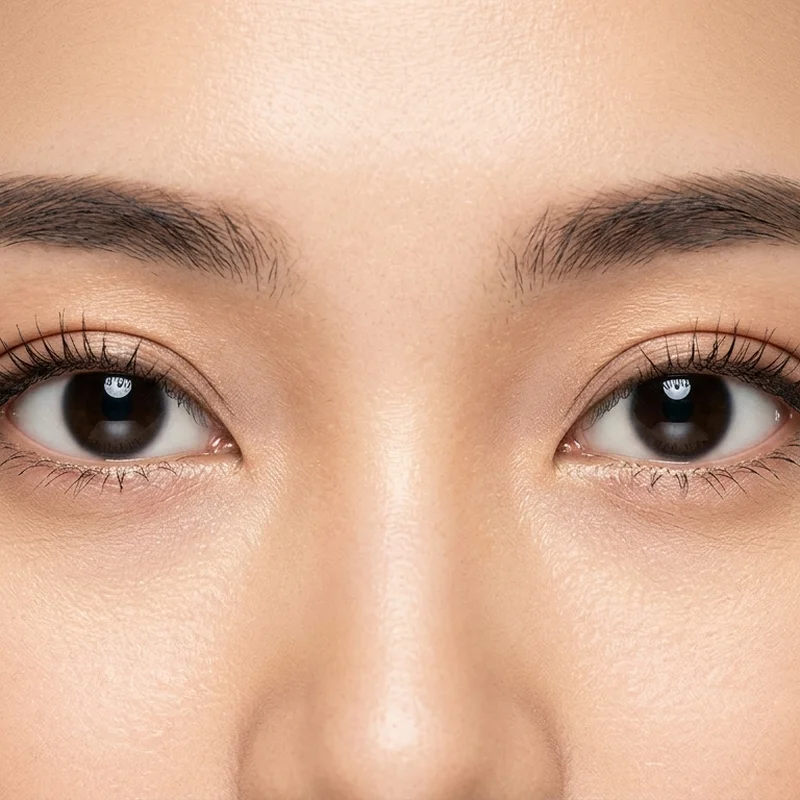
Double eyelid surgery, also known as Asian blepharoplasty, forms a crease in the upper eyelid by anchoring the lid skin to the deeper tissue underneath. It builds a fold where none exists, or refines one that is partial, faint, or uneven, so the eye looks more open and defined. The surgeon makes the crease either through a fine incision along the planned line or through buried sutures placed via tiny puncture points; with the incisional method the result is permanent. It usually takes one to one and a half hours under local anaesthesia with sedation.
Your eyes are the first thing people read on your face, so it is natural to want any change here to feel like you. This is not about making eyes look Western. Your surgeon studies your lid thickness, the amount of fat, and the shape that suits your eye and brow, then designs the crease around all of it.
Whether the incision or suture method is right depends on your lid anatomy rather than preference, something your surgeon confirms once they have examined your eyes.
It can address a range of concerns, including:
Am I a Good Candidate for Double Eyelid Surgery?
Crease surgery succeeds when the method matches your lid anatomy, so surgeons assess the tissue itself as carefully as the goal.
Good candidates have a lid-definition concern this procedure is built to solve, rather than general eye-area ageing.
Monolid: no visible upper eyelid crease affecting how open and defined the eye appears is the core indication.
Asymmetric folds: creases that differ noticeably between the two eyes can be redesigned to match.
A fading crease: a partial fold that weakens or disappears during the day points to a lack of structural attachment that surgery creates.
Makeup difficulty: an absent lid platform that makes eye makeup hard to apply is a common and legitimate reason to seek the procedure.
The incisional versus suture decision is not a preference question; your lid anatomy determines which method will hold.
Skin thickness: thicker lids generally need the incisional method, because suture creases can weaken or disappear in heavier tissue over several years.
Orbital fat: full or puffy lids may need fat sculpted through an incision so the crease sits cleanly rather than being buried.
Thin lids: younger patients with thin skin, minimal fat, and moderate crease goals are the candidates the suture method suits best.
Hidden ptosis: a weak levator muscle must be identified beforehand, because missed ptosis is one of the most common causes of unsatisfactory crease results.
Because surgery alters the upper lid, surgeons screen eye health carefully before agreeing to operate.
Dry eye and blepharitis: untreated dry-eye disease or chronic blepharitis needs managing before lid surgery is considered.
Contact lenses: daily wearers need a planned break, switching to glasses several days before surgery and for two weeks after.
Full disclosure: any history of lid problems or active eye conditions must be raised at consultation, since it affects both planning and healing.
General health: good overall health and a smoking stop of at least three weeks support clean lid healing.
The best results come from a crease designed for your anatomy rather than copied from someone else's.
Anatomy-led design: aiming for a Western-style high fold that fights your anatomy is a recognised warning sign; height and shape should suit your eye and brow geometry.
Crease height: a low crease of 5-6mm reads subtle, while 7-8mm shows more lid platform; the design is agreed during consultation.
Durability honesty: incisional creases are permanent, while suture creases can soften over years in thicker lids.
Settling time: expect 1-3 months for the fold to reach its final position before judging the result.
Who is not suitable for double eyelid surgery?
- Untreated dry-eye disease or chronic blepharitis
- Active eye conditions awaiting treatment
- Set on a Western-style high fold that fights their anatomy
- Daily contact-lens wearers with no planned break around surgery
- Smokers unwilling to stop three weeks before the procedure
- Existing lid asymmetry not yet measured and discussed
- A history of keloid or hypertrophic scarring, which makes the incisional method a poor choice in this visible area
- Significant upper-lid skin excess from ageing (dermatochalasis), which needs blepharoplasty rather than crease creation alone
- Severe primary ptosis, where the core problem is a drooping lid and the answer is ptosis repair, not a new crease
Pricing
How Much Will Double Eyelid Surgery Cost in Thailand?
What double eyelid surgery costs at accredited hospitals in Thailand, and what your final quote depends on.
Get your exact price
Tell us what you're considering and we'll send a personalised quote from accredited hospitals within 24 hours.
Get my free quoteTypical prices in Thailand
Typical ranges based on recent hospital quotes. Your exact price depends on the hospital and how complex your case is, and is confirmed at your teleconsultation.
Double Eyelid Surgery
Which technique suits you comes down to how thick your eyelid skin is, how much fat sits behind it, and whether the lid itself also sits low.
| Non-incisional (suture) Stitches only with no cut, suited to thin lids with little fat | $1,500 to $1,800 ฿51,000 to ฿61,200 |
| Incisional A permanent crease, with excess skin and fat removed | $2,000 to $2,500 ฿68,000 to ฿85,000 |
| Incisional with ptosis correction For lids that droop low over the eye as well as lacking a crease | $2,500 to $3,000 ฿85,000 to ฿102,000 |
| Revision double eyelid surgery Reshaping a crease from surgery you have already had | $2,200 to $3,200 ฿74,800 to ฿108,800 |
Get your exact price
Tell us what you're considering and we'll send a personalised quote from accredited hospitals within 24 hours.
Hospitals Trusted for Double Eyelid Surgery
From internationally accredited flagships to dedicated specialist hospitals, these are the kinds of facilities where international patients have this procedure.

Masterpiece Hospital
A cosmetic surgery specialty hospital in Bangkok focused on facial contouring, rhinoplasty and eyelid work.
View hospital profile
Bumrungrad International Hospital
Southeast Asia's flagship private hospital, treating over 520,000 international patients a year.
View hospital profile
Wansiri Hospital
A purpose-built cosmetic hospital known for breast and facial work.
View hospital profile
Get a Free Quote in Two Minutes
Tell us what you're considering. We'll match you with suitable specialists and provide real hospital pricing.
- Honest pricing with no markups
- Matched to a specialist for your procedure
- No obligation, no pressure


Rated 5 stars by our patients
The complete guide to Double Eyelid Surgery in Thailand
Everything below is for readers who want the full detail: costs broken down, types and techniques, recovery, risks and safety, and planning your trip.
Double Eyelid Surgery Surgeons & Clinics in Thailand
Double eyelid surgery is a precision procedure where millimetre differences in crease height change the outcome. The surgeon's volume with this specific operation matters more than their general cosmetic experience.
Leading Hospitals in Bangkok
Our partner hospitals are JCI-accredited and handle a high volume of Asian eyelid procedures. These are full-scale hospitals with dedicated plastic surgery units, not standalone aesthetic clinics. Operating theatres, onsite monitoring, and the ability to manage any complication without transfer are standard at this level.
Experienced Double Eyelid Surgeons
Our partner surgeons hold Thai Board certification in plastic and reconstructive surgery. Many trained with fellowships in South Korea or Japan, the two countries with the highest volumes of this procedure globally, before returning to practise in Bangkok. That combination of regional training and daily surgical volume in Thailand produces the kind of technical consistency this procedure demands.
What to Look for in a Surgeon
Board certification is the baseline. Beyond that, ask how many double eyelid procedures they perform monthly. This should be a core part of their practice, not something they do between facelifts. Request before-and-after photos showing patients with similar lid anatomy to yours, taken at least three months post-operatively when the crease has settled. Pay attention to symmetry and crease naturalness in those photos, not just the immediate post-operative appearance.
Understanding Your Results
Double eyelid results are visible early and settle quickly. Here is what the timeline looks like and what a well-executed outcome should achieve.
Typical Double Eyelid Surgery Results
A successful double eyelid procedure creates a consistent, defined crease that makes the eye appear wider and more open without looking operated on. The fold should be symmetric between both eyes and should move naturally when blinking. Common improvements include better lid definition, a visible lid platform for makeup application, and a more expressive eye shape overall. The crease height and shape are agreed during consultation and should match your facial proportions.
What Results Can You Expect?
The crease is visible from day one, though early swelling exaggerates the height. By three weeks, you have a reliable preview of the final result. Full settling occurs between one and three months. With the incisional technique, the crease is permanent. With the suture method, longevity depends on lid thickness and suture integrity; most hold well for years, but some patients experience gradual softening over time. Your surgeon will discuss expected durability based on your anatomy during consultation.
Double Eyelid Surgery Cost in Thailand
Average Cost of Double Eyelid Surgery
Double eyelid surgery in Thailand typically costs between $1,500 and $3,200. A non-incisional suture case at a reputable hospital sits at the lower end, while incisional surgery with fat sculpting or combined ptosis correction approaches the upper range. Your quote should break down each component so you can see exactly what is included.
Cost Breakdown
The surgeon's fee reflects the technical work, crease design, tissue handling, and suturing precision. Facility fees cover the operating room, sterile equipment, and nursing support. Anaesthesia covers local anaesthetic with sedation and monitoring throughout the procedure. Aftercare includes follow-up visits, suture removal, medications, and coordination during your stay in Thailand.
What Affects the Price?
Technique is the primary variable. The suture method is quicker and costs less. The incisional method takes longer, requires more surgical steps, and costs more, especially if fat removal or muscle adjustment is involved. Adding ptosis correction increases the fee further because it extends the procedure and demands additional technical skill. Surgeon experience and hospital accreditation level also affect the final number.
Thailand vs International Price Comparison
Double eyelid surgery in Thailand costs 40–60% less than equivalent procedures in the US ($4,200–$7,500), Australia (A$3,900–A$6,800), and the UK (£3,300–£5,700). The savings come from Thailand's lower operating and facility costs, not from differences in technique or equipment. Our partner hospitals hold JCI accreditation and surgeons carry Thai Board certification in plastic and reconstructive surgery.
Non-Surgical Alternatives to Double Eyelid Surgery
The non-surgical route to a double eyelid is eyelid tape or glue, applied each morning to push the skin into a temporary fold. It is cheap, needs no procedure, and lets you preview roughly how a crease might suit your face before deciding on anything permanent. Some clinics also market thread or fibre techniques, but these are still surgical sutures placed through the lid, not a genuinely non-invasive option.
The limits are the point. Tape and glue create a fold only while they are worn, so it has to be reapplied every day and disappears the moment it comes off; the skin returns to a monolid each night. The look is often slightly artificial up close, the adhesive can irritate the delicate lid skin or lashes over time, and it does nothing for excess lid fat, a heavy or puffy lid, or hidden ptosis. There is no version of tape that builds a lasting crease.
For a defined crease that holds without daily effort, surgery is the route. The suture method anchors the fold through buried stitches, and the incisional method attaches the skin directly to the tarsal plate for a permanent result, while also allowing fat sculpting or ptosis correction where the anatomy needs it. That is the lasting outcome the rest of this page covers.
Types of Double Eyelid Surgery
The choice between incisional and non-incisional methods is not a preference question, it depends on your lid anatomy. Skin thickness, the amount of orbital fat, and whether you need tissue removed all determine which approach produces a lasting, clean crease.
Incisional Double Eyelid Surgery
A precise incision along the planned crease line allows the surgeon to remove or reposition fat and muscle before anchoring the skin to the tarsal plate. This forms a deep, permanent fold. It is the standard method for patients with thicker lids, significant orbital fat, or anyone who wants certainty that the crease will hold long-term.
- Permanent crease formed by direct attachment to the tarsal plate
- Allows removal of excess fat and orbicularis muscle for a cleaner fold
- Incision line becomes the crease itself, scar is invisible once healed
- Best for: thicker eyelid skin, excess orbital fat, or patients wanting a guaranteed permanent result
Non-Incisional (Suture) Double Eyelid Surgery
Buried sutures create the crease by connecting the skin surface to the deeper lid structures through tiny puncture points. No tissue is removed. Recovery is faster and there is no visible scar, but the crease depends entirely on suture integrity. In thicker lids, the fold can weaken or disappear over several years.
- No incision, sutures placed through small puncture holes that heal within days
- Faster recovery with less swelling than the incisional method
- Reversible in theory, though reversal is rarely straightforward
- Best for: younger patients with thin eyelid skin, minimal fat, and moderate crease goals
Partial Incision Technique
A hybrid approach using a shorter incision than the full method, combined with buried sutures at the ends. It allows some fat removal while minimising the incision length. Increasingly used in Thailand for patients who fall between the clear-cut candidates for incisional or suture methods.
- Shorter incision reduces swelling and recovery time versus full incisional
- Still permits targeted fat removal through the smaller opening
- Combines structural security of incision with minimal scarring of suture method
- Best for: moderate lid thickness where a full incision is unnecessary but sutures alone may not hold
Double Eyelid Surgery Techniques
Beyond the incisional versus suture decision, several technical factors shape the final crease. Thai surgeons adjust these variables based on your specific lid anatomy and the look you want.
Crease Height and Shape Design
Crease height, measured in millimetres from the lash line, controls how much lid skin shows when your eyes are open. A low crease (5–6mm) produces a subtle fold popular in East Asia. A higher crease (7–8mm) creates more visible lid platform. Shape also matters; parallel, tapered, or semi-lunar each suits different eye and brow geometries differently.
- Low crease: subtle, popular across East and Southeast Asia
- High crease: more lid platform visible, suited to deeper-set orbital anatomy
- Tapered shape narrows toward the inner corner; parallel runs evenly across
- Best for: all patients, crease design is personalised during consultation based on anatomy and preference
Fat Sculpting and Muscle Adjustment
Thick upper lids are often caused by excess pre-tarsal fat or a bulky orbicularis muscle, not just the absence of a crease. The incisional method allows the surgeon to debulk these tissues selectively so the crease sits cleanly rather than being buried under puffy tissue. Over-removal creates hollowing, so conservative sculpting is the standard approach.
- Targeted removal of pre-aponeurotic or pre-tarsal fat pads
- Orbicularis muscle thinning for lids with significant bulk
- Conservative approach prevents the hollowed appearance of over-debulking
- Best for: patients with full or puffy upper lids where a crease alone would not create enough definition
Ptosis Correction Combined with Crease Creation
Some patients seeking double eyelid surgery also have mild ptosis, a weak levator muscle that causes the upper lid to droop. If this is not addressed during the crease procedure, the eye will not open fully regardless of how well the fold is created. Identifying and correcting ptosis at the same time produces a noticeably better outcome.
- Levator advancement or plication tightens the muscle that lifts the lid
- Performed through the same incision as the crease surgery, no additional scar
- Missed ptosis is one of the most common reasons for unsatisfactory crease results
- Best for: patients whose upper lid covers more of the iris than normal, especially when asymmetric
Epicanthoplasty (Inner Corner Adjustment)
A separate but commonly combined technique that adjusts the epicanthal fold, the small flap of skin covering the inner corner of the eye. Releasing it lengthens the eye horizontally and exposes more of the inner crease, so a new double eyelid fold reads cleaner and the eyes look slightly wider-set. Thai surgeons often discuss it alongside crease creation because the two procedures complement each other, though it is only suggested where the inner fold is genuinely prominent.
- Reshapes the inner-corner skin fold to lengthen the eye horizontally
- Often combined with crease creation so the fold extends naturally toward the inner corner
- Adds a small scar at the inner corner that usually settles well over months
- Best for: patients with a prominent epicanthal fold wanting a longer, more open eye alongside the crease
Double Eyelid Surgery Recovery Timeline
Days 1–3
Swelling and bruising are most noticeable on days two and three, concentrated across the upper lids. Cold compresses and elevation help manage it. Your eyes may feel tight and watery. You will rest at your hotel with daily check-ins from your care coordinator.
Days 5–7
Sutures come out at your follow-up appointment. The swelling drops noticeably once stitches are removed and the crease starts to take shape. Most patients can move around comfortably and handle light activities, though the lids may still look slightly puffy.
Weeks 2–4
Bruising clears and residual puffiness continues to settle. The crease becomes more defined each day. Desk work is already manageable from around day five to seven, so this period is mainly about resuming exercise and full social routines, with gym sessions, running, and heavy lifting cleared from 3–4 weeks. Eye makeup can typically be applied once your surgeon confirms the incision sites have closed fully.
Months 1–3
The crease reaches its final position as all remaining swelling resolves. Incision lines fade from pink to near-invisible within the fold. The lid moves naturally and the result looks established rather than recent. With the incisional method, this outcome is permanent.
When Can You Fly After Double Eyelid Surgery?
Most patients can fly home 7–10 days after surgery, once sutures have been removed and your surgeon has confirmed that the crease is forming properly. Cabin pressure at altitude poses no risk to the healing lids. Your eyes may feel drier than usual on the flight, bring lubricating drops and avoid contact lenses for the first two weeks post-operatively.
When Can You Return to Work and Exercise?
Desk-based work is manageable within 5–7 days for most patients, though visible bruising may still be present. Some patients prefer to work remotely with their camera off for a few extra days. Light walking is fine from day one. Gym sessions, running, and heavy lifting should wait until 3–4 weeks post-surgery. Avoid swimming and any activity that risks impact near the eyes for at least four weeks.
When Will You See Final Results?
You will see the new crease immediately after surgery, but the early appearance is distorted by swelling. The fold becomes clearer once sutures are removed around day five to seven. By two to three weeks, most swelling has resolved and the crease shape is apparent. Final settling, where the fold softens into its permanent position, takes one to three months. Patients with thicker lids should expect the longer end of that range.
Anaesthesia for Double Eyelid Surgery
Double eyelid surgery is performed under local anaesthetic with sedation, so you stay relaxed and comfortable rather than fully asleep. The numbing is placed in the upper lids themselves, which means you feel no pain during the procedure, while the sedation keeps you calm and drowsy throughout. A nurse or anaesthetist monitors you the whole time, which is standard at the accredited hospitals we work with.
Because the crease is designed to your own anatomy, working under sedation rather than a full general anaesthetic has a practical advantage: at points your surgeon may ask you to gently open and close your eyes so they can check the crease height and symmetry as the lid forms. Your surgeon and anaesthetist decide the exact balance of sedation based on your case and medical history, and a pre-operative assessment beforehand reviews your general health and any medication you take.
You feel nothing sharp during the surgery itself. Once the numbing wears off, most patients describe a tight, slightly sore sensation across the upper lids rather than real pain, and it settles quickly with the medication your surgeon prescribes. Because it is a day case under local anaesthetic with sedation, you are usually clear-headed and back at your hotel the same day.
Risks and Safety of Double Eyelid Surgery
Double eyelid surgery has a strong safety record and a low complication rate.1 The risks are real but manageable, especially when the surgeon understands lid anatomy well and matches the technique to your tissue.
- Crease asymmetry between the two eyes, which may require touch-up
- Loss of crease definition over time, particularly with the suture method
- Over-correction producing a crease that sits too high or appears unnatural
- Under-correction where the fold is too shallow or inconsistent
- Incomplete eye closure (lagophthalmos) in the first week, which can cause corneal dryness or exposure keratopathy if the eye surface is not kept lubricated2,3
- Suture extrusion or cheese-wiring, where a buried suture works through the lid skin and the crease loosens, a known cause of crease failure with the non-incisional method
- Hematoma (a collection of blood in the lid), an early complication seen more often with the incisional method2,3
- A hollow or sunken upper lid sulcus from over-removal of orbital fat, which is why conservative fat sculpting is the standard
- Infection at the incision or puncture sites (uncommon with sterile technique)
- Visible scarring if incision healing is compromised by smoking or infection2
- Mild ptosis from surgical trauma to the levator muscle (rare, usually temporary)
Most complications from double eyelid surgery relate to crease positioning rather than medical danger. The difference between a crease that looks right and one that needs adjustment often comes down to surgical planning and tissue assessment, not luck.
Is Double Eyelid Surgery Safe in Thailand?
Yes. Performed at JCI-accredited hospitals by board-certified surgeons, double eyelid surgery in Thailand meets the same safety standards as procedures in the US, UK, and Australia. It is a short procedure under local anaesthesia with sedation, involves no deep structures, and carries a low rate of serious complications, with most issues relating to crease positioning rather than medical danger. Thailand's top hospitals maintain strict sterile protocols and full monitoring capability even for outpatient procedures.
How to Reduce Risks
Choose a surgeon who performs double eyelid surgery as a regular part of their practice, not an occasional add-on. Ask specifically about their caseload for crease creation, it is a different skill set from standard blepharoplasty. Stop blood-thinning medications and supplements at least two weeks before surgery, as the eyelid area bruises readily. If you wear contact lenses, switch to glasses several days before and for two weeks after. Disclose any history of dry eyes or lid problems during your consultation.
When Is Revision Needed?
Revision is considered when the crease is noticeably asymmetric, too high, too low, or has loosened, particularly with the suture method. Wait at least three months before evaluating, because swelling distorts the apparent crease position for longer than most patients expect. Minor asymmetry at week four often resolves by week twelve. If revision is needed, it is typically a straightforward procedure under local anaesthesia.
Planning Your Trip to Thailand for Double Eyelid Surgery
Double eyelid surgery has one of the lightest recovery profiles of any facial procedure, making it well suited to a 7–10 day trip. Here is how to structure it.
How Long to Stay in Thailand
Plan for 7–10 days minimum. Day one covers your consultation and pre-operative lid assessment. Surgery is typically scheduled for day two, takes one to one and a half hours, and you return to your hotel the same day. The remaining days are spent recovering with scheduled check-ins, suture removal around day five to seven, and a final follow-up before your surgeon clears you to fly home.
What's Included in a Medical Trip
Your care coordinator manages hospital transfers, surgery scheduling, and all follow-up appointments. The surgical quote covers the surgeon's fee, anaesthesia, facility charges, and aftercare including medications and suture removal. Flights and accommodation are arranged separately, but your coordinator can recommend hotels close to the hospital and assist with bookings.
Recovery in Bangkok vs Phuket
Bangkok is the practical choice for the full stay. You are close to the hospital for suture removal, check-ups, and any unexpected questions during the first week. Double eyelid recovery is light enough that you can explore the city once the initial swelling subsides, but relocating to another destination before your surgeon has cleared you adds unnecessary complication. Stay where your surgical team is until they confirm healing is on track.
Related Procedures
Other procedures that address similar goals or conditions, in case one of them is a closer fit for you.
Planning your treatment in Thailand
Independent guides to help you weigh the decision, before you commit to anything.
Common Questions About Double Eyelid Surgery
Everything you need to know before your procedure
More About Double Eyelid Surgery

Medical References
Keep researching with AI
Open this guide in your AI assistant to dig deeper and ask the questions it didn't answer.
Opens in a new tab with this guide already loaded.
Medical disclaimer: This information is for educational purposes only and does not replace professional medical advice. Individual results, recovery times, and suitability vary. Always consult a qualified surgeon before making decisions about treatment.
Ready to Get Started?
Speak with our care coordinators for a free, no-obligation consultation and personalised quote.
Speak to Our Team