Labiaplasty in Thailand Your guide to cost, top surgeons & hospitals
When something this straightforward can resolve years of discomfort, the only question is why you waited.
What Is Labiaplasty?
Also known as: Labia Surgery · Labioplasty
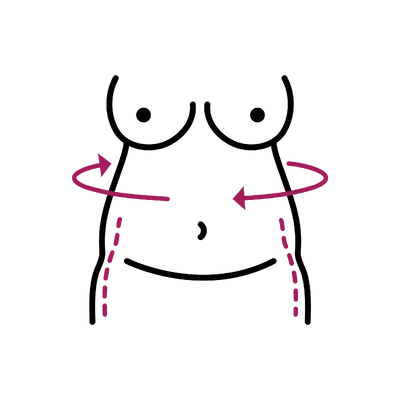
Labiaplasty is surgery that reshapes the labia minora, the inner vaginal lips, by removing excess or uneven tissue. It can ease pain during exercise, cycling, or sex, reduce chafing against clothing, and even out visible asymmetry, and the tissue removed does not grow back. It usually takes one to two hours under local anaesthesia with sedation as a day case.
Every body is shaped differently, so your surgeon plans how much to reduce around your anatomy and what is bothering you. Some women come because something hurts; others simply want to feel more comfortable in their own skin. Either reason is normal, and the consultation is handled with privacy and without judgement.
Results vary from person to person, and the aim is a natural, proportionate shape rather than a single ideal look. Most women with functional discomfort see it resolve, though the final contour takes a few months to settle as swelling fades. A good surgeon removes less rather than more, so the realistic goal is balance and relief, not perfection.
It can address a range of concerns, including:
Am I a Good Candidate for Labiaplasty?
Labiaplasty is straightforward surgery with high satisfaction rates, and suitability mostly comes down to symptoms, timing, and health.
Surgeons look for the functional and cosmetic complaints this procedure reliably resolves.
Functional pain: Good candidates experience discomfort during exercise, cycling, or intercourse caused by excess labial tissue, problems that most patients find significantly improve or fully resolve after reduction, though results vary from person to person.
Chafing and irritation: Friction from fitted clothing, activewear, or swimwear is a classic indication.
Asymmetry or excess tissue: Visible asymmetry or tissue volume causing self-consciousness responds predictably to either trim or wedge techniques.
Hygiene difficulty: Tissue volume that makes hygiene genuinely harder is a recognised functional reason for surgery.
Timing matters more than age in years, and surgeons check two things before agreeing to operate.
Adult tissue maturity: Younger patients should wait until labial tissue has reached adult maturity. Operating on tissue that is still developing risks a result that does not last.
Family plans: A vaginal delivery in the near future can stretch tissues and alter the result. The surgery does not affect childbirth itself, but many patients choose to wait until their family is complete.
No urgency either way: The procedure works equally well later, so waiting costs nothing clinically.
Mucosal tissue heals well, but a few health factors need to be settled before surgery.
Gynae evaluation first: If your concern is primarily functional, a gynaecologist should rule out non-surgical causes before you book an operation.
Skin and infection history: Recurrent vulval or vaginal infections, lichen sclerosus, or other dermatological conditions should be controlled beforehand.
Non-smoker: Nicotine significantly impairs mucosal healing, so you need to stop before surgery.
General health: Good overall health with no active infections at the time of the procedure.
Satisfaction rates are high, and surgeons look for patients who understand what the result will and will not be.
A settling period: The reduction is visible immediately, but swelling conceals the final shape. The contour is close to final by 6-8 weeks, with scars and sensation fully settled over 3-6 months.
Conservative by design: Surgeons prefer to remove less rather than more, since over-resection is far harder to revise. Good candidates accept a proportionate result over a maximal one.
Psychological readiness: Good candidates are doing this for themselves, not under pressure from a partner or anyone else. ACOG and the RCOG both expect motivation to be explored and body dysmorphic concerns ruled out before genital cosmetic surgery, since surgery does not resolve distress that is out of proportion to the anatomy.
Function first: Patients with functional complaints, pain, chafing, hygiene difficulty, usually see significant improvement or full resolution, though this varies from person to person. Purely aesthetic goals should aim for symmetry and proportion, not a single ideal look.
Who is not suitable for labiaplasty?
- Functional symptoms not yet evaluated by a gynaecologist
- Anyone planning a vaginal delivery in the near future
- Tissue still developing in younger patients
- Active vulval or vaginal infections or uncontrolled skin conditions
- Smokers unwilling to stop before surgery
- Untreated body dysmorphia, distress out of proportion to the anatomy, or anyone being pressured into surgery, until psychological readiness is addressed
Pricing
How Much Will Labiaplasty Cost in Thailand?
What labiaplasty costs at accredited hospitals in Thailand, and what your final quote depends on.
Get your exact price
Tell us what you're considering and we'll send a personalised quote from accredited hospitals within 24 hours.
Get my free quoteTypical prices in Thailand
Typical ranges based on recent hospital quotes. Your exact price depends on the hospital and how complex your case is, and is confirmed at your teleconsultation.
Labiaplasty
Labiaplasty removes excess or uneven tissue from the labia minora, the inner vaginal lips, to ease discomfort and even out shape.
| Trim labiaplasty, both sides Trims excess tissue along the outer edge, for maximum reduction and a clean, defined border | $1,800 to $2,500 ฿61,200 to ฿85,000 |
| Wedge labiaplasty, both sides Keeps the natural edge, with a more involved closure | $2,000 to $2,800 ฿68,000 to ฿95,200 |
| Labiaplasty with clitoral hood reduction Reduces the hood at the same time, for balanced proportions | $2,500 to $3,200 ฿85,000 to ฿108,800 |
| Labiaplasty with vaginoplasty A combined package when internal tightening is wanted too | $3,500 to $5,500 ฿119,000 to ฿187,000 |
Get your exact price
Tell us what you're considering and we'll send a personalised quote from accredited hospitals within 24 hours.
Hospitals Trusted for Labiaplasty
From internationally accredited flagships to dedicated specialist hospitals, these are the kinds of facilities where international patients have this procedure.

Bumrungrad International Hospital
Southeast Asia's flagship private hospital, treating over 520,000 international patients a year.
View hospital profile
Kamol Cosmetic Hospital
The only specialist cosmetic surgery hospital in Thailand to hold JCI accreditation.
View hospital profile
Yanhee International Hospital
A 400-bed hospital known worldwide for high-volume cosmetic surgery.
View hospital profile
Get a Free Quote in Two Minutes
Tell us what you're considering. We'll match you with suitable specialists and provide real hospital pricing.
- Honest pricing with no markups
- Matched to a specialist for your procedure
- No obligation, no pressure


Rated 5 stars by our patients
The complete guide to Labiaplasty in Thailand
Everything below is for readers who want the full detail: costs broken down, types and techniques, recovery, risks and safety, and planning your trip.
Labiaplasty Surgeons & Clinics in Thailand
This is a procedure where technique precision matters more than operating scale. Here is what to look for when choosing your surgeon and hospital.
Leading Hospitals in Bangkok
Our partner hospitals are JCI-accredited international facilities in Bangkok with dedicated gynaecological cosmetic departments that handle labiaplasty as a routine procedure. These are full-scale hospitals, not boutique clinics. Private recovery rooms and female nursing staff are standard for intimate procedures, and the environment is clinical and professional.
Experienced Labiaplasty Surgeons
Our partner surgeons hold certification from the Thai Board of Plastic and Reconstructive Surgery or equivalent gynaecological surgical boards. Many have trained internationally and handle a high volume of intimate cosmetic procedures. That volume matters, surgeons who perform labiaplasty regularly develop the judgment to know how much tissue to remove and how to balance symmetry without over-correcting.
What to Look for in a Surgeon
The things that matter most are case volume, demonstrable results, and genuine technique selection. We prioritise surgeons who perform labiaplasty regularly, who can show before-and-after photos of healed results rather than just immediate post-operative images, and who select between trim and wedge based on anatomy instead of defaulting to one. During your consultation, a surgeon who takes time rather than rushing tells you a lot about how the surgery will be approached, and you should feel free to ask anything.
Understanding Your Results
Labiaplasty results are permanent and typically visible within weeks. Here is what to expect at each stage.
Typical Labiaplasty Results
The procedure produces a permanent reduction in labial tissue. Patients who had functional complaints, pain during exercise, chafing from clothing, often report significant improvement or full resolution. Aesthetically, the aim is a more symmetrical, proportionate appearance. Scars in labial tissue tend to heal well due to the area's rich blood supply and can fade to barely visible lines within a few months.
What Results Can You Expect?
You will see an immediate difference in tissue volume, but the final shape takes 3–6 months to fully settle as swelling resolves and scars mature. Your surgeon will discuss the degree of reduction during consultation, using clinical assessment to recommend how much tissue to remove. The consultation is where you confirm that the surgeon's approach aligns with your expectations, be direct about what you want and ask questions.
Labiaplasty Cost in Thailand
Average Cost of Labiaplasty
Labiaplasty in Thailand typically costs between $1,800 and $5,500 depending on the technique used, whether additional procedures are included, and the hospital. A straightforward trim or wedge reduction sits at the lower end. Adding a clitoral hood reduction or combining with vaginoplasty increases the total. Quotes should itemise all components clearly.
Cost Breakdown
The surgeon's fee covers the operative time and technique. Anaesthesia fees cover the sedation or local anaesthetic and monitoring. Hospital fees cover the operating theatre, nursing support, and any day-stay facilities. Aftercare includes follow-up appointments, wound checks, and medications during your recovery in Thailand.
What Affects the Price?
The main factors are the technique used, whether one or both sides need treatment, and whether any additional procedures are performed at the same time. A bilateral trim labiaplasty under local sedation is the most straightforward and lowest cost. Adding clitoral hood reduction, using general anaesthesia, or combining with vaginoplasty all increase the price.
Thailand vs International Price Comparison
Labiaplasty in Thailand costs 40–60% less than equivalent procedures in the US ($5,000–$9,000), Australia (A$4,700–A$8,100), and the UK (£4,000–£6,800). The lower cost reflects Thailand's operating economics, not a difference in surgical quality. Our partner hospitals hold JCI accreditation and surgeons are board-certified by the Thai Board of Plastic and Reconstructive Surgery or equivalent gynaecological boards.
Non-Surgical Alternatives to Labiaplasty
Energy-based devices are the main non-surgical option marketed as an alternative. Radiofrequency and laser "vaginal rejuvenation" treatments heat the surface tissue to tighten it slightly and can mildly improve texture or laxity, while hyaluronic acid filler is sometimes used to plump a deflated or uneven labia majora. These are quick, in-office treatments with little downtime.
The honest limit is that none of them reduce the labia minora, which is what most women come for. Heating or filling tissue cannot remove the excess flap that causes chafing, tugging during sex, or visible protrusion, so they do little for true labial hypertrophy or asymmetry. The effects are modest and temporary, fading over months and needing repeat sessions to maintain, and several major bodies have cautioned that energy devices for genital "rejuvenation" are not well validated for this use.
When the problem is excess or uneven labia minora tissue, surgical labiaplasty is the only route that actually removes it, and the result is permanent because the tissue does not grow back. That structural reduction, by trim or wedge technique, is what the rest of this page covers.
Types of Labiaplasty
There are two established techniques. The choice depends on tissue thickness, how much needs removing, and whether preserving the natural labial edge matters to you.
Trim Labiaplasty
The most widely used method. The surgeon trims excess tissue along the outer edge of the labia minora, creating a straight, symmetrical result. Simple, predictable, and effective for most patients. Removes any darkened or irregular edges in the process.
- Removes excess tissue along the labial border
- Straightforward technique with predictable outcomes
- Eliminates darkened or uneven edges
- Best for: patients wanting maximum reduction with a clean, defined edge
Wedge Labiaplasty
A V-shaped section is removed from the thickest part of the labium, preserving the natural edge. The remaining tissue is sutured together. Preferred by patients who want to keep the original border intact. Slightly more technically demanding but produces a natural contour.
- Preserves the natural labial edge
- Removes volume from the thickest point
- Slightly more complex closure but natural-looking result
- Best for: patients who prefer to retain the natural border and contour
Labiaplasty Techniques
Beyond the trim-versus-wedge decision, there are technical variations that affect precision, healing speed, and scar quality.
Scalpel vs Laser Excision
Traditional scalpel excision remains the most common approach because it gives the surgeon maximum tactile control. Laser excision cauterises as it cuts, which reduces bleeding during the procedure but can cause more thermal tissue damage at the wound edge. Most experienced surgeons prefer scalpel for the cleaner healing profile.
- Scalpel offers precise, clean tissue margins with predictable healing
- Laser reduces intraoperative bleeding but carries a thermal injury risk
- Healing outcomes are generally comparable between the two
- Best for: scalpel suits most cases; laser may suit patients prone to bleeding
Clitoral Hood Reduction
Sometimes performed alongside labiaplasty when excess clitoral hood tissue creates a disproportionate appearance after the labia are reduced. This is an addition to the main procedure, not a standalone operation. The surgeon trims excess hood tissue to balance the overall aesthetic result.
- Addresses residual disproportion after labial reduction
- Performed through the same operative session
- Requires careful technique to preserve sensation
- Best for: patients with prominent clitoral hood tissue relative to the reduced labia
De-Epithelialisation Technique
The surface layer of tissue is removed while preserving the underlying structure, reducing volume without a full-thickness cut. Less commonly used but offers an alternative for patients with mild excess who want minimal disruption. Slower healing than traditional excision.
- Reduces tissue bulk without full-thickness excision
- Preserves deeper tissue layers and blood supply
- Longer healing timeline but less structural disruption
- Best for: mild cases where minimal tissue removal is needed
Labiaplasty Recovery Timeline
Days 1–3
Swelling and tenderness in the treated area are expected. Ice packs and prescribed medication manage discomfort effectively. Wear loose cotton underwear and avoid tight clothing. Your care coordinator checks in daily.
Week 1–2
Swelling reduces noticeably and the initial tenderness eases. Most patients feel comfortable enough for a short flight home after 7 days. Gentle walking is fine but avoid anything that puts friction or pressure on the area.
Weeks 3–6
Gradual return to exercise, starting with low-impact activity, with cycling left until weeks 4–6 because of saddle pressure. Sutures dissolve and the tissue continues settling into its final shape. Sexual activity must wait until your surgeon confirms healing is complete, typically 6 weeks. De-epithelialisation heals more slowly than trim or wedge excision, so allow about an extra week at each milestone if that was your technique.
Months 3–6
Scars typically fade to fine, barely visible lines and sensation usually normalises. The final aesthetic result is apparent by this stage. Most patients report significant improvement in both physical comfort and confidence.
When Can You Fly After Labiaplasty?
Most patients can fly home 7 days after surgery. Labiaplasty is a day case with a relatively short recovery window, and the treated area is not affected by cabin pressure changes. Wear loose clothing and cotton underwear for the flight. Mild swelling may temporarily increase from prolonged sitting, but this resolves within a day of landing.
When Can You Return to Work and Exercise?
Desk work is possible within 5–7 days for most patients. Jobs requiring physical activity or tight-fitting uniforms may need 2–3 weeks. Light walking is encouraged from day one. Running and gym workouts should wait until week 3–4, while cycling should wait longer, usually 4–6 weeks1, because saddle pressure sits directly on the healing area. Sexual activity is off-limits for at least 6 weeks3,4, this is non-negotiable for proper healing. If you had de-epithelialisation rather than trim or wedge excision, add roughly a week to each of these milestones, as it heals more slowly.
When Will You See Final Results?
The initial reduction is visible immediately, but swelling conceals the final shape for several weeks. By 6–8 weeks, most swelling has resolved and the contour is close to final. Complete scar maturation and full sensation recovery take 3–6 months. The tissue in this area tends to heal well due to its rich blood supply, so scars often fade to barely visible lines.
Anaesthesia for Labiaplasty
Labiaplasty in Thailand is usually performed under local anaesthesia with sedation, so you stay awake but deeply relaxed and feel no pain during the procedure. The area is fully numbed and the sedation keeps you calm and drowsy, which avoids the heavier grogginess and longer recovery of a general anaesthetic and is one reason this can be done as a day case.
An anaesthetist or trained team monitors you throughout, and because intimate surgery is involved the setting is private and professional, with female nursing staff standard at our partner hospitals. If a clitoral hood reduction or a combined procedure such as vaginoplasty is added, your surgeon and anaesthetist may recommend general anaesthesia instead, and they decide together based on how much work is involved and your medical history.
Before you are cleared you have a pre-operative assessment, including a review of your health and any medications. You feel nothing during surgery itself, and the soreness afterwards is mild to moderate: more a sense of tenderness and swelling than sharp pain, and well controlled with the medication and ice packs your surgeon provides in the first few days.
Risks and Safety of Labiaplasty
Labiaplasty has a strong safety record when performed by experienced surgeons, but all surgical procedures carry some degree of risk. Here are the specific considerations.
- Over-resection, removing too much tissue (the most common complication of labiaplasty, and difficult to reverse)2
- Wound separation at the suture line
- Chronic pain or sensitivity at the scar (very rare)
- Scarring that thickens rather than fading (uncommon in labial tissue)
Over-resection is the complication that matters most because it cannot be easily corrected. A conservative approach, removing enough to resolve the problem without taking too much, is always preferable. This is why surgeon experience specifically with labiaplasty, rather than general gynaecological surgery, is important.
Is Labiaplasty Safe in Thailand?
Yes, when performed at a JCI-accredited hospital by a board-certified surgeon with specific labiaplasty experience. Thailand's top private hospitals maintain rigorous infection-control and sterilisation standards. The procedure itself has a well-established safety profile.
How to Reduce Your Risk
We match you to surgeons who perform labiaplasty specifically, not just general gynaecological procedures, and we check how they approach tissue measurement and what safeguards they use against over-resection. On your side, the most important thing is to follow aftercare instructions precisely, particularly around hygiene and activity restrictions. Mucosal tissue heals well but is sensitive to friction and infection in the early days. If anything feels wrong during recovery, contact your coordinator immediately rather than waiting.
When Is Revision Surgery Needed?
Revision labiaplasty is uncommon but may be needed if asymmetry persists after swelling resolves, if insufficient tissue was removed, or if a wound separation leaves irregular scarring. Wait at least 6 months before considering revision, the tissue continues to settle and remodel over this period. Over-resection is much harder to revise than under-resection, which is another reason conservative surgery is preferred.
Planning Your Trip to Thailand for Labiaplasty
Labiaplasty requires the shortest Thailand stay of most surgical procedures. Here is how to plan it.
How Long to Stay in Thailand
Plan for a minimum stay of 7 days. This covers your consultation and pre-operative assessment (day 1), the procedure itself (day case, you go back to your hotel the same day), and a follow-up appointment around day 5–7 to check healing before you fly home. Some patients extend to 10 days for additional comfort, but 7 is sufficient for most.
What's Included in a Medical Trip
Your care coordinator arranges hospital transfers, surgery scheduling, and all follow-up appointments. A typical surgical quote covers the surgeon's fee, anaesthesia, theatre costs, and aftercare, though exact inclusions are set by the clinic and confirmed in writing in your quote. Flights and accommodation are separate, but your coordinator can recommend hotels close to the hospital. For labiaplasty specifically, a hotel with a bath (for sitz baths) and easy access to the hospital is ideal.
Recovery in Bangkok vs Phuket
Bangkok is the practical choice. Labiaplasty recovery is short but you need to be near your surgical team for the follow-up appointment, and complications, though uncommon, are easiest to manage when the hospital is 20 minutes away rather than a flight away. There is no medical reason to relocate to Phuket for a 7-day stay.
Related Procedures
Other procedures that address similar goals or conditions, in case one of them is a closer fit for you.
Planning your treatment in Thailand
Independent guides to help you weigh the decision, before you commit to anything.
Common Questions About Labiaplasty
Everything you need to know before your procedure

Medical References
Keep researching with AI
Open this guide in your AI assistant to dig deeper and ask the questions it didn't answer.
Opens in a new tab with this guide already loaded.
Medical disclaimer: This information is for educational purposes only and does not replace professional medical advice. Individual results, recovery times, and suitability vary. Always consult a qualified surgeon before making decisions about treatment.
Ready to Get Started?
No-obligation consultation and quote within 24 hours. Speak with a coordinator who can match you to the right surgeon and hospital.
Speak to Our Team