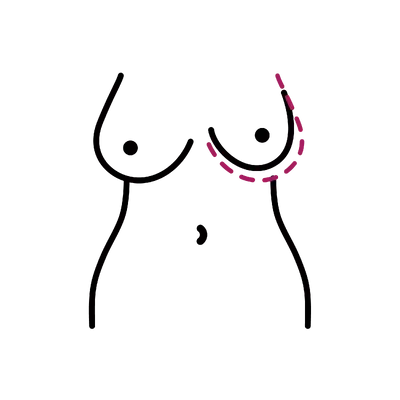
Tuberous Breast Correction in Thailand Your guide to cost, top surgeons & hospitals
The shape you were supposed to have. Reconstructive surgery that finally gives you a normal breast contour.

What Is Tuberous Breast Correction?
Also known as: Breast Shape Correction · Tubular Breast Reconstruction
Tuberous breast correction is reconstructive surgery that reshapes a constricted, tubular breast into a rounded contour by releasing the tight band of tissue at the base and rebuilding the lower pole. Tuberous deformity is a congenital condition present from puberty, giving a narrow base, an underdeveloped lower pole, and often a puffy areola where glandular tissue pushes through the nipple. The surgeon scores the constricting tissue internally so it can expand, reduces the areola to proportion, and usually places an implant for the volume the breast could not form on its own. The final shape takes around six months to settle and then holds long-term.
If you have lived with this shape since your teens, it can feel like something never quite fixable. It is a recognised condition with a clear surgical answer.
Milder cases are often corrected well in one operation. More severe deformity sometimes needs a second stage, and some asymmetry can remain. An honest surgeon will grade how constricted your breasts are and set those expectations at your consultation.
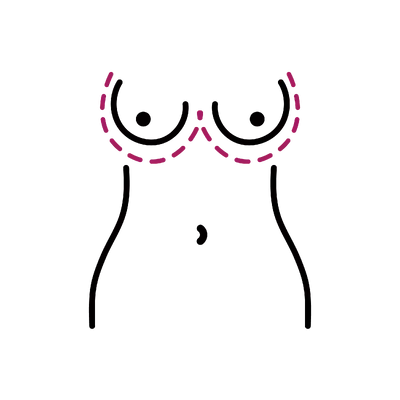
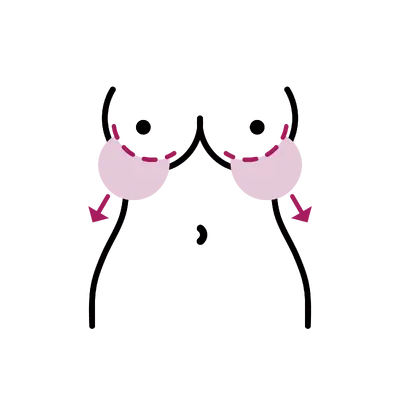
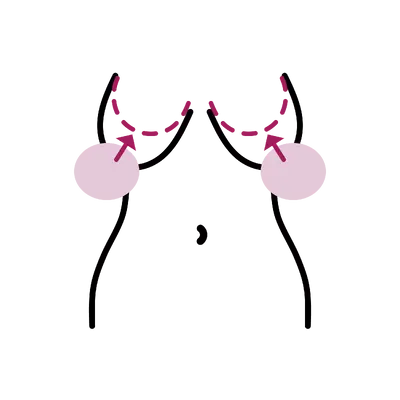
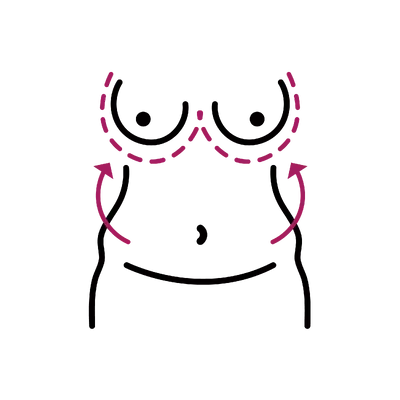
It can address a range of concerns, including:
Am I a Good Candidate for Tuberous Breast Correction?
Tuberous correction is reconstructive surgery, so surgeons assess development, severity grade, and expectations before mapping a plan.
The deformity is congenital, but surgery still waits until breast development is genuinely finished.
Development complete: Candidates are typically 18 or older with breast growth finished and the shape no longer changing.
12 months unchanged: Shape changes within the last year, particularly under 19, are a reason to wait and reassess.
Emotionally prepared: This is reconstructive surgery with a 10-14 day stay and a longer recovery; readiness for the process matters as much as the anatomy.
The Grolleau grade of your deformity determines how much surgery is needed and whether one operation is enough.
Type I: Mild lower-inner constriction, usually corrected with tissue release and an implant, with minimal areola work.
Type II: Full lower-pole constriction needing tissue scoring, areola reduction, and an implant to build the missing contour.
Type III: Total base constriction may require comprehensive reconstruction, sometimes staged over two operations.
Surgeon familiarity: A surgeon who can grade your deformity and show healed cases at a similar grade is part of the suitability check itself.
Prior breast surgery: A previous augmentation or an implant already in place can complicate or rule out the standard periareolar and inframammary release, so flag any earlier surgery before planning.
Both the condition and the correction can affect milk production, so this needs an honest conversation first.
The deformity itself: Underdeveloped glandular tissue often limits milk production before any surgery happens.
Surgical impact: Tissue scoring and areola reduction may reduce breastfeeding ability further.
Counselled choice: If nursing matters to you, your surgeon should explain which techniques preserve the most function before you commit to a plan.
This is reconstruction with higher revision rates than standard augmentation, and good candidates go in knowing that.
Possible second stage: Type III cases commonly need a second operation to refine the result; that is part of the process, not a failure.
Residual asymmetry: Some degree is expected even after a good correction; the goal is a natural rounded contour, not perfection.
Full timeline: Final shape emerges at around 6 months and scars fade over 12-18 months, so commitment to the whole recovery is required.
Who is not suitable for tuberous breast correction?
- Under 18 or breast development still ongoing
- Breast shape that has changed within the past 12 months
- Expecting perfect single-stage symmetry with Type III deformity
- Breastfeeding a priority without counselling on the impact of tissue scoring
- Unwilling to commit to a possible staged process and the full recovery timeline
- Smokers unwilling to quit at least 4 weeks before surgery
- Previous breast augmentation or an implant currently in place, which can complicate or rule out the standard periareolar and inframammary tissue-release approach
- A history of keloid or poor scar healing, given the periareolar and inframammary scars central to the result
Pricing
How Much Will Tuberous Breast Correction Cost in Thailand?
What tuberous breast correction costs at accredited hospitals in Thailand, and what your final quote depends on.
Get your exact price
Tell us what you're considering and we'll send a personalised quote from accredited hospitals within 24 hours.
Get my free quoteTypical prices in Thailand
Typical ranges based on recent hospital quotes. Your exact price depends on the hospital and how complex your case is, and is confirmed at your teleconsultation.
Tuberous Breast Correction
Your surgeon grades the deformity from mild to severe at consultation, and that grade decides how much tissue release and areola work the correction needs.
| Type I, mild tuberous shape Tissue release and an implant, with little areola work | $3,500 to $4,500 ฿119,000 to ฿153,000 |
| Type II, moderate tuberous shape Full lower-pole release, areola reduction and an implant | $4,500 to $6,000 ฿153,000 to ฿204,000 |
| Type III, severe tuberous shape Comprehensive reconstruction, sometimes carried out in two stages | $5,500 to $7,000 ฿187,000 to ฿238,000 |
Added to the above where needed
| Fat grafting Added when the contour needs further softening or refining | $1,000 to $2,000 ฿34,000 to ฿68,000 |
Get your exact price
Tell us what you're considering and we'll send a personalised quote from accredited hospitals within 24 hours.
Hospitals Trusted for Tuberous Breast Correction
From internationally accredited flagships to dedicated specialist hospitals, these are the kinds of facilities where international patients have this procedure.
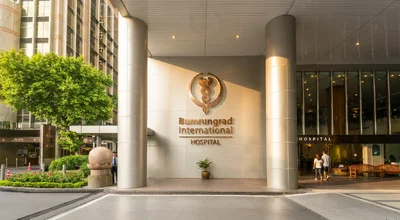
Bumrungrad International Hospital
Southeast Asia's flagship private hospital, treating over 520,000 international patients a year.
View hospital profile
Kamol Cosmetic Hospital
The only specialist cosmetic surgery hospital in Thailand to hold JCI accreditation.
View hospital profile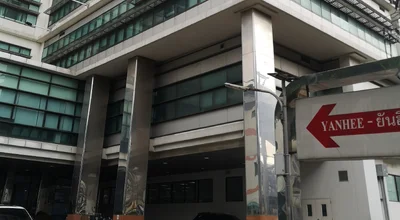
Yanhee International Hospital
A 400-bed hospital known worldwide for high-volume cosmetic surgery.
View hospital profile
Get a Free Quote in Two Minutes
Tell us what you're considering. We'll match you with suitable specialists and provide real hospital pricing.
- Honest pricing with no markups
- Matched to a specialist for your procedure
- No obligation, no pressure


Rated 5 stars by our patients
The complete guide to Tuberous Breast Correction in Thailand
Everything below is for readers who want the full detail: costs broken down, types and techniques, recovery, risks and safety, and planning your trip.
Tuberous Breast Correction Surgeons & Clinics in Thailand
This procedure sits at the intersection of reconstructive and aesthetic surgery. The surgeon needs both skill sets, and that combination is not common.
Leading Hospitals in Bangkok
Our partner hospitals are JCI-accredited facilities with both plastic surgery and reconstructive surgery departments. These leading Bangkok hospitals have the imaging, implant inventory, and operating infrastructure for complex breast reconstruction. These are not clinics; they are full-scale hospitals equipped to handle complications in-house if they arise.
Experienced Tuberous Correction Surgeons
Our partner surgeons are board-certified by the Thai Board of Plastic and Reconstructive Surgery. Tuberous correction falls under reconstructive rather than purely cosmetic work, and the surgeons who handle it best are those who trained in congenital and post-trauma breast reconstruction. Several of our partners completed overseas fellowships focused on breast reconstruction before returning to Thailand's higher-volume surgical environment.
What to Look for in a Surgeon
The most important question is how many tuberous corrections the surgeon has performed. This is a rare condition and many plastic surgeons have limited exposure to it. Ask for before-and-after photos of patients with a similar grade of deformity to yours. A surgeon who can explain the Grolleau classification and discuss how it changes the surgical approach is demonstrating real familiarity. Be cautious of anyone who treats it as a standard augmentation.
Understanding Your Results
Tuberous breast correction produces some of the most dramatic transformations in breast surgery. The change from a constricted, tubular shape to a natural rounded contour is significant.
Typical Tuberous Correction Results
A successful correction replaces the narrow, constricted breast shape with a rounded, proportionate contour. The base is widened, the lower pole fills out, the areola is reduced, and asymmetry between sides is corrected. For patients who have lived with this condition since puberty, the result is often described as finally having normal breasts, which, for this procedure, is precisely the point.
What Results Can You Expect?
Early results are visible immediately but obscured by swelling. The shape refines steadily over 3–6 months as implants settle and tissue adapts. Type I and II cases typically achieve excellent symmetry and contour in a single procedure. Type III cases may need a second operation to refine the outcome. Your surgeon will use pre-operative photos and measurements to set expectations specific to your grade of deformity during the consultation.
Tuberous Breast Correction Cost in Thailand
Average Cost of Tuberous Breast Correction
Tuberous breast correction in Thailand typically costs between $3,500 and $7,000, depending on the severity of the deformity and the combination of techniques required. Mild Type I cases needing tissue release and an implant sit at the lower end. Severe Type III cases requiring comprehensive reconstruction with areola repair, tissue scoring, and potentially fat grafting push toward the upper range.
Cost Breakdown
The surgeon's fee is the largest component and reflects the technical difficulty; this is specialist reconstructive work, not routine augmentation. Hospital fees cover the facility, operating theatre, anaesthesia, and an overnight stay. Implant costs are itemised separately and vary by brand and profile. Aftercare includes drain management, dressing changes, medications, and follow-up appointments with your surgical team.
What Affects the Price?
Severity is the primary cost driver. A Type I correction with minor tissue release and a straightforward implant costs less than a Type III reconstruction involving aggressive scoring, areola repair, and potentially staged procedures. Bilateral correction (both sides) versus unilateral also affects the total. If fat grafting is added to refine contour, that adds an additional component to the cost.
Thailand vs International Price Comparison
Tuberous breast correction in Thailand costs 40–60% less than in the US ($9,800–$17,500), Australia (A$9,100–A$15,800), and the UK (£7,700–£13,300). The savings are particularly pronounced because this is multi-technique reconstructive surgery that carries premium pricing at home. Our partner hospitals hold JCI accreditation with surgeons who carry equivalent board certifications.
Can Tuberous Breasts Be Fixed Without Surgery?
The injectable many patients ask about is fat transfer, where fat is harvested by liposuction and grafted into the breast to add volume and soften the lower pole. Some surgeons also use hyaluronic acid filler or temporary expansion to preview a shape. These can genuinely add a little fullness and, in very mild cases with reasonable existing tissue, improve contour without an implant.
What none of them can do is release the constricting band. The defining feature of a tuberous breast is a tight fibrous ring at the base that prevents the breast spreading and filling its lower pole; nothing injected can cut or expand that ring. Fat grafting on its own also struggles against the constriction, so a portion of the fat is reabsorbed and the puffy, herniated areola is left untouched. Filler is temporary and fades, and repeated grafting still will not widen a constricted base or correct asymmetry.
Because tuberous deformity is a structural, congenital problem rather than a volume one, surgery is the route to a lasting, complete correction. Internal tissue scoring releases the band, the areola is reduced, and an implant or grafted fat then fills the widened base, which is what the rest of this page covers. Fat grafting is best thought of as a refinement step within that surgical plan, not a substitute for it.
Types of Tuberous Breast Correction
The Grolleau classification grades tuberous deformity into three types based on severity. The surgical approach scales accordingly: mild cases need less intervention, severe cases require the full combination.
Type I (Lower Medial Deficiency)
The mildest form. The lower inner quadrant of the breast is underdeveloped, causing slight asymmetry and a minor shape irregularity. The areola may be mildly enlarged but tissue herniation is minimal. Correction usually involves tissue release and an implant, with or without areola adjustment.
- Lower medial pole constriction with mild shape distortion
- Areola may be slightly enlarged but not significantly herniated
- Tissue release plus implant often sufficient for a good outcome
- Best for: mild tuberous deformity where the breast is slightly misshapen but not severely constricted
Type II (Lower Pole Deficiency)
Both lower quadrants are underdeveloped, creating a tighter breast base and more obvious tubular shape. The areola is typically enlarged with some herniation. Surgery requires tissue scoring across the full lower pole, areola reduction, and an implant to establish the rounded contour the breast cannot form on its own.
- Full lower-pole constriction creating a noticeably tubular silhouette
- Areola herniation present, with tissue pushing through the nipple complex
- Requires tissue release, areola reduction, and implant placement
- Best for: moderate tuberous deformity with clear constriction across both lower quadrants
Type III (Total Breast Constriction)
The most severe form. The entire breast base is constricted with minimal tissue development, significant herniation, and often marked asymmetry between sides. Correction is full reconstruction: aggressive tissue release, areola reduction, implant placement, and potentially fat grafting or tissue expansion. Some cases are staged across two operations.
- Severe constriction of the entire breast base with very narrow footprint
- Major areola herniation and significant asymmetry between breasts
- Multi-technique reconstruction, sometimes staged over two procedures
- Best for: severe tuberous deformity requiring comprehensive reconstruction to create a natural breast shape
Tuberous Breast Correction Techniques
Most corrections combine all three of these techniques in one operation. The extent of each depends on the severity of the deformity.
Internal Tissue Release and Scoring
The constricting ring of tissue at the breast base is scored radially, cut in a spoke-like pattern from the inside. This allows the breast tissue to fan outward and fill the lower pole that was previously undeveloped. It is the foundational step without which the breast cannot achieve a rounded shape, even with an implant.
- Radial scoring of the constricting fibrous ring through an inframammary or periareolar approach
- Tissue fans outward creating the lower pole volume that was missing
- Combined with capsulotomy or pocket adjustment if tissue resistance is significant
- Best for: every grade of tuberous deformity; this step is almost always required
Areola Reduction and Herniation Repair
The herniated glandular tissue is pushed back behind the chest wall and the areola is trimmed to a proportionate diameter. A periareolar purse-string suture maintains the smaller size and prevents tissue from herniating again. Without this step, the puffy areola persists regardless of what else is done.
- Herniated tissue repositioned behind the areola and anchored internally
- Excess areola tissue excised to reduce diameter to breast proportion
- Purse-string closure prevents re-herniation and stretching over time
- Best for: tuberous cases with areola enlargement and tissue herniation through the nipple complex
Implant Placement for Volume and Shape
A breast implant provides the volume and lower-pole fullness the breast cannot generate from its own tissue. Round, high-profile implants are commonly used because they project well into the lower pole and counteract the constricted base. Dual-plane placement is typical: partly behind the muscle, partly behind the released glandular tissue.
- Round high-profile implants preferred for lower-pole projection
- Dual-plane placement allows the implant to fill the released lower pole
- Implant size selected to match the corrected breast footprint, not just desired volume
- Best for: providing volume and defining the breast shape after tissue release has widened the base
Fat Grafting (Autologous Fat Transfer)
Fat is harvested by liposuction, usually from the abdomen or thighs, and grafted into the breast to soften the lower-pole transition, smooth the edge of an implant, and refine contour after the constricting band has been released. In milder cases with adequate existing tissue, grafting is sometimes used on its own to fill the widened base without an implant. Some of the grafted fat is reabsorbed, so a second session is occasionally needed for the final result.
- Uses your own fat to refine contour and blend the lower-pole transition
- Can be combined with an implant or, in mild cases, used as an implant-free correction
- Some reabsorption is normal, so a top-up session is occasionally required2
- Best for: softening implant edges, refining asymmetry, or correcting milder deformity without an implant
Tuberous Breast Correction Recovery Timeline
Week 1
The breasts will be swollen and sit high on the chest. This is more pronounced than standard augmentation because of the internal tissue release and reshaping. Moderate discomfort is managed with prescribed medication. Drains may be placed and removed within the first few days. Sleep semi-elevated on your back, not on your side or front, and plan to keep doing so for 4–6 weeks to protect the repair and reduce swelling. Daily check-ins with your coordinator at your hotel.
Weeks 2–4
Swelling starts to subside and the new breast shape begins to emerge. The implants drop gradually into a lower, more natural position. The areola reduction is visible but still healing. Light daily activities and desk work can resume. Most patients are cleared to drive around 2–4 weeks, once they are off prescription pain medication and can brace, steer, and do an emergency stop without chest or shoulder pain, subject to surgeon clearance. No heavy lifting, overhead reaching, or chest exercises.
Months 1–3
The reconstructed breast continues settling. Lower-pole fullness becomes more defined as the tissue adapts to the implant and the scored tissue stabilises. Scars around the areola and in the breast fold are maturing. Moderate exercise can resume from about six weeks. The improvement from the pre-operative shape is striking by this stage.
Month 6+
Final breast shape and implant position are established. The tissue release is fully healed, the areola has settled to its corrected size, and scars are fading. For patients with significant pre-operative deformity, the difference is substantial. Any decision about revision or second-stage work is made from this point.
When Can You Fly After Tuberous Breast Correction?
Most patients can fly home 10–14 days after surgery. The internal tissue release needs time to stabilise, and drains (if used) must be removed before travel. Healing is assessed at a follow-up appointment before you are cleared to fly. Wear a supportive surgical bra for the flight and avoid carrying heavy luggage through the airport.
When Can You Return to Work and Exercise?
Desk work can resume after 10–14 days, once the initial swelling and discomfort subside. Walking from day one is encouraged. Gym workouts and exercise should wait until 4–6 weeks. Chest exercises, heavy lifting, and anything that stretches the pectoral muscles should be avoided for at least 8 weeks. The tissue release needs that time to heal and stabilise in its new position.
When Will You See Final Results?
You will see a dramatic improvement as soon as the surgical bra is removed, but the breasts will be swollen and sitting high. The shape improves progressively over 3–6 months as the implants settle and the released tissue adapts. Final results, including areola size, breast contour, and lower-pole fullness, are typically visible at 6 months. Scars continue fading for 12–18 months.
Anaesthesia for Tuberous Breast Correction
Tuberous breast correction is performed under general anaesthesia1, so you are fully asleep and feel nothing for the whole operation. Because this is reconstructive work that combines tissue release, areola repair, and implant placement in one session, it tends to take longer than a routine augmentation, and a consultant anaesthetist stays with you and monitors you continuously throughout. That is standard at the accredited hospitals we work with.
You will have a pre-operative assessment before you are cleared, including blood tests and a review of any medication you take, and the anaesthetist confirms you are fit for a procedure of this length. There is no awake or sedation-only option here; the internal scoring and reshaping need you fully under for the surgeon to work safely and precisely.
You feel nothing during surgery. When you wake, the sensation across the chest is more a deep tightness and pressure than sharp pain, and it is usually more noticeable than after standard augmentation because of the tissue release. It is well controlled with the medication your surgeon prescribes, and most patients are comfortable on simpler pain relief by the end of the first week.
Risks and Safety of Tuberous Breast Correction
This is among the more complex breast surgeries, which means the risk profile reflects multiple techniques combined in one session. Understanding these risks before committing is essential.
- Residual asymmetry that may warrant revision (some degree is expected)
- Haematoma (blood collection) or seroma (fluid build-up) in the released pocket, sometimes needing drainage
- Infection around the implant or incisions, which combined tissue release plus an implant under general anaesthesia makes a real risk1,3
- Capsular contracture around the breast implant1,3
- Recurrence of tissue herniation through the areola if internal sutures fail
- Temporary or permanent changes in nipple sensation from periareolar work1,3
- Visible scarring around the areola or in the breast fold
- Implant malposition as tissue adapts to the released breast base
- Reduced or lost breastfeeding ability from tissue scoring and areola surgery1
- Need for a second-stage procedure to refine the result
Revision rates for tuberous correction are higher than for standard augmentation because the anatomy is more variable and harder to predict. Your surgeon should discuss the likelihood of needing a second operation as part of the initial planning conversation.
Is Tuberous Breast Correction Safe in Thailand?
Yes. Performed at a JCI-accredited hospital by a board-certified plastic surgeon, tuberous correction in Thailand meets the same safety standards as Western centres. The key is selecting a surgeon with specific tuberous deformity experience; this is not standard augmentation and should not be treated as such. Our partner surgeons have the reconstructive training this procedure requires.
How to Reduce Your Risk
Surgeon selection is the single biggest risk-reduction factor. Verify your surgeon has treated tuberous deformity cases specifically, not just general breast augmentation. Ask to see before-and-after photos of tuberous patients with similar grades of deformity. A JCI-accredited hospital provides the infection control and emergency protocols needed for longer, more complex procedures. Pre-operative imaging helps the surgeon plan the extent of tissue release accurately.
When Is a Second Procedure Needed?
Revision or staged procedures are more common with tuberous correction than with standard breast surgery. The tissue may not respond exactly as planned to the release, or residual asymmetry may need addressing once the first operation has healed. Most surgeons advise waiting 6–12 months before assessing whether additional work is warranted. A second procedure is not a failure; it is part of the reconstructive process for complex cases.
Planning Your Trip to Thailand for Tuberous Breast Correction
Plan for 10–14 days in Thailand. This is reconstructive surgery with a longer initial recovery window than standard augmentation.
How Long to Stay in Thailand
Allow a minimum of 10–14 days. Pre-operative assessment takes longer for tuberous cases because the surgeon needs to grade the deformity, plan the tissue release, size the implants, and assess the areola correction needed. Surgery is followed by one night in hospital. The remaining days cover drain removal, dressing changes, and a follow-up appointment where your surgeon evaluates the early result before clearing you to fly.
What's Included in a Medical Trip
Your coordinator manages the full schedule: hospital transfers, surgical appointments, drain check-ins, and follow-up visits. The surgical quote covers the surgeon's fee, anaesthesia, implants, hospital stay, post-operative medications, and aftercare. Flights and accommodation are separate. Your coordinator can recommend recovery-friendly hotels near the hospital, which matters more for this procedure than for simpler ones.
Recovery in Bangkok vs Phuket
Stay in Bangkok for the entire recovery period. Tuberous correction involves tissue release and implant placement, and the first two weeks are when complications, if they arise, would show up. Being close to your surgical team is not optional for a procedure of this complexity. Some patients add a few relaxation days in Phuket after their final follow-up, but only once the surgeon has confirmed everything is healing as planned.
Related Procedures
Other procedures that address similar goals or conditions, in case one of them is a closer fit for you.
Planning your treatment in Thailand
Independent guides to help you weigh the decision, before you commit to anything.
Common Questions About Tuberous Breast Correction
Everything you need to know before your procedure

Medical References
Keep researching with AI
Open this guide in your AI assistant to dig deeper and ask the questions it didn't answer.
Opens in a new tab with this guide already loaded.
Medical disclaimer: This information is for educational purposes only and does not replace professional medical advice. Individual results, recovery times, and suitability vary. Always consult a qualified surgeon before making decisions about treatment.
Ready to Get Started?
Speak with our care coordinators for a free, no-obligation consultation and personalised quote.
Speak to Our Team