Gynecomastia Surgery in Thailand Your guide to cost, top surgeons & hospitals
A flat chest should not be something you have to think about. For most men, one procedure makes it permanent.

What Is Gynecomastia Surgery?
Also known as: Man Boob Removal · Male Breast Reduction
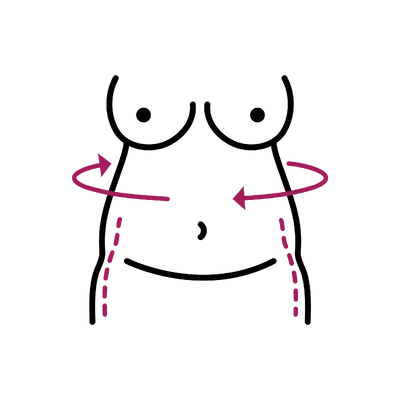
Gynecomastia surgery is an operation that flattens an enlarged male chest by removing the excess glandular tissue, the surplus fat, or both. It treats the firm disc behind the nipple and the fatty fullness around it, using liposuction for the fat and a small incision along the areola edge to remove the gland. Often called male breast reduction, it usually takes 1.5 to 2.5 hours under general anaesthesia. Glandular tissue does not grow back, so for most men the result lasts.
This is more common than most men realise, and once a gland has formed diet or training rarely shifts it. Your surgeon assesses how much of the fullness is fat and how much is gland, then plans the technique around your chest. It is handled quietly, as routine.
How much can be done in one operation depends on how much loose skin you have and how elastic it is. Mild cases often need only liposuction; heavier cases may need some skin removed too, leaving a flatter shape but more scarring. A physical assessment is the only way to say which path fits you.
It can address a range of concerns, including:
Am I a Good Candidate for Gynecomastia Surgery?
Gynecomastia surgery is reliable, but the right candidate at the right time matters; these are the things surgeons screen for first.
Adolescent gynecomastia often resolves on its own, so timing is the first question surgeons ask.
Tissue stability: if you are still in puberty, or your breast tissue has been stable for under a year, surgery is usually deferred.
Pubertal cases: sometimes resolve naturally within 1-2 years, which is why operating early risks treating something that would have settled itself.
Adult persistence: in adults, persistent enlargement involving glandular tissue rarely improves without surgery, and diet and exercise cannot remove the gland.
Operating while the cause is still active invites recurrence, and pathology must be ruled out first.
No causative substances: anabolic steroids, recreational drugs, or medications known to cause breast tissue growth make recurrence likely unless they are addressed first.
Lumps examined: a breast lump, asymmetry, or one-sided change needs a doctor's examination to rule out breast pathology before any cosmetic surgery.
Full disclosure: all medications, supplements, and steroid history should be shared at consultation, because they directly affect tissue composition and the surgical plan.
Good candidates have the concerns this surgery reliably and permanently resolves.
Puffy or protruding nipples: resolve completely once the glandular disc behind the nipple is excised.
Visible through shirts: enlarged tissue that shows through clothing flattens to a masculine chest contour.
Avoidance habits: skipping pools, beaches, and changing rooms is one of the most common reasons men seek this surgery, and the confidence change tends to be outsized.
Diet-resistant tissue: exercise can reduce chest fat but cannot eliminate glandular tissue, which is why the problem persists at any weight.
Gynecomastia is graded I-IV, and the grade drives the surgical plan and your expectations.
Fatty versus glandular: mild, primarily fatty cases with elastic skin suit liposuction alone; a firm glandular disc needs excision, because liposuction cannot remove gland.
Skin excess: very pendulous tissue with significant excess needs skin reduction and possibly nipple repositioning for a flat result.
Stable weight: candidates are at a stable weight in good overall health, which keeps the assessment, and the result, reliable.
Who is not suitable for gynecomastia surgery?
- Still in puberty or under 21 with unstable breast tissue
- Active anabolic steroid use or causative medication not yet addressed
- Unexamined breast lump, asymmetry, or one-sided change
- Weight not yet stable
- Smokers unwilling to stop at least four weeks before surgery
- Significant uncontrolled heart or lung disease, or otherwise not medically fit for general anaesthesia
- Bleeding or clotting disorders, or conditions that impair wound healing
Pricing
How Much Will Gynecomastia Surgery Cost in Thailand?
What gynecomastia surgery costs at accredited hospitals in Thailand, and what your final quote depends on.
Get your exact price
Tell us what you're considering and we'll send a personalised quote from accredited hospitals within 24 hours.
Get my free quoteTypical prices in Thailand
Typical ranges based on recent hospital quotes. Your exact price depends on the hospital and how complex your case is, and is confirmed at your teleconsultation.
Gynecomastia Surgery
Your grade comes down to how much of the swelling is fat rather than firm gland, and how well the skin will shrink back afterwards.
| Grade I, liposuction only Fatty breast tissue removed through small incisions, skin still elastic | $1,900 to $2,600 ฿66,000 to ฿88,000 |
| Grade II, excision with liposuction Firm glandular tissue cut out alongside the fatty layer | $3,000 to $4,000 ฿102,000 to ฿136,000 |
| Grade III to IV, excision with skin reduction Excess skin removed and the nipple repositioned as well | $4,000 to $5,000 ฿136,000 to ฿170,000 |
Get your exact price
Tell us what you're considering and we'll send a personalised quote from accredited hospitals within 24 hours.
Hospitals Trusted for Gynecomastia Surgery
From internationally accredited flagships to dedicated specialist hospitals, these are the kinds of facilities where international patients have this procedure.

Rattinan Clinic
A specialist body contouring clinic in central Bangkok with over 14,000 BodyTite treatments performed.
View hospital profile
Kamol Cosmetic Hospital
The only specialist cosmetic surgery hospital in Thailand to hold JCI accreditation.
View hospital profile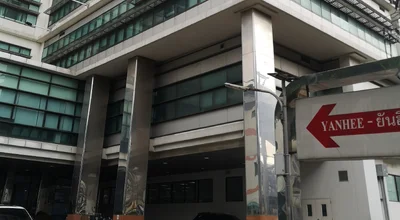
Yanhee International Hospital
A 400-bed hospital known worldwide for high-volume cosmetic surgery.
View hospital profile
Get a Free Quote in Two Minutes
Tell us what you're considering. We'll match you with suitable specialists and provide real hospital pricing.
- Honest pricing with no markups
- Matched to a specialist for your procedure
- No obligation, no pressure


Rated 5 stars by our patients
The complete guide to Gynecomastia Surgery in Thailand
Everything below is for readers who want the full detail: costs broken down, types and techniques, recovery, risks and safety, and planning your trip.
Gynecomastia Surgeons & Clinics in Thailand
Gynecomastia is technically straightforward, but the difference between a good result and a great one comes down to contour judgment. Here is what we screen our partner surgeons for.
Leading Hospitals in Bangkok
Our partner hospitals treat gynecomastia as a standard procedure within their plastic surgery departments. These are JCI-accredited full-scale hospitals with day-case and overnight facilities. Male cosmetic procedures are handled with the same clinical professionalism as any other surgical case.
Experienced Gynecomastia Surgeons
Our partner surgeons are certified by the Thai Board of Plastic and Reconstructive Surgery. They handle gynecomastia across all grades, from simple liposuction cases to severe skin-reduction procedures. The volume of male chest contouring cases they see annually builds the kind of aesthetic judgment that helps avoid over-resected craters and aims for a flat, natural-looking chest contour.
What to Look for in a Surgeon
When we screen partner surgeons for gynecomastia, we look for a body of before-and-after results across body types and grades, and a systematic approach to assessing tissue composition rather than defaulting to one technique for every patient. A good surgeon will not claim liposuction alone fixes obvious glandular tissue, and will have a considered approach to contouring the chest edges, which is where most contour defects originate. At consultation you are welcome to see relevant before-and-after photos and discuss the planned technique for your case.
Understanding Your Results
Gynecomastia surgery produces immediate, visible changes. Here is what the progression looks like and what a realistic outcome involves.
Typical Gynecomastia Surgery Results
The procedure produces a flat, masculine chest contour. Puffy or protruding nipples resolve completely when the underlying gland is excised. Patients who avoided taking their shirt off report the psychological impact as one of the most significant outcomes, the surgery itself is relatively minor, but the change in daily confidence is substantial. Results are permanent because glandular tissue does not regenerate.
What Results Can You Expect?
You will see a visibly flatter chest as soon as the compression vest comes off, though swelling means the final shape takes 3–6 months to settle. Your surgeon will assess the tissue composition during consultation, the ratio of fat to gland determines the technique and the expected outcome. Men with primarily fatty gynecomastia and good skin elasticity tend to see the smoothest results with minimal scarring.
Gynecomastia Surgery Cost in Thailand
Average Cost of Gynecomastia Surgery
Gynecomastia surgery in Thailand typically costs between $1,900 and $5,000, depending on the technique, severity, and hospital. Liposuction-only cases for mild gynecomastia sit at the lower end. Combined excision and liposuction for moderate cases falls mid-range. Severe cases with skin reduction cost more due to the longer operating time and additional complexity.
Cost Breakdown
A typical quote breaks down into a surgeon's fee for the operative time and technique, anaesthesia fees for the sedation or general anaesthetic and monitoring, and hospital fees for the operating theatre, nursing support, and any overnight stay if required. Aftercare usually covers follow-up appointments, wound checks, compression vest fitting, and medications during your recovery in Thailand. Exact inclusions are set by the clinic and confirmed in writing in your quote.
What Affects the Price?
The grade of gynecomastia is the primary cost driver. Grade I cases treated with liposuction alone are the least expensive, shorter operating time, minimal incisions, and often performed as a day case. Grade II cases requiring gland excision add cost through the additional surgical step. Grade III–IV cases with skin reduction are the most expensive due to longer operating time, more complex closure, and sometimes an overnight stay.
Thailand vs International Price Comparison
Gynecomastia surgery in Thailand costs 40–60% less than equivalent procedures in the US ($7,000–$12,500), Australia (A$6,500–A$11,300), and the UK (£5,500–£9,500). The procedure is classified as cosmetic in most countries and rarely covered by insurance, making the savings particularly relevant. Our partner hospitals hold JCI accreditation.
Non-Surgical Alternatives to Gynecomastia Surgery
Non-surgical fat reduction is heavily marketed for a fuller male chest, mainly fat freezing (cryolipolysis) and fat-dissolving injections such as deoxycholic acid. Both target subcutaneous fat without surgery or downtime, and for a chest that is genuinely just fatty, with no firm gland, they can take the edge off the fullness over a course of several sessions.
The catch is the one thing that defines true gynecomastia: the firm glandular disc behind the nipple. Neither fat freezing nor injections can remove gland, so if a gland is present, the puffiness and the protruding nipple stay no matter how many sessions you have. These treatments are also gradual and partial, results are modest, several sittings are usually needed, and they cannot tighten loose skin or correct asymmetry. For most men the fullness they want gone is at least partly glandular, which is exactly why these options disappoint.
If your enlargement involves any gland, or you want a flat, defined chest in one step rather than a slow, uncertain reduction, surgery is the route that actually removes the tissue for good. Liposuction handles the fat and a small periareolar excision removes the gland, which is what the rest of this page covers.
Types of Gynecomastia Surgery
Gynecomastia is graded by severity. The grade determines the technique, the extent of surgery, and the recovery profile. Getting the grade assessment right during consultation is what drives the surgical plan.
Grade I, Liposuction Only
For mild gynecomastia where enlargement is primarily fatty tissue with minimal glandular involvement and no skin excess. Small cannulas remove fat through 3–5mm incisions that leave virtually no visible marks. Skin retracts naturally. Quickest recovery of all three approaches.
- Minimally invasive with tiny, virtually invisible incisions
- Relies on good skin elasticity for natural retraction
- Fastest recovery, most patients return to desk work within days
- Best for: mild fatty gynecomastia with firm, elastic skin
Grade II, Excision with Liposuction
The most common approach. Liposuction reduces the fatty component, then the firm glandular disc behind the nipple is excised through a periareolar incision. This combination is needed because liposuction cannot remove glandular tissue, it only handles fat. The periareolar scar heals discreetly along the areola border.
- Addresses both fat and glandular tissue in one procedure
- Periareolar incision follows the natural areola boundary
- Resolves puffy or protruding nipple appearance
- Best for: moderate gynecomastia with both fatty and glandular components
Grade III–IV, Excision with Skin Reduction
For severe gynecomastia with significant volume and excess skin that will not retract on its own. After removing tissue and fat, excess skin is excised and the nipple-areola complex may be repositioned. More visible scarring is unavoidable but placed as discreetly as possible.
- Addresses severe enlargement with skin excess
- Nipple repositioning when significant descent has occurred
- Aims for a flat, defined chest contour even in advanced cases
- Best for: severe gynecomastia where skin will not retract after tissue removal
Gynecomastia Surgery Techniques
The technical approach varies based on tissue composition, skin quality, and how much reshaping is needed beyond simple tissue removal. Here is what each technique involves.
VASER Liposuction for Gynecomastia
VASER uses ultrasonic energy to emulsify fat before suctioning, allowing more precise contouring than standard liposuction. Particularly useful for gynecomastia because it allows the surgeon to sculpt the chest contour, feathering the edges to avoid a scooped-out appearance. Also promotes some skin retraction through thermal effect.
- More precise fat removal and chest contouring than standard liposuction
- Promotes modest skin tightening through thermal effect
- Less bleeding and bruising than traditional liposuction
- Best for: fatty gynecomastia where precise chest sculpting is wanted
Power-Assisted Liposuction (PAL)
PAL uses a cannula with a rapidly vibrating tip to break up fat as it suctions. The mechanical movement makes it easier to work through the dense, fibrous fat common in the male chest, where standard liposuction can struggle. It tends to mean less surgeon fatigue, more even removal, and often less bruising than traditional technique. It is frequently combined with gland excision rather than used alone.
- Vibrating cannula handles the dense, fibrous fat typical of the male chest
- More even fat removal and often less bruising than standard liposuction
- Commonly paired with periareolar gland excision in moderate cases
- Best for: fatty or mixed gynecomastia with firm, fibrous chest tissue
Pull-Through Gland Excision
A technique where the glandular disc is separated from surrounding tissue and pulled out through the periareolar incision after liposuction has removed the fatty component. Efficient and minimises tissue handling. The incision follows the areola edge and heals to become virtually invisible within months.
- Removes glandular tissue through a small periareolar access point
- Combined with liposuction for comprehensive tissue removal
- Minimal scarring, scar follows the natural areola border
- Best for: moderate gynecomastia with a defined glandular disc behind the nipple
Free Nipple Graft Technique
Reserved for the most severe cases where the nipple-areola complex needs to be completely repositioned. The nipple is removed as a graft, the excess tissue and skin are excised, and the nipple is reattached in its new position. Loss of nipple sensation is expected. This is the most invasive approach but the only option for extreme cases.
- Complete chest reshaping for extreme cases
- Nipple detached and grafted to a new, anatomically correct position
- Permanent loss of nipple sensation is expected
- Best for: severe gynecomastia with extreme skin excess and nipple descent
Gynecomastia Surgery Recovery Timeline
Days 1–3
Chest tightness, swelling, and bruising around the nipple and pectoral area. You will wear a compression vest continuously to support the tissue and minimise fluid accumulation. Pain is mild to moderate and well-managed with prescribed medication. Your care coordinator checks in daily.
Week 1–2
Bruising fades and tightness softens noticeably. Most patients feel comfortable enough for light activities and desk work within 7–10 days. You will attend a follow-up appointment before flying home. The compression vest stays on, typically for 4–6 weeks total.
Weeks 3–6
Visible chest contour improves as residual swelling reduces. Light cardio and lower-body exercise can resume around week 3. Avoid chest-specific workouts, heavy pressing movements, and contact sports until your surgeon clears you, typically around week 6.
Months 3–6
Your definitive chest shape is visible as the last swelling resolves and scars mature to thinner, paler lines. Periareolar scars become very difficult to detect. Most men see their final result by month 3–4, though subtle refinements can continue to month 6.
When Can You Fly After Gynecomastia Surgery?
Most patients can fly home 7–10 days after surgery, once their follow-up appointment confirms healing is progressing well. The compression vest is worn during the flight. Cabin pressure does not affect the surgical result. Mild swelling may increase temporarily during the flight due to reduced movement, this is normal and resolves within a day. The main reason to wait the full 7–10 days is the small but real risk of deep vein thrombosis (a clot in the leg) and pulmonary embolism, which surgery and long periods of sitting both raise. On the flight home, keep hydrated, walk the aisle every hour or two, and do regular calf flexes. Sudden calf pain or swelling, breathlessness, or chest pain needs urgent medical attention.
When Can You Return to the Gym?
Light walking from day one. Lower-body and light cardio exercise can resume around week 2–3. Upper-body workouts, chest pressing movements, and heavy lifting should wait until week 6 with surgeon approval. This is a hard restriction, not a suggestion, chest muscle engagement too early can cause fluid accumulation or disrupt the repair. Most men are back to full training by week 8.
When Will You See Final Results?
You will notice a flatter chest immediately after surgery, but swelling masks the final contour for several weeks. By 4–6 weeks, the improvement is obvious and most of the swelling has resolved. The definitive result, including scar maturation and final contour, is typically visible by 3–6 months.2 Patients with thicker chest skin may see continued subtle improvement beyond this.
Anaesthesia for Gynecomastia Surgery
Gynecomastia surgery in Thailand is performed under general anaesthesia, so you are fully asleep and feel nothing for the whole operation, whether it is liposuction alone or liposuction combined with gland excision. A consultant anaesthetist stays with you throughout and monitors you continuously, which is standard at the accredited hospitals we work with.
Because the procedure is often short and sometimes a day case, patients sometimes ask about lighter sedation. For most chest cases the surgeon and anaesthetist still favour general anaesthesia, as it keeps you completely still and comfortable while the gland is removed and the contour is shaped. They make that call together, based on how much work your chest needs and your medical history.
Before you are cleared, you have a pre-operative assessment including blood tests and a review of any medications, supplements, or steroid use, since these affect both safety and the surgical plan. You feel nothing during surgery, and once you wake the sensation is tightness and soreness rather than sharp pain, eased by the compression vest and the medication your surgeon prescribes.
Risks and Safety of Gynecomastia Surgery
Gynecomastia surgery has a strong safety record and one of the lower complication rates among body procedures. That said, specific risks exist and should be understood before proceeding.
- Contour irregularities or a scooped-out appearance (usually from over-resection)1
- Asymmetry between left and right chest
- Haematoma or seroma requiring drainage
- Temporary or prolonged numbness around the nipple
- Infection at incision or liposuction entry sites
- Under-correction leaving residual tissue (uncommon)
- Scarring that thickens or widens (varies by technique and skin type)
- Permanent nipple sensation loss (primarily with free nipple graft technique)1
- Deep vein thrombosis or pulmonary embolism, a small but serious risk after surgery that the long-haul flight home can add to1
The most visible complication in gynecomastia surgery is a contour defect, typically a crater or scooped-out depression from removing too much tissue. Experienced surgeons avoid this by feathering the tissue removal and blending the chest contour into the surrounding anatomy. This is a judgment skill that improves with case volume.
Is Gynecomastia Surgery Safe in Thailand?
Yes. Gynecomastia surgery is a low-complexity procedure when performed by board-certified surgeons at JCI-accredited hospitals. Our partner facilities hold JCI accreditation, which sets international benchmarks for infection control and patient monitoring. The procedure's overall complication rate is among the lowest in cosmetic surgery.
How to Reduce Your Risk
Choose a surgeon with specific gynecomastia experience, ideally someone who treats it frequently rather than occasionally. Disclose all medications, supplements, and steroid use during consultation, as these directly affect tissue composition and surgical planning. Wear your compression vest consistently for the full prescribed period. Follow exercise restrictions exactly, returning to chest workouts too early is the most common patient-side contributor to complications.
Can Gynecomastia Return After Surgery?
Glandular tissue that is surgically removed does not regrow.3 However, new fat deposition can occur in the chest area with significant weight gain. Anabolic steroid use or certain medications can also cause tissue changes after surgery. Maintaining a stable weight and avoiding known hormonal triggers preserves the result permanently for the vast majority of patients.
Planning Your Trip to Thailand for Gynecomastia Surgery
Gynecomastia surgery requires one of the shortest Thailand stays of any body procedure. Here is how to plan it efficiently.
How Long to Stay in Thailand
Plan for 7–10 days. This covers your consultation and pre-operative assessment (day 1), surgery (day case or one overnight stay), and a follow-up appointment around day 5–7 to check wound healing and confirm you are fit to fly. The short recovery makes this one of the easiest procedures to combine with a short trip.
What's Included in a Medical Trip
Your care coordinator handles hospital transfers, surgery scheduling, and all follow-up appointments. A typical surgical quote covers the surgeon's fee, anaesthesia, theatre costs, compression vest, and aftercare, though exact inclusions are set by the clinic and confirmed in writing in your quote. Flights and accommodation are separate, but your coordinator can recommend hotels close to the hospital. A compression vest is normally fitted before you leave the hospital.
Recovery in Bangkok vs Phuket
Bangkok is the obvious choice for a 7–10 day trip. You are close to the hospital for your follow-up, and if anything unexpected comes up, your surgical team is nearby. The recovery is light enough that you can enjoy Bangkok comfortably, dining out, gentle walking, sightseeing, from day 3–4 onwards. There is no practical reason to relocate for such a short stay.
Related Procedures
Other procedures that address similar goals or conditions, in case one of them is a closer fit for you.
Planning your treatment in Thailand
Independent guides to help you weigh the decision, before you commit to anything.
Common Questions About Gynecomastia Surgery
Everything you need to know before your procedure
More About Gynecomastia Surgery

Medical References
Keep researching with AI
Open this guide in your AI assistant to dig deeper and ask the questions it didn't answer.
Opens in a new tab with this guide already loaded.
Medical disclaimer: This information is for educational purposes only and does not replace professional medical advice. Individual results, recovery times, and suitability vary. Always consult a qualified surgeon before making decisions about treatment.
Ready to Get Started?
No-obligation consultation and quote within 24 hours. Speak with a coordinator who can match you to the right surgeon and hospital.
Speak to Our Team