Calves & Ankles Liposuction in Thailand Your guide to cost, top surgeons & hospitals
Slim lower legs are mostly a matter of genetics. When exercise cannot change them, precision surgery can.
What Is Calves & Ankles Liposuction?
Also known as: Calf Slimming · Calf and Ankle Lipoplasty
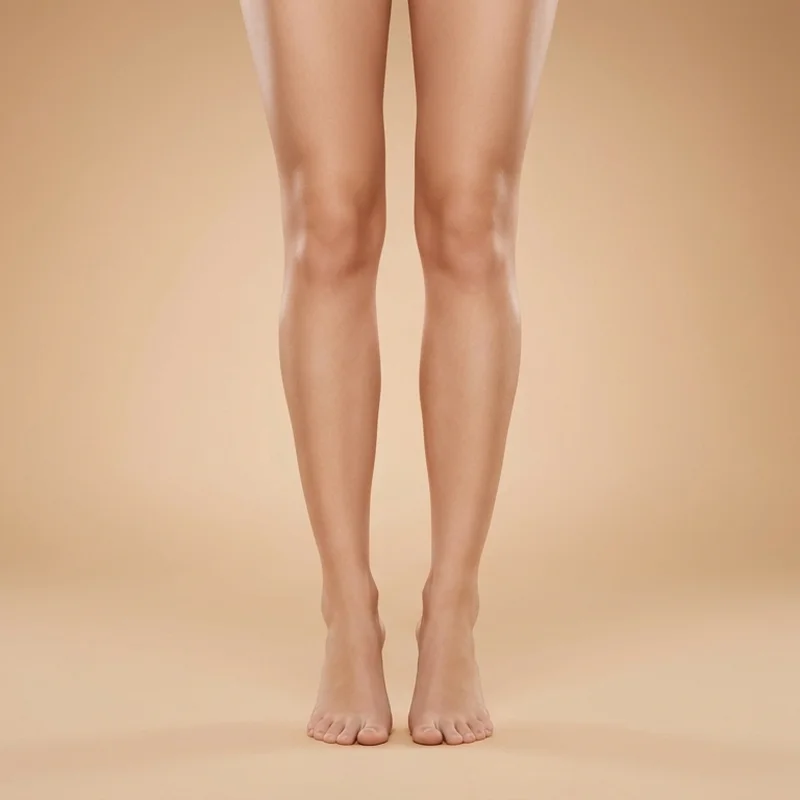
Calves and ankles liposuction is surgery that slims the lower leg by removing fat from the calf and ankle through a fine cannula. It eases a column-shaped leg into a softer taper, refines a thick or blurred ankle, and removes the fat cells for good, so the slimmer shape lasts as long as your weight stays stable1. The amount removed is modest, usually under general anaesthesia in 1 to 2 hours, but the change reads clearly because the lower leg is always on view.
Thick lower legs are often simply how you are built, fullness that stays put no matter how you train. This is delicate territory, with the sural nerve, which serves the outer foot, close to the surface, so the work stays conservative. Your surgeon first checks whether your thickness is fat or muscle, since liposuction only reduces fat.
For most people the right result is a refined taper, not a dramatic reduction, and the final shape takes five to six months. If your calves are mostly muscle, an honest consultation is where you learn that before travelling.
It can address a range of concerns, including:
Am I a Good Candidate for Calves & Ankles Liposuction?
Lower-leg liposuction suits a narrower group than most body procedures; here is what surgeons assess before agreeing to operate.
Liposuction removes fat only, and the defining question is what is actually making your lower leg thick.
Assessment first: surgeons pinch the tissue, check skin-fold thickness, and may use ultrasound to confirm the thickness is fat, not muscle.
Muscular calves: liposuction on a muscular leg produces minimal change, and a responsible surgeon will say so.
Genuine fat excess: genetically determined fullness that has never responded to exercise or weight loss is what responds well.
Lipoedema: behaves differently from regular fat and needs a clinician familiar with the condition, not standard liposuction.
Lower-leg liposuction refines shape; it does not change overall weight.
At or near a stable weight: good candidates carry genetically determined lower-leg fullness rather than generalised excess.
Localised, not generalised: if full calves sit on a frame of overall excess weight, surgery will not produce a meaningful change.
Holding the result: removed fat cells do not return, so the slimmer contour is permanent provided your weight stays stable afterwards.
The lower leg is narrow and exposed, with little room to hide retraction problems.
Good lower-leg elasticity: a core candidate requirement, because the skin must tighten around the slimmer contour.
Thin ankle skin: skin retraction issues are a particular risk around the ankle, where the skin is at its thinnest.
Marginal cases: where elasticity is borderline, VASER is often preferred for its gentler tissue handling and collagen stimulation, and your surgeon will advise accordingly.
Lower-leg recovery makes specific demands on your circulation and your daily routine.
Vein health: a history of varicose veins, DVT, or chronic venous insufficiency raises the bar for lower-leg surgery.
Job demands: work involving prolonged standing or walking in the first 3 to 4 weeks is a problem, because that is when lymphatic swelling is at its worst.
Non-smoker: or willing to stop at least four weeks before and after surgery.
Elevation commitment: much of the first week is spent with legs elevated in compression stockings, and candidates need to be able to live that way.
This procedure refines proportions; it does not transform them.
Modest reduction: typically 2-4 centimetres per calf, which reads as a significant change on a narrow, exposed leg.
Slow timeline: this is the slowest-healing liposuction zone; clear improvement shows by month 2, but the final shape takes 5-6 months.
Conservative by design: over-correction risks a hollow appearance and nerve injury, so conservative removal is the correct approach, not a compromise. Surgeons promising dramatic single-session reduction are a warning sign.
Who is not suitable for calves & ankles liposuction?
- Muscular calves rather than fat excess
- Lipoedema in the lower legs
- Jobs requiring prolonged standing or walking in the first 3-4 weeks
- History of varicose veins, DVT, or venous insufficiency
- Expecting a dramatic single-session reduction
- Smokers unwilling to stop at least four weeks before and after surgery
- Significant uncontrolled heart or lung disease, or otherwise not medically fit for general anaesthesia
- Active DVT, bleeding or clotting disorders, or pregnancy
Pricing
How Much Will Calves & Ankles Liposuction Cost in Thailand?
What calves & ankles liposuction costs at accredited hospitals in Thailand, and what your final quote depends on.
Get your exact price
Tell us what you're considering and we'll send a personalised quote from accredited hospitals within 24 hours.
Get my free quoteTypical prices in Thailand
Typical ranges based on recent hospital quotes. Your exact price depends on the hospital and how complex your case is, and is confirmed at your teleconsultation.
Calves & Ankles Liposuction
Calves and ankles are priced as separate areas, so what you pay depends on how much of the lower leg is treated.
| Calf liposuction only Treats the inner and outer calf where the bulk sits | $2,000 to $2,800 ฿68,000 to ฿95,200 |
| Ankle liposuction only Refines the ankle so it no longer blends into the calf | $2,000 to $2,500 ฿68,000 to ฿85,000 |
| Full lower leg, calves and ankles Slims the whole leg from knee to foot in one operation | $3,000 to $4,000 ฿102,000 to ฿136,000 |
Added to the above where needed
| VASER ultrasound-assisted technique Gentler handling of tissue, often the better choice on the lower leg | $500 to $1,000 ฿17,000 to ฿34,000 |
Get your exact price
Tell us what you're considering and we'll send a personalised quote from accredited hospitals within 24 hours.
Hospitals Trusted for Calves & Ankles Liposuction
From internationally accredited flagships to dedicated specialist hospitals, these are the kinds of facilities where international patients have this procedure.

Rattinan Clinic
A specialist body contouring clinic in central Bangkok with over 14,000 BodyTite treatments performed.
View hospital profile
Kamol Cosmetic Hospital
The only specialist cosmetic surgery hospital in Thailand to hold JCI accreditation.
View hospital profile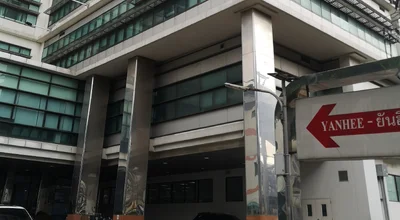
Yanhee International Hospital
A 400-bed hospital known worldwide for high-volume cosmetic surgery.
View hospital profile
Get a Free Quote in Two Minutes
Tell us what you're considering. We'll match you with suitable specialists and provide real hospital pricing.
- Honest pricing with no markups
- Matched to a specialist for your procedure
- No obligation, no pressure


Rated 5 stars by our patients
The complete guide to Calves & Ankles Liposuction in Thailand
Everything below is for readers who want the full detail: costs broken down, types and techniques, recovery, risks and safety, and planning your trip.
Calves & Ankles Liposuction Surgeons & Clinics in Thailand
Not every liposuction surgeon is qualified to work on the lower legs. This section explains what to look for when choosing a surgeon for this specialist procedure.
Leading Hospitals in Bangkok
Our partner hospitals are JCI-accredited with full plastic surgery departments and on-site anaesthesia teams. For lower leg liposuction, hospital choice matters because proper post-operative monitoring and DVT prevention protocols need to be in place. Standalone clinics may not have the infrastructure to manage a lower leg complication.
Surgeons with Lower Leg Experience
Our partner surgeons hold certification from the Thai Board of Plastic and Reconstructive Surgery and have specific experience with calf and ankle contouring. This matters because lower leg liposuction is technically different from body liposuction, the volumes are smaller, the anatomy is more delicate, and the swelling timeline is much longer. A surgeon who handles this area regularly understands the nuances.
Questions to Ask Your Surgeon
Ask how many lower leg liposuction cases they have performed and what their complication rate is, specifically regarding nerve injury. Ask to see before-and-after photos taken at 4–6 months, not just early post-op. Ask whether your calf thickness is caused by fat or muscle, a surgeon who does not assess this distinction should not be operating on your calves. And ask what outcome is realistically achievable with your specific anatomy.
Understanding Your Results
Calves and ankles liposuction produces meaningful change, but the results are more subtle than high-volume body liposuction. Here is what to expect.
Typical Results
Calves appear slimmer with a more defined curve. Ankles gain visible tapering where previously the calf blended straight into the foot. The overall lower leg silhouette shifts from column-shaped to tapered. The change is most apparent in shorts, skirts, and when wearing fitted boots that previously did not close properly.
What Results Can You Expect?
Expect a modest but meaningful reduction, not a dramatic transformation. Lower leg liposuction refines proportions rather than creating entirely new ones. The change in circumference is often in the region of a few centimetres per calf, which can translate to a visually significant improvement because the lower leg is narrow and exposed, though the actual change varies with your anatomy and how much treatable fat is present. The consultation covers what is realistically achievable for your anatomy.
Calves & Ankles Liposuction Cost in Thailand
Average Cost of Calves & Ankles Liposuction
Calf and ankle liposuction in Thailand typically costs $2,000–$4,000. The range depends on whether you treat calves only, ankles only, or both, and which technique is used. Despite removing less volume than most liposuction procedures, the price reflects the specialist skill and extra care required in this delicate area.
Cost Breakdown
The surgeon's fee is the dominant cost because this procedure demands more precision per unit of fat removed than any other liposuction zone. Hospital fees cover the operating theatre, monitoring, and nursing. Anaesthesia, usually general or deep sedation, is separate. Aftercare includes medical-grade compression stockings, follow-up visits, and swelling management guidance.
What Affects the Price?
Treatment scope is the main variable, calves alone versus calves plus ankles. The ankle zone is particularly delicate and adds surgical time disproportionate to the small amount of fat removed. VASER technique costs more than standard tumescent but is often the better choice here because of its gentler tissue handling. Surgeon experience with this specific area also factors into pricing, not all surgeons offer it.
Thailand vs International Price Comparison
Calves and ankles liposuction in Thailand costs 40–60% less than equivalent procedures in the US ($5,600–$10,000), Australia (A$5,200–A$9,000), and UK (£4,400–£7,600). This is specialist surgery that commands premium pricing in Western countries. Thailand offers the same level of skill at substantially lower cost, with JCI-accredited hospitals maintaining international safety standards.
Non-Surgical Alternatives to Calf & Ankle Liposuction
The right non-surgical option depends entirely on whether your lower leg thickness is fat or muscle, which is the same distinction surgery turns on. For muscular calves, calf-slimming Botox injects botulinum toxin into the gastrocnemius so the muscle relaxes, partially shrinks5, and the bulge softens over a few weeks. For fat-based thickness, cryolipolysis (fat freezing) chills fat cells until they die off, gradually reducing a modest amount of volume4. Both avoid surgery, scars, and the long lower-leg swelling, which is their genuine appeal.
The limits are significant, though. Botox does not touch fat and its effect fades over four to six months, so the muscle returns to size unless you keep repeating it, and over-relaxing the calf can affect how the leg feels on tiptoe or stairs. Fat freezing on the lower leg works slowly and unpredictably on a narrow, curved surface, often needs several sessions, and reduces only a small fraction of the fat, never reshaping the ankle or correcting a true cankle. Neither can deliver a clear taper from knee to foot, and neither result is permanent.
If your thickness is fat and you want a lasting, defined change, calf and ankle liposuction is the route, because it removes the fat cells for good in a single procedure rather than asking for an injection or freezing cycle every few months. An honest consultation first establishes whether you are dealing with fat or muscle, since that determines whether surgery will help you at all, and that is what the rest of this page covers.
Types of Lower Leg Liposuction
Lower leg liposuction can target the calves, the ankles, or both. The right approach depends on where your fat is concentrated and how your legs are proportioned from knee to foot.
Calf Liposuction
Removes fat from the medial and lateral calf to reduce circumference and create a more tapered lower leg shape. The calf contains more treatable fat than the ankle, so results here tend to be more pronounced. Both legs are treated in the same session.
- Targets fat around the gastrocnemius muscle, not the muscle itself
- Both legs treated simultaneously for symmetry
- Moderate volume reduction with significant visual impact
- Best for: patients with fat-based calf thickness (not muscular calves)
Ankle Liposuction
Refines the ankle contour by removing the fat pad that creates a cankle appearance, where the calf blends straight into the foot without tapering. The fat volume is small but the area is anatomically sensitive, with the sural nerve and saphenous vein in close proximity.
- Small volume removed but high-impact visual change
- Requires conservative technique around nerves and vessels
- Creates a visible taper between calf and foot
- Best for: patients with a column-shaped lower leg who want ankle definition
Full Lower Leg Contouring
Treats both calves and ankles in a single session for a comprehensive result, a smooth, proportionate taper from knee to foot. The longest procedure and recovery of the three options, but the most dramatic overall change in lower leg silhouette.
- Complete reshaping of the lower leg profile
- Requires the most careful surgical planning
- Longer swelling resolution than isolated calf or ankle work
- Best for: patients with excess fat throughout the entire lower leg
Calves & Ankles Liposuction Techniques
The lower leg is the most anatomically sensitive liposuction zone. Technique matters more here than anywhere else on the body because the margin for error is thin and the consequences of aggressive work are serious.
Tumescent Technique
Standard tumescent fluid infiltration with fine cannula extraction. On the lower leg, ultra-fine cannulae are used and the approach is deliberately conservative. The surgeon moves slowly and methodically, removing small amounts from each pass to avoid creating dips or injuring superficial structures.
- Ultra-fine cannulae for maximum control in a tight space
- Conservative, multi-pass approach for even results
- Lower cost than VASER
- Best for: moderate calf fat with good skin elasticity
VASER-Assisted Technique
Ultrasound energy gently emulsifies fat before extraction. In the lower leg, VASER's tissue-selective property is especially valuable, it targets fat cells while preserving the nerves, vessels, and connective tissue that sit dangerously close. The collagen stimulation also promotes better skin retraction on the narrow lower leg surface.
- Tissue-selective technology protects surrounding nerves and vessels
- Gentler extraction reduces bruising and post-operative swelling
- Collagen stimulation aids skin tightening around the slim lower leg
- Best for: ankle work, patients with marginal skin elasticity, or complex lower leg anatomy
Power-Assisted Liposuction (PAL)
Power-assisted liposuction uses a cannula that vibrates rapidly to break up fat with less physical force from the surgeon. On the lower leg, where the tissue is fibrous and the working space is tight, that fine, controlled movement helps the cannula pass smoothly and evenly without dragging or excess trauma. It is often combined with the tumescent approach rather than used alone.
- Vibrating cannula eases through firm, fibrous lower-leg fat
- More even passes with less manual force in a confined area
- Frequently paired with tumescent fluid infiltration
- Best for: firmer or more fibrous calf fat where smooth, controlled extraction matters
Laser-Assisted Liposuction
Laser-assisted liposuction uses laser energy to liquefy fat before it is removed and to warm the underside of the skin, which can encourage tightening. On the narrow, exposed lower leg, where loose skin has nowhere to hide, that skin-retraction effect is the main appeal. It is not offered everywhere and suits smaller-volume, contour-focused cases rather than large reductions.
- Laser energy liquefies fat and warms the skin to aid retraction
- Useful where skin tightening matters on the slim lower leg
- Suited to smaller-volume, contour-focused treatment
- Best for: patients with mild skin laxity wanting a tightening effect alongside slimming
Calves & Ankles Liposuction Recovery Timeline
Days 1–5
The lower legs feel heavy, tight, and swollen, noticeably more than most liposuction areas. Ankles may puff to double their normal size initially. Compression stockings go on immediately and stay on continuously. Keep legs elevated whenever sitting or lying down. Short, flat walks only, no stairs or inclines.
Weeks 1–2
Swelling may actually increase before it starts receding, this is normal for the lower legs. Standing for long periods causes puffiness to worsen. Most patients manage desk work from their hotel after 7–10 days. Continue elevation and compression religiously.
Weeks 3–6
Swelling starts dropping meaningfully and early contour improvements appear. Walking becomes more comfortable and distances can increase. Light exercise can begin, avoid impact activities. Compression stockings during the day, off at night if your surgeon agrees.
Months 3–6
Refined, proportionate lower legs emerge as the last swelling resolves. The lower leg retains fluid longer than any other liposuction zone, so patience is essential. Final shape typically visible by 5–6 months. Incision marks near the knee and ankle fade to near-invisible dots.
When Can You Fly After Calves & Ankles Liposuction?
Plan to fly at 7–10 days minimum. Wear medical-grade compression stockings during the entire flight. Walk the aisle every 30–45 minutes on long-haul flights. Stay well-hydrated and avoid alcohol. Deep vein thrombosis prevention is especially important after lower leg surgery, follow your surgeon's specific guidance on anticoagulants and in-flight movement.
When Can You Return to Work and Exercise?
Desk work with legs elevated is possible after 7–10 days. Jobs requiring extended standing or walking need 3 weeks off. No exercise beyond flat walking for the first 3 weeks. Light swimming or cycling at 4 weeks. Running and impact activities at 6–8 weeks once your surgeon confirms the swelling trajectory is on track. Expect the lower legs to swell after exercise for several months, this does not mean something is wrong.
When Will You See Final Results?
This is the slowest-healing liposuction zone. Gravity pulls fluid into the lower legs, so swelling persists longer than anywhere else. You will see a clear improvement by month 2, a strong result by month 3–4, and the final refined shape by month 5–6. Do not make judgments about the outcome until at least 4 months post-op.
Anaesthesia for Calves & Ankles Liposuction
Calf and ankle liposuction in Thailand is performed under general anaesthesia, so you are fully asleep and feel nothing while the surgeon works. A consultant anaesthetist stays with you for the whole procedure and monitors you continuously, which is standard at the accredited hospitals we work with. The operation itself is short, usually one to two hours, and is typically done as a day case rather than an overnight stay.
Some surgeons treat smaller, single-zone cases, such as the ankles alone, under deep sedation with local tumescent anaesthetic instead, where you are relaxed and pain-free but not fully under. Which approach is used depends on how much of the lower leg is being treated and your medical history, and your surgeon and anaesthetist decide together what is safest for you.
Because this is lower-leg surgery, the pre-operative assessment pays particular attention to your circulation, including any history of varicose veins or clots, alongside the usual blood tests and medication review. You feel nothing during the procedure. Afterwards the lower legs feel heavy, tight, and swollen rather than sharply painful, and that discomfort is mild and well controlled with the medication your surgeon prescribes. Keeping your legs elevated does as much for comfort in the first week as anything else.
Risks and Safety of Calves & Ankles Liposuction
This is the most technically demanding liposuction zone on the body. The risk profile is different from standard liposuction and you should understand these specific concerns before proceeding.
- Sural nerve injury, causes numbness or altered sensation along the outer foot and ankle (usually temporary, rarely permanent)1
- Prolonged swelling lasting months, not weeks, the lower legs retain fluid much longer than other zones
- Contour irregularities visible on the narrow calf surface where there is little room to hide imperfections
- Deep vein thrombosis, a genuine risk with lower leg surgery, mitigated by compression and early mobilisation1,3
- Asymmetry between legs, especially during the prolonged swelling phase
- Skin retraction issues, particularly around the ankle where skin is thin
- Limited fat removal, over-correction risks creating a hollow or skeletal appearance
The lower leg has less fat to work with and more structures to protect than any other liposuction site. Conservative fat removal is not a compromise, it is the correct approach. Surgeons who promise dramatic calf reduction in a single session are either planning to be too aggressive or do not fully appreciate the anatomy. A modest improvement done safely is always better than a dramatic result that damages nerves.
Is Calves & Ankles Liposuction Safe in Thailand?
Yes, provided you choose a surgeon with specific experience in lower leg contouring at a JCI-accredited hospital. This is not a procedure that every liposuction surgeon should perform, it requires familiarity with the anatomy and a deliberately conservative approach. Our partner surgeons have the training and case volume to handle this area safely.
How to Reduce Risks
The single most important factor is a surgeon who performs lower leg liposuction regularly, not one who treats it as an afterthought, which is exactly what we screen our partner surgeons for, along with their use of fine cannulae and conservative, sural-nerve-sparing passes. On your side, the things that most reduce risk are wearing compression stockings exactly as prescribed, following DVT prevention protocols without exception, and accepting that this area heals slowly, rushing the result is how complications happen. You are welcome to ask your surgeon about their approach to the sural nerve at consultation, and we can help you raise it.
When Is Revision Needed?
Because lower leg results take 5–6 months to stabilise, revision decisions should wait at least that long. Occasionally, a small area of residual fat or mild asymmetry becomes apparent. Touch-ups are possible but should be performed with the same conservative philosophy as the original procedure. In some cases, what looks like a problem at month 3 resolves on its own by month 5.
Planning Your Trip to Thailand for Calves & Ankles Liposuction
Lower leg liposuction requires more careful post-operative management than most liposuction zones. Plan your trip with that in mind.
How Long to Stay in Thailand
Aim for 7–10 days minimum. The lower legs swell more and for longer than other areas, so the extra monitoring time is worthwhile. Day 1 consultation, day 2 surgery, days 3–9 recovery with elevation and compression, and day 9–10 follow-up and flight clearance.
What's Included in a Medical Trip
Your coordinator handles scheduling, transport, and follow-ups. A typical surgical quote covers surgeon fees, anaesthesia, the facility, aftercare, and medical-grade compression stockings, though exact inclusions are set by the clinic and confirmed in writing in your quote. Flights and accommodation are separate, your coordinator will arrange ground-floor or elevator-access accommodation, which matters when your lower legs are swollen and stairs are not practical.
Recovery Logistics
Ground-floor accommodation is essential. Pack slip-on shoes or sandals, your feet and ankles will be too swollen for fitted footwear. Bring clothing that accommodates compression stockings beneath (loose trousers, long skirts). Have entertainment ready that you can enjoy with your legs elevated, you will spend much of the first week doing exactly that.
Related Procedures
Other procedures that address similar goals or conditions, in case one of them is a closer fit for you.
Planning your treatment in Thailand
Independent guides to help you weigh the decision, before you commit to anything.
Common Questions About Calves & Ankles Liposuction
Important questions for patients considering this specialist procedure

Medical References
Keep researching with AI
Open this guide in your AI assistant to dig deeper and ask the questions it didn't answer.
Opens in a new tab with this guide already loaded.
Medical disclaimer: This information is for educational purposes only and does not replace professional medical advice. Individual results, recovery times, and suitability vary. Always consult a qualified surgeon before making decisions about treatment.
Ready to Get Started?
No-obligation consultation and quote within 24 hours. Speak with a coordinator who can match you to the right surgeon and hospital.
Speak to Our Team