Buffalo Hump Removal in Thailand Your guide to cost, top surgeons & hospitals
A clean neckline is something you notice only when it is gone. This brings it back.
What Is Buffalo Hump Removal?
Also known as: Buffalo Hump Surgery · Dorsocervical Fat Pad Removal
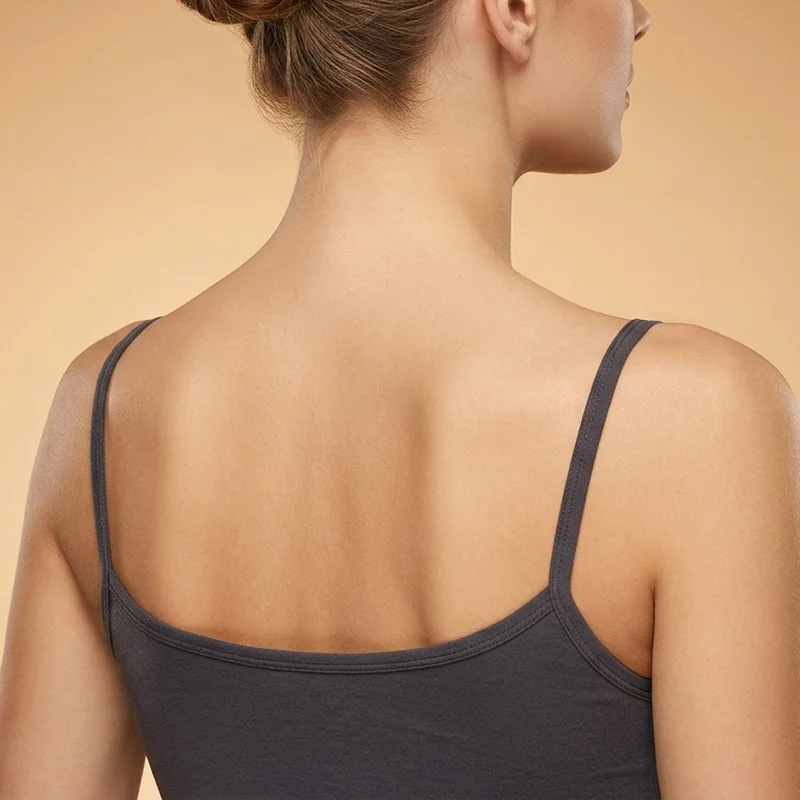
Buffalo hump removal is liposuction that flattens the rounded fat pad at the base of the neck by suctioning the deposit out through tiny incisions. It treats the dorsocervical fat pad, a build-up of fatty tissue between the lower neck and upper back, often linked to long-term corticosteroid use, Cushing's syndrome, certain HIV medications, hormonal shifts, or genetics1. A thin cannula passes through openings of 3 to 5 mm, and the skin usually retracts naturally afterwards. It takes one to one and a half hours under local anaesthesia with sedation.
The hump may have crept up slowly, and it can feel like something you cannot diet or exercise away. That is normal, because this deposit rarely responds to weight loss like other fat does. Your surgeon examines the area, then decides whether liposuction alone will do or whether a little skin needs removing too.
The fat cells taken out are gone for good, so for most people the result lasts.2 One honest point: if a medication or hormonal condition is driving the pad, that cause needs managing alongside surgery, or the hump can return. Raise it at consultation.
It can address a range of concerns, including:
Am I a Good Candidate for Buffalo Hump Removal?
Removing the hump is the straightforward part; a lasting result depends on what caused it, which is where assessment begins.
If the root cause is not managed, the fat pad can simply build back up.
Cause identified: buffalo humps stem from prolonged corticosteroid use, Cushing's syndrome, hormonal shifts, genetics, or weight distribution, and which one matters for recurrence risk.
Medication review: long-term corticosteroids or HIV antiretroviral therapy contributing to the pad make recurrence likely unless the cause is addressed first, ideally with your prescribing doctor involved.
Endocrine work-up: Cushing's or another endocrine condition should be ruled out with bloodwork and specialist review before cosmetic surgery goes ahead.
Good candidates have a confirmed dorsocervical fat pad causing problems the surgery reliably fixes.
Visible hump: a rounded mound at the base of the neck that affects your profile, replaced by a flat neck-to-back transition.
Physical discomfort: neck stiffness or postural discomfort from the weight of the deposit.
Clothing difficulty: collared shirts and certain necklines that no longer sit comfortably.
Diet resistance: a pad that persists despite weight loss and exercise, which is typical of this deposit.
Skin elasticity decides whether liposuction alone is enough or skin excision is needed too.
Good elasticity: in most cases the skin retracts naturally after fat removal, leaving only 3-5 mm incision marks.
Large or long-standing humps: may need redundant skin excised in the same session to avoid laxity, which adds minor scarring along natural skin lines.
Thin or sun-damaged neck skin: retraction across the upper back can be uneven after liposuction, so skin quality is assessed specifically before the plan is set.
Standard surgical fitness applies, along with one honest caveat about what the surgery can relieve.
Good general health: with the dorsocervical fat pad confirmed on examination.
Non-smoker: or willing to stop at least four weeks before and after surgery.
Spine expectations: significant cervical spine issues or postural pain may not improve as much as hoped from fat pad removal alone, and surgeons are upfront about that distinction.
Who is not suitable for buffalo hump removal?
- Ongoing corticosteroid or antiretroviral therapy without the underlying cause addressed
- Cushing's syndrome or endocrine disease not yet ruled out
- Expecting relief of cervical spine or postural pain from fat removal alone
- Very thin or sun-damaged neck skin
- Smokers unwilling to stop four weeks before and after surgery
Pricing
How Much Will Buffalo Hump Removal Cost in Thailand?
What buffalo hump removal costs at accredited hospitals in Thailand, and what your final quote depends on.
Get your exact price
Tell us what you're considering and we'll send a personalised quote from accredited hospitals within 24 hours.
Get my free quoteTypical prices in Thailand
Typical ranges based on recent hospital quotes. Your exact price depends on the hospital and how complex your case is, and is confirmed at your teleconsultation.
Buffalo Hump Removal
What you pay turns on whether the hump can be removed by liposuction alone or whether loose skin has to come away with it.
| Liposuction only, standard tumescent Suits a hump that is mostly fat with skin that will shrink back | $1,500 to $2,000 ฿51,000 to ฿68,000 |
| VASER liposuction Ultrasound loosens denser deposits and helps the skin tighten | $2,000 to $2,500 ฿68,000 to ฿85,000 |
| Liposuction with skin excision Removes excess skin as well as fat for a flat result | $2,400 to $3,000 ฿81,600 to ฿102,000 |
Get your exact price
Tell us what you're considering and we'll send a personalised quote from accredited hospitals within 24 hours.
Hospitals Trusted for Buffalo Hump Removal
From internationally accredited flagships to dedicated specialist hospitals, these are the kinds of facilities where international patients have this procedure.
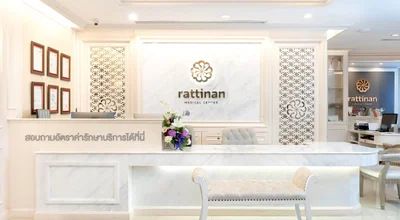
Rattinan Clinic
A specialist body contouring clinic in central Bangkok with over 14,000 BodyTite treatments performed.
View hospital profile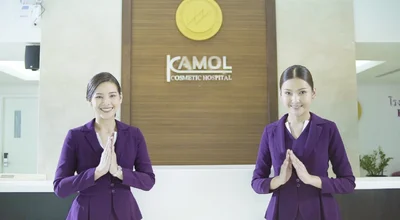
Kamol Cosmetic Hospital
The only specialist cosmetic surgery hospital in Thailand to hold JCI accreditation.
View hospital profile
Yanhee International Hospital
A 400-bed hospital known worldwide for high-volume cosmetic surgery.
View hospital profile
Get a Free Quote in Two Minutes
Tell us what you're considering. We'll match you with suitable specialists and provide real hospital pricing.
- Honest pricing with no markups
- Matched to a specialist for your procedure
- No obligation, no pressure


Rated 5 stars by our patients
The complete guide to Buffalo Hump Removal in Thailand
Everything below is for readers who want the full detail: costs broken down, types and techniques, recovery, risks and safety, and planning your trip.
Buffalo Hump Removal Surgeons & Clinics in Thailand
The procedure is technically simple, but choosing the right surgeon still matters for a clean, even result.
Leading Hospitals in Bangkok
Our partner hospitals are JCI-accredited with dedicated plastic surgery departments. These are full-scale hospitals, not standalone clinics, meaning any complication (however unlikely for this procedure) is managed on-site with full backup.
Experienced Body Contouring Surgeons
Our surgeons are board-certified by the Thai Board of Plastic and Reconstructive Surgery and perform high volumes of body contouring work, including liposuction across multiple body areas. Buffalo hump removal is technically straightforward for a surgeon experienced in neck and upper-back contouring.
What We Look for in a Surgeon
Board certification is non-negotiable, and it is the baseline we screen our partner surgeons against. Beyond that, we look for documented experience with dorsocervical fat pad cases specifically, since not all liposuction surgeons have treated this area. We review before-and-after work showing the neck-to-back transition, and we make sure the surgical plan includes a strategy for addressing the underlying cause if one exists. At your consultation you are welcome to ask the surgeon about any of this directly.
Understanding Your Results
Results are visible immediately and refine over two to three months as swelling resolves and skin retracts.
Typical Buffalo Hump Removal Results
The hump is visibly reduced from day one, though swelling masks the full result initially. By eight to twelve weeks, a smooth, flat neckline replaces the rounded deposit. The improvement is most noticeable in profile view and when wearing open-neck clothing.
What Results Can You Expect?
Most patients achieve a lasting, flat neck-to-back contour, provided the underlying cause is managed. Patients often report improved posture, reduced neck discomfort, and significantly more confidence in their profile. The small incision marks typically fade to near-invisible within a few months.
Buffalo Hump Removal Cost in Thailand
Average Cost of Buffalo Hump Removal
Buffalo hump removal in Thailand typically costs between $1,500 and $3,000, depending on whether liposuction alone is sufficient or skin excision is also needed. Most cases fall in the lower half of that range because the procedure is straightforward and performed as a day case under local anaesthesia with sedation.
Cost Breakdown
The surgeon's fee covers the technical work, fat extraction and contouring. Facility fees cover the operating room, sedation, nursing support, and consumables. Aftercare typically includes your compression garment, wound dressings, follow-up appointments, and your care coordinator. Exact inclusions are set by the clinic and itemised in writing in your quote, so you can see precisely where the cost sits.
What Affects the Price?
The main variable is whether skin excision is needed alongside liposuction. Liposuction alone is shorter and cheaper. If excess skin must be removed, operative time increases and the procedure moves to a slightly higher price bracket. The technique used (standard, PAL, or VASER) can also influence cost, as can the overall size of the deposit.
Thailand vs International Price Comparison
Buffalo hump removal in Thailand costs 40–60% less than the same procedure in the US ($4,200–$7,500), Australia (A$3,900–A$6,800), or UK (£3,300–£5,700). The savings reflect Thailand's lower operating costs, not lower standards. Our partner hospitals hold JCI accreditation and surgeons are board-certified by the Thai Board of Plastic and Reconstructive Surgery.
Non-Surgical Alternatives to Buffalo Hump Removal
Fat-dissolving injections, using deoxycholic acid (the active ingredient in Kybella and Aqualyx), are the main non-surgical option people weigh against buffalo hump surgery. The acid is injected into the fat pad to break down fat cells gradually, so a small, soft deposit can shrink over a course of several sessions spaced a few weeks apart, with no incisions and minimal downtime. For a modest hump in someone who wants to avoid surgery, it can take the edge off the contour.
The limits are real, though. Injections only work on smaller, primarily fatty deposits, and a dorsocervical fat pad is often denser and more fibrous than fat elsewhere, so results are slow, partial, and hard to predict. It typically needs multiple rounds, swelling and bruising in the area between sessions are common, and it does nothing for excess skin once the volume reduces. It also does not address the underlying cause, so if steroids or a hormonal condition are driving the pad, injections fade against an ongoing trigger.
For a larger or long-standing hump, a dense fibrous deposit, or a single predictable result that flattens the neckline in one session, liposuction is the route, and that is what the rest of this page covers.
Types of Buffalo Hump Removal
Most cases are treated with liposuction alone. The decision to combine it with skin excision depends on the size of the deposit and whether your skin has enough elasticity to retract on its own.
Liposuction Only
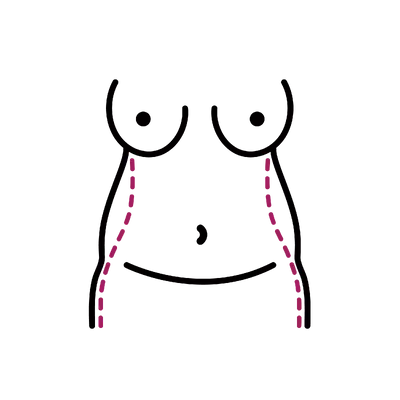
The standard approach for moderate humps where skin quality is good. Small cannulas remove the fat through tiny incisions, and the skin contracts naturally over the following weeks. Most patients are back to desk work within days.
- Incisions of just 3–5 mm, virtually invisible once healed
- Performed under local anaesthesia with sedation as a day case
- Skin retraction relies on good underlying elasticity
- Best for: moderate humps where skin quality is adequate
Liposuction with Skin Excision
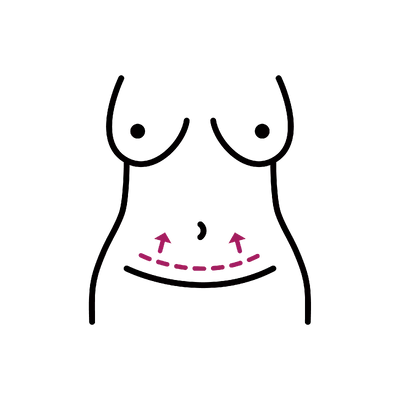
For larger or long-standing humps where the skin will not retract enough after fat removal. The fat is suctioned first, then redundant skin is removed and the wound is closed along natural skin lines. This adds minor scarring but ensures a flat contour.
- Addresses both volume and skin laxity in a single session
- Incisions placed along natural creases for discreet scarring
- Necessary when the deposit is large or skin elasticity is reduced
- Best for: large humps or patients with diminished skin quality
Techniques Used for Buffalo Hump Removal
Technique depends on the composition of the hump and whether fibrous tissue is present alongside the fat. Your surgeon assesses this during consultation and selects the approach that will deliver the cleanest result.
Tumescent Liposuction
The most common method. A tumescent solution is injected to numb the area and constrict blood vessels, then a thin cannula breaks up and suctions the fat. Minimal blood loss and a controlled, even result.
- Tumescent fluid reduces bleeding and post-operative bruising2
- Fine cannulas allow precise contouring of the neck-to-back transition
- Well-suited to soft, primarily fatty deposits
- Best for: most standard buffalo hump cases without significant fibrosis
Power-Assisted Liposuction (PAL)
Uses a vibrating cannula that loosens fat cells mechanically before suctioning. Particularly useful for humps with a fibrous component, where standard cannulas meet resistance. The vibration reduces operative time and surgeon fatigue without affecting precision.
- Vibrating tip handles dense or fibrous tissue more efficiently
- Less physical force needed, resulting in smoother extraction
- Shorter operative time than manual liposuction in tough cases
- Best for: firm, fibrous humps or cases where the deposit is dense
VASER-Assisted Liposuction
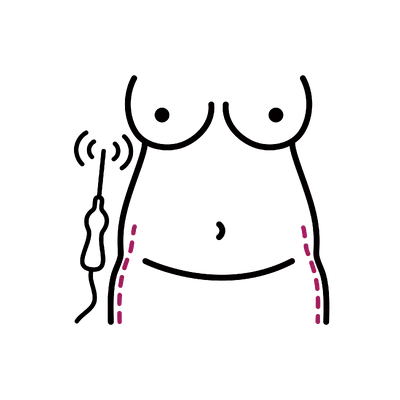
Ultrasound energy liquefies the fat before aspiration, allowing very smooth contouring with less trauma to surrounding tissue. Often chosen when precision matters and the surgeon wants to maximise skin retraction over the treated area.
- Ultrasonic energy breaks down fat while preserving connective tissue
- May promote better skin tightening through controlled thermal effect
- Less bruising and swelling compared to traditional methods
- Best for: patients wanting maximum skin retraction and refined contouring
Laser-Assisted Liposuction
A thin laser fibre is passed under the skin to melt the fat before it is suctioned, and the heat it delivers also tightens the overlying skin a little. That combination of gentle fat removal and mild skin contraction suits the neck and upper back well, where retraction matters. It works best on smaller deposits rather than very large humps.
- Laser energy liquefies fat and adds a controlled skin-tightening effect
- Useful where skin retraction over the neck-to-back transition is a concern
- Better suited to smaller or moderate deposits than bulky humps
- Best for: smaller humps where some extra skin tightening is wanted
Buffalo Hump Removal Recovery Timeline
Days 1–3
The base of the neck feels sore and tight, with bruising spreading into the upper shoulders. A compression garment supports the area and controls swelling. You can walk around your hotel and manage light tasks. Your care coordinator checks in daily.
Week 1–2
Bruising fades and puffiness starts to settle noticeably. Most patients feel comfortable enough for desk work and light outings by day five. Sutures are checked and your surgeon confirms progress at a follow-up appointment before you travel home.
Weeks 3–4
Residual swelling continues to reduce. Light walking has been encouraged since day one; now you can add gym workouts and upper-body exercise as the healing tissue tolerates it. The compression garment is worn for two to four weeks total. Your improved neckline becomes increasingly visible as the tissue settles.
Months 2–3
The final contour emerges as remaining swelling resolves and skin fully retracts. Most patients see their definitive result by eight to twelve weeks. The fat cells removed are gone permanently, provided underlying causes are managed.
When Can You Fly After Buffalo Hump Removal?
Most patients can fly home around day seven of the trip, which is about five days after surgery, once their surgeon has checked the wound at follow-up and confirmed healing is on track. The compression garment should be worn throughout the flight. Mild swelling may increase temporarily during travel due to cabin pressure and reduced movement, this is normal and settles within a day or two of landing.
When Can You Return to Work and Exercise?
Desk work and light daily tasks can typically resume within three to five days. Light exercise such as walking is encouraged from day one. Gym workouts and upper-body exercise should wait until three to four weeks post-procedure to avoid disrupting the healing tissue. Full activity including resistance training is usually cleared by six weeks.
When Will You See Final Results?
You will notice an immediate reduction in the hump, but swelling obscures the full picture for the first few weeks. The definitive contour typically emerges by eight to twelve weeks as residual swelling resolves and the skin fully retracts. Patients with larger deposits or those who required skin excision may take slightly longer to reach their final result.
Anaesthesia for Buffalo Hump Removal
Buffalo hump removal is done under local anaesthesia with sedation, so the base of your neck is fully numbed while a mild sedative keeps you relaxed and drowsy. You stay awake but comfortable and feel no pain during the procedure, and you avoid the longer recovery and grogginess that comes with a full general anaesthetic. A trained anaesthetist or anaesthetic nurse monitors you throughout, which is standard at the accredited hospitals we work with.
This lighter approach suits the operation well, because it is short, contained, and confined to a single area at the base of the neck and upper back. Your surgeon and anaesthetist confirm the plan together based on the size of the deposit and your medical history. For most patients this is comfortably enough; if the case is unusually large or skin excision is involved, they will talk through any adjustment with you beforehand.
Before you are cleared, you have a pre-operative assessment that includes routine bloodwork and a review of any medication you take, which matters here because long-term steroids or hormonal conditions are often part of the picture. You feel nothing while the fat is removed. Afterwards the area feels sore and tight rather than sharply painful for the first few days, and that discomfort is well controlled with the simple pain relief your surgeon prescribes.
Risks and Safety of Buffalo Hump Removal
Buffalo hump liposuction is a low-risk, well-tolerated procedure. Serious complications are rare, but you should understand what can happen.
- Contour irregularities or minor asymmetry (correctable if needed)3
- Seroma, fluid accumulation under the skin requiring drainage2
- Hematoma, a collection of blood under the skin, since the neck-to-upper-back junction is well supplied with vessels
- Temporary numbness or altered sensation in the treated area3
- Thermal burns or skin surface irregularity with energy-based techniques (VASER or laser-assisted liposuction)
- Deep tissue injury near the cervical spine, rare with an experienced surgeon but specific to this site
- Wound infection at incision sites (uncommon with proper aftercare)
- Recurrence if underlying hormonal or medication causes are not addressed
- Scarring, minimal with liposuction alone, more visible if skin excision is needed
The main risk specific to this procedure is recurrence. If the hump developed because of ongoing corticosteroid use or an untreated hormonal condition, the fat can return unless the root cause is managed. This is discussed during consultation along with appropriate follow-up.
Is Buffalo Hump Removal Safe in Thailand?
Yes. The procedure is performed at JCI-accredited hospitals by board-certified plastic surgeons who handle body contouring cases regularly. It is a short, contained operation under local anaesthesia with sedation, and JCI accreditation requires hospitals to maintain documented infection-control and patient-safety protocols.
Are There Risks Specific to VASER or Laser Liposuction?
These two techniques deliver energy (ultrasound for VASER, heat for laser) to break down and tighten tissue, so they carry a small added risk of thermal burns or surface irregularity if the energy is not carefully controlled. An experienced surgeon manages this with correct settings, protective measures, and steady cannula movement. Because the treatment site sits close to the cervical spine, deep work is kept controlled and superficial, which is another reason surgeon experience matters more than the technique label itself.
How to Reduce Risks
Choose a JCI-accredited hospital and a surgeon with specific liposuction experience. Follow compression garment instructions carefully, they reduce seroma risk and support even skin retraction. If your hump is linked to medication or a hormonal condition, discuss this with both your prescribing doctor and your surgeon before travelling, so the underlying cause can be addressed alongside the cosmetic correction.
When Might Further Treatment Be Needed?
Revision is uncommon but may be considered if contouring is uneven or a small residual deposit remains. Recurrence of the fat pad itself is possible if the underlying cause, steroid medication, Cushing's syndrome, or hormonal imbalance, is not managed. Your surgeon will assess at follow-up and advise if any touch-up is warranted.
Planning Your Trip to Thailand for Buffalo Hump Removal
A short trip of about seven days covers everything. Here is how to plan it.
How Long to Stay in Thailand
Plan for a minimum of seven days. Day one covers your consultation and pre-operative checks. Surgery is typically on day two. The remaining days allow for wound monitoring, suture checks, and a final follow-up with your surgeon before you are cleared to fly home.
What Is Included in a Medical Trip
Your care coordinator handles hospital transfers, surgery scheduling, and all post-operative follow-up. A typical surgical quote covers the surgeon's fee, anaesthesia, facility, aftercare, and compression garment, though exact inclusions are set by the clinic and confirmed in writing in your quote. Flights and accommodation are arranged separately, though your coordinator can recommend nearby hotels.
Recovery in Bangkok
Bangkok is the practical choice, you stay close to your hospital for wound checks and follow-up. The recovery is mild enough that most patients can explore the city comfortably within a few days, wearing the compression garment discreetly under clothing.
Related Procedures
Other procedures that address similar goals or conditions, in case one of them is a closer fit for you.
Planning your treatment in Thailand
Independent guides to help you weigh the decision, before you commit to anything.
Common Questions About Buffalo Hump Removal
Everything you need to know before your procedure

Medical References
Keep researching with AI
Open this guide in your AI assistant to dig deeper and ask the questions it didn't answer.
Opens in a new tab with this guide already loaded.
Medical disclaimer: This information is for educational purposes only and does not replace professional medical advice. Individual results, recovery times, and suitability vary. Always consult a qualified surgeon before making decisions about treatment.
Ready to Get Started?
No-obligation consultation and quote within 24 hours. Speak with a coordinator who can match you to the right surgeon and hospital.
Speak to Our Team