Back Liposuction in Thailand Your guide to cost, top surgeons & hospitals
Bra rolls and back fat are almost entirely genetic. Removing them changes how every top and dress fits.
What Is Back Liposuction?
Also known as: Back Fat Removal · Dorsal Liposuction
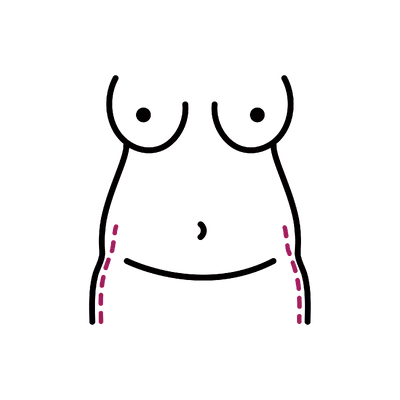
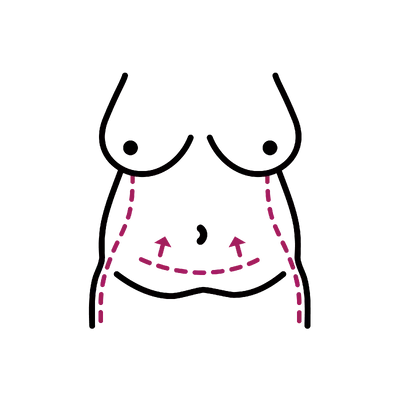
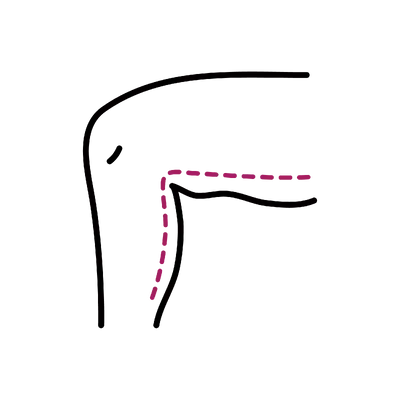
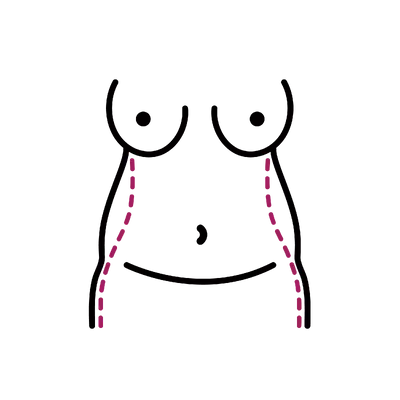
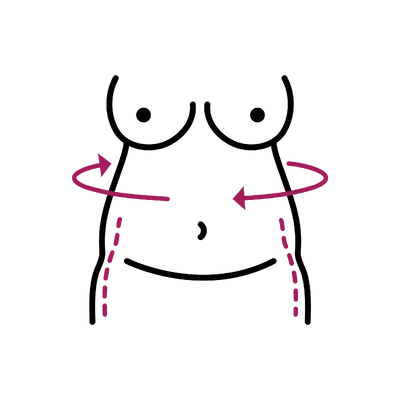
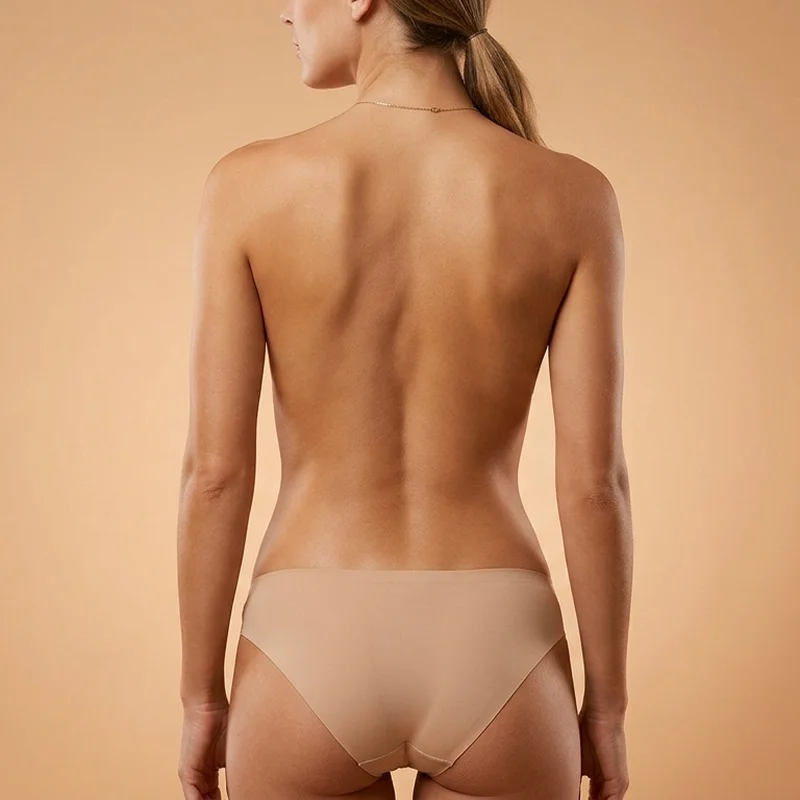
Back liposuction is surgery that reshapes the bra line, flanks and upper or lower back by removing fat through a thin tube called a cannula. It flattens bra rolls, smooths love handles and slims a heavy-looking upper back. Back fat is fibrous and denser than the softer fat of the belly or thighs, which is why it resists diet and exercise. Removed fat cells do not return, so results last as long as your weight stays stable.1
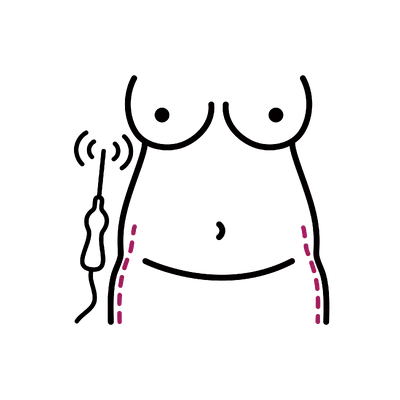
Because the back is broad and on show through fitted tops, the aim is an even surface with no dips or ridges. Dense fibrous fat is harder to remove smoothly, so surgeons often use ultrasound-assisted (VASER) or power-assisted tools to break it up.
Liposuction works best when you carry distinct, pinchable rolls rather than all-over weight, and good skin elasticity helps the surface settle.2 For most people the back looks flatter under clothing within a few weeks, with the final shape clearer once swelling clears. A consultation confirms whether your fat and skin suit it.
It can address a range of concerns, including:
Am I a Good Candidate for Back Liposuction?
Back fat is fibrous and the results show through everything you wear, so surgeons assess these factors carefully before agreeing to operate.
Surgeons first confirm your concern is one back liposuction reliably improves.
Bra rolls: good candidates can pinch a distinct fat roll at the band line, one of the most reliably treated zones.
Flank fullness: a pinchable layer wrapping from the waist round to the back responds well, treated alone or as part of full back contouring.
Upper-back heaviness: the test is whether the bulk is soft, grabbable fat rather than muscle or loose skin; only fat responds to liposuction.
Diet resistance: if the rolls have persisted through genuine weight loss and training, that fibrous fat is exactly what surgery removes for good.
Liposuction removes localised rolls; it does not change generalised weight.
Near a stable weight: good candidates carry localised back fat rather than generalised excess.
Localised, not generalised: if back fat sits on a frame of overall excess weight, liposuction will not produce a meaningful change.
Holding the result: removed fat cells do not return, so the improvement is permanent provided your weight stays stable afterwards.
The back is a large, visible canvas, and the skin has to retract smoothly over it.
Thick, firm skin: retracts better than thin or loose skin, and back skin is generally elastic, which works in most patients' favour.
Thin or sun-damaged skin: contour irregularities and fibrosis are more visible after fibrous-tissue liposuction, so this is assessed specifically at consultation.
Large treatment areas: incomplete skin retraction is a known risk across the lower back, which is why elasticity matters more here than in smaller zones.
Recovery involves weeks of compression vest wear and steady healing across the torso.
Non-smoker: or willing to stop at least four weeks before surgery.
Wound-healing history: poor healing on the back or upper torso is a caution flag, because access for hygiene and dressing changes is harder there.
Compression tolerance: shoulder, neck, or upper-back pain conditions can be aggravated by four to six weeks of compression vest wear, so surgeons check you can manage it.
Who is not suitable for back liposuction?
- Generalised excess weight rather than localised back rolls
- History of poor wound healing on the back or upper torso
- Neck, shoulder, or upper-back conditions aggravated by compression vest wear
- Very thin or sun-damaged back skin
- Smokers unwilling to stop at least four weeks before surgery
- Significant uncontrolled heart or lung disease, or otherwise not medically fit for general anaesthesia
- Bleeding disorder or blood thinners that cannot be safely stopped before surgery
Pricing
How Much Will Back Liposuction Cost in Thailand?
What back liposuction costs at accredited hospitals in Thailand, and what your final quote depends on.
Get your exact price
Tell us what you're considering and we'll send a personalised quote from accredited hospitals within 24 hours.
Get my free quoteTypical prices in Thailand
Typical ranges based on recent hospital quotes. Your exact price depends on the hospital and how complex your case is, and is confirmed at your teleconsultation.
Back Liposuction
Back fat is fibrous and slower to remove than most, so the price follows both the zones treated and how dense the tissue is.
| Bra roll liposuction Treats the rolls sitting above and below the bra line | $1,800 to $2,200 ฿61,200 to ฿74,800 |
| Lower back and flank liposuction Reduces the love handles that carry round towards the waist | $1,800 to $2,500 ฿61,200 to ฿85,000 |
| Full back liposuction, all zones Upper, lower and lateral areas treated together for an even line | $2,800 to $3,600 ฿95,200 to ฿122,400 |
Added to the above where needed
| VASER ultrasound-assisted technique Softens fibrous back fat before removal where the tissue needs it | $500 to $800 ฿17,000 to ฿27,200 |
Get your exact price
Tell us what you're considering and we'll send a personalised quote from accredited hospitals within 24 hours.
Hospitals Trusted for Back Liposuction
From internationally accredited flagships to dedicated specialist hospitals, these are the kinds of facilities where international patients have this procedure.
Rattinan Clinic
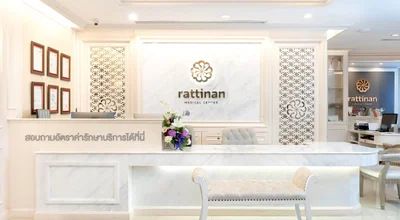
A specialist body contouring clinic in central Bangkok with over 14,000 BodyTite treatments performed.
View hospital profile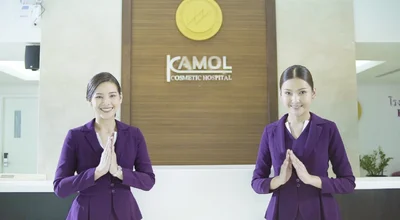
Kamol Cosmetic Hospital
The only specialist cosmetic surgery hospital in Thailand to hold JCI accreditation.
View hospital profile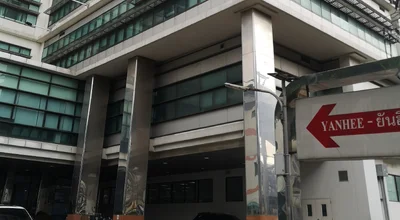
Yanhee International Hospital
A 400-bed hospital known worldwide for high-volume cosmetic surgery.
View hospital profile
Get a Free Quote in Two Minutes
Tell us what you're considering. We'll match you with suitable specialists and provide real hospital pricing.
- Honest pricing with no markups
- Matched to a specialist for your procedure
- No obligation, no pressure


Rated 5 stars by our patients
The complete guide to Back Liposuction in Thailand
Everything below is for readers who want the full detail: costs broken down, types and techniques, recovery, risks and safety, and planning your trip.
Back Liposuction Surgeons & Clinics in Thailand
The back is a technically demanding area because fibrous fat requires different handling and the results are visible through clothing. Here is how to find the right surgeon.
Leading Hospitals in Bangkok
Our partner hospitals have full plastic surgery departments with operating theatres, anaesthesia teams, and overnight stay capability. For back liposuction, the hospital matters because these facilities have VASER and power-assisted equipment available, not all clinics do.
Experienced Back Liposuction Surgeons
Our partner surgeons hold certification from the Thai Board of Plastic and Reconstructive Surgery. Back contouring is part of their regular body sculpting work. The surgeons we work with understand fibrous tissue dynamics and know how to avoid the surface irregularities that plague less experienced operators. Many combine back lipo with arm or flank work in the same session.
Matching You to the Right Surgeon
We match you to a partner surgeon with experience in the specific zone you need treated, because bra roll technique differs from lower back or flank work. At consultation your surgeon can show back-specific before-and-after photos, rather than just front-facing abdominal shots, and explain which technique they would use for your fat density and why. Seeing how smooth the result looks in side and rear views is the most useful thing to focus on when you review their cases.
Understanding Your Results
Back liposuction makes a noticeable difference in how clothing fits and how the torso looks from behind. Here is what to expect.
Typical Back Liposuction Results
The most obvious change is that fitted tops, bras, and dresses sit flat without creating bulges. The silhouette from behind becomes smoother and more streamlined. Bra rolls disappear, flanks flatten, and the waist-to-hip transition looks cleaner. Results are permanent, removed fat cells do not return.
What Results Can You Expect?
Expect a noticeably smoother back profile once swelling resolves. The change is most visible in clothing, things that used to create visible lines and rolls now drape smoothly. In photos taken from behind, the difference is significant. Skin retraction across the back is generally good because back skin tends to be thick and elastic, but your surgeon will assess this specifically during consultation.
Back Liposuction Cost in Thailand
Average Cost of Back Liposuction
Back liposuction in Thailand typically costs $1,800–$3,600 depending on how many zones are treated and which technique is used. A single area like bra rolls sits at the lower end. Full back contouring, upper, lower, and flanks, approaches the upper range. VASER cases cost more than standard tumescent because the equipment is more expensive to operate.
Cost Breakdown
The surgeon's fee accounts for the largest share. Back fat is fibrous and takes longer to extract than softer fat, which is reflected in the fee. Hospital charges cover the operating theatre, sterile equipment, and nursing. Anaesthesia fees depend on whether local sedation or general is used, general is more common for multi-zone back work. Aftercare includes follow-ups, medication, and a compression garment.
What Affects the Price?
Treatment scope is the biggest factor, one zone versus the full back. Fat density matters because fibrous tissue takes longer and may require VASER, which adds cost. Surgeon seniority and hospital accreditation level also affect the number. If you combine back lipo with arm or flank work, the incremental cost for additional zones is usually less than treating them as separate procedures.
Thailand vs International Price Comparison
Back liposuction in Thailand costs 40–60% less than comparable procedures in the US ($5,000–$9,000), Australia (A$4,700–A$8,100), and UK (£4,000–£6,800). The gap widens for multi-zone work because Western per-area fees stack up quickly. Our partner hospitals are JCI-accredited and use modern VASER and power-assisted equipment.
Surgical vs Non-Surgical Back Fat Removal
The main non-surgical option for back fat is fat freezing (cryolipolysis, often known as CoolSculpting), which cools targeted pockets of fat until the cells break down and the body clears them over the following weeks. Fat-dissolving injections are sometimes used for very small bra-roll bulges too. For a single, modest, pinchable deposit in someone already near their target weight, these can give a noticeable reduction with no incisions and no real downtime.
The limits are significant on the back, though. Each fat-freezing cycle only treats a small area and reduces it partially, so the broad, fibrous fat across the upper back, bra line and flanks usually needs several sessions and still falls short of a flat, even result. It cannot sculpt a whole back evenly, struggles with the dense fibrous fat that makes back rolls so stubborn in the first place, and carries a rare risk of paradoxical fat growth, where the treated area enlarges instead of shrinking.
For removing bra rolls and back fat completely in one session, contouring the whole back to an even surface, or treating the dense fibrous fat that resists everything else, surgical back liposuction is the route, and that is what the rest of this page covers.
Types of Back Liposuction
Most patients fall into one of two groups, those who want a specific trouble spot addressed and those who need the entire back smoothed. The approach depends on where your fat sits.
Targeted Back Liposuction
Focuses on one or two problem zones, most commonly the bra roll area or the lower back flanks. Quicker procedure, shorter recovery, and lower cost. Effective when the rest of the back has acceptable contour and the issue is localised.
- 30–60 minutes per zone
- Can often be done under local anaesthesia with sedation
- Smaller compression garment, less post-op restriction
- Best for: patients with one or two specific bulge areas on an otherwise smooth back
Full Back Contouring
Treats the entire posterior surface, upper back, mid-back, bra rolls, lower back, and flanks. This produces a uniformly smooth result from the shoulders to the waistline. Longer procedure requiring general anaesthesia, but the comprehensive result is worth it for patients who carry fat across the whole back.
- 1.5–2 hours under general anaesthesia
- Multiple incision points for complete access
- Compression vest covers the full torso for 4–6 weeks
- Best for: patients with generalised back fat or who want a comprehensive transformation
Back Liposuction Techniques
Back fat is among the most fibrous tissue in the body. Technique selection matters more here than in softer areas because the wrong approach can leave lumps, dips, or an uneven surface.
Tumescent Technique
Tumescent fluid infiltrates the fat layer, numbs the area, and facilitates removal with a cannula. Reliable for moderate deposits and softer fat. On the back, it works well for lower back and flank work but can struggle with the very dense, fibrous fat found around the upper back and bra line.
- Proven, cost-effective approach for moderate fat density
- Works well for lower back and flanks
- May leave more bruising in fibrous areas than VASER
- Best for: lower back and flank fat of moderate density
VASER-Assisted Technique
Ultrasound energy liquefies fat before extraction, which is especially valuable in the back where the tissue is fibrous and resistant to standard cannula work. Some surgeons feel the heat may encourage a degree of skin retraction, though the peer-reviewed evidence for meaningful skin tightening is limited, so it should not be relied on as a substitute for good natural elasticity.
- Handles dense, fibrous back fat more effectively than tumescent alone
- Any added skin tightening is modest, not a guaranteed effect
- Less bruising and more uniform results in tough tissue
- Best for: bra rolls, upper back, or any area with dense fibrous fat
Power-Assisted Liposuction (PAL)
A mechanically vibrating cannula that breaks up resistant fat more efficiently. Practical for multi-zone back work where large areas need to be treated evenly. Reduces operating time and surgeon fatigue during longer sessions, which helps maintain quality across the entire treatment area.
- Efficient fat removal over large back surfaces
- Consistent results across multiple zones in one session
- Reduced operative time for comprehensive back contouring
- Best for: full back contouring where speed and uniformity matter
Laser-Assisted Liposuction
Laser-assisted liposuction (often marketed as SmartLipo) uses laser energy to liquefy fat before it is removed and to heat the underside of the skin as it goes. On the back, the appeal is the thermal skin tightening: the broad surface relies on good retraction to settle smoothly, so the added firming can help where skin is on the looser side. It tends to suit smaller, defined zones rather than full-back work.
- Laser melts fat and heats the skin to encourage tightening
- Useful where back skin needs extra retraction over a smaller area
- Less suited to high-volume, full-back removal than VASER or PAL
- Best for: a single zone like bra rolls where some skin tightening is wanted
Back Liposuction Recovery Timeline
Days 1–3
The treated areas feel bruised and tight. Sleeping is most comfortable on your side or stomach. Compression garment goes on immediately and stays on continuously. Short walks several times a day. Avoid reaching behind you or twisting, movements that stretch the back.
Days 4–7
Tightness eases and bruising begins fading. You can manage most daily activities, dressing, eating, short outings. Sleeping improves as tenderness decreases. Follow-up appointment before the end of the week to check incisions and healing.
Weeks 2–4
The back starts feeling normal again. Swelling reduces and contours become visible through your compression garment. Light exercise can resume. Compression switches to nighttime-only around week 2–3.
Months 2–6
Final back contour settles as remaining swelling clears and skin retracts. Bra rolls stay gone, the back sits flat under clothing, and incision marks fade to faint dots that are hard to find.
When Can You Fly After Back Liposuction?
Most patients fly home at 7 days. Wear your compression garment during the flight and get up to walk periodically. Aeroplane seats can feel uncomfortable against the treated area for the first flight, bring a soft travel pillow or blanket to cushion your back against the seat.
When Can You Return to Work and Exercise?
Desk work within 5–7 days. Any job involving lifting, pulling, or sustained back use needs 2–3 weeks off. Light walking and gentle movement from day one. Gym work excluding back-intensive exercises at 3 weeks. Full exercise including rowing, pull-ups, and deadlifts at 6 weeks.
When Will You See Final Results?
The improvement is obvious within the first two weeks as initial swelling drops. Fitted tops and bras sit noticeably smoother. By month 2 you have a strong sense of the final shape. The very last refinements, deep swelling resolution and full skin retraction, continue through month 6.
Anaesthesia for Back Liposuction
Back liposuction in Thailand is done under one of two approaches, and which one suits you depends mainly on how much of the back is being treated. A single zone, such as a bra roll or one flank, can often be done under local anaesthesia with sedation: the area is numbed completely and you are relaxed and drowsy but not fully asleep, so you feel no pain while the fat is removed. Full back contouring across several zones is usually done under general anaesthesia instead, where you are fully asleep for the whole procedure.
Your surgeon and anaesthetist decide together which is safer and more comfortable for your case, based on the number of zones, how long the operation will take, and your medical history. Whichever route is chosen, a qualified anaesthetist stays with you and monitors you throughout, which is standard at the accredited hospitals we work with.
Before you are cleared you have a pre-operative assessment, including blood tests and a review of any medications you take. You feel nothing during the procedure itself. Afterwards the back feels bruised and tight rather than sharply painful, more like a deep ache across the treated area, and this is well controlled with the pain relief your surgeon prescribes as it settles over the first week.
Risks and Safety of Back Liposuction
Back liposuction is a well-established procedure, but the fibrous nature of back fat creates some specific considerations that are worth understanding.
- Infection at incision sites (uncommon with sterile technique)
- Incomplete skin retraction, particularly across larger treatment areas on the lower back
- Blood clots in the legs (deep vein thrombosis) that can travel to the lungs (pulmonary embolism), a rare risk that rises with long-haul flights soon after surgery3,2
The back is a large, flat surface. Any irregularity, a dip, a ridge, or uneven fat removal, shows through clothing. This is why back liposuction demands careful, methodical technique. Fibrous tissue is harder to remove evenly, and surgeon experience in this specific area is the best protection against uneven results.
Is Back Liposuction Safe in Thailand?
At our partner hospitals, which are JCI-accredited and staffed by surgeons certified by the Thai Board of Plastic and Reconstructive Surgery, back liposuction follows internationally recognised surgical and infection-control protocols. The procedure is relatively low-risk compared to deeper surgeries, it involves surface-level fat removal with no organs or major structures at risk.
How to Reduce Risks
The biggest factor is the surgeon, and we match you with partner surgeons who perform back contouring regularly rather than treating it as an afterthought to abdominal work, because fibrous back fat requires different technique. Your surgeon will talk you through back-specific results and the approach planned for your case at consultation. On your side, wear your compression garment as directed without shortcuts, and avoid lying on your back for extended periods during the first week, as it can increase fluid accumulation in the treated area.
When Is a Touch-Up Needed?
Small areas of residual fullness or mild asymmetry occasionally become visible once all swelling clears at 3–6 months. Touch-ups for the back are straightforward, usually under local anaesthesia, targeting the specific area that needs refinement. Wait the full 6 months before making a judgment, because residual swelling in fibrous tissue takes longer to fully resolve than in softer body areas.
Planning Your Trip to Thailand for Back Liposuction
Back liposuction recovery is manageable and the procedure is practical for a medical trip. Here is how to plan it.
How Long to Stay in Thailand
Seven days covers the essentials, consultation on day 1, procedure on day 2, recovery days 3–6, and follow-up on day 7. If you are combining back with flank or arm work, consider extending to 10 days for a more comfortable recovery before the flight home.
What's Included in a Medical Trip
Your coordinator arranges scheduling, hospital transfers, and follow-up appointments. A typical quote covers surgeon fees, anaesthesia, the procedure room, aftercare, and your compression garment, though exact inclusions are set by the clinic and confirmed in writing in your quote. Accommodation and flights are separate, your coordinator will recommend nearby hotels.
What to Pack
Front-opening clothing is essential, pulling anything on or off over your head is uncomfortable for the first week when the back is healing. Bring soft, breathable fabrics that do not chafe against compression garments. A travel pillow for the flight home cushions the back against the seat. Skip underwired bras, soft crop tops work better over a compression vest.
Related Procedures
Other procedures that address similar goals or conditions, in case one of them is a closer fit for you.
Planning your treatment in Thailand
Independent guides to help you weigh the decision, before you commit to anything.
Common Questions About Back Liposuction
Practical answers for patients considering back contouring in Thailand

Medical References
Keep researching with AI
Open this guide in your AI assistant to dig deeper and ask the questions it didn't answer.
Opens in a new tab with this guide already loaded.
Medical disclaimer: This information is for educational purposes only and does not replace professional medical advice. Individual results, recovery times, and suitability vary. Always consult a qualified surgeon before making decisions about treatment.
Ready to Get Started?
No-obligation consultation and quote within 24 hours. Speak with a coordinator who can match you to the right surgeon and hospital.
Speak to Our Team