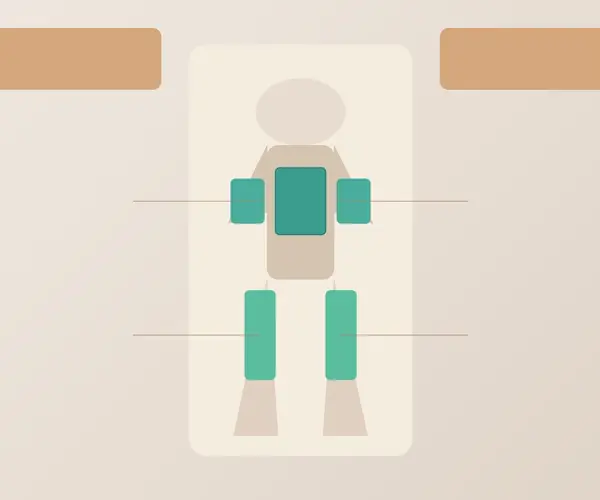
Common Donor Sites for Fat Harvesting
The first stage of a Brazilian Butt Lift is liposuction to collect fat from one or more areas of the body. The most frequently used donor sites are the abdomen and flanks, as these areas tend to hold substantial fat deposits in most patients and contouring them simultaneously enhances the waist-to-hip ratio.
The lower back is another common harvesting area. Removing fat from above the buttocks creates a smoother transition to the newly enhanced gluteal area, improving the overall contour from every angle.
The inner and outer thighs are also viable donor sites, particularly when additional volume is needed or when the patient carries proportionally more fat in the lower body. In some cases, the upper arms, bra roll area, or chin may also be used, though these typically yield smaller volumes.
Your surgeon will assess your fat distribution during the consultation and recommend the donor sites that will provide the best combination of sufficient volume and aesthetic body contouring.
How Much Fat Is Needed
The amount of fat required depends on the desired level of enhancement and the patient's starting anatomy. Most BBL procedures require approximately 1000 to 2000ml of purified fat for injection. However, because purification removes a significant portion of the harvested material, the total volume of liposuction aspirate collected is typically higher than the final injection volume.
As a general guide, for every litre of raw liposuction aspirate, roughly 600 to 700ml of usable purified fat may be obtained. Patients with limited donor fat may not be able to achieve dramatic enhancement in a single procedure and may be candidates for a staged approach.
Consult your surgeon about whether your available fat reserves are sufficient for the level of enhancement you have in mind.
The Purification Process
Raw liposuction aspirate contains not only viable fat cells but also blood, oil from damaged cells, tumescent fluid, and cellular debris. Injecting this unprocessed material would reduce fat survival and increase the risk of complications. Purification isolates the healthy, intact fat cells for transfer.
There are several purification methods in common use. Centrifugation spins the aspirate to separate fat from unwanted components by density. Decanting involves allowing the aspirate to settle by gravity, then draining off the lower fluid layer. Washing with saline or a specialised solution rinses away contaminants while preserving cell viability.
Each method has its advocates, and research has not conclusively demonstrated that one approach produces significantly better fat survival than the others. The consistency of the surgeon's technique and handling of the fat matter more than the specific purification method used.
How Fat Is Injected
Once purified, the fat is loaded into syringes and injected into the buttocks using thin cannulas. The injection process is meticulous. Fat is deposited in small amounts across multiple tissue layers, using a fanning technique that distributes tiny parcels throughout the subcutaneous tissue.
This approach maximises the surface area of contact between the grafted fat and the surrounding tissue, giving each deposit the best chance of establishing blood supply. Placing fat in thin layers rather than large boluses is a key factor in achieving high survival rates.
The injection pattern is also designed to sculpt the buttocks according to the agreed aesthetic plan, building projection, rounding the contour, and blending the enhancement smoothly into the surrounding anatomy.
Can the BBL Be Safe With Limited Donor Fat
Patients with lower body fat percentages may still be candidates for a BBL, though the degree of enhancement will be more modest. In these cases, surgeons may harvest from multiple smaller donor sites to accumulate sufficient volume. Some patients choose to gain a moderate amount of weight before the procedure to increase available donor fat, though this should only be done under medical guidance.
For patients who truly lack adequate donor fat, butt implants or a combined implant-and-fat-transfer approach may be more appropriate. Your surgeon will provide an honest assessment of what can realistically be achieved based on your body composition.