What to Expect at Your First Cosmetic Surgery Consultation
A good consultation is where your idea meets reality: what is achievable for you, by this surgeon. How to prepare, how it works from abroad, and the signs of a surgeon worth trusting.
Published 10 April 2026
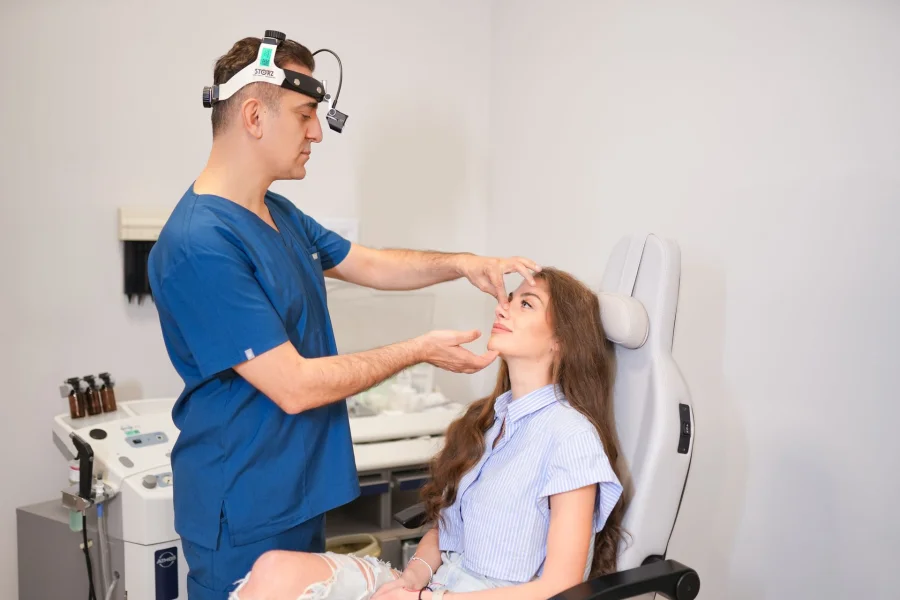
A cosmetic consultation is where an idea in your head meets what is actually possible: for your face or body, with your anatomy, in this surgeon's hands. It is the most important conversation you will have, and the best ones are not always the ones that tell you what you want to hear.
A surgeon who tempers your expectations, or suggests a smaller change than you came in for, is often a better sign than one who enthusiastically agrees to everything.
This guide covers how to prepare, how the process works when the surgeon is abroad, and how to read what you are told.
What the consultation is actually for
It is easy to think of a consultation as the moment you book your procedure. It is more useful to think of it as the moment you find out whether the procedure is right, and right for you.
A good surgeon uses it to understand your goals, examine what your anatomy allows, and tell you plainly what a realistic result looks like. Sometimes that matches your hopes exactly. Sometimes it means a different technique, a more modest change, or a frank "I would not recommend this". All three are the consultation doing its job.
What to bring
The more you bring, the more useful the conversation.
- Photos of yourself, taken plainly in good light from a few angles, so the surgeon can assess what you are starting with.
- Reference images of the look you are drawn to, with an open mind that your own features may not allow an exact copy.
- Your medical history, including past surgery, medications, allergies, and anything relevant to anaesthesia.
- Your goals in your own words, and the questions you do not want to forget to ask.
Being clear about what bothers you, and what you hope to change, lets a surgeon give you a real opinion rather than a generic one.
How it works when the surgeon is abroad
Treatment abroad usually runs in two stages.
First, a remote consultation. You share your photos and history, and the surgeon responds with an assessment, the options they would consider, and an itemised quote. Ask for a video call if you can, because seeing how a surgeon talks about risk and limits tells you a great deal.
Then, an in-person consultation a day or two before surgery, where the surgeon examines you properly and confirms the plan. Build a little room into your trip for this, in case the in-person assessment adjusts what is sensible.
Choosing where that consultation happens is itself a safety decision, which we cover in choosing a safe cosmetic clinic.
What is realistic for you
This is the heart of a good consultation. A surgeon should look at your skin, your bone structure, and your proportions, and tell you what is achievable and what is not.
Two tools help, and both have limits. 3D imaging or simulation can show a likely direction, but it is a guide, not a promise of your result. And before-and-after photos are far more useful when you ask to see patients who started with features like yours, rather than the clinic's most flattering cases.
Be wary of a perfect answer. Bodies heal differently, results settle over months, and no good surgeon guarantees an outcome. What they can give you is a realistic range, and the reasoning behind it.
Reading the quote
When the quote comes back, read it in full. A clear estimate itemises rather than landing on a single number.
Look for the surgeon's fee, anaesthesia, the facility, any implants or devices, your compression garments, follow-up appointments, and crucially the revision policy: what happens, and who pays, if a result needs adjusting. It should also be clear what is not included, such as flights and accommodation.
A quote that will not be broken down is a small red flag in itself.
Green flags and red flags
By the end, you should have a feel for the surgeon as much as the plan.
Reassuring signs: a willingness to temper your expectations, clear talk about risks and recovery, relevant before-and-afters, an itemised quote, and no pressure to commit today.
Treat these as warnings: promises of a perfect result, agreement to every request without question, reluctance to discuss complications, a quote that stays vague, or pressure to pay a deposit to "hold" a price or a surgery date.
Questions worth asking
- Looking at my features, what result is realistic, and what is not?
- Which technique would you use, and why that one for me?
- Can I see before-and-afters of patients who started similar to me?
- What are the main risks, and the realistic recovery, for this procedure?
- What is your revision policy if I am not happy with the result?
A quick consultation checklist
- Clear photos of yourself and reference images gathered.
- Medical history and your questions written down.
- A remote consultation done, by video if possible.
- A realistic result discussed, not a guaranteed one.
- An itemised quote that includes the revision policy.
- A surgeon who tempered rather than oversold.
Frequently asked questions
Do I need to travel just for the consultation?
Usually not. Most cosmetic consultations start remotely from your photos and history, with an in-person assessment a day or two before surgery.
Should I bring photos of the look I want?
Yes, reference images help a surgeon understand your goal. Just stay open to hearing that your own features may not allow an exact copy.
Is a 3D simulation what I will actually look like?
No. A simulation shows a likely direction, not a promise. Treat it as a guide, and ask the surgeon how close it tends to be in practice.
What if the surgeon suggests something different from what I wanted?
Take it seriously. A surgeon who proposes a different or smaller change, or advises against a procedure, is usually doing their job, not losing interest.
How do I judge a surgeon over video?
Watch how they handle limits and risks. A good surgeon is comfortable saying what is not achievable, and never pressures you to decide on the call.
How Thailand Beauty helps
We help you get a consultation worth having: your photos and goals in front of the right board-certified plastic surgeon, a video call where you can ask anything, and an itemised plan you can actually understand.
If you would like to start, share your goals and photos with us and we will arrange the right consultation for you.

Related Articles

Is Your Clinic Actually Run by a Real Doctor? How to Check
Most aesthetic and beauty clinics are not run by plastic surgeons, and a few are…

The Real Risks of Cosmetic Surgery Abroad, and How to Reduce Them
Every operation carries risk, and cosmetic surgery abroad adds a few specific on…

Recovery and Flying Home After Cosmetic Surgery
The result you are picturing is months away, not the day you fly home. What reco…

Does Insurance Cover Cosmetic Surgery Abroad?
There is a quiet assumption that insurance has your back. For cosmetic surgery a…
Ready to Get Started?
Speak with our care coordinators for a free, no-obligation consultation and personalised quote.
Get a Free Quote