Arm Liposuction in Thailand Your guide to cost, top surgeons & hospitals
Toned arms should not be something only genetics can give you. Sometimes the last step is surgical.

What Is Arm Liposuction?
Also known as: Arm Fat Removal · Upper Arm Lipoplasty
Arm liposuction is surgery that slims the upper arms by suctioning out fat through small incisions with a thin tube called a cannula. It targets the back and inner arm, where stubborn fat sits even when the rest of you is lean, reducing circumference for a more toned shape. Both arms are treated in one session so they match, usually in 1 to 2 hours under general anaesthesia or local anaesthesia with sedation. The fat cells removed do not return, so the change lasts as long as your weight stays stable.
The arms are a spot that diet and training often never quite fix, and that frustration is what brings most people here. Your surgeon hides the tiny incisions in the elbow crease and armpit fold. The aim is naturally slimmer arms, not a hollow look.
If your skin is firm and elastic, lipo alone usually works well. If there is significant hanging skin, often after major weight loss, your surgeon will say plainly at consultation whether an arm lift should be part of the plan.
It can address a range of concerns, including:
Am I a Good Candidate for Arm Liposuction?
Whether lipo alone will slim your arms depends on a short list of factors that surgeons assess in minutes at consultation.
The procedure is designed for a fat problem on otherwise healthy arms, and surgeons confirm that pattern first.
Persistent upper-arm fullness: Fat that stays on the arms even when the rest of your body is lean is the classic indication.
The wave wobble: Fat that moves or hangs when you raise your arms reduces significantly or disappears, provided the cause is fat rather than skin.
Covered-up arms: Avoiding sleeveless tops because of how your arms look is a common driver, and good candidates regain that choice.
Hidden tone: Consistent upper-body training with no visible definition suggests an overlying fat layer lipo can thin.
Arm suitability forks cleanly on skin quality, and your surgeon will pinch-test it at consultation.
Firm skin, fat problem: Fat with firm, elastic skin means liposuction alone works well, with the skin shrinking around the slimmer arm.
Hanging skin: Loose, hanging skin, common after major weight loss, needs a brachioplasty (arm lift) instead of or alongside liposuction.
Thin skin and cellulite: Very thin upper-arm skin or visible cellulite raises the risk of contour irregularities showing after fat removal, so surgeons weigh this carefully.
Arms change with your overall weight, so surgeons want yours settled before they sculpt.
Near target weight: Good candidates are close to where they intend to stay, treating liposuction as refinement rather than reduction.
Ongoing changes: Fluctuating weight alters both arm volume and skin tone, undermining the symmetry the surgeon builds in.
Bilateral by design: Both arms are matched in a single session, and that matching assumes a stable baseline to plan around.
A short list of health factors specific to the arms gets checked before approval.
Lymphatic history: Lymphoedema or previous lymph node clearance affecting the arm is a significant caution for arm surgery.
Non-smoker: You need to quit at least four weeks before surgery to protect healing and skin retraction.
Compression commitment: Sleeves are worn full-time for the first week and at night for another 2-3 weeks. Inconsistent wear is the leading cause of uneven retraction.
Who is not suitable for arm liposuction?
- Loose, hanging arm skin needing an arm lift instead
- Very thin skin or prominent cellulite on the arms
- Lymphoedema or previous lymph node clearance
- Unstable weight
- Smokers unwilling to quit four weeks before surgery
- Significant uncontrolled heart or lung disease, or otherwise not medically fit for general anaesthesia
- Bleeding disorder or blood thinners that cannot be safely stopped before surgery
Pricing
How Much Will Arm Liposuction Cost in Thailand?
What arm liposuction costs at accredited hospitals in Thailand, and what your final quote depends on.
Get your exact price
Tell us what you're considering and we'll send a personalised quote from accredited hospitals within 24 hours.
Get my free quoteTypical prices in Thailand
Typical ranges based on recent hospital quotes. Your exact price depends on the hospital and how complex your case is, and is confirmed at your teleconsultation.
Arm Liposuction
Both arms are always treated in the same session for symmetry, so every price here covers the pair rather than one arm.
| Tumescent arm liposuction, both arms The standard technique, suited to firmer skin that will retract | $1,800 to $2,500 ฿61,200 to ฿85,000 |
| VASER arm liposuction, both arms Ultrasound energy for better skin retraction and smoother contouring | $2,500 to $3,600 ฿85,000 to ฿122,400 |
| Arm liposuction with a brachioplasty, both arms For loose skin that fat removal alone will not tighten | $4,000 to $6,500 ฿136,000 to ฿221,000 |
Get your exact price
Tell us what you're considering and we'll send a personalised quote from accredited hospitals within 24 hours.
Hospitals Trusted for Arm Liposuction
From internationally accredited flagships to dedicated specialist hospitals, these are the kinds of facilities where international patients have this procedure.

Rattinan Clinic
A specialist body contouring clinic in central Bangkok with over 14,000 BodyTite treatments performed.
View hospital profile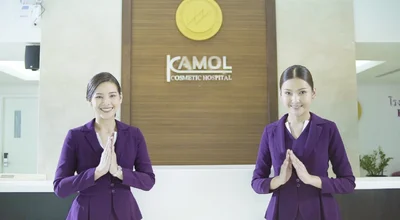
Kamol Cosmetic Hospital
The only specialist cosmetic surgery hospital in Thailand to hold JCI accreditation.
View hospital profile
Yanhee International Hospital
A 400-bed hospital known worldwide for high-volume cosmetic surgery.
View hospital profile
Get a Free Quote in Two Minutes
Tell us what you're considering. We'll match you with suitable specialists and provide real hospital pricing.
- Honest pricing with no markups
- Matched to a specialist for your procedure
- No obligation, no pressure


Rated 5 stars by our patients
The complete guide to Arm Liposuction in Thailand
Everything below is for readers who want the full detail: costs broken down, types and techniques, recovery, risks and safety, and planning your trip.
Arm Liposuction Surgeons & Clinics in Thailand
Arm liposuction requires bilateral precision, both arms need to match. Here is how to choose the right surgeon and facility in Thailand.
Leading Hospitals in Bangkok
Our partner hospitals are JCI-accredited with dedicated plastic surgery departments. These are full hospitals, not clinics, with on-site anaesthesia teams, post-operative monitoring, and emergency support. For arm liposuction the facility matters less than the surgeon, but knowing complications can be handled in-house is still important.
Experienced Arm Liposuction Surgeons
Our partner surgeons hold Thai Board of Plastic and Reconstructive Surgery certification and perform body contouring procedures daily. Arm liposuction is a standard part of their practice, often combined with back or flank work in the same session. They understand the specific challenges of arm skin retraction and bilateral symmetry from handling a high volume of these cases.
Choosing the Right Surgeon
Ask for before-and-after photos specifically of arms, not just abdominal or thigh work. Check that the photos show results at 3–6 months, not just one week post-op when everything is still swollen. Ask whether they would recommend VASER over tumescent for your skin type. And pay attention to how they assess your skin, a good surgeon will pinch the skin, evaluate elasticity, and tell you honestly whether lipo alone will be enough.
Understanding Your Results
Arm liposuction produces visible, lasting change, but the final shape takes time to emerge. Here is a realistic timeline of what to expect.
Typical Arm Liposuction Results
The main change is circumference reduction and improved shape along the back of the arm. Arms look slimmer and more toned, particularly when raised or extended. The improvement is permanent, removed fat cells do not regenerate.3,2 Results are most dramatic in patients who had a clear fat pocket but decent underlying muscle tone.
What Results Can You Expect?
Expect a noticeable reduction in arm size and a more defined tricep line. If you had the wobble when waving, it will be significantly reduced or gone. The final shape at 6 months depends on how well your skin retracts, younger patients with elastic skin tend to get the tightest result. If you train your arms after recovery, muscle definition will be more visible without the overlying fat.
Arm Liposuction Cost in Thailand
Average Cost of Arm Liposuction
Arm liposuction in Thailand typically costs $1,800–$6,500 for both arms. Tumescent technique sits at the lower end, VASER at the upper end. Both arms are always treated together in a single session, pricing for one arm alone is uncommon because symmetry requires bilateral treatment.
Cost Breakdown
The surgeon's fee is the largest component, reflecting the skill required to sculpt both arms evenly. Facility fees cover the operating room, equipment, and nursing support. Anaesthesia, either local with sedation or general, is a separate line item, with general costing more. Post-operative care includes follow-up visits and compression sleeves.
What Affects the Price?
Fat volume is the main driver, arms carrying a large amount of fat take longer to treat. VASER adds cost because the ultrasound equipment is expensive. If your surgeon recommends combining lipo with a mini arm lift for mild skin excess, that adds both time and fee. Hospital tier matters too, JCI-accredited facilities charge more than standalone clinics.
Thailand vs International Price Comparison
Arm liposuction in Thailand costs 40–60% less than equivalent procedures in the US ($5,000–$9,000), Australia (A$4,700–A$8,100), and UK (£4,000–£6,800). The savings come from lower facility and staffing costs, not from any compromise on surgical standards. Our partner hospitals are JCI-accredited and equipped for modern body-contouring techniques.
Surgical vs Non-Surgical Arm Contouring
The main non-surgical alternatives are fat freezing (cryolipolysis, often known as CoolSculpting) and fat-dissolving injections, which use cold or an injected solution to break down a portion of fat cells in the upper arm over several weeks, with no incisions and little to no downtime. They can take the edge off mild arm fullness and are worth knowing about if you want to avoid surgery entirely.
The limits are real, though. These treatments only reduce a fraction of the fat in a treated area, so stubborn or fuller arms usually need several sessions and still fall short of a sculpted result. They cannot suction fat evenly across the back and inner arm the way a surgeon can, they do nothing for loose skin, and results vary far more from person to person. There is no precise contouring and no guarantee both arms end up matched.
Arm liposuction is the route when you want a definite, lasting change in one session. It removes the fat directly and in a controlled way, treats both arms together for symmetry, and the removed fat cells do not come back. For anyone who has already tried non-surgical options without enough change, or who simply wants the result done properly the first time, surgery is what the rest of this page covers.
Types of Arm Liposuction
There are really only two paths for arm contouring, liposuction alone for fat, or liposuction with a lift for fat plus skin. Your anatomy determines which one.
Standard Arm Liposuction
Removes fat from the posterior and medial upper arm through two or three small incisions. Both arms are sculpted in the same session. Works well when skin elasticity is good enough to shrink around the reduced volume without sagging.
- Incisions hidden in the elbow crease and armpit fold
- Both arms treated simultaneously for balanced results
- Recovery takes about 7–10 days before you look presentable
- Best for: patients with upper arm fat but firm, elastic skin
Arm Liposuction with Brachioplasty
Combines liposuction with surgical removal of excess skin along the inner arm. The trade-off is a scar running from the armpit toward the elbow, which fades over time but does not disappear. Necessary when skin will not retract on its own, common after significant weight loss.
- Addresses both fat and skin excess in one operation
- Scar runs along the inner arm, fades but remains visible
- Longer recovery, 2–3 weeks before returning to normal activities
- Best for: patients with hanging skin, especially post-weight-loss
Arm Liposuction Techniques
Arm fat sits in distinct layers and the skin behaves differently on the inner versus outer arm. Technique choice affects how smooth the result is and how well the skin tightens afterward.
Tumescent Technique
Tumescent fluid is injected to numb the tissue, reduce bleeding, and make fat easier to extract with a fine cannula.3 The standard approach for most arm cases. Reliable, well-understood, and effective when skin quality is good.
- Can be done under local anaesthesia with sedation
- Consistent, predictable fat removal with low complication rate
- Incisions placed in the elbow crease or armpit, heal to faint lines
- Best for: straightforward arm fat reduction with good skin tone
VASER-Assisted Technique
Ultrasound breaks down fat more selectively before removal, with less disruption to surrounding blood vessels and connective tissue than standard suction. The added benefit for arms is collagen stimulation in the skin, which improves retraction. Worth considering if your skin is on the border of adequate elasticity or you want the smoothest possible contour.
- Gentler fat disruption means less bruising and quicker healing
- Collagen stimulation helps skin tighten around slimmer arms
- More uniform fat removal across inner and outer arm compartments
- Best for: patients with borderline skin elasticity or wanting maximum definition
Power-Assisted Technique (PAL)
A cannula with a fine vibrating tip loosens fat as it moves, so the surgeon works through dense or fibrous arm fat more smoothly and with less manual force. The benefit on arms is more even extraction across the back and inner arm, which helps keep both sides matched. It is often combined with tumescent fluid rather than used as a standalone method.
- Vibrating cannula eases fat removal from firmer, fibrous areas
- More controlled, even passes help bilateral symmetry
- Typically less surgeon fatigue on longer or higher-volume cases
- Best for: denser or more fibrous arm fat, or revision after previous lipo
Laser-Assisted Technique
A thin laser fibre liquefies fat and delivers heat to the underside of the skin before or during suction, with the heat intended to encourage some tightening as the arm slims. It suits smaller volumes and patients with mildly lax skin who are not candidates for an arm lift. Not every hospital offers it, and your surgeon will say whether it adds anything in your case.
- Laser energy liquefies fat and warms the skin to aid retraction
- Suited to smaller fat volumes rather than large reductions
- A non-surgical option for mild laxity short of needing an arm lift
- Best for: smaller arm fat pockets with mild skin laxity
Arm Liposuction Recovery Timeline
Days 1–3
Both arms will be swollen and sore, with bruising concentrated along the inner arm and tricep area. Compression sleeves go on immediately and stay on continuously. You can use your hands for light tasks but avoid lifting anything heavier than a phone. Walking is fine and encouraged.
Days 4–7
Swelling drops noticeably and the bruising shifts from purple to yellow-green. You can manage most daily tasks with care, eating, typing, light dressing. Overhead reaching is still uncomfortable. Follow-up appointment happens during this window.
Weeks 2–4
Compression sleeves switch to nighttime only. Your arms start looking visibly slimmer and you can return to lower body exercise. Upper body workouts should wait until week 4, starting light and building gradually.
Months 2–6
Arm contours reach their final shape as deep swelling resolves and skin contracts fully. Any small incision marks fade to faint lines that blend into the elbow crease or armpit fold.
When Can You Fly After Arm Liposuction?
Most patients fly home at 7 days, once the surgeon has reviewed healing and cleared you to travel. Liposuction and the immobility of a long flight both raise the risk of a deep vein thrombosis (DVT), a clot in the leg that can travel to the lungs1,2, so the timing and precautions matter. Wear your compression sleeves, stay well hydrated, get up and walk the aisle every hour or two, and flex your calves and ankles regularly. Ask your surgeon whether you need graduated compression stockings or a blood-thinning injection for the journey. Seek urgent medical care if you develop calf pain or swelling, chest pain, or breathlessness. Mild arm swelling during the flight is normal and settles within 24 hours of landing.
When Can You Return to Work and Exercise?
Desk work is possible within 5–7 days if your job does not require heavy lifting. Lower body exercise can resume at 2 weeks. Upper body training, anything involving the arms, should wait until 4 weeks minimum, then build back slowly. Heavy lifting and high-intensity arm work at 6 weeks.
When Will You See Final Results?
You will notice slimmer arms as soon as the initial swelling drops around day 5–7, but that is just the rough preview. The shape refines steadily over 2–3 months as swelling resolves layer by layer. Skin retraction, especially on the inner arm, continues for up to 6 months.
Anaesthesia for Arm Liposuction
Arm liposuction can be done two ways, and which one suits you is decided case by case. Smaller, straightforward cases are often done under local anaesthesia with sedation, where the arms are fully numbed and you are relaxed and drowsy but breathing on your own and pain-free throughout. Larger-volume cases, or when arm lipo is combined with other areas, are usually done under general anaesthesia, so you are completely asleep and aware of nothing. Either way a consultant anaesthetist stays with you and monitors you continuously, which is standard at the accredited hospitals we work with.
Your surgeon and anaesthetist make the final call together, based on how much fat is being removed, whether other areas are treated in the same session, and your medical history. It is not something you have to decide alone, and they will talk it through with you beforehand. Because both arms are always treated in one sitting for symmetry, the choice partly comes down to keeping you comfortable and still for the full hour or two the procedure takes.
Before you are cleared for either option you have a pre-operative assessment, including blood tests and a review of any medication you take, so anything that affects anaesthesia is picked up early. You feel nothing during the procedure itself. The soreness afterwards is real but manageable: most people describe it as a deep ache, like the day after a hard arm workout, and it is well controlled with the pain relief your surgeon prescribes and the support of your compression sleeves.
Risks and Safety of Arm Liposuction
Arm liposuction is a common, well-established procedure with a low complication rate. That said, you should understand the specific risks before committing.
- Seroma or fluid collection requiring aspiration1
- Infection at incision sites (uncommon with proper wound care)
- Skin laxity if elasticity was insufficient for lipo-only, may require a secondary arm lift
The inner arm has thinner skin and less supportive tissue than the outer arm, which is why contour irregularities are more common here. Surgeon experience with bilateral arm work is the single biggest factor in avoiding asymmetry and achieving smooth results.
Is Arm Liposuction Safe in Thailand?
Yes. At JCI-accredited hospitals with board-certified plastic surgeons, arm liposuction in Thailand follows established surgical protocols. The procedure itself is relatively low-risk, it is surface-level surgery with no deep structures at risk.
How to Reduce Risks
We match you with surgeons certified by the Thai Board of Plastic Surgery who have specific experience with arm contouring, not just general liposuction, and you can ask to see before-and-after photos taken at 3 months or later rather than just post-op images. On your side, the biggest factor you control is following the compression sleeve instructions precisely, because inconsistent wear is the leading cause of uneven retraction. And be honest with your surgeon about your expectations, if they recommend adding a lift, there is usually a good reason.
When Is Revision Needed?
Occasionally, once all swelling resolves at 4–6 months, a small area of residual fat or slight asymmetry becomes noticeable. This is uncommon but correctable with a minor touch-up under local anaesthesia. Do not assess your result until at least 4 months post-op, swelling in the arms can be stubborn and misleading before that.
Planning Your Trip to Thailand for Arm Liposuction
Arm liposuction is a one-session procedure with a quick initial recovery, making it practical for a medical trip. Here is how to organise it.
How Long to Stay in Thailand
Seven days is the minimum. Consultation and pre-op on day 1, procedure on day 2, recovery days 3–6, follow-up on day 7. Most patients feel well enough to fly home comfortably at the one-week mark. If you are combining arm lipo with other body areas, add a few extra days.
What's Included in a Medical Trip
Your coordinator handles scheduling, hospital transfers, and post-op check-ins. A typical surgical quote covers surgeon fees, anaesthesia, the facility, aftercare visits, and compression sleeves, though exact inclusions are set by the clinic and confirmed in writing in your quote. Flights and hotel are arranged separately, but your coordinator can suggest nearby hotels and help coordinate logistics.
What to Pack and Prepare
Bring button-front or zip-up tops, pulling anything over your head will be uncomfortable for the first 5–7 days. Pack loose, long-sleeved layers that can be worn over compression sleeves if you want to cover them while out. Your compression sleeves should be fitted before departure if possible, or can be provided at the hospital.
Related Procedures
Other procedures that address similar goals or conditions, in case one of them is a closer fit for you.
Planning your treatment in Thailand
Independent guides to help you weigh the decision, before you commit to anything.
Common Questions About Arm Liposuction
Practical answers for patients considering arm liposuction in Thailand

Medical References
Keep researching with AI
Open this guide in your AI assistant to dig deeper and ask the questions it didn't answer.
Opens in a new tab with this guide already loaded.
Medical disclaimer: This information is for educational purposes only and does not replace professional medical advice. Individual results, recovery times, and suitability vary. Always consult a qualified surgeon before making decisions about treatment.
Ready to Get Started?
No-obligation consultation and quote within 24 hours. Speak with a coordinator who can match you to the right surgeon and hospital.
Speak to Our Team