Otoplasty in Thailand Your guide to cost, top surgeons & hospitals
Ears that sit flat against the head rarely get noticed. That is exactly the point, and exactly what otoplasty achieves.
What Is Otoplasty?
Also known as: Ear Pinning · Pinnaplasty
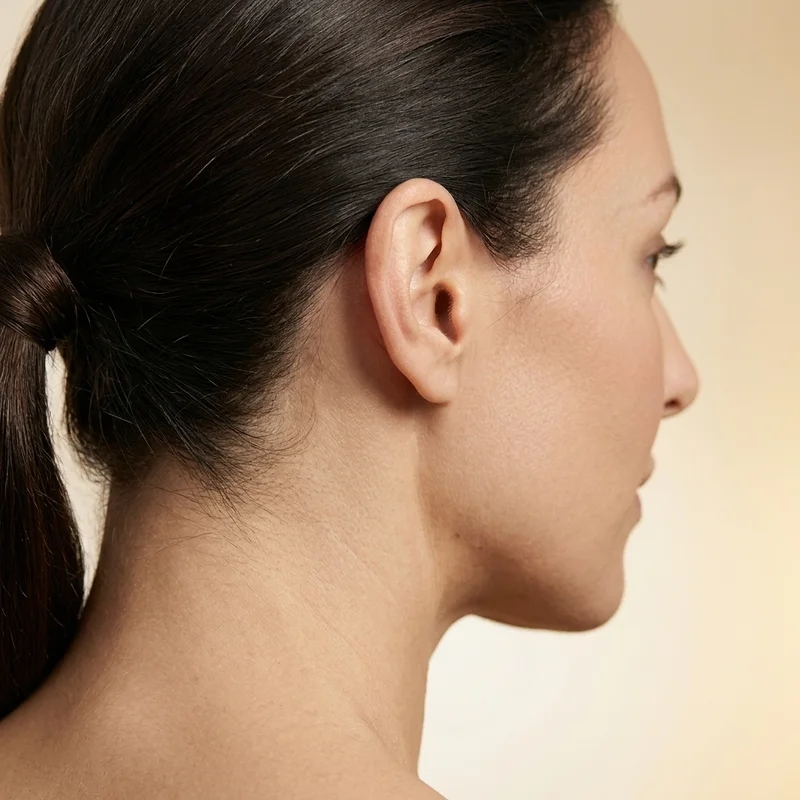
Otoplasty is surgery that corrects the shape, position, or proportion of the ears by reshaping the cartilage that holds them. It can bring prominent ears closer to the head, build a missing antihelical fold, the natural curve that holds the upper ear in, or reduce an oversized conchal bowl, the deep cup near the canal. The surgeon works through a small incision hidden behind the ear, usually in 1 to 2 hours under local sedation or general anaesthesia.1 Once healed, the cartilage holds its new shape for life.3
If you have spent years tucking your ears under your hair or angling away from photos, this is a procedure built around that exact worry. Every pair protrudes for a slightly different reason, so your surgeon examines yours, folds them gently to preview the position, and plans the correction around the actual cause.
The aim is ears that look unremarkable, not ears pinned flat, because an ear pressed hard against the skull draws as much attention as one that sticks out. Your surgeon will preview the likely result at consultation.
It can address a range of concerns, including:
Am I a Good Candidate for Otoplasty?
Otoplasty has one of the clearest candidate profiles in facial surgery; assessment centres on cartilage maturity, scarring history, and what you expect symmetry to mean.
Otoplasty has a genuine developmental gate at one end and no upper limit at the other.
Cartilage development: the ear cartilage must be fully developed, typically from age five, before correction is possible.
Adults equally suitable: a large proportion of patients are adults who have lived with prominent ears for decades; the procedure and recovery are the same at any age once cartilage is mature.
No deadline: results are permanent whenever you have the surgery, because the reshaped cartilage holds its corrected position for life.
Good candidates have a structural ear concern the surgeon can map to a specific correction.
Projection: ears that stand out at a noticeable angle, usually from an underdeveloped antihelical fold, are the classic indication.
Conchal excess: an enlarged conchal bowl pushing the whole ear away from the skull responds to conchal reduction.
Asymmetry: a significant size or shape difference between the ears can be corrected, with each side adjusted independently.
Long-standing self-consciousness: patients bothered by their ears for years tend to be among the most satisfied after correction.
The health gates for otoplasty are few but specific, and most relate to healing behind the ear.
Non-smoker: blood supply to the ear skin and cartilage affects healing quality, so smoking must stop at least three weeks before surgery.
Scarring history: keloid or hypertrophic scarring behind the ear is a caution worth raising at consultation.
Bleeding risk: easy bleeding or regular blood thinners need a pre-operative review before surgery can be scheduled.
Aftercare commitment: candidates must keep the head bandage on as prescribed and wear a soft headband at night for four to six weeks afterwards.
The aim is ears nobody notices, which means natural correction rather than perfection.
Natural, not flat: an ear pressed completely flat against the skull looks as conspicuous as one that protrudes, so surgeons correct to a natural resting position.
Symmetry within reason: most ears are not identical to begin with; candidates expecting perfect left-right symmetry should recalibrate before booking.
Permanent result: once healed, the cartilage maintains its corrected shape for life.
Settling window: the final position establishes over one to three months as the cartilage stabilises.
Who is not suitable for otoplasty?
- Children whose ear cartilage is not yet fully developed (typically under five)
- Keloid-prone scarring behind the ear not yet reviewed with the surgeon
- Unreviewed blood thinners or uncontrolled bleeding risk
- Expecting perfect left-right symmetry
- Smokers unwilling to stop three weeks before surgery
- Unable to commit to the bandage and night headband routine
Pricing
How Much Will Otoplasty Cost in Thailand?
What otoplasty costs at accredited hospitals in Thailand, and what your final quote depends on.
Get your exact price
Tell us what you're considering and we'll send a personalised quote from accredited hospitals within 24 hours.
Get my free quoteTypical prices in Thailand
Typical ranges based on recent hospital quotes. Your exact price depends on the hospital and how complex your case is, and is confirmed at your teleconsultation.
Otoplasty
What your ears need depends on how stiff the cartilage is and whether a deep ear bowl is pushing them out as well as a missing fold.
| Bilateral ear pinning, sutures only Both ears reshaped with permanent stitches, the simplest approach | $1,800 to $2,400 ฿61,200 to ฿81,600 |
| Bilateral with cartilage scoring For firmer cartilage that has to be softened before the fold will hold | $2,200 to $3,000 ฿74,800 to ฿102,000 |
| Conchal reduction with fold correction Reduces a deep ear bowl and rebuilds the fold in one operation | $2,800 to $3,600 ฿95,200 to ฿122,400 |
| Revision otoplasty Correcting or refining the result of earlier ear surgery | $2,500 to $3,800 ฿85,000 to ฿129,200 |
Get your exact price
Tell us what you're considering and we'll send a personalised quote from accredited hospitals within 24 hours.
Hospitals Trusted for Otoplasty
From internationally accredited flagships to dedicated specialist hospitals, these are the kinds of facilities where international patients have this procedure.

Masterpiece Hospital
A cosmetic surgery specialty hospital in Bangkok focused on facial contouring, rhinoplasty and eyelid work.
View hospital profile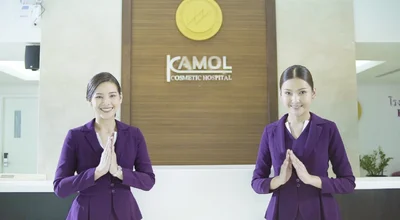
Kamol Cosmetic Hospital
The only specialist cosmetic surgery hospital in Thailand to hold JCI accreditation.
View hospital profile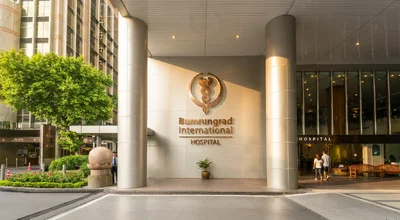
Bumrungrad International Hospital
Southeast Asia's flagship private hospital, treating over 520,000 international patients a year.
View hospital profile
Get a Free Quote in Two Minutes
Tell us what you're considering. We'll match you with suitable specialists and provide real hospital pricing.
- Honest pricing with no markups
- Matched to a specialist for your procedure
- No obligation, no pressure


Rated 5 stars by our patients
The complete guide to Otoplasty in Thailand
Everything below is for readers who want the full detail: costs broken down, types and techniques, recovery, risks and safety, and planning your trip.
Otoplasty Surgeons & Clinics in Thailand
Otoplasty is a contained procedure, but getting the degree of correction right, enough to improve the profile without over-pinning, requires experience with cartilage behaviour across different patients.
Leading Hospitals in Bangkok
Our partner hospitals are JCI-accredited and operate dedicated plastic surgery departments. For ear surgery, a hospital setting provides proper sterile theatre conditions, trained nursing, and the capacity to handle any post-operative concern without transferring to another facility. Otoplasty is routinely performed at these hospitals as part of their facial surgery programmes.
Experienced Otoplasty Surgeons
Our partner surgeons hold Thai Board certification in plastic and reconstructive surgery, the equivalent of specialist registration in the UK, ABPS certification in the US, or FRACS in Australia. Several trained overseas in craniofacial or paediatric plastic surgery fellowships, which is directly relevant because otoplasty is one of the most commonly performed procedures in those subspecialties. That background translates into confident cartilage handling and accurate correction.
What to Look for in a Surgeon
Ask to see before-and-after photos taken from multiple angles, front, side, and rear, at least three months post-operatively. The rear view shows scar quality; the front and side views show whether the correction is proportionate or over-done. Board certification in plastic surgery is the minimum. Beyond that, ask how often they perform ear corrections and whether they treat both adults and children, as that range of experience reflects deeper familiarity with different cartilage types and patient anatomy.
Understanding Your Results
Otoplasty produces a visible change in ear position that is apparent as soon as the bandage comes off. Here is what to expect from the result and how it develops.
Typical Otoplasty Results
A well-performed otoplasty brings the ears closer to the head by creating or enhancing the antihelical fold, reducing conchal depth, or both. The correction should look proportionate, ears that sit naturally against the head without appearing artificially flat or pressed. Scars are hidden behind the ears and become virtually undetectable once healed. The change is permanent because the reshaped cartilage maintains its corrected position.
What Results Can You Expect?
The corrected position is visible immediately after bandage removal, though early swelling slightly exaggerates the flattening. Over the next one to three months, the ears settle into their final position as the cartilage heals and stabilises. During consultation, your surgeon will assess ear projection, fold anatomy, and cartilage firmness to determine how much correction is needed and demonstrate the approximate post-operative position by manually folding the ear back. That physical demonstration is the most useful preview of the likely outcome.
Otoplasty Cost in Thailand
Average Cost of Otoplasty
Otoplasty in Thailand typically costs between $1,800 and $3,800. A straightforward bilateral ear pinning under local anaesthesia sits at the lower end. More complex cases involving conchal reduction, cartilage grafting, or surgery under general anaesthesia approach the upper range. Your quote should separate each component clearly.
Cost Breakdown
The surgeon's fee covers the cartilage work, scoring, suturing, and shaping. Hospital fees cover the operating theatre, sterile instruments, nursing support, and any overnight stay. Anaesthesia fees vary depending on whether local sedation or general anaesthetic is used. Aftercare covers follow-up appointments, bandage changes, medications, and coordination support during your recovery in Thailand.
What Affects the Price?
Complexity is the main factor. Simple fold creation with sutures costs less than cases requiring cartilage scoring, conchal reduction, or both. General anaesthesia adds to the total compared with local sedation. Revision otoplasty, correcting a previous surgery, costs more because scar tissue makes the cartilage harder to work with. Hospital tier and surgeon seniority also influence the final figure.
Thailand vs International Price Comparison
Otoplasty in Thailand costs 40–60% less than equivalent procedures in the US ($5,000–$9,000), Australia (A$4,700–A$8,100), and the UK (£4,000–£6,800). The difference reflects lower facility and operating costs in Thailand, not lower surgical quality. Our partner hospitals hold JCI accreditation and surgeons carry Thai Board certification in plastic and reconstructive surgery.
Non-Surgical Alternatives to Otoplasty
The only genuine non-surgical option for prominent ears is ear moulding, a soft splint worn to guide the cartilage into shape. It works because newborn cartilage is still soft and pliable from the mother's hormones, so a moulding system fitted in the first few weeks of life can reshape the ear without surgery. For the right baby, started early enough, it can avoid an operation altogether.
The catch is the window. That softness fades fast, usually within the first six weeks, after which the cartilage stiffens and no longer responds to moulding. For older children and adults there is no splint, headband, or device that pins ears back permanently; the cartilage has set, and anything worn simply holds the ear while it is in place and releases the moment it comes off. Stick-on products and "ear correctors" sold online are cosmetic, not corrective.
For anyone past early infancy, otoplasty is the only way to change the ear's position for good. The surgeon reshapes or repositions the cartilage itself, so the correction holds for life rather than depending on something you keep wearing, which is what the rest of this page covers.
Types of Otoplasty
The correction needed depends on what is causing the protrusion. A missing fold, an oversized bowl, or a combination of both each require a different surgical approach, and sometimes both are addressed in the same procedure.
Antihelical Fold Correction
The most common type of otoplasty. When the antihelical fold is absent or underdeveloped, the upper portion of the ear projects outward. The surgeon creates or sharpens this fold using cartilage scoring, suturing, or both. The goal is a smooth curve that holds the ear closer to the head without creating a sharp ridge.
- Addresses the most frequent cause of prominent ears, a flat or missing antihelical fold
- Scoring weakens cartilage to allow reshaping; sutures hold the corrected position
- Produces a gradual, curved fold rather than a sharp crease
- Best for: patients whose ear protrusion originates in the upper third or middle of the ear
Conchal Reduction
When the conchal bowl, the deep cup of cartilage nearest the ear canal, is too large, it pushes the entire ear away from the skull. Conchal reduction removes a strip of cartilage from this bowl and sutures the ear closer to the mastoid bone behind it. This addresses projection that originates from the base of the ear rather than from a missing fold.
- Removes excess cartilage from the deep bowl of the ear
- Brings the ear closer to the head at its root rather than just folding the upper portion
- Often combined with antihelical fold correction for comprehensive reshaping
- Best for: patients whose ears project because of an oversized conchal bowl, not just a flat fold
Combined Correction
Many patients have both an underdeveloped fold and excess conchal depth contributing to the protrusion. Addressing only one would leave a partial correction that looks incomplete. Combined otoplasty handles both in a single session, producing a proportionate result that holds from every angle.
- Corrects both the fold and the bowl in one procedure
- Avoids the lopsided look of correcting only one contributing factor
- Slightly longer operating time but still a day case under local or general anaesthesia
- Best for: patients with multiple contributing causes of ear protrusion who need comprehensive correction
Otoplasty Techniques
The two core techniques, cartilage scoring and cartilage suturing, can be used independently or combined. Which your surgeon selects depends on cartilage stiffness, the degree of correction needed, and the specific anatomy causing the protrusion.
Cartilage Scoring (Anterior Approach)
Controlled cuts or abrasions on the front surface of the cartilage weaken it so it curls backward into the desired fold shape. This harnesses the cartilage's own tension to maintain the correction. Particularly effective for stiff, thick cartilage that resists repositioning with sutures alone. The trade-off is slightly less predictable contouring than suture methods.
- Uses the cartilage's natural recoil to hold the new shape
- Effective for firm, resistant cartilage that does not bend easily
- Slight risk of sharp edges if scoring is too aggressive
- Best for: patients with thick, stiff ear cartilage where suture-only correction would be insufficient
Cartilage Suturing (Mustarde and Furnas Methods)
Permanent sutures reshape the cartilage by folding and holding it without cutting. The Mustarde technique creates the antihelical fold; the Furnas technique secures the conchal bowl to the mastoid bone. Suturing preserves the ear's natural flexibility and produces smooth contours. It is the gentler option but may be less durable in very stiff cartilage.
- Mustarde sutures create or enhance the antihelical fold through folding
- Furnas sutures pin the conchal bowl to reduce projection at the base
- Preserves the natural feel and spring of the ear cartilage
- Best for: moderate protrusion with pliable cartilage that responds well to repositioning
Combined Scoring and Suturing
For ears that need both significant fold creation and conchal setback, combining techniques gives the surgeon independent control over each element. Scoring weakens the cartilage where the fold should be, sutures hold it in position, and a separate set of sutures addresses the conchal depth. This layered approach handles the most complex corrections.
- Scoring creates the fold shape; sutures lock it and address conchal depth separately
- Each component is adjusted independently for precise overall correction
- Standard approach for ears with both fold absence and conchal excess
- Best for: complex cases requiring correction of multiple anatomical elements simultaneously
Otoplasty Recovery Timeline
Days 1–3
A padded bandage wraps around the head to protect the ears and hold them in position. Expect a dull ache and some throbbing, manageable with prescribed pain relief. The ears will feel warm and swollen under the dressing. You will rest at your hotel with daily check-ins from your care coordinator.
Days 5–7
The head bandage is removed at your follow-up appointment and you see the corrected ear position for the first time. Bruising is present but fading, and swelling is subsiding. Your surgeon checks the suture sites and confirms healing is progressing. Most patients are comfortable with light activity by this stage.
Weeks 2–4
With desk work already resumed once the bandage came off around day seven, this stage is about heavier activity. Residual bruising clears and the ears settle further into their final position. Gym sessions and cardio can usually restart at three to four weeks. A soft headband worn at night protects the ears from being bent forward during sleep, most surgeons recommend this for four to six weeks.
Months 1–3
The cartilage stabilises in its corrected position and any remaining firmness softens. Scars behind the ears fade to fine pale lines that are completely concealed. The final shape and projection are fully established. Results are permanent once healing is complete.
When Can You Fly After Otoplasty?
Most patients can fly home 7–10 days after surgery, once the head bandage has been removed and your surgeon has confirmed that the cartilage is healing in the correct position. Cabin pressure at cruising altitude does not affect the ears at this stage. Wear a soft headband during the flight to prevent the ears from being pressed forward by headrests or pillows.
When Can You Return to Work and Exercise?
Desk work is manageable within a week for most patients. The head bandage comes off around day five to seven, and after that the ears are visible but may still be slightly swollen. Light walking is encouraged from day one. Gym sessions and cardio should wait until three to four weeks post-surgery. Swimming should wait at least six weeks, and contact sports or any activity with a risk of ear impact until around eight weeks.1
When Will You See Final Results?
The corrected ear position is visible as soon as the bandage comes off, though swelling and bruising soften the immediate appearance. By two to three weeks, the shape and projection are much clearer. Scars behind the ears fade over several months and become very difficult to detect. Full cartilage stabilisation takes one to three months, at which point the result is permanent.
Anaesthesia for Otoplasty
Otoplasty in Thailand is done under one of two approaches: local anaesthetic with sedation, where the area behind the ears is fully numbed and you are relaxed and drowsy but breathing on your own, or general anaesthesia, where you are completely asleep. Either way you feel nothing during the cartilage reshaping itself. A consultant anaesthetist is present throughout and monitors you continuously, which is standard at the accredited hospitals we work with.
The choice between the two is made by your surgeon and anaesthetist together, based on how much correction your ears need, whether one or both sides are being treated, your age, and your medical history. Straightforward adult ear pinning is often comfortable under local with sedation; more involved cases, anxious patients, and younger children are usually done fully asleep. You will know which applies to you before the day of surgery.
Before you are cleared for anaesthesia you have a pre-operative assessment, including a review of any medications and your bleeding history, which matters here because the skin behind the ear is delicate. During the procedure you feel nothing. Afterwards the discomfort is mild: more a dull ache and throbbing under the head bandage for the first few days than sharp pain, and it is well controlled with the medication your surgeon prescribes.
Risks and Safety of Otoplasty
Otoplasty has a low complication rate and a long track record. The main risks relate to the correction itself, whether the ears end up in the right position and whether the cartilage holds, rather than medical danger.
- Asymmetry between the two ears after healing, which may need assessment
- Over-correction producing ears that sit too flat or appear pinned
- Under-correction where protrusion partially returns as cartilage relaxes
- Suture extrusion, a permanent suture working through the skin surface (uncommon)
- Infection around the cartilage (rare but requires prompt treatment to prevent cartilage damage)3,1
- Haematoma under the skin of the ear (uncommon, may require drainage)
- Altered sensation or numbness around the ears, usually temporary3,1
- Keloid or hypertrophic scarring behind the ears in predisposed individuals
Cartilage infection, while rare, is the one risk that requires immediate attention because it can permanently alter ear shape if untreated. Staying close to your surgical team during the first week, which a Thailand trip naturally ensures, means any early signs are caught and treated promptly.
Is Otoplasty Safe in Thailand?
Yes. At JCI-accredited hospitals with board-certified plastic surgeons, otoplasty in Thailand meets the same clinical and safety standards as procedures in the UK, US, and Australia. It is a well-established procedure with a low complication rate. The surgery involves cartilage reshaping through a concealed incision, no deep structures, no implants, and a predictable healing course in the vast majority of cases.
How to Reduce Risks
Keep the head bandage on for the full period your surgeon prescribes. This is not decorative; it holds the cartilage in position during the critical early healing phase. Sleep on your back for at least three weeks to avoid bending the ears. Stop smoking a minimum of three weeks before surgery because blood supply to the ear skin and cartilage affects healing quality. Report any increasing pain, warmth, or redness immediately. Early signs of cartilage infection need to be treated within hours, not days.
When Is Revision Needed?
Revision otoplasty is uncommon. The most frequent reason is asymmetry that becomes apparent once swelling has fully resolved, or partial recurrence of protrusion if the cartilage relaxes against the sutures. Wait at least three months before considering revision, swelling can make the ears look uneven during recovery when the final result is actually symmetric. If correction does recur, it is usually a straightforward repeat procedure.
Planning Your Trip to Thailand for Otoplasty
Otoplasty fits comfortably into a 7–10 day trip. The procedure is quick, recovery is predictable, and the follow-up schedule is straightforward.
How Long to Stay in Thailand
Plan for 7–10 days minimum. Day one covers your consultation and pre-operative assessment of ear cartilage and projection. Surgery is typically on day two, one to two hours, then back to your hotel. The protective bandage stays on for about five to seven days, after which your surgeon removes it, checks the correction, and schedules a final follow-up before clearing you to fly home.
What's Included in a Medical Trip
Your care coordinator handles hospital transfers, surgery scheduling, and all follow-up appointments. A typical surgical quote covers the surgeon's fee, anaesthesia, facility charges, and aftercare including bandage changes, medications, and follow-up visits, though exact inclusions are set by the clinic and confirmed in writing in your quote. Flights and accommodation are arranged separately, though your coordinator can recommend hotels near the hospital and assist with bookings.
Recovery in Bangkok vs Phuket
Bangkok is the sensible option for the entire stay. You need to be close to the hospital for bandage removal and your follow-up appointments, and if any concern arises, increased pain, warmth, or swelling, you are minutes from your surgeon rather than a domestic flight away. Otoplasty recovery is light enough that you can enjoy Bangkok once the bandage comes off, but moving to another city before your surgeon has confirmed everything is healing correctly adds unnecessary risk.
Related Procedures
Other procedures that address similar goals or conditions, in case one of them is a closer fit for you.
Planning your treatment in Thailand
Independent guides to help you weigh the decision, before you commit to anything.
Common Questions About Otoplasty
Everything you need to know before your procedure
More About Otoplasty

Medical References
Keep researching with AI
Open this guide in your AI assistant to dig deeper and ask the questions it didn't answer.
Opens in a new tab with this guide already loaded.
Medical disclaimer: This information is for educational purposes only and does not replace professional medical advice. Individual results, recovery times, and suitability vary. Always consult a qualified surgeon before making decisions about treatment.
Ready to Get Started?
Speak with our care coordinators for a free, no-obligation consultation and personalised quote.
Speak to Our Team