What Each Procedure Does
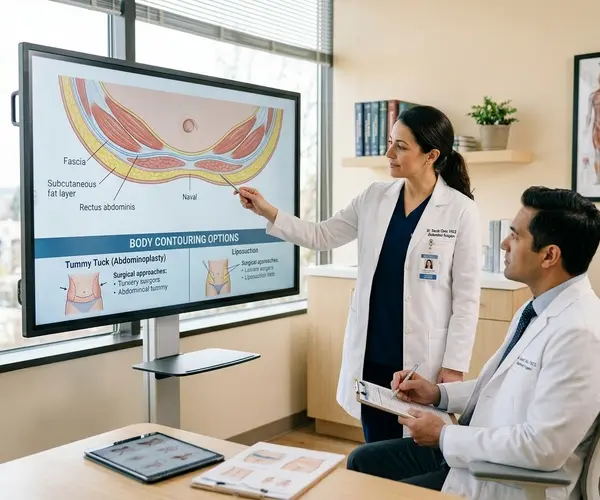
Liposuction uses a thin cannula to suction fat from beneath the skin. It is effective at reducing volume in areas where fat accumulates disproportionately, such as the abdomen, flanks, and thighs. However, it does not remove excess skin or repair weakened abdominal muscles. If the skin has good elasticity, it will retract and tighten naturally after the fat is removed.
A tummy tuck is a more extensive procedure. The surgeon makes an incision along the lower abdomen, removes a section of excess skin, and tightens the underlying rectus abdominis muscles if they have separated (a condition called diastasis recti). Fat can be removed at the same time, either by direct excision or by combining the tummy tuck with liposuction of specific areas.
Comparing the Two Procedures
| Factor | Liposuction | Tummy Tuck |
|---|---|---|
| Removes fat | Yes | Yes |
| Removes excess skin | No | Yes |
| Repairs muscle separation | No | Yes |
| Scar | Small puncture marks | Hip-to-hip below bikini line |
| Anaesthesia | Local or general | General |
| Typical procedure time | 1 to 3 hours | 2 to 5 hours |
When Liposuction Is the Better Choice
Liposuction is well suited for patients who are near their ideal weight but have localised fat deposits that do not respond to diet and exercise. The key requirement is adequate skin elasticity. If the skin can retract smoothly after the underlying fat is removed, liposuction alone will produce a pleasing contour.
Good candidates for liposuction typically have firm, elastic skin without significant stretch marks or sagging. They may have stubborn pockets of fat on the abdomen, flanks, or other areas but do not have a significant overhang of loose skin.
When a Tummy Tuck Is Necessary
A tummy tuck becomes the better option when excess skin is present, particularly if it hangs over the waistband or creates a visible fold. This is common after pregnancy, where the abdominal wall stretches significantly, or after substantial weight loss. In both situations, the skin has been stretched beyond its capacity to retract on its own.
Muscle separation is the other major indication for a tummy tuck. During pregnancy, the left and right halves of the rectus abdominis muscle can spread apart, creating a gap called diastasis recti. This causes a bulging appearance in the midsection that no amount of exercise or fat removal will correct. Only surgical repair can bring the muscles back together.
Combining Both Procedures
Many patients benefit from having both procedures performed at the same time. A surgeon may perform a tummy tuck to address skin and muscle laxity while also using liposuction on the flanks, hips, or other areas to create a smoother overall contour. This combined approach can produce more comprehensive results than either procedure alone.
Combining procedures does increase the overall length of surgery and recovery, so it is not appropriate for every patient. Your surgeon will advise whether a combined approach is suitable based on your anatomy, health status, and goals.