Abdomen and Flanks
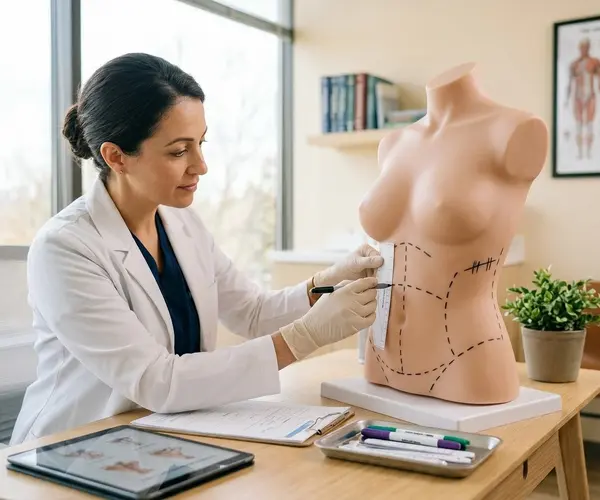
The abdomen is the single most popular area for liposuction. Fat deposits on the upper and lower abdomen can create a rounded silhouette that persists despite diet and exercise. Liposuction can address both the central abdominal fat and the flanks (commonly called love handles) in the same session, producing a slimmer waistline and improved profile.
Results in this area depend significantly on skin quality. Patients with firm, elastic skin tend to see smooth retraction after fat removal. Those with stretched or thin skin may need to discuss whether a combined approach with a tummy tuck would produce a better outcome.
Thighs
Both the inner and outer thighs respond well to liposuction. Outer thigh fat, sometimes referred to as saddlebags, can create a disproportionately wide hip appearance. Inner thigh fat may cause chafing and discomfort as well as an aesthetic concern. Liposuction can address both zones, though the inner thigh requires careful technique due to the thinner skin in that region.
Upper Arms
Fat on the upper arms is a common concern, particularly for women. Liposuction can reduce the circumference of the upper arm and improve its shape. Skin elasticity is an important factor here, as the arm skin can be prone to laxity. For patients with significant skin excess, an arm lift may be recommended either instead of or in addition to liposuction.
Chin and Neck
Submental liposuction targets the fat beneath the chin that creates the appearance of a double chin. This is one of the most straightforward liposuction procedures, often performed under local anaesthesia through a small incision beneath the chin. The results can significantly sharpen the jawline and neck profile.
This area responds particularly well in younger patients with good skin elasticity. Older patients with significant skin laxity in the neck may benefit more from a neck lift procedure.
Back
Fat deposits on the upper and lower back can create visible bulges, particularly around the bra line in women. These areas tend to contain denser, more fibrous fat that can be more challenging to remove. Techniques such as VASER ultrasound-assisted liposuction may be particularly useful for back fat due to their ability to break down fibrous tissue more effectively.
Chest (Gynecomastia)
Male patients with enlarged breast tissue, a condition called gynecomastia, can benefit from chest liposuction. This removes the fatty component of the enlarged breast, creating a flatter, more masculine chest contour. In cases where there is also excess glandular tissue, the surgeon may need to combine liposuction with direct excision of the gland.
Knees, Calves, and Ankles
Fat deposits around the knees, on the calves, and at the ankles can affect the proportions of the lower leg. These are smaller treatment areas that require precise technique and careful attention to symmetry. Not all surgeons routinely perform liposuction in these zones, so it is important to find a practitioner with specific experience in lower leg contouring.
Choosing Which Areas to Treat
Most patients have one or two primary areas of concern, but liposuction of multiple areas in a single session is common. The total volume of fat removed across all areas must stay within safe limits. Your surgeon will help prioritise treatment areas based on which changes will create the most meaningful improvement in your overall proportions and silhouette.