Prominent Ears
Prominent ears, sometimes called protruding ears, are the most common reason patients seek otoplasty. The ears project outward from the head at a wider angle than average, typically due to an underdeveloped antihelical fold, an enlarged conchal bowl, or a combination of both. Otoplasty corrects this by reshaping the cartilage to create or enhance the antihelical fold and, when necessary, reducing the depth of the conchal bowl to bring the ears closer to the head.
The degree of protrusion varies between patients and can differ between the two ears. Surgical correction is precisely calibrated to each ear independently, aiming for a natural, balanced result rather than mathematical symmetry.
Ear Asymmetry
Many people have ears that differ noticeably in shape, size, angle, or position. Asymmetry can be congenital or can develop after trauma or previous surgery. Otoplasty addresses asymmetry by adjusting each ear individually to create a more balanced appearance when viewed from the front.
Perfect symmetry is neither achievable nor desirable, as natural ears always have slight differences between the two sides. The goal is to minimise noticeable discrepancy so that neither ear draws disproportionate attention. This is permanent once the cartilage heals in its corrected position.
Macrotia
Macrotia refers to ears that are disproportionately large relative to the head and face. This is distinct from prominence, as the ears may sit at a normal angle but are simply too big. Correction involves reducing the overall size of the ear by removing a precisely planned wedge of cartilage and skin, then reconstructing the ear to maintain a natural shape at a smaller scale.
Congenital Ear Deformities
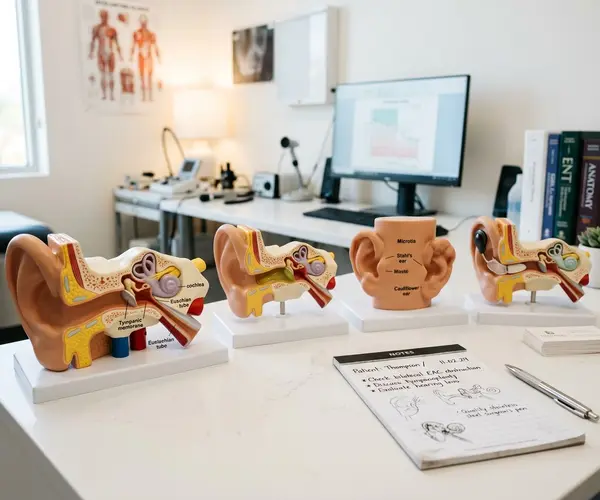
Several congenital conditions affect the shape of the ear cartilage from birth. Lop ear involves a forward fold of the upper ear, causing the top portion to droop downward. Cupped ear, also called constricted ear, features a tight, hooded upper rim that gives the ear a cup-like appearance. Shell ear is characterised by an absence of the natural folds and curves of the outer ear, leaving it flat and featureless.
Stahl's ear presents with an extra cartilage fold that creates a pointed, elf-like appearance at the upper ear. Each of these conditions requires a specific surgical approach to reconstruct the missing or malformed cartilage framework and produce a more typical ear shape.
Cauliflower Ear
Cauliflower ear develops when blunt trauma to the ear, common in wrestling, rugby, and martial arts, causes a blood clot (haematoma) between the cartilage and its overlying skin. If left untreated, the cartilage loses its blood supply, dies, and is replaced by fibrous scar tissue that creates a lumpy, thickened appearance. Otoplasty for cauliflower ear involves removing the scar tissue and, where possible, reconstructing the ear's contour.
Earlobe Repair
While not technically otoplasty in the traditional sense, earlobe correction is frequently performed alongside or as part of ear surgery. Stretched or torn earlobes from heavy earrings or gauges, elongated lobes from ageing, and keloid scarring from piercings can all be surgically repaired. The procedure is straightforward, performed under local anaesthesia, and produces permanent results.
Consult your surgeon to discuss which specific ear concerns apply to your case and what combination of techniques would produce the best outcome.