Why the Results Are Permanent
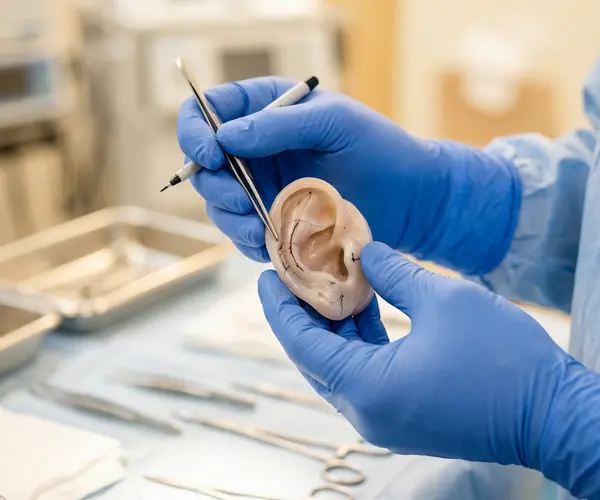
Otoplasty reshapes the structural framework of the ear rather than relying on temporary methods to hold it in place. Depending on the technique used, the surgeon either scores the cartilage to weaken it and allow it to fold into a new shape, removes small sections of cartilage to change the ear's contour, or places permanent internal sutures that hold the cartilage in a repositioned configuration.
Once the cartilage heals in its new position, the change is structural. Unlike soft tissue procedures where results may gradually relax over time, reshaped cartilage does not have a tendency to spring back to its original form. The healing process creates scar tissue within the cartilage that reinforces the correction and helps maintain the new shape indefinitely.
What the Revision Data Shows
Large published reviews of otoplasty outcomes report revision rates of approximately five percent. Reasons for revision include mild recurrence of protrusion in one ear, asymmetry that becomes apparent after swelling resolves, or over-correction where the ears sit too flat against the head.
Revision surgery, when needed, is typically less extensive than the primary procedure and addresses the specific area of concern. Most patients who undergo otoplasty do not require any further intervention.
The low revision rate reflects the inherent stability of cartilage once it has been surgically restructured. Unlike procedures that depend on the body's response to foreign materials, otoplasty works directly with the patient's own cartilage framework.
Can the Ears Change Over Time
All ears change subtly with age. Cartilage continues to grow very slowly throughout life, and the skin and soft tissue of the ear gradually lose elasticity. These natural ageing changes affect everyone, whether or not they have had otoplasty.
In practical terms, the corrected position of the ears remains stable. A patient who had otoplasty at age six can expect their ears to still appear well-positioned decades later. The gradual changes of ageing are cosmetically insignificant compared to the degree of correction achieved by surgery.
Trauma to the ear after surgery, such as a significant impact during contact sports, could theoretically affect the result, but this is uncommon. Wearing appropriate head protection during high-risk activities is a sensible precaution during the first few months of healing.
Suture-Based Techniques and Longevity
Some otoplasty techniques rely primarily on permanent internal sutures to reshape and hold the cartilage. A question that sometimes arises is whether these sutures can loosen or fail over time. While suture-related complications such as extrusion or loosening can occur, they are uncommon. The scar tissue that forms around the sutures over the first several months provides additional structural support that persists independently of the sutures themselves.
Surgeons who use suture-based methods often combine them with cartilage scoring to provide a dual mechanism of correction. Consult your surgeon about which technique they plan to use and how it contributes to the long-term stability of your result.