How the Deep Plane Technique Differs
In a traditional SMAS facelift, the surgeon lifts the skin as one layer and then separately tightens the SMAS beneath it, either by folding it (plication) or by removing a strip and suturing it tighter (SMASectomy). The skin is then redraped over the tightened foundation. While this approach is effective, it places some of the lifting tension on the skin itself, which can contribute to a less natural appearance over time.
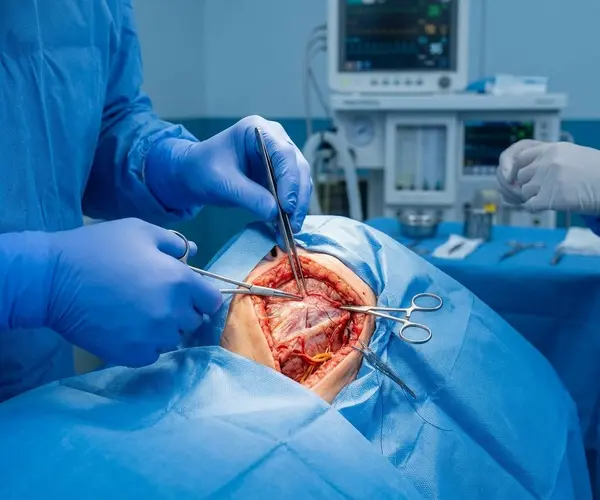
A deep plane facelift takes a fundamentally different approach. The surgeon dissects beneath the SMAS layer, releasing the ligaments that anchor it to the underlying bone, and lifts the entire composite flap (SMAS plus fat pads plus overlying skin) as a single unit. Because the deeper structures move together with the skin rather than independently, the result looks more like a restoration of youthful anatomy than a tightening of surface tissue.
This distinction is clinically significant. By mobilising the fat pads of the midface, the surgeon can restore volume to the cheeks and smooth the nasolabial folds without the need for separate fat grafting in many cases. The best age for a facelift varies, but the deep plane technique is particularly effective for patients with moderate to advanced volume loss in the midface.
Why Surgeons Consider It the Gold Standard
Many experienced facelift surgeons regard the deep plane technique as the gold standard for comprehensive facial rejuvenation. The reasons are both aesthetic and structural.
Because the skin is not separated from the underlying fat and muscle, it does not need to be pulled tight to achieve the lift. This eliminates the "windswept" or overly taut appearance that can occur when excessive tension is placed on the skin. The face retains its natural softness and movement.
The structural repositioning also contributes to longevity. When the SMAS and fat pads are lifted as a unit and secured in their new position, the result is supported by the deeper tissues rather than by skin tension alone. Skin stretches over time, but the repositioned SMAS provides a more durable scaffold. This is one reason deep plane results tend to outlast those of more superficial techniques.
What the Procedure Involves
A deep plane facelift is performed under general anaesthesia. The incisions are similar to those used in a traditional full facelift, running from the temple area along the front of the ear, around the earlobe, and behind the ear into the hairline. The difference lies in the depth and extent of the dissection beneath these incisions.
After making the incision, the surgeon identifies and enters the deep plane, working beneath the SMAS to release key retaining ligaments. The zygomatic ligaments (over the cheekbone) and the mandibular ligaments (along the jawline) are carefully released, allowing the composite flap to be repositioned in a more youthful vector.
The entire flap is then lifted and secured without placing tension on the skin. Excess skin is trimmed and the incisions are closed. The procedure typically takes longer than a standard SMAS facelift because of the more detailed dissection required, but the incisions and external appearance during recovery are similar.
Candidacy and Considerations
The deep plane technique is not necessary for every patient seeking a facelift. Patients with mild lower face laxity and minimal midface descent may achieve excellent results with a less extensive approach. The deep plane method is most beneficial for those with significant midface volume loss, deep nasolabial folds, jowling, and neck laxity occurring together.
Good candidates are in overall good health and have realistic expectations about the outcome. Smoking must be stopped well before surgery because the deep plane dissection relies on robust blood supply to the composite flap for proper healing.
The technique requires a surgeon with specific training and experience in deep plane dissection. The proximity of the facial nerve branches within the surgical field demands precise anatomical knowledge. Consult your surgeon about their experience with this technique and whether it is appropriate for your degree of facial ageing.
Recovery Compared to Other Techniques
Recovery from a deep plane facelift is broadly similar to that of a traditional full facelift. Swelling and bruising are expected in the first two weeks, with the majority of visible signs resolving within three to four weeks. Some surgeons report that deep plane patients experience less bruising because the blood supply to the skin is preserved when the skin and SMAS are kept together as a composite unit.
The deeper tissue repositioning means that the final result continues to refine over several months as swelling resolves and the tissues settle into their new position. Most patients see a clear improvement within the first month, with the full result becoming apparent over the following six to twelve months.