What Jaw Reduction Involves
Jaw reduction surgery, also called mandibular angle reduction or jaw contouring, reshapes the lower jaw by removing or shaving bone from the jaw angles. The procedure is designed to narrow a wide or square jawline, creating a softer, slimmer facial profile. It is one of the most commonly requested facial bone procedures in East Asian cosmetic surgery and has become increasingly popular worldwide.
The surgery is performed through incisions inside the mouth, leaving no visible scars. Using specialised instruments, the surgeon shaves or cuts the protruding angles of the mandible to reduce width and angularity. In some cases, the outer cortex of the jawbone is also burred to further slim the lower face.
Jaw reduction is frequently combined with chin reshaping to create a harmonious V-line contour, particularly when the patient's goal is an overall slimmer lower face rather than isolated jaw narrowing. The masseter muscle may also be treated with botulinum toxin before or after surgery to reduce muscular bulk contributing to jaw width.
What Jaw Augmentation Involves
Jaw augmentation adds structure and definition to a jawline that appears weak, narrow, or poorly defined. The most permanent surgical option is placement of solid jaw angle implants, typically made from silicone or porous polyethylene, which are positioned along the mandibular angle and body to create a stronger, more defined contour.
The implants are inserted through intraoral incisions or, less commonly, through small external incisions behind the jaw angle. Custom implants can be fabricated from CT scan data for patients whose anatomy requires a highly tailored approach.
Non-surgical jaw augmentation using dermal fillers is also available, offering temporary enhancement lasting 12 to 18 months without surgery. While fillers provide a useful preview of how added jaw definition might look, they cannot replicate the structural projection that implants deliver.
How Surgeons Determine the Right Approach
The decision between reduction and augmentation begins with a thorough analysis of facial proportions, bone structure, and soft tissue. Frontal width, profile projection, jaw angle shape, and the relationship between the jaw and other facial landmarks such as the cheekbones and chin are all assessed.
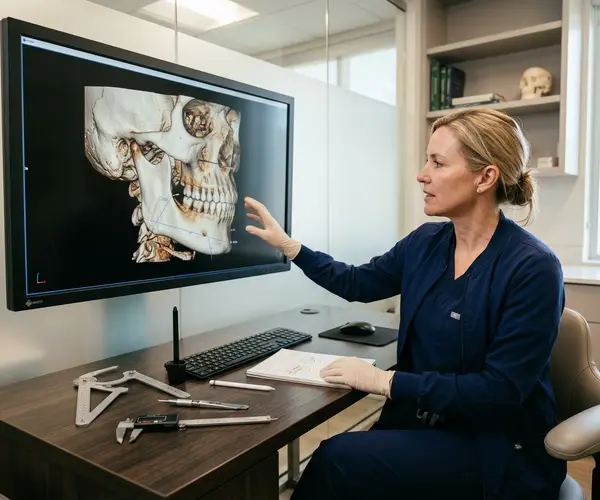
Imaging and sometimes 3D modelling help the surgeon plan the degree of change and predict the outcome. A patient who feels their face is too wide typically needs reduction, while someone who feels their jawline disappears into their neck or lacks definition typically needs augmentation.
In some cases, the answer is not straightforward. A patient may have adequate bone structure but excessive masseter muscle bulk, making non-surgical treatment with botulinum toxin a better starting point than bone surgery. Others may need a combination of chin surgery and jaw work to achieve balanced proportions. Consult your surgeon for a personalised assessment.
Bone Surgery vs Non-Surgical Options
Both jaw reduction and augmentation can be approached surgically or non-surgically, though the results differ significantly. Surgical bone contouring is permanent and offers the most dramatic change. Non-surgical options such as botulinum toxin for the masseter (reduction) or fillers along the jawline (augmentation) are temporary but carry less downtime and can serve as a useful trial before committing to surgery.