Cooper's Ligaments and Breast Support
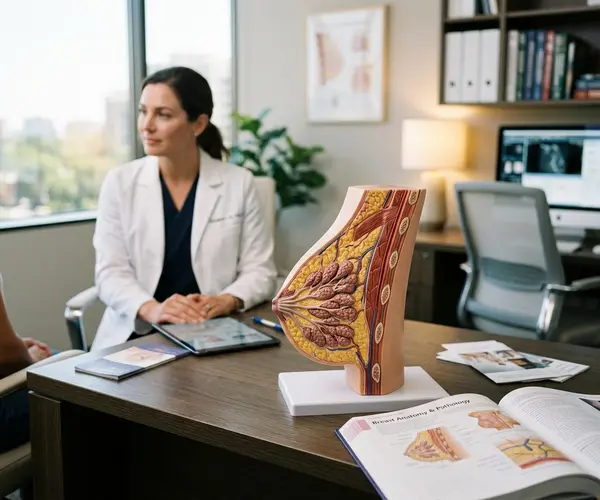
The internal support system of the breast depends heavily on structures called Cooper's ligaments. These are bands of connective tissue that run from the chest wall through the breast tissue to the skin, acting as a natural scaffolding that holds the breast in its position. When these ligaments are intact and elastic, they maintain the shape and elevation of the breast.
Over time, various forces cause Cooper's ligaments to stretch. Once they have elongated, they do not contract back to their original length. This is why breast ptosis is progressive and, beyond a certain point, cannot be reversed through exercise, creams, or other non-surgical methods. A breast lift is the surgical procedure designed to address this by reshaping and repositioning the tissue.
Pregnancy and Breastfeeding
Pregnancy causes significant hormonal changes that increase breast volume as the mammary glands prepare for milk production. The skin and ligaments stretch to accommodate this growth. After breastfeeding ends and the glandular tissue involutes, the breast volume decreases, but the skin envelope and ligaments often remain stretched. This mismatch between the reduced tissue volume and the expanded skin is one of the most common causes of post-pregnancy sagging.
Multiple pregnancies compound this effect, as the cycle of expansion and contraction is repeated. The degree of ptosis varies significantly between individuals and depends partly on the amount of volume change during each pregnancy and the inherent elasticity of the patient's skin.
Weight Fluctuations
Significant weight gain increases the fat content within the breast, causing the skin and supporting structures to expand. When weight is subsequently lost, the fat volume decreases but the stretched ligaments and skin may not fully retract. Repeated cycles of weight gain and loss accelerate this process.
Maintaining a stable weight helps preserve the existing support structures. Patients considering a breast lift are generally advised to reach and maintain their target weight before surgery so the surgical result is not compromised by subsequent volume changes.
Ageing and Gravity
The natural ageing process reduces the production of collagen and elastin in the skin, two proteins responsible for firmness and elasticity. As the skin becomes less resilient, it is less able to resist the constant downward pull of gravity. This gradual process affects all individuals regardless of breast size, though larger, heavier breasts may experience more pronounced sagging due to the greater gravitational force involved.
Hormonal changes during menopause further contribute to changes in breast tissue composition. Dense glandular tissue is gradually replaced by softer fatty tissue, which provides less structural support.
Genetics and Other Factors
Genetic factors influence skin elasticity, breast density, and the baseline strength of connective tissue, all of which affect how susceptible a person is to ptosis. Some women notice sagging earlier than others despite similar life experiences, and this variation is largely attributable to inherited characteristics.
Smoking accelerates skin ageing by damaging collagen and reducing blood flow, which can worsen sagging. Wearing a supportive bra during exercise may help reduce repetitive stretching forces, though no bra can prevent the internal ligament changes caused by ageing or hormonal shifts.
Understanding the causes of sagging helps set realistic expectations. Consult your surgeon about how long surgical results can be maintained given your individual anatomy and lifestyle factors.